Which Measurements an Italian Greyhound Coat Needs
If you've ever tried to buy a coat for your elegant Italian Greyhound, you know the struggle is real. It's not just about picking out a cute pattern; it's about finding something that actually fits their uniquely graceful yet fragile physique. Generic dog clothing often hangs awkwardly, leaving crucial areas exposed or restricting movement. This guide will walk you through precisely which measurements you need to take to ensure your Italian Greyhound stays warm, comfortable, and stylish.
The Unique Challenge of Dressing an Italian Greyhound
Italian Greyhounds are a breed like no other, both in spirit and in physical form. Their distinctive conformation—a deep chest, incredibly slender waist, long arching back, and delicate limbs—is part of what makes them so beautiful, but it's also why finding well-fitting apparel can feel like a Herculean task. Owners often spend years, and no small amount of money, trying to clothe their Iggys in a way that truly provides the warmth and protection they need.
A Body Unlike Any Other Dog
Think about the standard dog shape most clothing is designed for: a relatively uniform torso, perhaps a slight tuck-up, but generally proportionate from front to back. Now picture an Italian Greyhound. Their chest is deep, sometimes almost reaching their elbows, allowing for those powerful, ground-eating sprints. But immediately behind that impressive chest, their body tapers dramatically to a narrow waist, often described as a "tuck-up" that defines their sighthound elegance. Then there's their famously arched back, often called a "roach back," which is a hallmark of the breed but adds another curveball to clothing design.
This unique silhouette means that a coat designed for a Beagle or a Terrier simply won't drape correctly on an Italian Greyhound. A coat that fits around their deep chest might be ridiculously baggy at the waist, letting in cold drafts and snagging on obstacles. Conversely, a coat snug enough for their waist might be too tight across the chest, restricting their movement and causing discomfort. It’s a delicate balance, and getting it right is crucial, especially since Italian Greyhounds are particularly susceptible to the cold due to their minimal body fat and thin skin. Why an Italian Greyhound Cannot Hold Its Own Heat is a topic many of us are intimately familiar with, making proper clothing a necessity, not a luxury.
The Frustration of Ill-Fitting Apparel
The practical problems of ill-fitting coats are numerous and frustrating. Many owners find coats that are either too short on the back, leaving a significant portion of their IG's spine and hindquarters exposed to the elements, or they are so long that they interfere with tail carriage or potty breaks. Leg holes can be too wide, causing sleeves to slip down, or too tight, chafing delicate skin. Necklines are often too loose, allowing warmth to escape, or too short, not adequately covering their elegant, long necks.
The real pain point here isn't just aesthetics; it's about your dog's well-being. An Italian Greyhound who is constantly shivering, or one whose movement is restricted by an uncomfortable coat, isn't a happy or healthy Italian Greyhound. You want them to be able to run, play, and even curl up for a nap without feeling pinched or exposed. This frustration often leads to a pile of unused, incorrectly sized dog clothes in the closet, a testament to the challenge of dressing these finely built creatures. It's a common tale among IG owners: endless searching and purchasing, only to find that another "perfect" coat just doesn't measure up.
Mastering the Key Measurements for a Perfect Fit
To cut through the frustration and find coats that genuinely fit, you need to arm yourself with precise measurements. This isn't just about guessing; it's about understanding the specific dimensions that cater to the Italian Greyhound's unique anatomy. Forget standard dog sizing charts that only offer vague weight ranges or generic breed sizes; for an Italian Greyhound, you need to get granular.
Back Length: The Foundation of Fit
The back length is arguably the most critical measurement because it dictates how much of your Italian Greyhound's body will be covered, from the base of the neck to the tail. A coat that's too short will leave their delicate back and hindquarters exposed, which is precisely where they lose a lot of heat. Too long, and it might interfere with their tail or, worse, their ability to relieve themselves without soiling the garment.
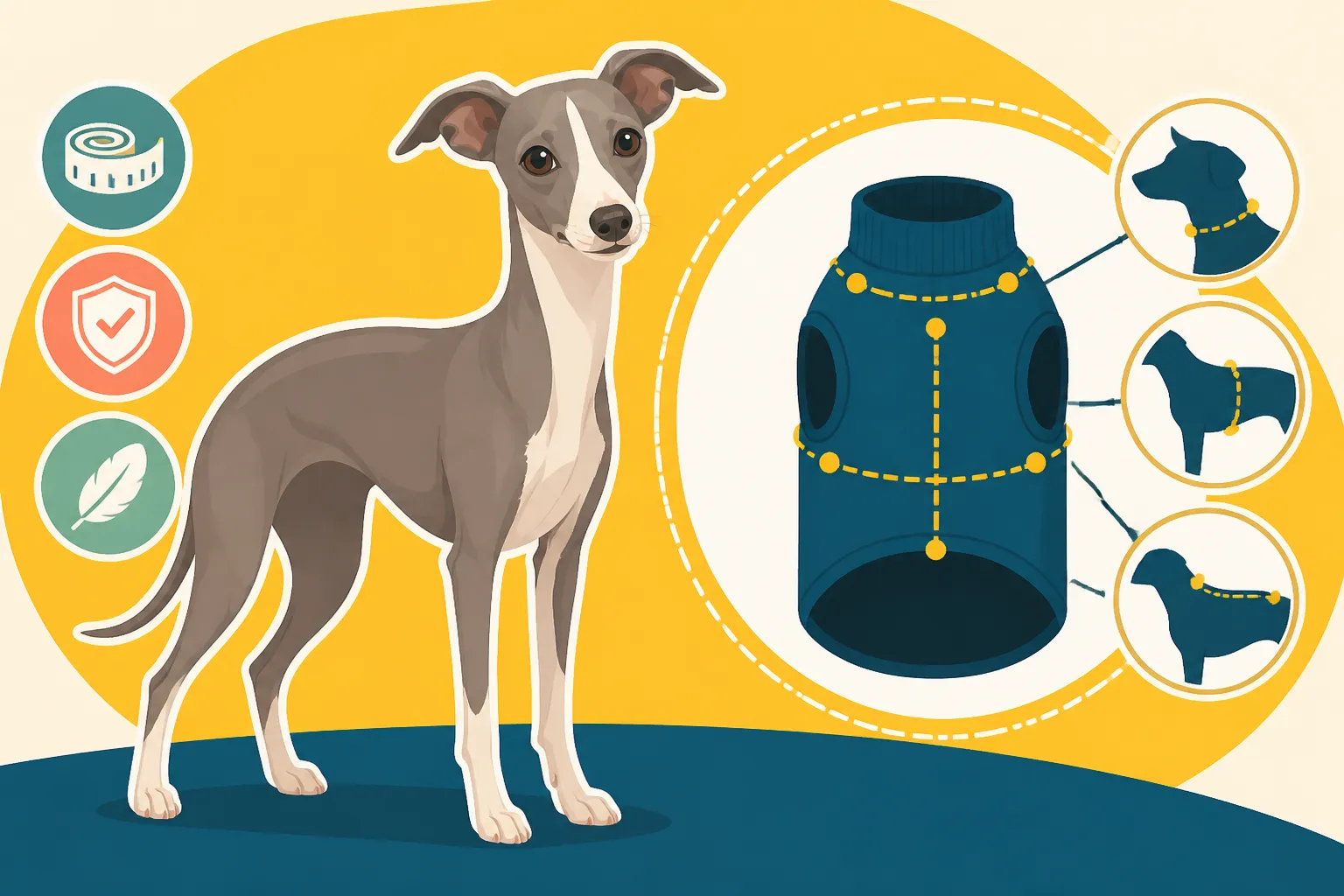
To measure back length, have your Italian Greyhound stand naturally on all four paws, with their head up. Locate the highest point of their shoulders, typically where the neck meets the back, just in front of the shoulder blades. This is your starting point. Now, measure straight along their spine to the point where their tail begins, not including the tail itself. This measurement is crucial for preventing those awkward "high-water pants" coats that barely cover their mid-back. Remember, their unique Why an Italian Greyhound's Back Arches means the fabric needs to accommodate that curve without pulling tight.
Chest Girth: Accommodating the Deep Chest
The chest girth measurement is essential to ensure the coat isn't too tight, which can restrict breathing and movement, or too loose, allowing cold air to penetrate. Italian Greyhounds have exceptionally deep chests that house their powerful lungs, a feature that distinguishes them from many other breeds.
To get this right, take your measuring tape and wrap it around the widest part of your Italian Greyhound's chest, directly behind their front legs. Make sure the tape is snug but not constricting, allowing for two fingers to slip underneath. This area needs ample room, not just for comfort but for their natural movement and to ensure they can fully expand their lungs when they burst into their famous zoomies. Many off-the-rack coats fail here, either being too shallow for the depth of the chest or too narrow around the circumference, making them unwearable.
Neck and Waist Girths: The Tapered Torso
These two measurements address the extremes of the Italian Greyhound's tapered body. Their long, slender necks require a collar or neckline that offers warmth without being too bulky or gaping. Meanwhile, their tiny waists, or "tuck-up," present a challenge for preventing cold air from rushing in.
For the neck girth, measure around the base of your Italian Greyhound's neck, where a standard collar would comfortably rest. This ensures the coat's neckline will sit well, providing coverage without choking or slipping down. When it comes to the waist, or belly girth, measure around the narrowest part of their abdomen, typically just in front of their hind legs. This is where you'll often find the most dramatic difference in circumference compared to their chest. A coat should fit snugly here, but not tightly, to seal in warmth without restricting their movement or causing discomfort when they need to go to the bathroom. Many brands will focus on the chest and miss the waist, leading to a coat that billows out awkwardly.
Specialty Measurements for Full Coverage
While back, chest, neck, and waist girths are the absolute essentials, some coats, especially those designed for extreme cold, full body pajamas, or rain suits, might require additional measurements. These can ensure an even better, more protective fit.
For coats with sleeves or full-leg coverage, you might need to measure leg length. This typically goes from the top of the shoulder (for front legs) or hip (for back legs) down to where the garment should end, often just above the paw to prevent dragging. For winter wear, ensuring the legs are adequately covered can make a huge difference, especially for breeds with such thin skin and minimal fur. Another less common but valuable measurement can be the distance from the collar to the deepest point of their chest, ensuring the coat extends far enough down their sternum without interfering with their front leg movement. This can be especially important if your Italian Greyhound needs substantial chest protection, for instance, from sharp ice or bitter winds.
Here’s a quick reference table for the core measurements:
| Measurement | How to Measure | Why It's Crucial for an Italian Greyhound |
|---|---|---|
| Back Length | Base of neck (between shoulder blades) to tail set | Ensures full spinal coverage, crucial for warmth |
| Chest Girth | Widest part of chest, behind front legs | Accommodates deep chest, allows free movement |
| Neck Girth | Base of neck, where collar sits | Ensures comfortable neckline, prevents heat loss |
| Waist Girth | Narrowest part of abdomen, in front of hind legs | Secures coat against tuck-up, prevents cold drafts |
| Leg Length | From shoulder/hip to desired cuff (for sleeves/pants) | Provides full limb protection, especially in cold |
Ensuring Accuracy: Tips for Taking Your Italian Greyhound's Measurements
Even with a clear understanding of which measurements to take, the process itself can sometimes feel like trying to measure a wiggle worm. Italian Greyhounds, with their sensitive nature and sometimes fleeting attention spans, require a little patience and the right technique to get accurate results. Rushing this step can undo all your good intentions and lead right back to an ill-fitting coat.
The Right Tools for the Job
First, ditch that rigid carpenter's tape measure. What you need is a soft, flexible cloth or vinyl measuring tape, the kind typically used for sewing. This type of tape will conform easily to your Italian Greyhound's curves, including their deep chest and pronounced tuck-up, giving you a much more accurate reading than a stiff metal tape ever could. A bright color can also help you see the markings clearly against their often light-colored fur.
It's also a good idea to have a pen and paper handy. Jot down each measurement as you take it, immediately, before you forget or mix them up. Don't rely on your memory; getting it wrong by even an inch can make a significant difference in the fit of a coat. Some owners even take a photo of their dog with the tape measure in place for each dimension, just to double-check their positioning later. This level of detail ensures you're truly prepared when comparing against various brand size charts.
Optimal Stance and Patience
This might sound simple, but your Italian Greyhound needs to be standing in a natural, relaxed position on all four paws. No sitting, no lying down, and definitely no hunching! If they're not standing squarely, their body measurements will be skewed. It helps if they're calm and relaxed; trying to measure a dog in the middle of a zoomie session is a recipe for disaster and frustration for both of you.
Consider making it a two-person job. One person can gently hold your Italian Greyhound, offering calm reassurance and perhaps a few small, high-value treats to keep them still and focused. The other person can then concentrate on taking the measurements accurately. Remember, positive reinforcement works wonders with Iggys. A few bits of their favorite kibble or a small piece of Ollie (if they like it!) can go a long way in making the experience stress-free and even enjoyable for them. It’s about building a positive association with being handled for these purposes.
Decoding Size Charts and Material Considerations
Once you have your meticulous measurements, the real work of shopping begins. This is where it gets tricky, because every single brand seems to have its own unique sizing chart. A "medium" from one company could be a "small" or even a "large" from another. You absolutely must consult the specific size chart for each individual coat or brand you're considering. Do not assume.
Compare your Italian Greyhound's measurements directly to the numbers provided. If your dog falls between sizes, it's generally safer to size up, especially for the chest, to ensure freedom of movement, unless the material is known to be very stretchy. Also, consider the fabric: a fleece coat will have more give than a stiff, waterproof shell. A very stretchy knit sweater might allow for a snugger fit than a woven, non-stretch jacket. Remember that even on large platforms like Chewy, where you might find many brands, each brand will have its own sizing guide you'll need to reference. This due diligence is what transforms a frustrating shopping experience into a successful one where you find a coat that truly fits your Italian Greyhound. What a Fitted Italian Greyhound Sweater Costs often reflects the precision in its design, and that precision is worthless if you haven't measured correctly.
Beyond the Tape Measure: What Else to Look for in an Italian Greyhound Coat
While precise measurements are the foundation of a good fit, the battle isn't over once you've secured the numbers. There are several other design and functional considerations that can make or break a coat's suitability for an Italian Greyhound. These details contribute significantly to comfort, warmth, and practicality, ensuring the garment truly serves its purpose for your delicate companion.
Leg Openings and Underside Coverage
Think about how a coat sits around your Italian Greyhound's legs. Are the leg openings too wide, causing the sleeves to twist or slip? Or are they too tight, potentially chafing their sensitive skin, especially in the armpit area? For breeds with such fine bones and thin skin, chafing can quickly become a serious issue. Look for coats with elasticated, but not restrictive, leg openings, or designs that are sleeveless if that's what works best for your dog's comfort and range of motion.
Another crucial aspect, especially for male Italian Greyhounds, is underside coverage. A coat needs to provide adequate warmth for their belly without interfering with urination. Many generic dog coats have a wide belly panel that can get soiled during potty breaks. Look for designs that feature a well-cut "tuck-up" or an adjustable elastic belly band that can be tightened to prevent gaping but still allows for a clean potty break. The right balance here keeps them warm and tidy, preventing extra laundry and discomfort.
Necklines, Collars, and Harness Compatibility
Italian Greyhounds have long, elegant necks, and many suffer from being cold. A coat with a high, snug collar or even a hood can provide much-needed warmth, protecting their neck and ears from bitter winds. However, ensure the collar isn't so high or stiff that it restricts head movement or causes irritation. Some coats feature a snood-style neck that can be pulled up over the ears for extra warmth, which is often ideal for Iggys who feel the cold acutely. Getting cold under sedation (Whether an Italian Greyhound Gets Cold Under Sedation) is a major concern at the vet, but daily warmth is equally critical.
You also need to consider how the coat will integrate with their walking gear. Does it have an opening for a leash to attach to a harness worn underneath? Or does it have an integrated D-ring for leash attachment? Given that Italian Greyhounds are sighthounds and cannot be trusted off-leash, ever, a harness is a daily necessity. The coat needs to allow for comfortable harness wear without bunching up or pulling in awkward places. Some coats are specifically designed to be worn over a harness, with clever zipper or snap openings that make leash attachment easy and secure.
Custom Solutions vs. Ready-to-Wear
Despite taking all the right measurements, you might still find that off-the-rack coats simply don't quite hit the mark for your uniquely shaped Italian Greyhound. This is a common experience, and it's why many IG owners eventually turn to custom-made clothing. Specialty artisans who understand the Italian Greyhound form can create garments tailored precisely to your dog's dimensions, accommodating their deep chest, dramatic tuck-up, and roach back perfectly.
While custom clothing may represent a higher initial investment, it often pays off in terms of superior fit, durability, and comfort for your dog. A custom coat is less likely to wear out prematurely from awkward bunching or stretching and will provide optimal warmth and protection. For daily wear, especially in colder climates, or for specific needs like rain or snow, a custom solution can be a game-changer. However, even when considering custom options, having those accurate measurements ready is your starting point, as they will be the blueprint for the tailor. This commitment to finding the perfect fit truly reflects What Owning an Italian Greyhound Costs That Nobody Warns You About, but the comfort of your beloved companion is always worth it.
Disclaimer
This article is for general informational purposes only and does not constitute professional advice. Laws, prices and regulations vary by location and change over time. Consult a qualified professional for guidance on your specific situation.