Why an Italian Greyhound’s Back Arches
An Italian Greyhound’s back can look arched even when the dog is perfectly healthy, which can make owners worry that they are seeing pain or a spinal problem. The breed has a characteristic topline, but a sudden change in posture deserves attention. This guide explains what a normal arch looks like, what can make it appear more pronounced, and when to call your veterinarian.
What a normal Italian Greyhound back looks like
The breed’s natural topline
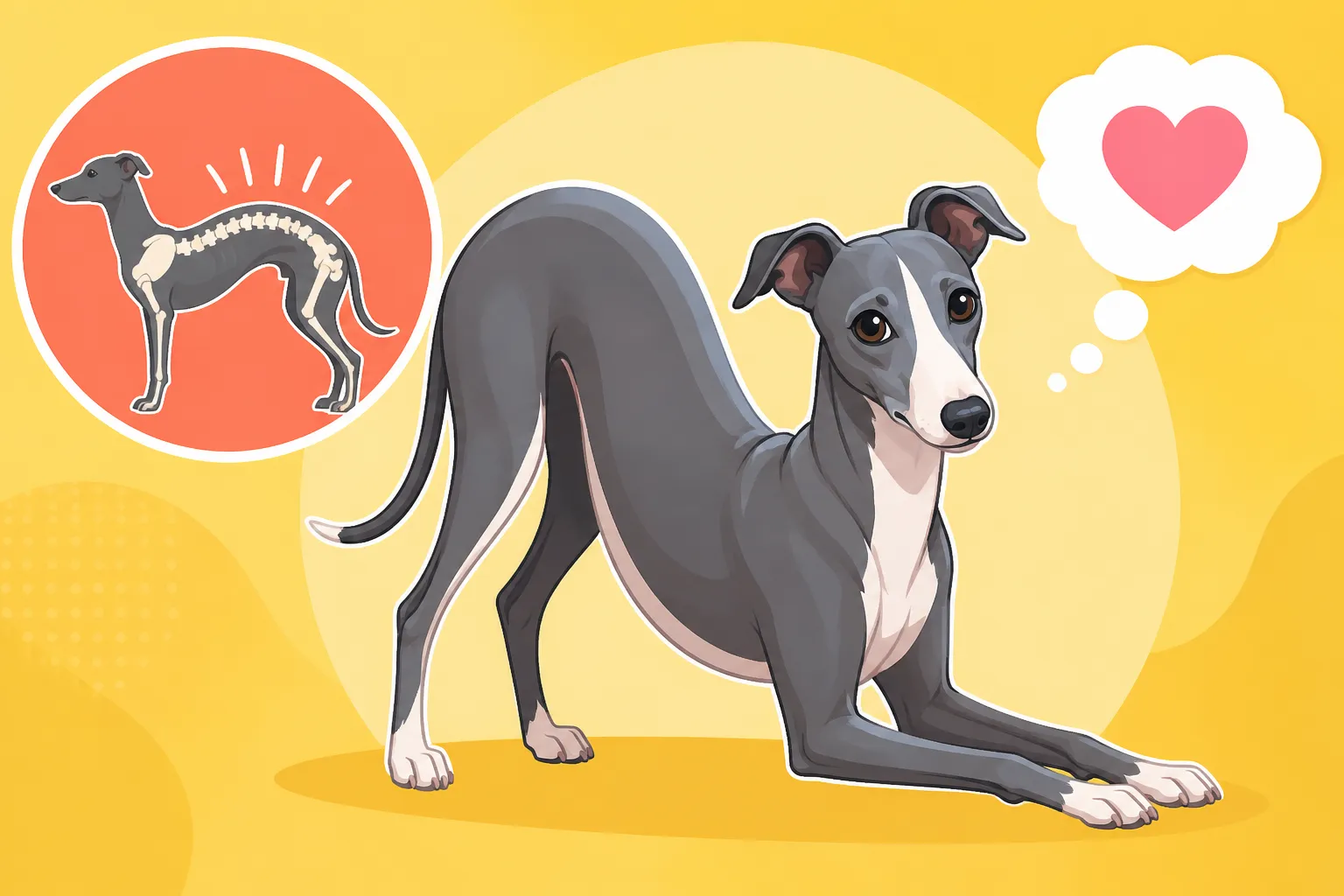
An Italian Greyhound is not built with a ruler-straight back. The breed has a slight, graceful arch over the loin, the section between the last ribs and the pelvis. In a relaxed stance, that curve may be subtle; when the dog is alert or moving, the line can look more noticeable. The important point is that a gentle arch is part of the breed’s outline, not automatically evidence of a spinal problem.
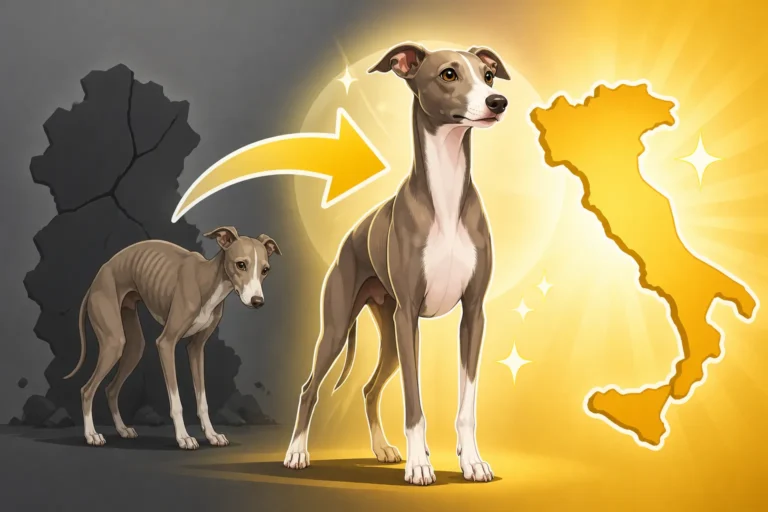
The arch should blend into the rest of the dog’s shape. Italian Greyhounds have a deep chest, a tucked-up abdomen, fine limbs, and little body fat, so their silhouette can appear unusually delicate to someone used to sturdier breeds. If you are comparing your dog with a breed description, What a Correct Italian Greyhound's Topline Looks Like explains the topline in context. The related What an Italian Greyhound's Tuck Up Should Be helps distinguish the abdomen’s natural rise from the curve of the back.
A healthy-looking outline is only one part of the picture. A dog’s comfort, movement, appetite, and willingness to do familiar activities tell you more than a single side-on photograph. Some Italian Greyhounds naturally show a more noticeable curve than others, and posture changes slightly as a dog shifts its weight or turns to look at you.
Why photos can make the arch look stronger
A photo freezes one instant. If your dog is standing with its hind legs tucked under, stretching, turning, or looking up at a treat, the topline may appear more curved than it does in a neutral stance. Camera angle also matters: a close-up taken from above can distort proportions, while a low angle may exaggerate the rise over the loin.
Try looking at your dog while it stands naturally on a level, non-slip surface. Avoid coaxing it into a show pose or stretching its legs to “check” its back. You can take a short video of your dog walking at an easy pace, turning, and standing comfortably; comparing that with older footage may help you notice whether the shape is genuinely changing.
If the question is whether your dog’s frame looks too thin or simply fine-boned, body condition is a separate issue from topline shape. What an Italian Greyhound Weighs and How to Tell If It Is Right can help you think about weight and body condition without expecting a healthy Italian Greyhound to look like a stockier dog.
Why an Italian Greyhound may arch its back
Normal posture and temporary changes
A mild arch can become more visible when a dog is alert, tense, cold, or bracing on a slippery floor. Italian Greyhounds are sensitive to cold, and some hunch their bodies or tuck themselves up when uncomfortable. A dog may also change its outline briefly while stretching, squatting, or adjusting its stance. If the posture disappears when the dog relaxes and its movement stays normal, that is different from a persistent, newly hunched position.
Surface matters, too. On smooth hardwood, an Italian Greyhound may hold its body stiffly or place its feet cautiously to avoid slipping. That can make its back seem unusually curved, even though the main problem is confidence and traction. Why an Italian Greyhound Slips on Hardwood covers ways to make the walking surface safer without assuming the back itself is the cause.
Pay attention to the whole situation rather than trying to correct the curve. Is the dog warm and relaxed? Is it standing on a stable surface? Does it move normally once it starts walking? A temporary posture that changes with the situation may be less concerning than an arch that remains present across different settings, though only a veterinary professional can assess the cause.
Pain or illness can change posture
A sudden, sustained arch or hunched posture can be a sign that a dog is uncomfortable. Pain may come from the back, abdomen, hips, or another part of the body, and the posture alone cannot identify the source. Some dogs also become quieter, resist being picked up, hesitate before jumping, walk stiffly, or avoid stairs and play. Others hide discomfort well, so a dog that still eats or trots around may nevertheless be sore. See How an Italian Greyhound Hides Pain for more on subtle behavior changes.
Look for a change from your dog’s usual pattern. A dog who normally climbs onto the sofa but suddenly waits to be lifted, or who begins taking short steps after a vigorous play session, is giving you useful information even if the back looks only slightly different. For a puppy, a limp or reluctance to move should not be dismissed as clumsiness; Signs an Italian Greyhound Puppy Has Hip Pain describes changes that warrant veterinary attention.
Do not press along the spine, force your dog to stretch, or try to “put the back straight.” These actions may worsen pain or make a frightened dog defensive. Keep your dog quiet, prevent jumping, and contact your veterinarian for advice if the posture is new, persistent, or accompanied by other signs.
| What you notice | What it may mean | A sensible next step |
|---|---|---|
| A gentle arch that has always been present, with comfortable movement | A normal breed outline may be likely | Observe your dog in a relaxed stance and during ordinary movement |
| A curve that looks stronger in a photo or on a slippery floor | Position, angle, or footing may affect appearance | Check posture on a level, grippy surface and compare short videos |
| A new hunch that persists or comes with stiffness or reluctance to move | Pain or another health issue is possible | Restrict jumping and contact your veterinarian |
| A hunched posture after a fall, collision, or other injury | An injury may need prompt assessment | Seek veterinary care promptly and handle your dog gently |
| Weakness, inability to walk normally, severe distress, or rapid worsening | A potentially urgent problem may be present | Contact an emergency veterinary service |
How to tell a normal arch from a concerning change
Watch movement and behavior, not just the outline
A useful observation is whether your dog moves in a familiar, comfortable way. Watch it rise from bed, walk across a room, turn, and settle down without encouraging it to jump or run. Notice whether the stride is even, whether the dog bears weight comfortably, and whether it is avoiding an activity it usually enjoys. A video can help your veterinarian see the change, especially if the posture is intermittent.
Keep track of when you first noticed the arch and what was happening around that time. Did it appear after a slip, a fall, rough play, or a long walk? Does it show up only when the dog is cold or anxious, or does it remain when the dog is resting? These details do not diagnose the problem, but they can make a veterinary conversation more useful.
A dog that appears otherwise normal can still benefit from a check if the change persists. Conversely, a naturally curved topline that has looked the same for years and is paired with comfortable, even movement is less suggestive of a sudden problem. The difference between “this is how my dog is built” and “my dog has changed” is often the most important clue.
Know when to call the veterinarian
Contact your veterinarian if the arch is new and does not resolve, or if it comes with a limp, stiffness, yelping, trembling, reduced appetite, unusual quietness, or resistance to being handled. A veterinary exam can help determine whether the issue relates to the back, hips, abdomen, or something else. Depending on the findings, the veterinarian may recommend further assessment rather than relying on posture alone.
Seek urgent veterinary advice after a fall or other injury if your dog seems painful, cannot walk normally, or is getting worse. Weakness, collapse, severe distress, or trouble controlling normal bodily functions also calls for prompt professional guidance. Do not wait for a dog to stop moving entirely before asking for help; some dogs continue to walk despite discomfort.
Until you have advice, keep activity calm and prevent sofa or bed jumps. If your veterinarian recommends changes at home, focus on the specific need they identify. For example, a low ramp may help reduce jumping, while a non-slip runner may make a route across the room steadier. You can compare ramp dimensions through retailers such as Chewy, but a product should not replace an exam or be used to force a painful dog to move. If supportive bedding is recommended, Chewy listings can help you compare size and washable-cover details; choose for your dog’s comfort rather than assuming a particular bed will treat a back problem.
Supporting an Italian Greyhound safely at home
Make everyday movement easier
If your dog has trouble getting on and off furniture, teach it to use a stable ramp or lift it carefully rather than letting it leap. A ramp should not wobble or slide, and the dog should be allowed to approach it at its own pace. Teaching an Italian Greyhound to Use a Ramp offers a gradual approach that can make the new route less intimidating.
Improve traction where your dog walks most often. Secure rugs or runners so they cannot bunch up, keep nails at a comfortable length, and clear clutter from narrow paths. These changes can be helpful for an Italian Greyhound that is cautious on slick floors, whether or not its back is naturally arched. If you are considering a ramp or grip mat, Chewy is one place to compare product measurements and surfaces, but check that the item fits your home and your dog rather than buying based on a general recommendation.
Keep your dog warm and give it a comfortable place to rest, particularly if cold weather makes it tense or reluctant to move. A warm, relaxed posture may look different from a guarded posture, but warmth alone will not resolve pain caused by an injury or illness. If your dog continues to hunch despite being comfortable and warm, contact your veterinarian.
Avoid home treatments based on appearance
Do not give human pain medicine unless a veterinarian specifically directs you to do so. Some common medicines can be dangerous for dogs, and the appropriate treatment depends on what is causing the posture. Avoid braces, massage, stretching routines, or supplements intended to “straighten” the back without professional guidance.
It is also easy to overreact to a naturally fine outline. Italian Greyhounds can look fragile, and a visible waist or gentle topline curve does not by itself mean the dog is underweight or unwell. For more on breed appearance and how delicacy differs from a health concern, see Whether a Correct Italian Greyhound Looks Fragile. If the dog’s posture or movement has changed, however, do not let breed shape explain away new signs of discomfort.
The most reassuring pattern is a topline that is familiar for your dog, paired with relaxed movement and normal behavior. The pattern that deserves a closer look is a sudden or persistent change, especially when it arrives with pain, stiffness, or reluctance to move. When in doubt, share a short video and your observations with your veterinarian rather than trying to diagnose the curve at home.
Disclaimer
This article is for general informational purposes only and does not constitute professional advice. Laws, prices and regulations vary by location and change over time. Consult a qualified professional for guidance on your specific situation.