Whether a Correct Italian Greyhound Looks Fragile
An Italian Greyhound can look almost impossibly delicate: fine legs, a narrow body, and a light, elegant outline. That appearance often leaves owners wondering whether a “correct” dog should look fragile—or whether a dog that seems sturdier is somehow wrong. This guide explains what the breed’s refined build means, what healthy structure looks like, and how to tell elegance from a genuine concern.
Why a Correct Italian Greyhound Can Look Delicate
Fine-boned does not mean poorly built
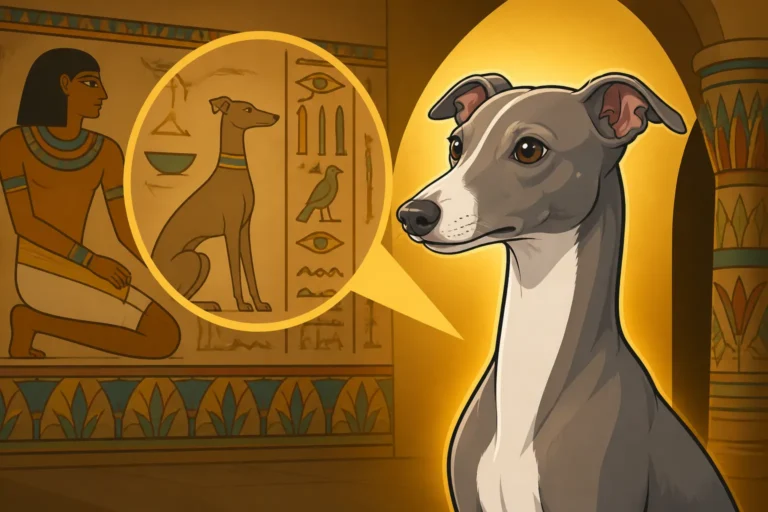
The Italian Greyhound is a small sighthound, bred for speed, agility, and companionship. Its outline is meant to be refined: long limbs, a narrow waist, a deep chest, and a comparatively light frame. Those features can make the breed look fragile beside a compact terrier or a small dog with heavier bone. But a delicate outline is not, by itself, evidence of poor health or weak structure.
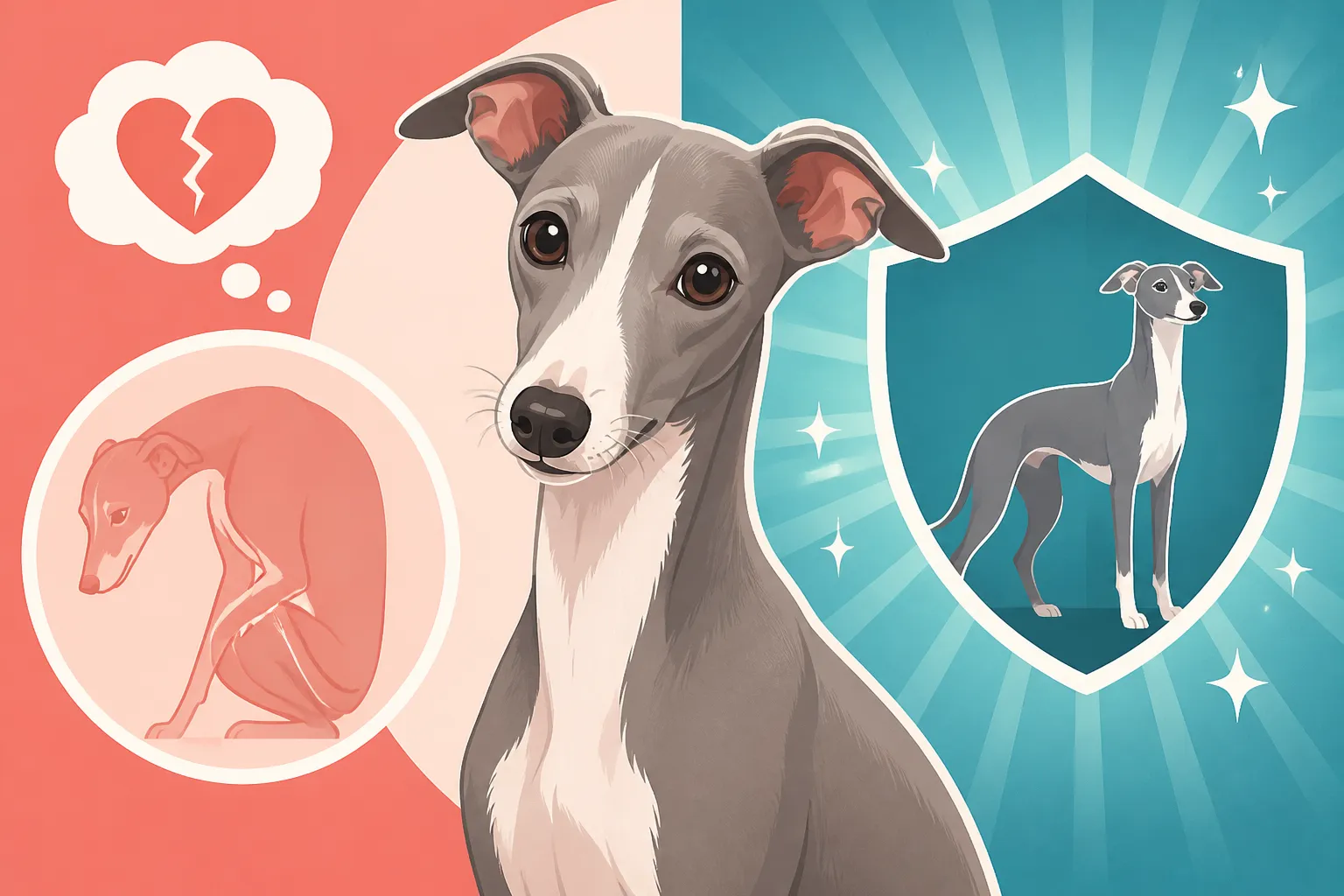
A well-built Italian Greyhound should look balanced rather than flimsy. The legs should appear long in proportion to the body, and the muscles should be visible without looking bulky. The body is narrow, but it should not look starved or hollow. A gentle tuck behind the ribs is part of the breed’s shape; a sharply protruding spine, hips, or ribs combined with muscle loss may be a reason to check in with a veterinarian.
The breed’s fine silhouette can also be misleading when a dog is standing still. Under its smooth coat, an Italian Greyhound is an athletic animal, not a decorative statue. Watch the dog move comfortably across a safe, nonslip surface. A sound dog should generally move freely and evenly, without persistent limping, stiffness, or a repeated reluctance to bear weight. For more detail on the breed’s outline, see What a Correct Italian Greyhound's Topline Looks Like and What Shape an Italian Greyhound's Feet Are.
The breed’s outline is not a weight diagnosis
A slim-looking Italian Greyhound is not automatically underweight. Breed type, age, sex, muscle development, and individual build all affect appearance. A young dog may look leggy and unfinished as it grows, while a senior dog may lose muscle and need a closer look at its overall condition. Comparing one dog with a photo of another can be misleading, especially when coat color, posture, and camera angle change how prominent the bones seem.
Instead of judging by appearance alone, look at the dog from the side and above, and gently feel the body. You should be able to feel the ribs without pressing hard, but they should not feel sharply exposed beneath the skin. A visible waist is expected; an extreme hollowing through the flanks or a sudden change in body condition deserves attention. Your veterinarian can assess weight and muscle condition in context, rather than relying on a single number.
If you are unsure whether your dog is naturally lean or losing condition, take note of changes over time. Weighing the dog periodically on the same scale, keeping a record of appetite and activity, and mentioning any unexplained weight change at a checkup can make the conversation much clearer. The reference What Weight Range an Italian Greyhound Should Fall In offers additional context, but an individual dog’s ideal condition is best assessed with a veterinary professional.
| What you notice | What it may mean | A sensible next step |
|---|---|---|
| Long legs, narrow waist, and a light frame | Typical refined breed outline | Assess comfort, movement, and body condition together |
| Ribs that are easy to feel but not sharply prominent | Often consistent with a lean, fit dog | Ask your veterinarian to confirm at a routine visit |
| Sudden weight loss or reduced muscle | A change that needs context | Arrange a veterinary assessment, especially if appetite or energy has changed |
| Limping, swelling, or reluctance to use a leg | Possible injury or pain | Contact a veterinarian promptly |
| A puppy jumping from furniture or colliding during rough play | Avoidable risk for a small, fine-limbed dog | Manage the environment and supervise play |
What a Sound Italian Greyhound Should Look Like and Do
Look for balance, muscle, and comfortable movement
A correct Italian Greyhound is not simply the smallest or thinnest-looking dog in the room. The breed’s elegance comes from proportion and carriage: a refined head and neck, a deep chest, a tucked abdomen, and long limbs that support a light, athletic body. A dog can be graceful without looking depleted. You should see a sense of balance, not a collection of sharp angles.
Muscle matters, too. The dog should have enough strength to move, play, and maintain ordinary daily activity. A very thin dog may have little muscle along the hindquarters or shoulders, while a healthy lean dog can still feel firm and capable. These differences are easier to evaluate by touch and movement than by a quick glance, which is why a veterinarian’s hands-on assessment is useful when you are uncertain.
Movement gives another helpful clue. Look for comfortable, coordinated steps on a surface where the dog is not slipping. A dog that moves evenly is different from one that repeatedly skips, favors a limb, or hesitates before stepping down. A single odd step can happen for many reasons, but a persistent pattern, sudden lameness, or signs of pain should not be dismissed as “just how a fragile breed walks.”
Recognize real risk without assuming every dog is injured
Italian Greyhounds can be vulnerable to leg injuries, particularly when a fall, collision, or awkward landing puts force through a slender limb. That risk is worth taking seriously, but it does not mean every Italian Greyhound is constantly injured or that its legs are inherently incapable of normal activity. Careful handling and sensible household arrangements help reduce avoidable accidents.
Puppies and adolescents deserve especially thoughtful supervision. They may be bold, quick, and unaware of their own limits, particularly when playing with larger dogs or racing around a slick room. A puppy that launches from a sofa may land badly even if the jump looks small to a person. For more on the breed’s particular fracture concerns, read Why an Italian Greyhound's Leg Bones Break So Easily.
A dog’s injury risk is not a reason to keep it motionless. Appropriate exercise, play, and opportunities to move are part of a healthy life. The goal is to let the dog use its body in safe settings: supervise energetic play, prevent reckless furniture leaps where possible, and be cautious with slippery flooring. If your dog is already limping or seems painful, avoid testing the leg by encouraging more activity; contact your veterinarian for guidance.
How to Care for a Refined Build at Home
Make furniture access safer
Many Italian Greyhounds are enthusiastic furniture companions. The challenge is that a dog may jump down in a hurry, especially when excited by a doorbell, a toy, or someone returning home. A ramp or low, stable steps can give the dog a more controlled route to the sofa or bed. These supports are most useful when they are secure, easy to reach, and introduced before the dog has learned to leap automatically.
A ramp that slides away or has a steep angle can create a new hazard. Place it on a nonslip surface, check that it does not wobble, and reward the dog for using it calmly. Some dogs need patient practice: start with the ramp flat or at a gentle incline, guide the dog with treats, and avoid pushing or dragging it into position. For room-by-room planning, see Ramps and Steps for an Italian Greyhound's Furniture.
Look at the whole route, not just the furniture. A ramp is less useful if the dog has to sprint across a slippery floor to reach it. Area rugs or nonslip runners can improve traction in high-traffic spots, particularly near the sofa, bed, and hallway. If you are shopping for practical home supplies, Chewy may be one place to compare pet ramps, mats, and related items; check the measurements and surface details before choosing anything for your dog.
Handle and play with the dog thoughtfully
Support your Italian Greyhound securely when lifting it. Avoid grabbing a front leg, lifting by the armpits, or allowing the hindquarters to dangle. A calm lift that supports the chest and body helps the dog feel steady. If children are in the home, teach them to call an adult rather than picking the dog up themselves. Even a well-meaning child can lose their grip if the dog squirms or jumps.
For a step-by-step handling discussion, see How to Pick Up an Italian Greyhound Safely. The same principle applies when passing the dog to someone else: bring it close to the person’s body, make sure they have a secure hold, and do not hand it over while either person is standing near stairs or a hard floor.
Play should match the size and style of the dogs involved. A large dog may not intend harm but can knock a small Italian Greyhound over while turning or wrestling. Choose playmates carefully and supervise interactions, especially with puppies. A fenced, secure space with good footing is a safer place for a short burst of running than a busy dog park where unfamiliar dogs may crowd or chase. An Italian Greyhound can be athletic and still need protection from rough, unpredictable play.
When a Fragile Appearance Should Prompt a Closer Look
Watch for changes rather than judging one snapshot
A naturally fine frame is usually consistent over time. A sudden change in weight, muscle, posture, or activity is more informative than a single photograph or comparison with another dog. Keep an eye on appetite, energy, the dog’s willingness to walk, and how easily it rises after resting. If the dog begins avoiding stairs, stops using a limb normally, or seems unusually quiet, describe those changes to your veterinarian.
Pay attention to the details you can report: when the change began, whether it followed a fall or rough play, which leg seems affected, and whether the dog is eating and drinking normally. A short video of an unusual gait can sometimes help your veterinarian understand what you are seeing, but do not make the dog run or jump just to record it. If the dog appears acutely painful, has obvious swelling, or will not bear weight, seek veterinary advice promptly.
Routine care can also help separate normal breed shape from a health concern. At checkups, ask the veterinarian to assess body condition, muscle, gait, and any areas that seem tender. A dog that looks slender but has stable weight and moves comfortably may simply have the characteristic Italian Greyhound outline. A dog that is losing condition or changing how it moves needs an individual assessment rather than reassurance based on breed appearance alone. For broader context, see Whether an Italian Greyhound Is a Healthy Breed.
Avoid trying to “correct” a normal silhouette
It can be tempting to add extra food because a dog’s ribs are visible, or to restrict activity because its limbs look delicate. Neither response should be automatic. Extra food can lead to excess weight, which may place additional strain on joints and limbs, while unnecessary restriction can reduce fitness and enrichment. Ask a veterinarian to help determine whether the dog’s condition is appropriate before changing its diet or exercise plan.
The same caution applies to supplements and special products. A supplement is not a substitute for a balanced diet, safe exercise, or veterinary evaluation, and products marketed for “strong bones” should not be treated as a guarantee against injury. If you are considering a product, discuss it with your veterinarian and follow the label and professional guidance. Chewy can be useful for browsing routine supplies such as food storage, grooming items, or nonslip mats, but product availability does not determine what is medically appropriate for a particular dog.
Most importantly, do not treat the word “fragile” as a complete description of the breed. An Italian Greyhound is refined, light, and sometimes physically vulnerable to careless handling or unsafe landings—but it is also an active dog capable of running, playing, and enjoying daily life. Respect its build, provide safe footing and thoughtful supervision, and judge its health by its condition and behavior rather than by how delicate it looks beside another breed.
Disclaimer
This article is for general informational purposes only and does not constitute professional advice. Laws, prices and regulations vary by location and change over time. Consult a qualified professional for guidance on your specific situation.