What Weight Range an Italian Greyhound Should Fall In
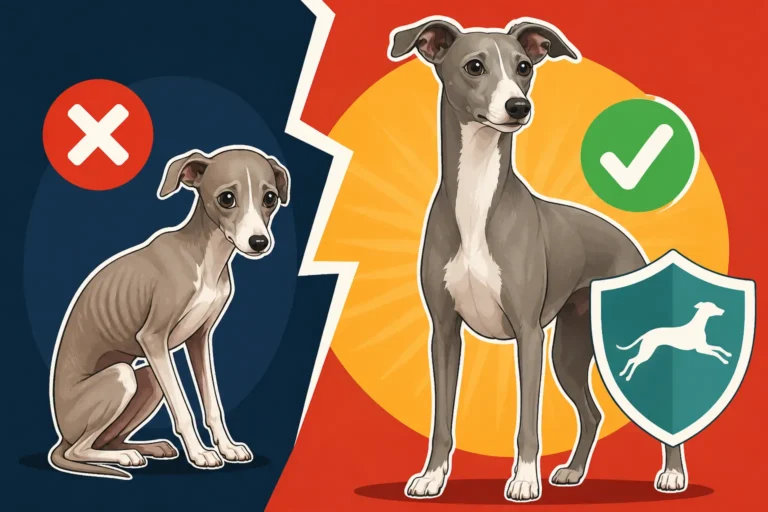
An Italian Greyhound can look startlingly slim to someone used to a sturdier dog, so it’s easy to mistake a healthy build for being underweight—or to miss gradual weight gain beneath a blanket of fur. This guide explains the usual adult weight range, how to assess body condition at home, and when a change deserves a veterinarian’s attention.
The usual weight range for an Italian Greyhound
Breed standard and healthy weight are not exactly the same
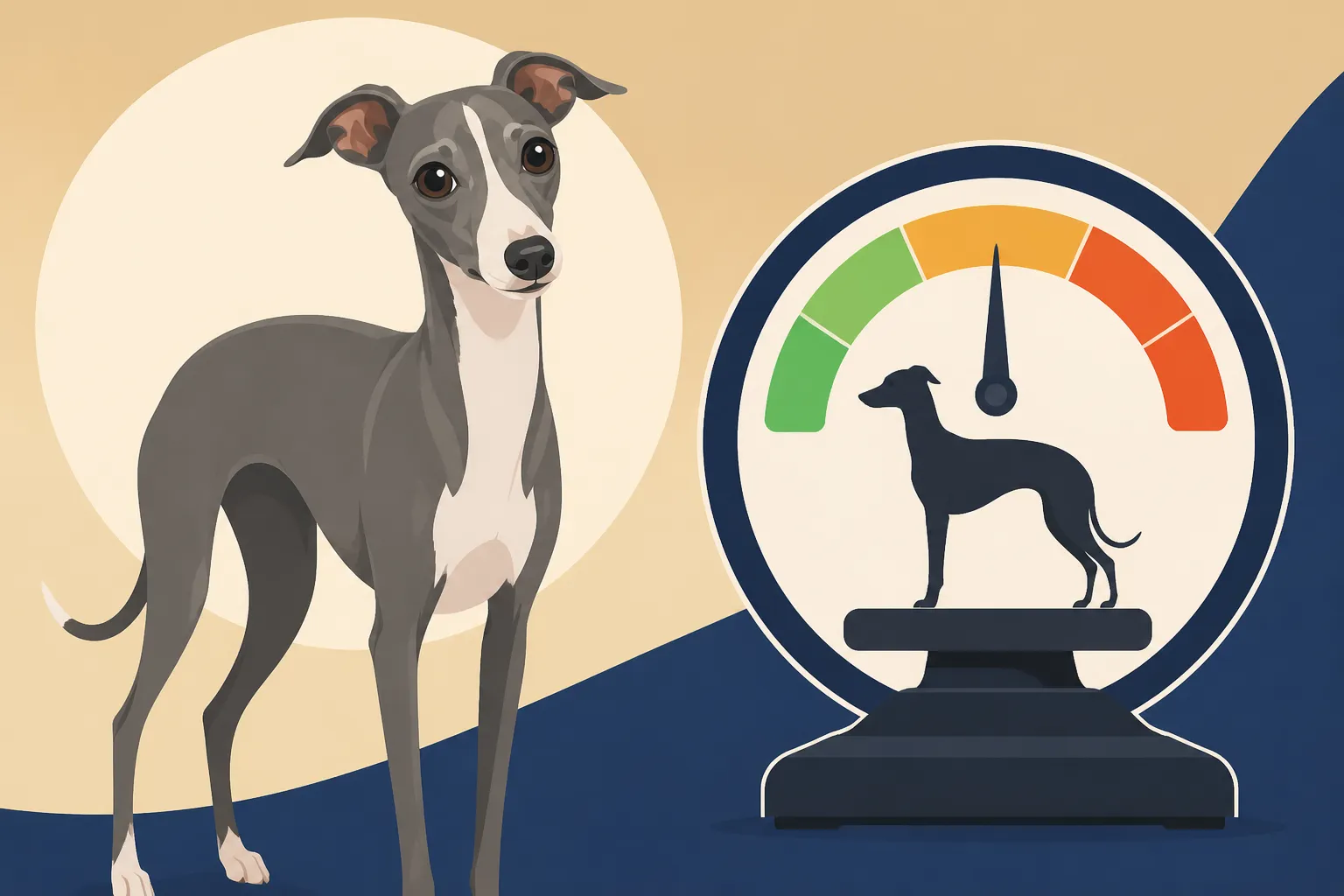
An adult Italian Greyhound commonly weighs about 7 to 14 pounds. The breed standard sets an upper weight limit of 14 pounds, but that figure is a show guideline—not a complete health assessment or a target every dog must reach. A smaller-framed dog may be healthy below the middle of that range, while a taller or more substantial dog may look and feel different at the same weight.
That’s why the number on the scale needs context. Two Italian Greyhounds can both weigh 10 pounds and have different body conditions: one may be lean and fit, while another may have lost muscle or be carrying extra fat. Age, sex, height, frame, muscle, activity, and health all influence what is appropriate for an individual dog. For breed proportions and ways to judge whether a dog’s weight suits its build, see What an Italian Greyhound Weighs and How to Tell If It Is Right.
A useful starting point is to ask your veterinarian to identify your dog’s healthy weight and body condition during a routine exam. Once you have that baseline, you can track whether your dog is staying close to its own healthy range instead of comparing it with a neighbor’s dog or an online photo. If you’re looking for a broader overview of typical weights, How Much an Italian Greyhound Weighs covers that related question.
Why one number cannot tell the whole story
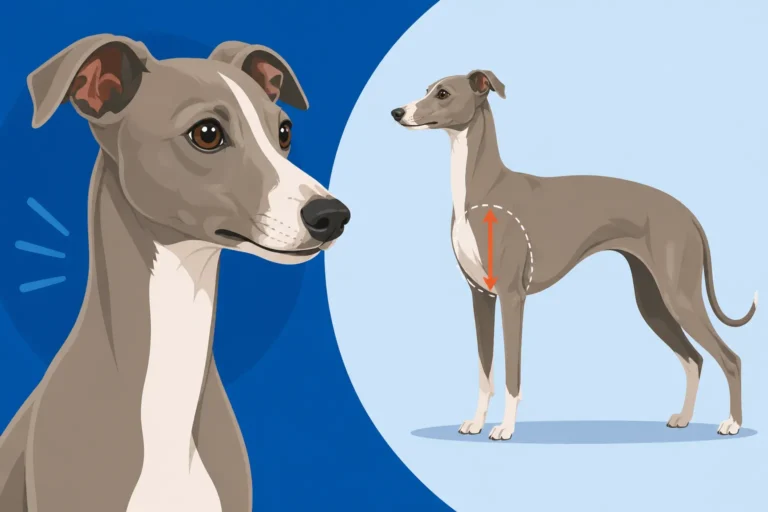
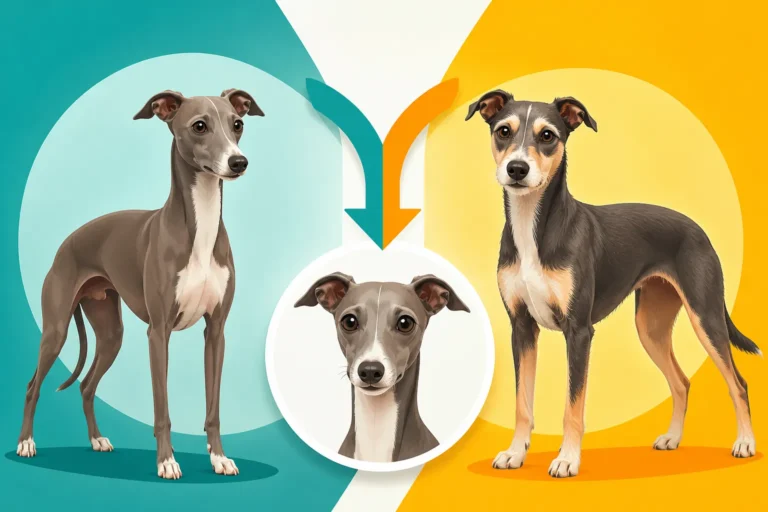
Italian Greyhounds are fine-boned, narrow-bodied sighthounds. Their tucked-up waist and visible outline can look unfamiliar if you’re used to breeds with a broader chest or more body fat. A naturally lean silhouette does not automatically mean a dog needs more food. On the other hand, a sharp change in appearance or weight should not be dismissed as “just how the breed looks.”
Height and build matter. A petite dog near the lower end of the breed’s size range may have a different healthy weight from a taller dog with more bone and muscle. A dog that has been less active during recovery from an injury may also lose muscle even if the scale barely changes. The right question is not simply, “Is my dog inside the usual range?” It is, “Does this weight suit this dog, and has it been stable?”
A healthy weight is usually supported by several signs together: a visible waist when viewed from above, an abdominal tuck when viewed from the side, and ribs that are easy to feel under a thin covering. Your veterinarian can help you interpret those signs and establish a target that is specific to your dog. For an additional look at body shape, What an Italian Greyhound Should Weigh and How Much of an Italian Greyhound's Ribs Should Show are useful related topics.
| What you notice | What it may suggest | A sensible next step |
|---|---|---|
| Stable weight, defined waist, ribs easy to feel | Often consistent with a lean, healthy build | Keep monitoring and confirm body condition at routine exams |
| Weight rising over several checks, waist becoming less visible | Possible gradual weight gain | Review portions, treats, and activity with your veterinarian |
| Ribs, spine, or hip bones becoming more prominent than usual | Possible loss of fat or muscle, or another health issue | Arrange a veterinary assessment rather than simply adding food |
| Sudden weight change or weight change with illness signs | May need prompt investigation | Contact your veterinarian and describe the change and timing |
How to tell whether your Italian Greyhound is at a healthy weight
Check body shape and feel, not just appearance
Look at your dog from above while it is standing naturally. You should generally see a waist behind the ribs rather than a straight-sided or rounded outline. From the side, the belly should rise toward the hind legs. These proportions are helpful clues, but they should be considered alongside how your dog feels under your hands.
Gently run your fingertips over the ribcage. Ribs should usually be easy to feel without pressing hard, but they should not feel as though they are covered by no tissue at all. It can be normal to see some rib definition on a lean Italian Greyhound; prominent ribs accompanied by a visible spine, hip bones, weakness, or a recent downward weight trend are more concerning. A thick coat, a curled posture, or a dog that is wriggling away can make visual checks less reliable, so use touch as well.
Try to assess your dog consistently: in the same standing position, in good light, and at roughly the same point in the day. Don’t judge body condition after a large meal or compare a relaxed, curled-up dog with a posed picture. If you’re unsure whether your dog is simply lean or genuinely underweight, Signs an Italian Greyhound Is Underweight can help you notice patterns worth discussing with your veterinarian.
Make weight tracking a simple habit
Regular weighing helps you spot a trend before it becomes obvious in a photo or in the way a harness fits. For a small dog, even a modest change can represent a meaningful shift in body weight. Use the same scale when you can, and record the date and result in a phone note or pet-care calendar. At a veterinary visit, ask the team to note both the weight and body condition so you have more than a number to compare.
At home, you can weigh yourself holding your dog and then weigh yourself alone, subtracting the two readings. This approach is less precise than a suitable pet or veterinary scale, but it can still help identify a general trend if you repeat it consistently. A small dog scale may be easier if your dog is comfortable standing still. If you buy food or supplies through Chewy, you can also keep a simple note with your order records showing the food name, feeding amount, and your dog’s recent weight. That can make it easier to spot whether a change followed a switch in food or routine.
Weigh more often when your veterinarian recommends it, such as during a weight-management plan, a puppy’s growth period, or recovery from illness. Otherwise, a regular check-in at home alongside routine veterinary visits is often more useful than weighing repeatedly and reacting to tiny fluctuations. How Often an Italian Greyhound Should Be Weighed offers more on building a practical tracking routine.
How age and life changes affect weight
Puppies need to be assessed as they grow
A puppy’s weight changes as its body develops, so an adult range is not a useful target for a young dog. Growth is not always perfectly even from week to week, and a single measurement cannot show whether development is on track. Your veterinarian can interpret weight alongside age, body condition, appetite, and the puppy’s overall growth pattern.
Rather than trying to make a puppy reach a particular adult number early, keep a record of weights and bring it to wellness visits. Ask whether the puppy’s condition and rate of growth look appropriate for its frame. Avoid adding supplements or increasing food substantially because a puppy seems small; extra calories or nutrients are not automatically beneficial and may create other problems. For more on the timeline, see The Age an Italian Greyhound Stops Growing.
Adult dogs can also change shape without a dramatic change on the scale. Less exercise may reduce muscle, while extra treats can add fat gradually. After a move, a change in household routine, or a period of restricted activity, keep an eye on both weight and body shape. If you use Chewy to reorder your dog’s usual food, double-check the feeding directions on the current packaging rather than assuming a familiar scoop always matches your dog’s changing needs.
Older dogs and medical changes deserve a closer look
As dogs age, their activity, muscle mass, appetite, and health can shift. An older Italian Greyhound may lose muscle even while keeping a similar weight, or may gain weight because walks have become shorter. A scale alone may not reveal those changes, so pay attention to strength, posture, stamina, and whether your dog still feels as expected over the ribs and hips.
A persistent change in appetite or weight can sometimes be linked to a health problem rather than feeding habits. Contact your veterinarian if your dog loses or gains weight unexpectedly, has difficulty eating, vomits repeatedly, develops ongoing diarrhea, seems unusually tired, or drinks and urinates much more than usual. Seek prompt advice if weight loss happens quickly or alongside weakness or other signs of illness. Don’t wait for your dog to fall outside the typical breed range before asking for help.
If your dog has gained weight, that does not mean you should sharply cut food on your own. If your dog has lost weight, simply offering richer food may hide the underlying issue without treating it. A veterinary exam can help distinguish routine changes from a problem that needs testing or a tailored plan. For more on recognizing excess weight, see Signs an Italian Greyhound Is Overweight and How Easily an Italian Greyhound Gains Weight.
What to do if your dog seems too thin or too heavy
Start with a measured routine, not a guess
If your dog’s weight is moving in the wrong direction, begin by writing down what it eats in a typical day. Include meals, training treats, table scraps, chews, food used for medication, and anything other people in the household offer. Small extras can add up, especially for a small dog, and estimating portions by eye can be surprisingly inaccurate.
Measure the food using a consistent method and compare the amount with your veterinarian’s guidance. Feeding-label suggestions are a starting point, not an individualized prescription; needs vary with age, activity, health, and body condition. If you’re changing food, make the transition in a way your veterinarian recommends and monitor appetite, digestion, and weight. Chewy’s product listings and packaging can help you identify the exact food and feeding information you’re using, but the feeding plan should be based on your dog—not a generic label alone.
For a dog that needs to lose weight, ask the veterinary team to set a safe goal and review how to handle treats and exercise. For a dog that seems too thin, ask whether a medical check is needed before increasing portions. Keep the plan manageable: the goal is a steady, sustainable change, not a rapid swing in either direction. Record weights and body observations so you and your veterinarian can see whether the plan is working.
Know when a veterinary visit is the right next step
Book an appointment if your dog’s body shape changes noticeably, the weight trend continues despite a consistent routine, or you cannot tell whether the ribs and spine feel appropriate. Bring your notes about meals, treats, activity, recent food changes, and when you first noticed the change. Details such as “the harness became loose over the past month” or “she stopped finishing breakfast after a move” are often more useful than a vague impression that the dog looks different.
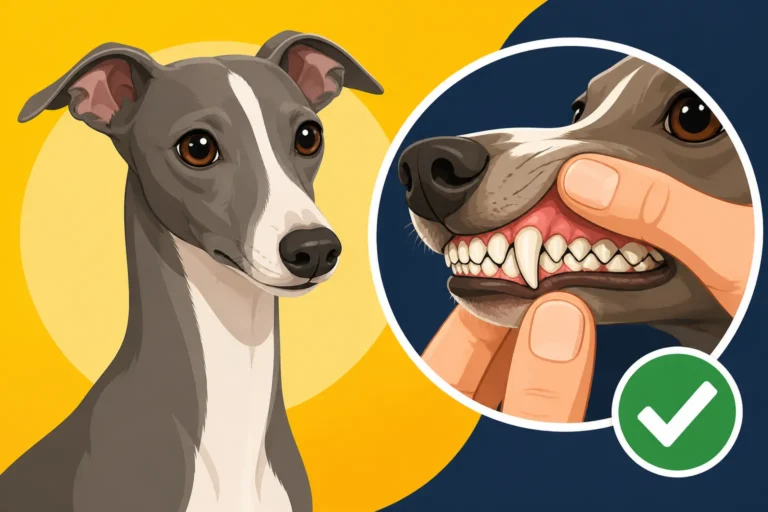
A veterinarian can assess body condition, muscle, dental comfort, and general health, then recommend whether to adjust food, monitor at home, or investigate further. That matters because a dog that appears thin may be losing muscle or struggling with a health issue, while a dog that looks round may have a different body shape or posture than expected. Avoid comparing your Italian Greyhound with a single breed photo or using an online chart as a diagnosis.
Chewy can be a convenient place to keep track of the food you’ve purchased, but the most useful record is the full picture: what your dog eats, how much, how often, and how its weight and body condition change. Bring that information to your veterinary appointment. Your dog’s healthy number is the one that fits its individual build and supports steady energy, comfortable movement, and good overall health.
Disclaimer
This article is for general informational purposes only and does not constitute professional advice. Laws, prices and regulations vary by location and change over time. Consult a qualified professional for guidance on your specific situation.