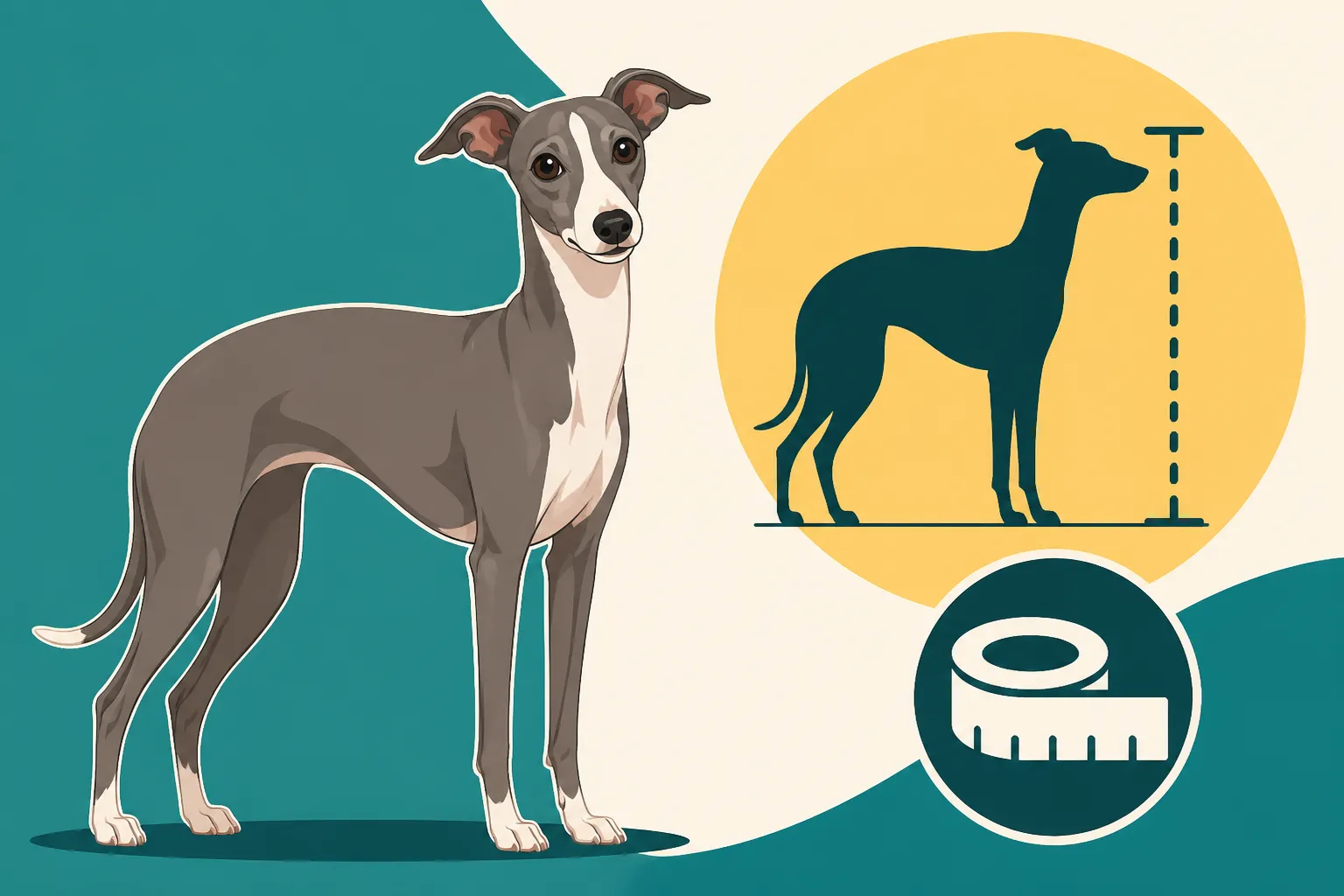
What Height the Italian Greyhound Standard Asks For
An Italian Greyhound’s height is easy to misjudge: a long neck, narrow chest, and delicate legs can make this little sighthound look taller or shorter depending on how it stands. The breed standard gives a specific measurement, but it is not a health test or a rule for loving your pet. Here’s where to measure, how registry standards differ, and what the number really means.
The height the Italian Greyhound standard asks for
The standard measurement is taken at the withers
The height of an Italian Greyhound is measured from the ground to the withers: the highest point of the shoulder blades, where the neck meets the back. It is not measured to the top of the head, the ears, or the highest point of the dog’s arched back.
That distinction matters because an Italian Greyhound can hold its head high and look considerably taller than its shoulder measurement. A dog that is stretching its neck to investigate a treat may appear to gain an inch, while a dog standing with its head lowered may look smaller. Neither posture changes its official height.
For a fair measurement, the dog should stand naturally on a level, firm surface, with its legs positioned comfortably beneath it. The measurement is taken vertically from the floor to the top of the shoulder. A dog that is crouching, leaning, or standing on a soft rug can be difficult to assess accurately.
The AKC standard calls for 13 to 15 inches
Under the American Kennel Club breed standard, the preferred height for an Italian Greyhound is 13 to 15 inches at the withers. The standard also specifies a weight limit of 15 pounds, provided the dog is in good condition. These are conformation guidelines, not a promise that every healthy Italian Greyhound will land at the same height or weight.
If you are comparing measurements across countries, check which registry’s standard is being discussed. The Fédération Cynologique Internationale standard describes a height range of 32 to 38 centimetres for both males and females. That is close to the AKC range, but the figures and wording are not identical. A dog’s recorded height can therefore be interpreted in the context of the registry and show rules being used.
| Measurement detail | What to know |
|---|---|
| Where height is measured | From the floor to the withers at the shoulder |
| AKC preferred height | 13 to 15 inches |
| FCI height range | 32 to 38 centimetres |
| What is not included | Head, ears, or the height of a raised neck |
| What the measurement tells you | A conformation measurement, not a complete health assessment |
For a broader look at expected adult size, see How Tall an Italian Greyhound Stands and What an Italian Greyhound Weighs and How Tall It Stands. Height is only one part of the picture: proportions, movement, and overall condition help explain why two dogs with similar measurements can look quite different.
The number is a breed guideline, not a verdict on your pet
A standard is used to describe the desired characteristics of a breed and guide judging in conformation shows. It is not a pass-or-fail test for a companion dog. If your Italian Greyhound is a little outside the preferred range, that alone does not mean the dog is unhealthy, poorly bred, or somehow less of an Italian Greyhound.
This can be a real worry for owners who measure a beloved dog and discover that the result differs from what they expected. A small difference may come from how the dog stood, where the measuring point was placed, or which registry’s standard you had in mind. Even an accurate measurement is best understood alongside the dog’s body condition, movement, and veterinary assessment.
A show judge evaluates a dog against the applicable breed standard. A veterinarian, on the other hand, is concerned with the individual dog’s health and function. Those are related but different questions. A height measurement by itself cannot diagnose a growth problem or determine whether a dog needs treatment.
How to measure an Italian Greyhound at home
Set up the dog before reaching for the tape
Choose a level, non-slip surface and wait until your dog is standing calmly. Many Italian Greyhounds are more comfortable when they are not being fussed over, so a quiet moment after a walk or meal may work better than trying to measure during a burst of excitement.
If your dog tends to slide on tile or hardwood, place a stable mat under their feet. A non-slip surface can make it easier for the dog to stand naturally instead of bracing or shifting. If you’re looking for pet-safe household gear, a retailer such as Chewy may be one place to compare mats, but the important thing is that the surface stays flat and does not bunch underfoot.
Have a helper offer a treat at the dog’s nose level if that encourages a steady stance. Avoid holding the treat too high: that can pull the neck upward and change the posture you are trying to assess. Keep the dog standing rather than sitting, and do not force the legs into an unnatural position just to make the measurement look tidy.
Use the withers as your reference point
A height-measuring stick or a carpenter’s level can help you identify the top of the shoulder and keep the measurement vertical. If you only have a flexible tape, take care not to follow the curve of the dog’s neck or back. The goal is a straight vertical distance from the floor to the withers, not a measurement along the body.
A common mistake is measuring to the top of the head. Another is placing the tape on the shoulder but angling it toward the dog’s feet. Either can produce a number that has little use for comparing the dog with a breed standard. If the result seems surprising, pause and repeat the measurement rather than assuming the first attempt is correct.
If you’re sourcing a simple measuring tool or a stable surface through Chewy, focus on practicality rather than specialty features. A basic tool that lets you take a straight, repeatable measurement is more useful than an elaborate setup your dog dislikes. For a dog that becomes anxious when handled, take a break and try again later.
Repeat the measurement without turning it into a contest
Take more than one reading, giving your dog time to relax between attempts. If the measurements differ, check that the dog was standing on the same level surface and that you used the same point at the shoulders each time. A helper can watch the dog’s stance while you handle the measuring tool.
Home measurements are useful for tracking growth or checking whether your method is consistent. They are not a substitute for an official measurement at a conformation event, where the dog is assessed under the applicable show rules. If you need a formal measurement for a particular purpose, ask the relevant registry or event organizer how it is taken.
It can also help to write down the date, the measurement, and any notes about posture or equipment. That way, if a later number looks different, you can tell whether the dog has actually changed or whether the measuring conditions changed. For puppies, changes over time are expected; a single reading does not tell the whole story.
Why Italian Greyhounds can look taller or shorter than they are
Their outline creates optical illusions
Italian Greyhounds have a distinctive, slender outline: long legs, a deep chest, a tucked-up abdomen, and an elegant neck. Those proportions can make the dog appear taller than the measured height suggests. Conversely, a dog standing with a lowered head, bent legs, or a rounded posture may look shorter.
Movement also affects what you see. The breed’s characteristic high-stepping gait can make the legs seem especially long in motion. The standard’s description of structure and gait helps explain why height cannot be judged reliably from a quick glance. For more on how movement fits into the breed picture, see The High Stepping Gait That Marks a Correct Italian Greyhound.
Compare dogs only when they are standing in similar positions and viewed from a similar angle. A photo taken from above can make a dog look smaller, while a low camera angle can exaggerate height. Coat, posture, and camera distance all change how the dog appears without changing the actual measurement.
Age and development affect what you see
A young Italian Greyhound’s height changes as the puppy grows. Legs can seem to lengthen quickly, while the rest of the body takes time to develop in proportion. It is normal for a puppy to look somewhat awkward during growth, and that temporary appearance does not reliably predict the dog’s final outline.
If you are following a puppy’s development, measure under similar conditions and keep the results as informal notes rather than treating them as a forecast. Growth patterns vary between individuals. A breeder or veterinarian can help you understand whether your puppy’s development seems appropriate when considered alongside weight, body condition, and general health.
For more context on growth, see The Age an Italian Greyhound Stops Growing. Do not try to influence a puppy’s adult height with supplements or extra food. Nutrition should be appropriate for the dog’s age and health, and any concern about growth is best discussed with a veterinarian.
Height does not explain the whole build
A dog’s height does not tell you everything about its proportions, bone structure, muscle, or condition. Two Italian Greyhounds at the same height may differ in chest depth, body length, and overall appearance. Likewise, a dog that looks particularly fine-boned is not automatically healthier or more correct.
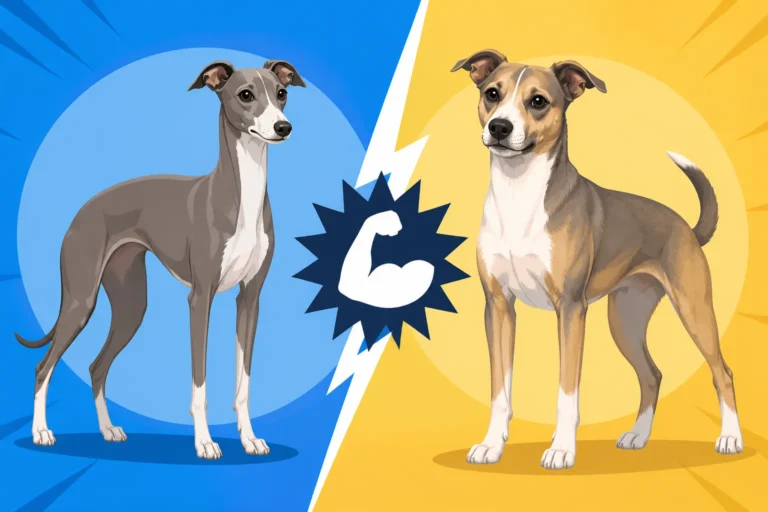
This is one reason a height figure should not be used alone to judge a dog’s quality. Breed standards describe a combination of characteristics, while health depends on much more than appearance. If you’re comparing an Italian Greyhound with a Whippet or Greyhound, remember that these are different breeds with different expected sizes and proportions. The Italian Greyhound Against the Whippet and the Greyhound offers more on those distinctions.
The same caution applies to weight. A particular height does not automatically mean a dog should weigh a particular amount, because body condition and build matter. For related guidance, see What Weight Range an Italian Greyhound Should Fall In. If you are concerned that your dog is too thin or carrying excess weight, ask your veterinarian to assess body condition rather than relying on height alone.
What height means for shows, breeding, and everyday life
Show eligibility depends on the rules being applied
When people ask whether a taller Italian Greyhound can be shown, the answer depends on the registry’s rules and the event. In the AKC standard, dogs over 15 inches are disqualified from conformation competition. That is a show rule; it does not mean that a taller dog is automatically unhealthy or unsuitable as a companion.
If showing is your goal, confirm the standard and measurement procedure with the registry and show organization involved. Avoid relying on a casual home measurement to decide whether a dog is eligible. The dog may stand differently during an official measurement, and a small difference in technique can affect the result.
For a closer look at the show question, read Whether an Oversized Italian Greyhound Can Be Shown. The key point is that a conformation decision is about how the dog fits a particular standard, not a general judgment of the dog’s value or the care it deserves.
Height should not be the only factor in choosing a puppy
A puppy’s predicted adult height is only one consideration when choosing an Italian Greyhound. Responsible breeders should be able to discuss health, temperament, structure, and the likely range of adult size in their lines. Even with careful breeding, no one can guarantee the exact height an individual puppy will reach.
Ask what measurements the breeder uses, how adult relatives are built, and whether the puppy’s parents have been evaluated for relevant health concerns. A conversation focused only on finding the smallest or most delicate puppy misses more important questions about soundness and welfare. A correct-looking dog should not be selected at the expense of health or stable temperament.
The question Whether a Correct Italian Greyhound Looks Fragile is useful if you’re trying to understand the difference between a fine, elegant outline and a dog whose size or structure raises concerns. Smallness alone is not a measure of quality.
For a pet, comfort and function matter more than inches
For everyday ownership, height is most useful when it helps you plan practical things such as a safe resting area, a well-fitting harness, or a comfortable way to get on and off furniture. But height alone rarely determines fit. Measure the dog’s neck, chest, back, and weight when choosing equipment, and follow the product’s own sizing guidance.
A harness that fits a taller dog poorly can still rub or allow an escape, while a coat that matches the dog’s height may be wrong for its chest and back length. If you shop for pet clothing or walking gear through Chewy, use your dog’s actual body measurements rather than selecting a size based on height alone. Check the fit gently, especially around the shoulders and under the front legs.
Most importantly, don’t let a measurement make you anxious about a healthy companion. An Italian Greyhound does not need to match a show-ring number to be an affectionate, energetic, and very much loved member of the household. The standard is useful context; your dog’s comfort, health, and individual needs come first.
Disclaimer
This article is for general informational purposes only and does not constitute professional advice. Laws, prices and regulations vary by location and change over time. Consult a qualified professional for guidance on your specific situation.