The Age an Italian Greyhound Stops Growing
An Italian Greyhound may look nearly full-grown before its puppy energy, proportions, and appetite settle down. That can make it hard to tell whether your dog is still growing, simply filling out, or falling outside a healthy pattern. This guide explains when Italian Greyhounds usually reach adult size, what changes after their height stops increasing, and when to ask your veterinarian about growth.
When an Italian Greyhound Usually Stops Growing
Height often settles before the dog looks fully mature
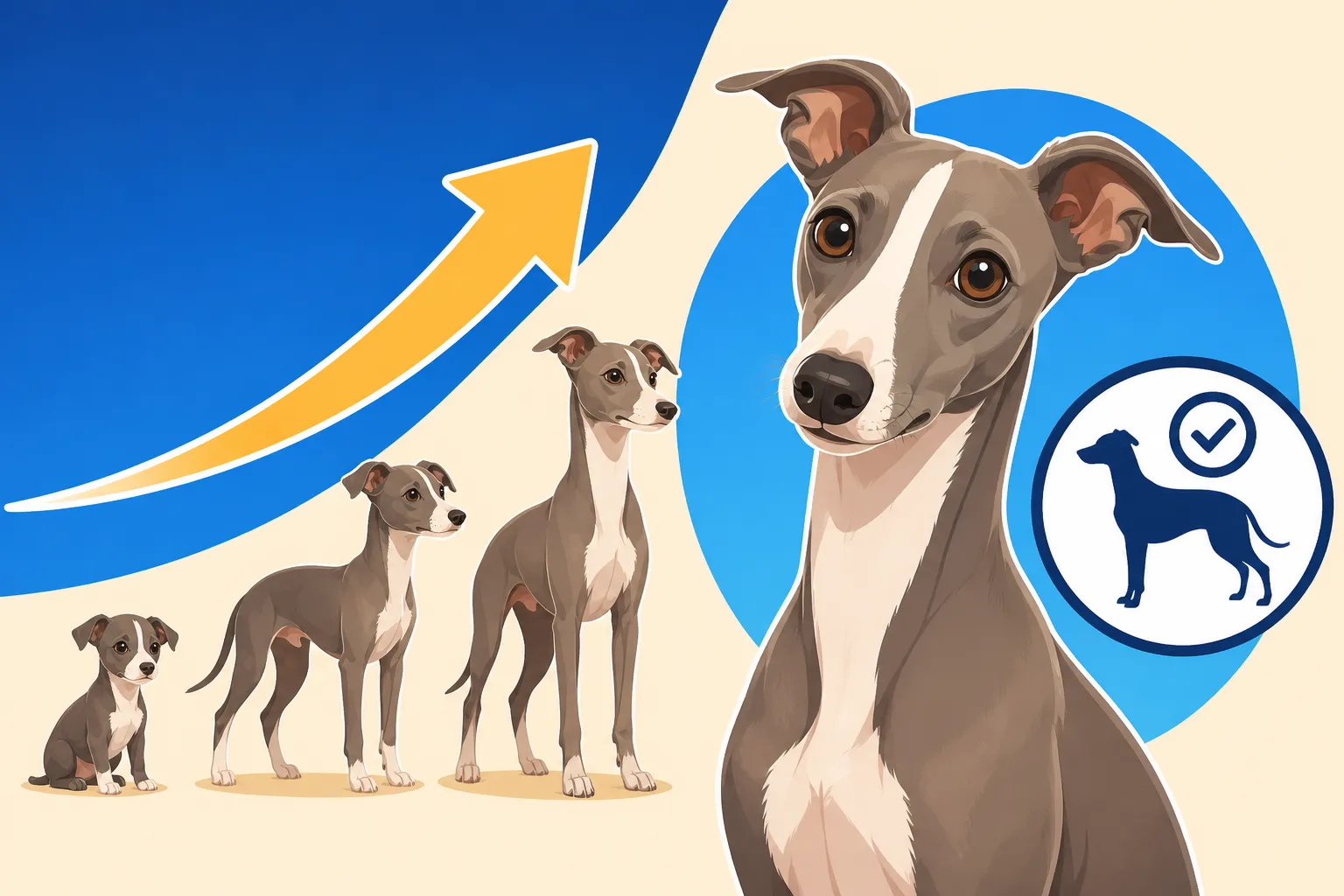
Most Italian Greyhounds reach close to their adult height during the first year of life. Many are near their final height by about 8 to 12 months, though the timing varies from puppy to puppy. A dog may still gain a little height after its first birthday, but a sudden, steady upward growth spurt is less typical at that stage.
Breed standards describe a small, fine-boned dog, but individual dogs do not all develop on the same schedule. Genetics, nutrition, health, and the puppy’s starting size all play a part. If you are comparing your dog with a littermate or a photo online, remember that two healthy Italian Greyhounds can look quite different while growing.
It can help to record your puppy’s height every few weeks rather than trying to judge it by eye. Stand your dog on a level surface and measure from the floor to the top of the shoulder area, using the same method each time. A single measurement can be off because a wiggly puppy may crouch, stretch, or shift its weight. A pattern across several measurements is more useful.
For background on adult proportions and breed measurements, see What an Italian Greyhound Weighs and How Tall It Stands and The Age an Italian Greyhound Stops Growing.
Body condition can keep changing after height levels off
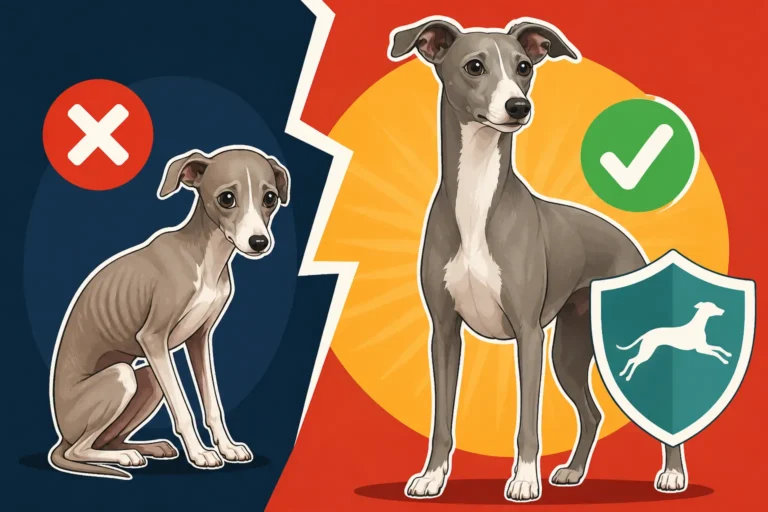
A puppy who has stopped getting taller may still be developing. The chest can deepen, the body can gain muscle, and the overall outline may become more adult-looking over the next several months. Young Italian Greyhounds can seem especially leggy and narrow, so owners sometimes mistake normal puppy proportions for a sign that the dog is underweight.
A useful distinction is whether your dog is changing in height or changing in shape. If the shoulders remain about the same height but the chest and muscles gradually develop, that may be ordinary maturation. If you are unsure whether your puppy is too thin or simply built like a young sighthound, ask your veterinarian to assess body condition rather than relying on appearance alone.
Italian Greyhounds are naturally lean. You may be able to feel the ribs without seeing every rib sharply outlined, but the right body condition depends on the individual dog. Do not try to “bulk up” a growing puppy by feeding extra food without guidance; excess weight can put unnecessary strain on a small frame. For help judging body condition, What an Italian Greyhound Weighs and How to Tell If It Is Right explains what to look for.
A practical growth timeline
The table below is a broad guide, not a promise that every puppy will follow the same timetable. Your dog’s veterinarian can put growth in context with body condition, health history, and family size.
| Approximate age | Common growth pattern | What owners can track |
|---|---|---|
| 8 to 16 weeks | Rapid early growth; puppy proportions are pronounced | Weight, appetite, energy, and regular veterinary checks |
| 4 to 6 months | Continued growth in height and length; legs may look especially long | Weight trend and whether the puppy is eating and acting normally |
| 6 to 12 months | Growth often slows; many dogs approach adult height | Height, body condition, and changes in muscle and chest |
| 12 to 18 months | Some dogs continue filling out and maturing | Weight stability, activity, and any unexpected changes |
| After maturity | Size is generally stable; weight can still change with lifestyle or health | Periodic weight checks and body-condition assessment |
What Affects an Italian Greyhound’s Adult Size
Genetics and family size
A puppy’s parents and close relatives offer clues about the size it may reach, but they cannot provide an exact prediction. Even puppies from the same litter may end up at different heights and weights. A breeder may be able to share how earlier puppies from the same lines developed, which can give you a more helpful reference than comparing your dog with a general online chart.
If you are choosing a puppy, be wary of anyone promising an unusually tiny adult size as a selling point. Predicting exact adult weight is difficult, and deliberately seeking the smallest possible dog can encourage unhealthy expectations. Italian Greyhounds are already fine-boned; a puppy’s health and sound development matter more than a particular number on the scale.
A responsible breeder should be willing to discuss the parents’ sizes and health history. If you are still researching where to get a puppy, What an Italian Greyhound Breeder Should Have Tested covers health screening, while What Height the Italian Greyhound Standard Asks For gives context for the breed’s expected proportions.
Nutrition and health during puppyhood
Puppies need an appropriate, balanced diet to support development. Feeding too little can leave a dog without the nutrition it needs, while routinely feeding too much can contribute to excess weight. Neither approach is a good way to influence adult height. Follow the food’s feeding guidance as a starting point, then adjust with your veterinarian based on your puppy’s growth, body condition, and activity.
When comparing puppy foods, read the life-stage label and ask your veterinarian whether the formula suits your dog. Chewy product listings may help you review ingredients and feeding directions, but a product page cannot assess your individual puppy’s nutritional needs. If your dog has a sensitive stomach, a poor appetite, or a medical condition, get veterinary advice before making a major change.
Health problems can also affect growth or appetite. A puppy who is not gaining as expected, loses weight, seems unusually tired, or has persistent vomiting or diarrhea should be checked by a veterinarian. These signs do not automatically mean that growth is abnormal, but they deserve attention rather than an attempt to fix the issue by adding food or supplements.
Exercise and safe development
Normal play and age-appropriate activity help a puppy build coordination and strength, but exercise should not be used to force a particular body shape. Italian Greyhound puppies are lively and may sprint around the house, then settle down for a long nap. Let your puppy rest, avoid pushing through fatigue, and keep play in safe spaces where footing is stable.
Because the breed is small and fine-boned, take care with falls, rough play, and leaps from furniture. That caution is about preventing injury, not preventing normal growth. A puppy can be energetic and still need close supervision around larger dogs, children, stairs, and slippery floors. The Age an Italian Greyhound Is Most Likely to Break a Leg discusses a risk owners should understand while their dog is young.
How to Track Growth Without Becoming Anxious
Weigh consistently and look at the trend
A weekly or occasional weight check can help you see whether your puppy is following a steady pattern. Use the same scale when possible and weigh at roughly the same time of day, since meals and bathroom breaks can shift the number slightly. For a small puppy, a household scale may not register changes reliably; your veterinary clinic can help with accurate weighing.
Write down the date and weight rather than relying on memory. If the number rises gradually while your dog remains energetic and comfortable, that can be more reassuring than one isolated reading. If weight drops, stalls unexpectedly, or increases rapidly, bring the record to your veterinarian. A simple log gives the clinic useful context and helps avoid making decisions based on guesswork.
A product listing or feeding chart can be a reference, but it should not replace an individual assessment. For example, Chewy may show suggested feeding amounts for a food, yet your puppy’s age, activity, body condition, and health can all affect what is appropriate. Ask your veterinarian how often to weigh your dog and what changes they want you to report.
Keep notes on more than height and weight
Growth is not just a number. Note appetite, stool quality, energy, coat condition, and whether your puppy seems comfortable during movement. A dog who is steadily growing but acting normally is different from one whose weight is changing alongside poor appetite, low energy, or digestive symptoms.
At routine appointments, ask the veterinarian to assess body condition and discuss whether your puppy is ready to transition from puppy food to an adult formula. The timing can vary, so avoid switching only because your dog has reached a certain age or appears close to full height. When an Italian Greyhound Moves to Adult Food offers more on that transition.
If you use a growth chart, treat it as a way to spot a trend, not a pass-or-fail test. Individual dogs do not always match a single curve. A healthy puppy may be smaller or larger than an online example and still be developing appropriately.
Avoid supplements and extra food as growth shortcuts
Calcium, vitamins, and other supplements should not be added just because a puppy looks slender or seems small. A complete puppy diet is designed to provide nutrients in a balanced proportion, and unnecessary supplements can create problems rather than improve growth. Ask your veterinarian before adding anything, including products marketed for bones, joints, or weight gain.
Likewise, do not increase portions simply to make your puppy look less leggy. Italian Greyhounds are supposed to have a light, elegant build, and extra body fat does not make their bones stronger. If the concern is that your puppy is not growing, the right next step is a veterinary assessment—not an improvised feeding plan.
When to Ask a Veterinarian About Growth
Changes that deserve a call
A puppy’s growth may be uneven, but certain changes are worth discussing promptly: a sudden loss of weight, a prolonged lack of gain, persistent appetite problems, repeated digestive upset, or a noticeable drop in energy. A limp, pain, or reluctance to move also needs veterinary attention, especially in a young Italian Greyhound.
Do not wait for a puppy to become visibly ill before asking about a growth concern. A veterinarian can review diet, examine your dog, and decide whether further investigation is needed. Bring your weight log, food details, and notes about appetite or behavior; those specifics make the conversation more productive.
If you are unsure whether your puppy is simply small or showing a health issue, describe what has changed and when. “She has always been small” is different from “her weight has dropped over the last few weeks and she has stopped finishing meals.” Clear timelines help your clinic understand the concern.
Questions to bring to the next appointment
A few direct questions can make a routine visit more useful:
- Is my puppy’s current body condition appropriate?
- Does the weight trend look steady for this dog?
- Should I adjust the amount or type of food?
- When should we discuss switching to adult food?
- Are there signs that would mean I should call sooner?
You can also ask the clinic to show you how to assess your dog’s body condition at home. That is often more useful than aiming for a specific adult weight, especially when growth is still underway. If you shop through Chewy or another retailer, keep the food label handy so your veterinarian can review the exact formula and feeding directions.
Most Italian Greyhounds reach close to adult height within their first year, then continue to mature in build and condition. The best way to judge your puppy is not by a single birthday, online chart, or comparison with another dog, but by steady records and regular veterinary guidance. If growth seems unusually slow or is paired with changes in appetite, energy, or comfort, check in with your veterinarian.
Disclaimer
This article is for general informational purposes only and does not constitute professional advice. Laws, prices and regulations vary by location and change over time. Consult a qualified professional for guidance on your specific situation.