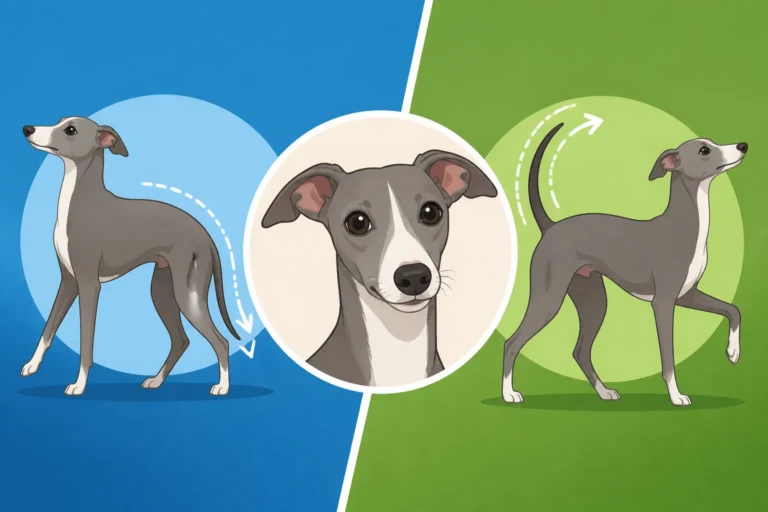
How Italian Greyhound Standards Differ Between Countries
A show entry can become confusing when an Italian Greyhound bred under one country’s rules is judged under another country’s standard. Height limits, accepted colors, and even the wording used to describe the dog may differ. This guide explains what those differences mean, which details matter in the show ring, and how to check the right standard before you buy, travel, or enter a dog.
Why Italian Greyhound standards differ by country
A breed standard is a written description of the ideal dog for that registry or kennel club. It helps judges assess structure, movement, coat, and temperament. It is not a universal measurement sheet, and the same breed may be described somewhat differently by different organizations.
Standards also sit within different registration and judging systems. A dog may be registered in one country, compete in another, and be evaluated under the rules of the show it has entered. That is why “my dog meets the standard at home” is not always a complete answer when crossing borders.
The registry and show rules both matter
Start by identifying the organization that governs the event. In the United States, the American Kennel Club has its own Italian Greyhound standard. In the United Kingdom, The Royal Kennel Club publishes the standard used within its system. Many other countries use standards linked to the Fédération Cynologique Internationale, or FCI, sometimes alongside national rules and local show regulations.
The standard used for judging is generally the one adopted by the organization running the show. A dog’s country of birth, registration papers, or breeder’s location does not automatically determine the standard under which it will be judged abroad. If you plan to compete, confirm the event’s requirements with the show organizer or the relevant national kennel club rather than relying on a breeder’s summary.
It also helps to distinguish between registration and eligibility. Registration records a dog with a particular organization; it does not guarantee that every other registry will accept the dog in the same way or that the dog meets every show’s entry requirements. If you are moving or importing a dog, check both the paperwork process and the judging standard.
For a useful foundation on the breed’s shape and proportions, compare The Italian Greyhound Against the Whippet and the Greyhound with the written standard used by the event you have in mind. The comparison can help you understand the breed’s identity, but it is not a substitute for the actual rules.
The basic ideal is shared, but the wording is not
Across major standards, the Italian Greyhound is generally described as a fine-boned, elegant, small sighthound. Its outline is meant to look balanced and athletic rather than weak, and its movement should be free and purposeful. The standards may express these ideas in different terms, or put more emphasis on particular features.
That variation can make a translated standard seem more different than it really is. One document may describe a body proportion precisely, while another uses broader language about elegance or balance. The judge’s job is to interpret the whole dog against the standard, not to reward a single measurement or a dramatic-looking feature in isolation.
This is why the phrase “correct Italian Greyhound” can be misunderstood. A dog can look delicate without being structurally unsound, and a heavier-looking dog is not automatically better built. If you are trying to understand that balance, Whether a Correct Italian Greyhound Looks Fragile offers helpful context on the breed’s naturally fine appearance.
The clearest differences to compare
Some differences between country standards are easy to spot on paper. Height ranges, weight descriptions, and color rules are among the most practical details to check before entering a show or choosing a puppy. They are not the only things a judge evaluates, but they can affect whether a dog fits the written description.
| Feature | What may differ between standards | What to check |
|---|---|---|
| Height | The permitted range or how height is described | The exact standard used by the show |
| Weight | A stated range, a maximum, or no firm limit | Whether weight is a formal criterion or general guidance |
| Color | Which colors are accepted and how markings are treated | The wording on color and disqualifications |
| Proportions | The language used for body length, topline, and outline | The complete standard, not a short summary |
| Movement | How gait and action are described | Whether the standard emphasizes reach, drive, or overall freedom |
| Eligibility | Registration and entry rules | The event organizer’s current entry instructions |
Height and weight are not interchangeable measures
Height is usually measured at the withers, the point where the top of the shoulders meets the neck. The measurement can be affected by how the dog is standing, the surface beneath it, and the accuracy of the measuring method. A dog that appears tall or short beside another dog is not necessarily outside the written range.
Some standards specify a height range in inches, while others use centimetres. You may see different unit systems even when the underlying description is similar. Use the official figure for the standard in question rather than converting from a social media post or relying on a rounded number. For an overview of the measurement itself, see What Height the Italian Greyhound Standard Asks For.
Weight can be trickier because standards do not all treat it in the same way. One may give a weight range or maximum, while another may place greater emphasis on proportion and condition. A number by itself also says little about whether an individual dog is healthy or appropriately built. What Weight Range an Italian Greyhound Should Fall In explains why weight needs to be considered alongside the dog’s frame and body condition.
If you are comparing standards for a puppy, remember that a young dog is still growing. Adult expectations should not be applied as though they were a prediction of a puppy’s final show career. A reputable breeder can explain the size of the parents and relatives, but no single measurement guarantees how a puppy will mature.
Color rules can be noticeably different
Color is one of the areas where national standards can diverge more visibly. Some standards permit a broad range of colors, with specified exceptions. Others describe a narrower set of accepted colors and may limit where white markings can appear. A color that is acceptable in one registry may not be treated identically in another.
Read the exact language carefully. “Color permitted” and “color preferred” are not the same thing, and a rule about a marking may be more specific than a general statement about coat color. It is also worth checking whether the wording is a disqualification, a fault, or simply a description of the preferred appearance. Those terms have different consequences in a show context.
Color rules are about conformation-show judging, not a straightforward prediction of temperament or overall health. A coat color alone does not tell you whether an individual dog has been responsibly bred or well cared for. To explore the subject more fully, compare Which Colors the Italian Greyhound Standard Accepts and Whether a Blue Italian Greyhound Is Standard.
If a breeder says a particular color is “not allowed,” ask which country’s standard they mean and whether they are referring to show eligibility, registration, or their own breeding preference. Those can be three separate claims. A clear answer should identify the organization and point you to its written standard.
How to compare standards without getting lost in details
When two standards use different wording, it is tempting to treat every difference as a contradiction. Often, though, the documents share the same broad picture of the breed and differ in how precisely they describe a feature. A side-by-side comparison is more useful than relying on memory or a forum comment.
Read the complete standard, not a breeder’s shorthand
Look at the official standard from the kennel club or federation that governs the show. Read the full document, including sections on general appearance, head, body, limbs, movement, coat, color, and temperament. A short summary may leave out an exception or make a preference sound like a strict rule.
Pay particular attention to the wording around faults and disqualifications. A fault may affect a judge’s evaluation, but it does not necessarily make a dog ineligible to compete. A disqualification is more serious and may prevent a dog from being shown under that organization’s rules. If the distinction is unclear, ask the relevant club or show organizer rather than guessing.
Keep a copy of the relevant standard with your show notes. If you are traveling, check that you have the version used for the event and confirm any entry requirements directly with the organizer. A printed standard from a different registry can still be informative, but it should not be treated as the governing document.
Compare features one at a time
A simple comparison process makes the differences easier to interpret:
- Identify the kennel club or federation responsible for the show.
- Find its official Italian Greyhound standard.
- Note the stated height and any weight guidance.
- Compare the color rules and the wording for markings.
- Review the descriptions of proportions, topline, limbs, and movement.
- Check the show’s entry rules separately from the breed standard.
- Ask the organizer or breed club about any point that remains unclear.
For example, imagine a family moving from one country to another with an Italian Greyhound they hope to show. They should not assume the dog’s existing registration settles every question. They need to check how the new organization handles imported registrations, which standard applies at the show, and whether the dog’s color and measurements fit that standard.
The comparison should also consider the whole dog. A height figure does not explain whether the dog is balanced, and a coat description does not replace evaluation of movement or structure. For more on how movement fits into the breed picture, see The High Stepping Gait That Marks a Correct Italian Greyhound.
What these differences mean for owners and future show dogs
For most pet owners, country-to-country differences in the breed standard will not change daily care. They become more relevant when choosing a puppy with show potential, importing a dog, breeding, or entering conformation events. Even then, the standard is only one part of responsible ownership.
Choosing a puppy for showing or companionship
If you are buying a puppy with the hope of showing it, ask the breeder which registry’s standard they use and where their puppies are likely to be shown. Ask how they assess structure, movement, and temperament, and whether they can explain any differences between local standards and those in other countries. A thoughtful breeder should be able to discuss the standard without promising that a particular puppy will become a champion.
If your main goal is a companion, a show standard can still help you understand the breed’s intended form, but it should not become a checklist that outweighs health, temperament, and fit with your household. A puppy that is not destined for the show ring can still be a wonderful Italian Greyhound. Likewise, a dog that fits a written description still needs appropriate veterinary care, safe exercise, and patient training.
Historical changes in breed preferences and standards can also help explain why descriptions vary. How Italian Greyhound Type Has Changed Since 1900 provides useful background on how breed type has developed over time. That context is helpful, but the standard in force for the show remains the one that matters for judging.
Preparing for travel and everyday ownership
If you are traveling to a show, keep the practical arrangements separate from the standard itself. Confirm entry paperwork, identification, travel requirements, and a safe plan for keeping your dog comfortable. A fine-coated Italian Greyhound may need familiar bedding and clothing in cool conditions, but those needs are part of care, not conformation rules.
For routine supplies during a move or trip, retailers such as Chewy may be useful where available for replenishing familiar food, cleaning supplies, or basic accessories. Chewy is not a source for official breed standards, registration rules, or show eligibility, so use the relevant kennel club for those questions. Planning supplies through Chewy can address an everyday travel frustration, but it should not be confused with preparing a dog for judging.
Owners comparing products for a new home may also find Chewy useful for ordinary care items, while verifying sizing and suitability for their individual dog. The key is to keep the roles clear: the kennel club explains the standard, the show organizer explains entry requirements, and a retailer such as Chewy may help with practical supplies.
Questions to ask before entering abroad
Before you commit to a show, ask the organizer which standard will be used and whether foreign registrations are accepted. If you are uncertain about a measurement or color rule, ask the question in writing and keep the response with your entry records. That small step can prevent a frustrating surprise after travel plans are already made.
If you are purchasing a puppy internationally, ask which registry the breeder uses, what documentation accompanies the dog, and whether the puppy’s registration can be transferred or recognized where you live. Be wary of broad promises such as “this dog meets every country’s standard.” Standards and administrative rules differ, and responsible answers should name the specific organization and explain the limits of the claim.
The most reliable approach is to treat country standards as related but not interchangeable documents. Learn the shared breed ideal, then verify the details with the registry governing the decision you need to make. That keeps measurements, color rules, and eligibility in perspective—and lets you focus on the dog in front of you rather than on conflicting snippets from different sources.
Disclaimer
This article is for general informational purposes only and does not constitute professional advice. Laws, prices and regulations vary by location and change over time. Consult a qualified professional for guidance on your specific situation.