Whether an Italian Greyhound Mix Is Sturdier
An Italian Greyhound mix may look broader or more solidly built than a purebred Italian Greyhound, but mixed ancestry does not guarantee stronger bones or fewer injuries. A dog’s adult size and sturdiness depend on the other parent, inherited traits, growth, health, and everyday care. This guide explains what “sturdier” can mean, what to assess, and how to choose and care for a mix realistically.
What Sturdier Means in an Italian Greyhound Mix
A broader body is not the same as stronger bones
People often use “sturdier” to mean a dog with a wider chest, thicker legs, a heavier frame, or a less delicate appearance. Those features can make a dog look more robust, but appearance alone cannot tell you how strong its bones are or how likely it is to be injured. A well-muscled dog can still have a fracture, while a fine-boned dog may remain healthy and active with appropriate care.
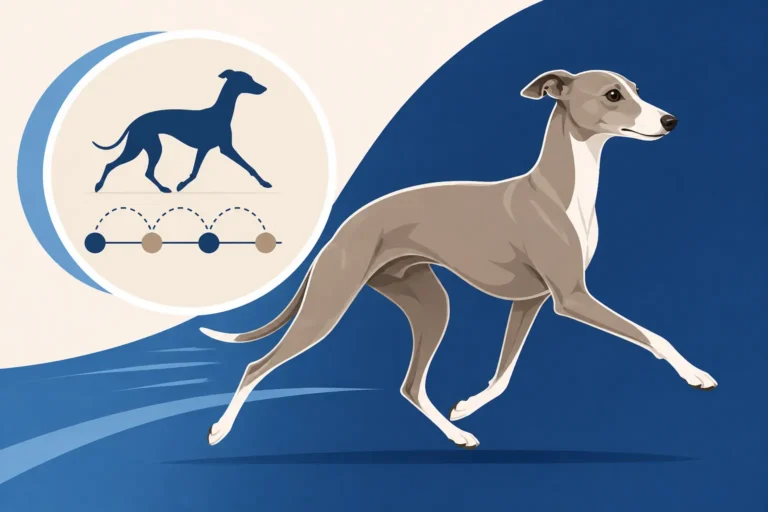
Italian Greyhounds are small, athletic sighthounds with a naturally lean outline. Their visible ribs and tucked-up waist can look alarming to someone used to a stockier dog, but a slim silhouette is not automatically evidence of weakness or poor health. For a helpful comparison, see What an Italian Greyhound Weighs and How Tall It Stands and Whether a Correct Italian Greyhound Looks Fragile.
A mix may inherit a heavier build from its other parent, but that does not mean it will inherit every trait associated with that breed. In the same litter, one puppy may have a narrow sighthound frame, while a sibling grows into a broader, more compact adult. Even full siblings can vary in height, weight, leg shape, coat, and athleticism.
Sturdiness has several parts
When considering whether an Italian Greyhound mix is sturdier, separate the question into a few practical measures:
| What you mean by sturdier | What to look at | What it cannot tell you by itself |
|---|---|---|
| Broader or heavier build | Adult body shape, leg proportions, and overall condition | Bone density or fracture risk |
| Greater physical resilience | Health history, movement, and recovery from normal activity | Whether the dog will never be injured |
| Better suited to rough play | Size match, play style, and ability to disengage | Whether every dog of a breed is safe to play with |
| Lower risk of leg injury | Growth, environment, activity, and veterinary assessment | A guarantee based on mixed ancestry |
The most useful question is not simply, “Is this mix sturdier?” It is, “What traits did this particular dog inherit, and what does it need to stay safe?” That shift matters because “mix” describes ancestry, not a predictable body type or health outcome.
How the Other Parent Can Affect a Mix
Size and shape depend on inherited traits
The other parent can influence an Italian Greyhound mix’s adult size, chest depth, muscle, head shape, and leg proportions. A cross with a somewhat larger, more substantial dog may produce a puppy that grows heavier or broader than a typical Italian Greyhound. But the outcome is not a simple average of the parents. A puppy can inherit a mixture of traits that does not closely resemble either parent.
Even a cross that appears predictable on paper can produce variation. One dog may have the narrow shoulders and long limbs of an Italian Greyhound, while another may have a shorter body and more substance. Coat color and markings are visible early, but adult build takes time to emerge. A puppy’s current chunkiness, paw size, or apparent bone thickness should not be treated as a reliable forecast of strength.
For more detail on why mixed dogs can differ so much in appearance, read Whether an Italian Greyhound Mix Keeps the Build. If you are comparing a potential cross with another sighthound, How an Italian Greyhound Differs From a Whippet can help clarify the differences in typical size and structure.
Crossbreeding does not guarantee better health
A mixed-breed dog may benefit from a wider range of inherited traits, but “hybrid vigor” is not a promise that an individual dog will be healthier, sturdier, or free from inherited conditions. A mix can inherit a health concern from either parent, and some risks may occur in both breeds. Responsible breeding depends on the health and temperament of the individual parents, not just the fact that they belong to different breeds.
Ask for the parents’ veterinary and health history, and find out what screening was appropriate for each parent’s breed and family line. A responsible breeder should be willing to discuss known concerns, explain why particular dogs were paired, and provide clear records. A vague assurance that mixed puppies are “naturally healthier” is not a substitute for evidence. Which Italian Greyhound Crosses Are Bred Deliberately offers more context on planned crosses and why the details behind a pairing matter.
If you are considering adoption, ask the rescue or foster caregiver what they know about the dog’s medical history, adult size, movement, and behavior around other dogs. Some information may be unknown, especially for a young puppy. That uncertainty does not make a dog a poor choice; it simply means you should plan for a range of possible adult builds and needs.
Leg Injury Risk and Everyday Safety
A mix may still need careful handling
Italian Greyhounds have a reputation for delicate-looking limbs, and fractures can happen, particularly in young, active dogs. The risk for any one dog depends on more than breed label: age, activity, footing, body condition, the height and type of a fall, and the dog’s individual anatomy all matter. A broader-looking mix is not automatically protected from a fracture. For background on the breed’s vulnerability, see Why an Italian Greyhound's Leg Bones Break So Easily.
Puppies and adolescents need sensible management while they grow. That does not mean keeping them still or treating them as permanently fragile. It means reducing avoidable high-impact situations: jumping down from tall furniture, scrambling on slick floors, or playing at speed with a much larger dog that could bowl them over. As a young dog matures, the veterinarian can help you assess safe activity based on its development and health.
Pay attention to the home setup, too. Non-slip runners on smooth floors, a stable route on and off furniture, and calm introductions to energetic dogs can reduce some common mishaps. A ramp or steps are useful only if the dog will actually use them consistently; an unused ramp does not prevent a leap. For age-related context, see The Age an Italian Greyhound's Bones Finish Hardening.
Safe play matters more than a “tough” label
A sturdy build does not make a small dog a good match for every playmate. Differences in size, speed, and play style can create risk even when both dogs are friendly. A larger dog may cause an accidental collision or step on a smaller dog during a chase. Watch the interaction rather than assuming that a mixed-breed dog can handle rough play because it looks stockier.
Give dogs room to move, interrupt play before it becomes frantic, and make sure the smaller dog can take a break without being pursued. If one dog repeatedly pins, body-checks, or ignores the other’s attempts to stop, separate them and reset. Dog parks can be especially difficult when dogs of very different sizes are mixing freely. Why an Italian Greyhound Should Not Play With Large Dogs explains the concern in more depth.
At home, a comfortable harness and secure leash are useful for walks and controlled introductions. If you are browsing options through a retailer such as Chewy, measure the dog rather than choosing by a breed label; Italian Greyhound mixes can have unusual proportions, and a poor fit can rub or let the dog back out. A good fit should allow comfortable movement without pressure at the throat or behind the front legs.
Choosing and Caring for an Italian Greyhound Mix
What to ask before bringing a dog home
If you are speaking with a breeder, rescue, or foster caregiver, focus on the individual dog rather than a broad claim about the mix. Ask about the parents’ size and health, the puppy’s growth so far, any observed limping or injuries, and how the dog behaves around children and other dogs. For an adult dog, ask how it moves on different surfaces and whether it has a history of orthopedic problems.
If possible, watch the dog walk and trot on a safe, level surface. Look for comfortable, even movement rather than trying to diagnose its structure yourself. A puppy’s gait and proportions change as it grows, so one visit cannot predict its mature build with certainty. A veterinarian can assess body condition and discuss whether the dog’s movement or growth calls for follow-up.
Be cautious of anyone who promises that a specific cross will be “unbreakable,” “much healthier,” or guaranteed to avoid Italian Greyhound leg problems. No responsible person can promise that. If you want to learn more about the breed’s overall health considerations, see Whether the Italian Greyhound Is a Healthy Breed.
Set up the dog for the body it has
Once you bring a mix home, make everyday care fit the dog in front of you. Keep the dog at a healthy body condition, build activity gradually, and ask your veterinarian how to support safe growth if it is still young. Extra weight can place additional strain on joints and limbs, while overfeeding a puppy in an effort to make it “stronger” is not a reliable way to improve bone strength. Feed a complete, appropriate diet and discuss supplements with a veterinarian rather than adding calcium or other products on your own.
Pay attention to flooring, furniture, and play. If the dog is small and fast, secure doors and gates so it cannot bolt into a hazardous area. If it is long-legged and eager to jump, teach it to wait before getting on or off furniture and provide a safe route down. A retailer such as Chewy may offer a range of practical supplies, but choose based on your dog’s measurements, behavior, and home setup rather than assuming one size or style suits every Italian Greyhound mix.
Food and gear choices should not be driven by the mix’s label alone. A retailer such as Chewy can be one place to compare everyday supplies, but questions about diet, growth, limping, or injury prevention belong with your veterinarian. If your dog suddenly favors a leg, cries out, holds a limb oddly, or becomes reluctant to move, keep it calm and contact a veterinary clinic promptly. Some dogs may still try to run despite an injury, so apparent energy is not proof that everything is fine.
The realistic answer is that an Italian Greyhound mix may be broader or heavier than a purebred Italian Greyhound, but mixed ancestry alone does not make a dog sturdier. Look at the individual dog’s structure, health history, development, and behavior, then make practical choices around exercise, flooring, furniture, and play. That approach is far more dependable than relying on a breed label or a promise about what a cross will be like.
Disclaimer
This article is for general informational purposes only and does not constitute professional advice. Laws, prices and regulations vary by location and change over time. Consult a qualified professional for guidance on your specific situation.