Whether an Italian Greyhound Mix Keeps the Build
An Italian Greyhound mix may inherit the breed’s fine bones, deep chest, long legs, and tucked-up waist—but there’s no guarantee it will look like a smaller Italian Greyhound. The other parent’s size and body type matter, and puppies in the same litter can grow into noticeably different adults. This guide explains what may carry through, what is hard to predict, and how to plan for your dog’s eventual build.
What an Italian Greyhound Mix May Inherit
The Italian Greyhound outline is more than a small frame
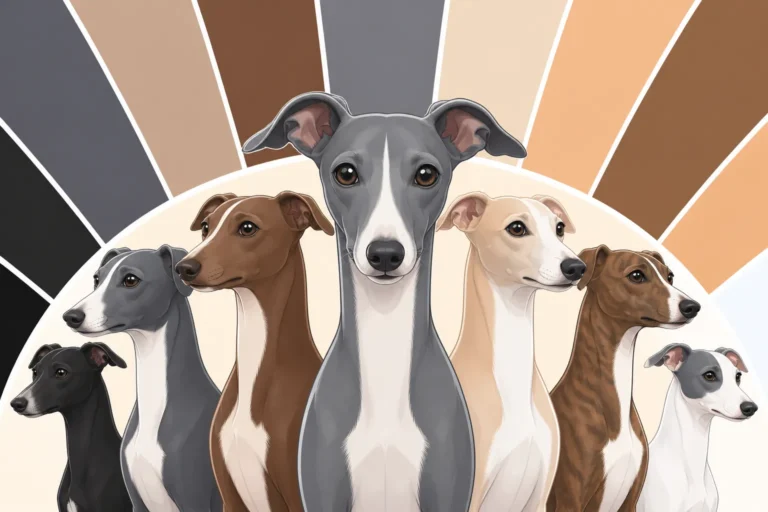
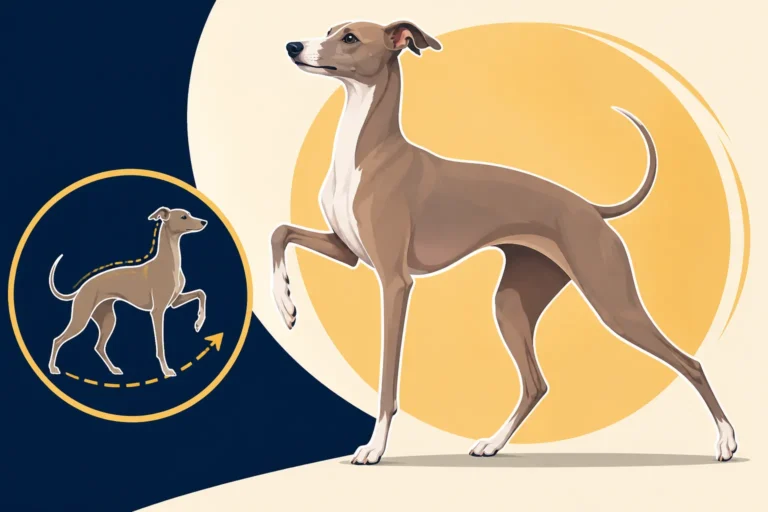
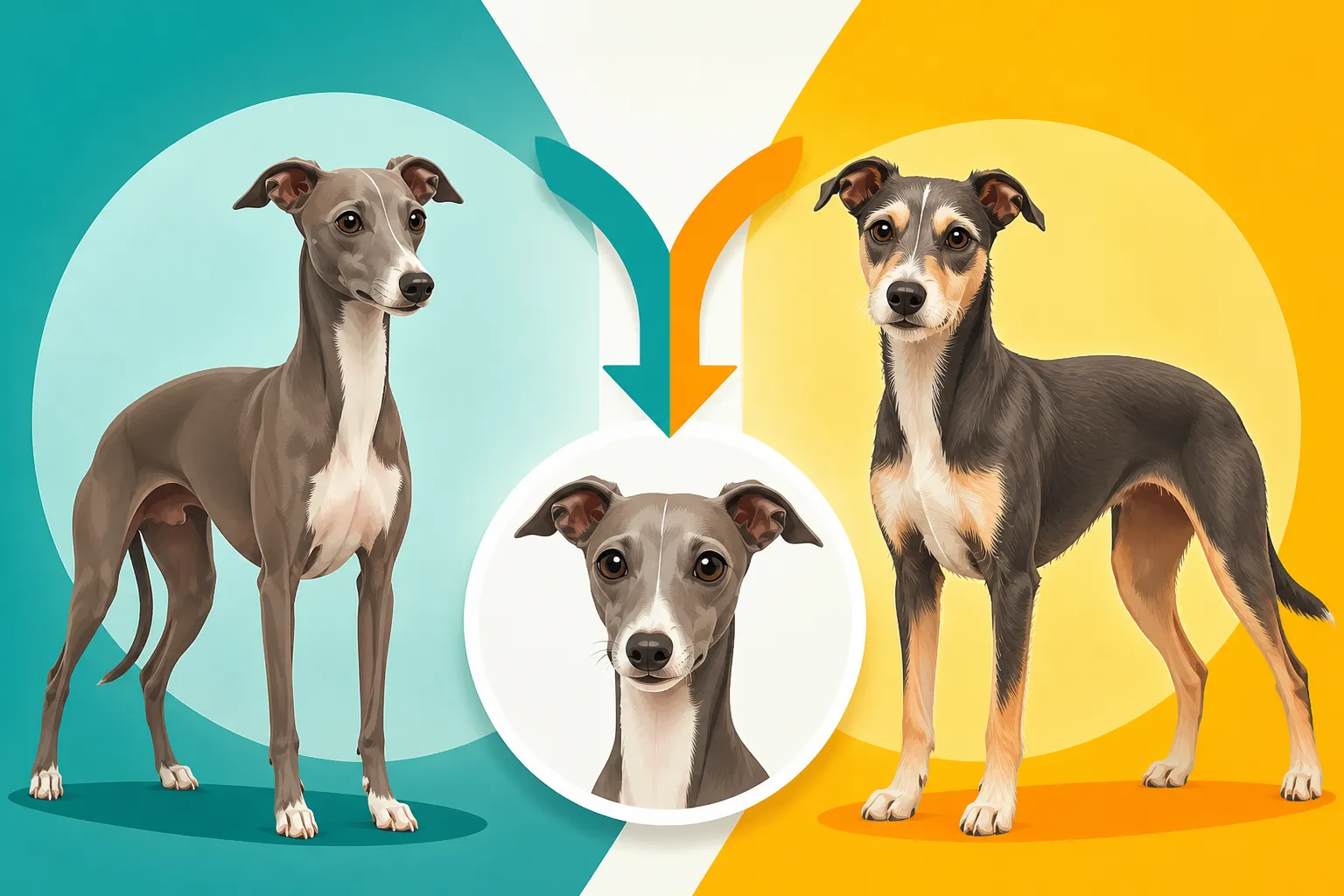
People often recognize an Italian Greyhound by its delicate appearance, but that look comes from several traits working together: a narrow body, long legs, a deep chest, fine skin, and a curved topline. A mix may inherit some of those features without inheriting the whole outline. For example, a dog can have an Italian Greyhound’s narrow head and long legs but a broader chest or heavier body from its other parent.
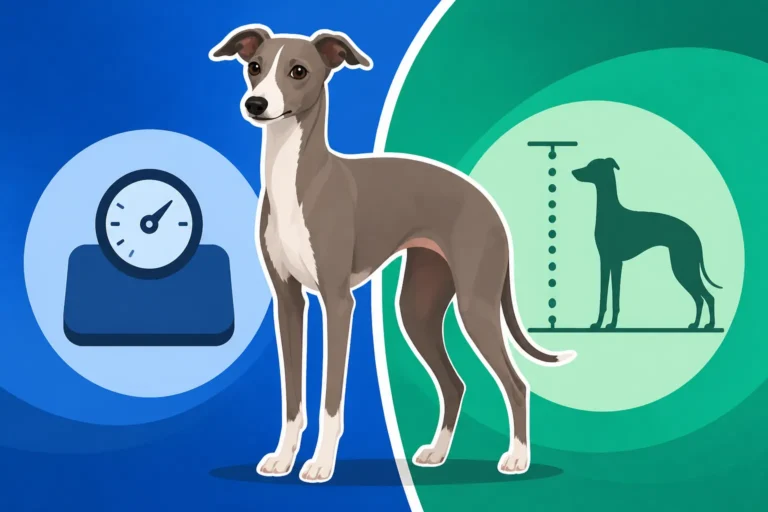
That difference matters when you are trying to picture the adult dog from a puppy photo. A young mix with slender legs may later develop a sturdier torso, while a puppy that looks more substantial early on may grow into a relatively light, leggy adult. Appearance at eight or twelve weeks is a clue, not a dependable forecast. For a reference point, What an Italian Greyhound Weighs and How Tall It Stands describes the parent breed’s general proportions; a cross may fall outside them in either direction.
The word “mix” also covers many different combinations. An Italian Greyhound crossed with another small, fine-boned dog may look quite sighthound-like. Crossed with a breed that has a broader chest, shorter legs, or heavier bone, the puppy may inherit a more obvious blend. Even then, there is no simple rule that the puppy will land halfway between the two parents.
Inheritance does not work like an average
It is tempting to imagine that a puppy will be exactly halfway between its parents in height, weight, and shape. In reality, body size and proportions are influenced by many genes, and different puppies can inherit different combinations. A littermate may take after the Italian Greyhound’s long-legged silhouette, while another has more of the other parent’s compact body or heavier frame.
The parents’ own builds are useful context, but they do not settle the question. A particularly small parent does not guarantee tiny offspring, and a larger parent does not mean every puppy will grow large. Grandparents and more distant relatives can also contribute traits that are less obvious from looking only at the two adult dogs.
This is why claims like “all the puppies will stay Italian Greyhound-sized” deserve caution unless they are supported by information about the parents and their relatives. Even with a carefully planned cross, the breeder cannot promise an exact adult appearance. It is more realistic to ask which traits are common in the dogs’ family lines and how much variation has appeared in previous litters.
How the Other Parent Can Change the Build
Crosses can preserve the outline or soften it
Some mixes retain a recognizably slender, sighthound-shaped body. That is more likely when the other parent also has a light frame and long limbs, though individual puppies can still vary. A cross with a dog of a very different shape may have a broader rib cage, shorter legs, a more substantial neck, or a less pronounced waist. Those changes can make the dog look less like an Italian Greyhound even if it inherits the breed’s smooth coat or fine head.
The other breed’s size is only one part of the picture. Two dogs can be similar in height but built very differently: one may be narrow and long-legged, the other broad and muscular. Looking at the parents standing naturally, and at adult relatives if available, can tell you more about likely proportions than comparing their weights alone. For a clearer sense of the differences between two related sighthound types, see How an Italian Greyhound Differs From a Whippet.
There is also no guarantee that a cross will be sturdier simply because one parent is larger or more heavily built. “Sturdy” can mean several things: thicker bone, a broader body, greater muscle, or simply a heavier dog. Those features do not all appear together, and a mixed-breed dog can remain quite delicate even when it is larger than an Italian Greyhound. Whether an Italian Greyhound Mix Is Sturdier explores that distinction in more detail.
Size and shape are related, but not identical
A mix may be taller than an Italian Greyhound but still have a narrow, lightweight body. Another may be shorter yet broader and heavier. Height, weight, leg length, and bone thickness are separate aspects of build, so it helps to ask about each rather than relying on a vague description such as “small” or “medium.”
The table below can help you organize what you know. It is not a formula for predicting a puppy’s adult appearance; it is a practical way to compare clues and identify what remains uncertain.
| What to look at | What it may tell you | What it cannot guarantee |
|---|---|---|
| Both parents’ adult builds | The range of shapes the puppy may inherit | That the puppy will match either parent |
| Adult relatives | Whether a trait appears across the family | That every puppy will inherit that trait |
| Littermates | How much variation is already visible | The final size or proportions of each puppy |
| Growth over several months | Whether the puppy is lengthening, broadening, or filling out | An exact adult weight |
| The other parent’s breed type | Which body features might appear in the mix | A predictable halfway blend |
If you are comparing a particular cross, find out whether it is commonly bred and what the adult dogs in that cross tend to look like. Which Italian Greyhound Crosses Are Bred Deliberately can help frame that research. Whatever the cross, an individual dog’s relatives and development are more informative than a label alone.
How to Estimate an Italian Greyhound Mix’s Adult Build
Ask about the family, not just the puppy
A breeder or rescue may be able to share useful details about the puppy’s parents, adult relatives, or littermates. Ask for the parents’ measured height and current body condition, and, if possible, ask whether they have adult photos of earlier offspring. If a dog is being adopted through rescue, its estimated mix and adult size may be uncertain; a veterinarian can still help assess its current condition and growth.
Look at the dogs from the side and from above, not just in a posed photo. A side view can show leg length, chest depth, and the overall length of the body. A top view may make it easier to see whether the torso is narrow or broad. Photos can be misleading, however: camera angle, stance, coat, and weight all change how a dog appears.
Ask how confident anyone is in the breed identification. A dog described as an Italian Greyhound cross may have ancestry that is not visually obvious, especially if its background is unknown. Breed labels can be useful shorthand, but they are not a measurement or a guarantee of physical traits.
Track growth without chasing a number
A puppy’s proportions change as it grows. Legs can seem to lengthen before the body fills out, and the dog may go through lanky phases that make its adult build difficult to judge. Keep regular notes on weight and body condition, and ask your veterinarian whether growth appears appropriate for that individual puppy. A single weigh-in does not show the whole pattern.
Avoid trying to make a puppy heavier because it looks thin beside a stockier dog. A lean outline can be normal in a sighthound-influenced dog, but a mix should be assessed as an individual rather than judged against an idealized photo. Your veterinarian can help distinguish a naturally fine frame from inadequate weight or a health concern. For general reference, The Age an Italian Greyhound Stops Growing covers the parent breed’s growth timeline, though a mix may mature differently.
It is also worth separating frame from body condition. A dog with a broad frame may be at a healthy weight while a narrower dog at the same weight could be carrying too much. Conversely, prominent bones or a sudden change in weight merit a veterinary conversation rather than assumptions based on breed appearance. Growth charts and online estimates can offer rough context, but they cannot replace an examination.
Living With a Mix That Has a Delicate Build
Choose equipment for the dog in front of you
Even if your mix is larger than an Italian Greyhound, it may still have a narrow chest, fine neck, or long limbs that affect how collars, harnesses, coats, and beds fit. Measure the dog rather than buying by breed label. Check fit again as a puppy grows, since a harness that sits correctly one month may rub or restrict movement later.
A well-fitting harness should allow comfortable movement without pressing into the throat or sliding around the body. Coats may need a longer back or a closer fit through the chest than standard designs provide. If you shop at Chewy or a local pet store, compare the product’s measurement guide with your dog’s actual chest and neck measurements, and check the fit after the first few minutes of wear. The label “small dog” does not tell you whether the shape will suit a particular mix.
For a young dog, buy with growth in mind but do not rely on a large, loose harness to last indefinitely. Extra slack can affect fit and comfort, and a loose coat may bunch or catch during play. Recheck measurements as the puppy changes, and adjust or replace equipment when it no longer sits securely.
Make sensible plans without assuming fragility
A delicate-looking mix is not automatically unhealthy or incapable of normal activity. The sensible approach is to consider the dog’s actual proportions, confidence, coordination, and health rather than treating every Italian Greyhound cross as if it has the same needs. Supervise play with much larger dogs, use secure handling, and avoid encouraging a puppy to make repeated high jumps while its body is still developing.
If a dog has particularly fine limbs or seems uncertain on slippery floors, practical changes can help. Rugs can provide traction, and a ramp may make access to furniture more controlled. The point is not to restrict every movement but to reduce avoidable tumbles and to build safe habits. Whether a Correct Italian Greyhound Looks Fragile helps distinguish the breed’s naturally refined appearance from a medical problem or poor condition.
As the dog grows, follow veterinary advice about exercise, weight, and any injury concerns. A mixed breed’s appearance does not establish its bone health, and no body type alone predicts how resilient an individual will be. If you are shopping for a coat or harness through Chewy, a specialty maker, or another retailer, prioritize measurements and comfort over assumptions about what an “Italian Greyhound mix” should wear.
The practical expectation is that a mix may keep some of the Italian Greyhound’s elegant outline, but it may also develop a wider chest, shorter legs, heavier bone, or a very different overall shape. The parents and relatives offer clues, not certainty. Plan for a range of possibilities, monitor growth with your veterinarian, and make choices based on the dog you actually bring home—not just the mix name.
Disclaimer
This article is for general informational purposes only and does not constitute professional advice. Laws, prices and regulations vary by location and change over time. Consult a qualified professional for guidance on your specific situation.