Why Brindle Markings End an Italian Greyhound’s Show Career
A brindle Italian Greyhound can be healthy, beautiful, and unmistakably true to the breed—and still be ineligible for conformation competition under a particular kennel club’s rules. That can be a painful surprise for an owner who planned to show a puppy. This guide explains what brindle means, why some standards disqualify it, and what that rule does—and does not—mean for your dog.
What brindle markings look like on an Italian Greyhound
Brindle is a coat pattern, not a separate breed type
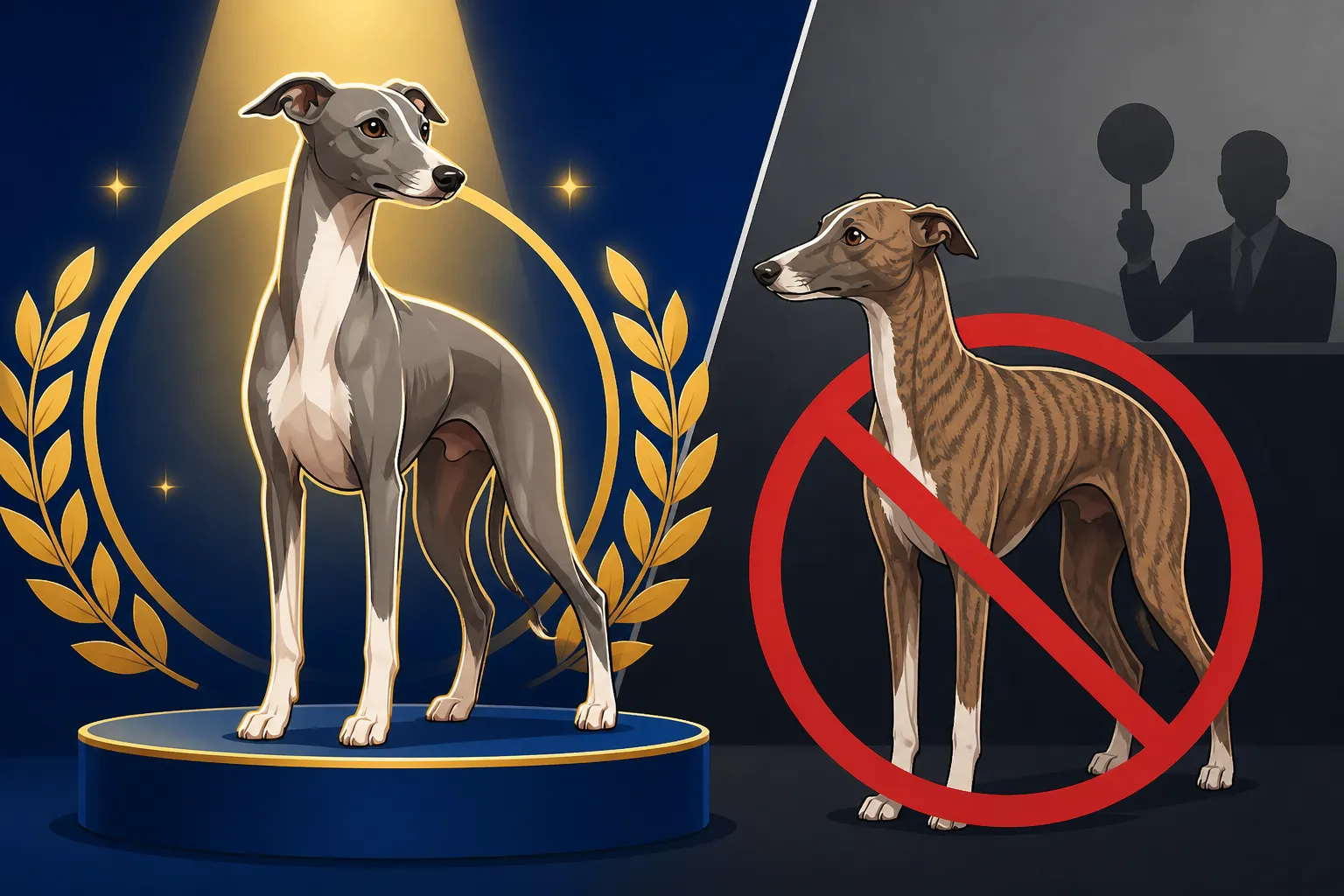
Brindle describes a pattern of darker streaks or stripes over a lighter background. On a short-coated dog, the markings may be bold and easy to spot, or faint enough that they are most obvious in bright daylight. A dog might look mostly fawn, red, or another lighter shade at first glance, with darker striping showing along the back, sides, or legs when you look closely.
The pattern is not the same thing as a solid coat color. That distinction matters in the show ring because breed standards often specify which colors or markings are acceptable. A brindle dog does not become a different breed, and the pattern does not by itself say anything about the dog’s temperament, athletic ability, or overall quality as a companion.
Italian Greyhound colors and markings can be confusing to newcomers, especially when a coat is very dark or the striping is subtle. For a broader look at the breed’s palette, see Which Colors an Italian Greyhound Comes In. The important practical point is that a description such as “fawn” or “blue” does not settle show eligibility if the dog also has a disqualifying pattern.
Brindle can be subtle, and coat descriptions can be misleading
Some brindle markings are obvious: dark stripes stand out clearly against a lighter coat. Others are muted, sparse, or concentrated in areas where they are easy to miss in a quick photograph. Coat color can also appear different under indoor lighting, in shade, or when a puppy’s coat changes as it matures.
That is why a single seller’s description or an informal photo may not be enough if you are choosing a puppy specifically for conformation showing. Ask the breeder to describe the markings plainly, provide clear photos in natural light, and explain how they interpret the applicable breed standard. If you are unsure, ask an experienced Italian Greyhound breeder or conformation mentor to assess the dog in person.
Avoid trying to settle a standards question with a name alone. “Dark fawn,” “sable,” or another casual label may not tell you whether visible striping would be treated as brindle. If your concern is a specific dog, focus on what the coat actually looks like and get guidance from people familiar with the rules at the shows you plan to enter.
Why brindle can end an Italian Greyhound’s conformation career
Some breed standards list brindle as a disqualification
In conformation, judges compare dogs with the written standard used by the kennel club or organization hosting the event. A disqualification is different from a minor fault: it means a dog is not eligible to compete in that conformation class under that standard. The American Kennel Club Italian Greyhound standard lists brindle as a disqualification, alongside black and tan markings. Owners should check the specific rules for their registry and show, rather than assuming that one country’s standard applies everywhere.
The rule is about conformity to that standard—not a judgment that the dog is unhealthy, poorly bred, or less deserving of affection. Conformation shows assess how closely a dog fits a written breed description, including appearance and structure. A color or pattern disqualification is one part of that rulebook, even when the dog is otherwise an excellent example of the breed.
Because standards and event rules can differ, verify them before entering. If a breeder says a puppy is “show quality,” ask what they mean: eligible for conformation, promising in structure, suitable for performance sports, or simply a lovely example of the breed? Those phrases are not interchangeable. The wider color rules are discussed in Which Colors the Italian Greyhound Standard Accepts and Why Brindle Disqualifies an Italian Greyhound.
A disqualification is not the same as a poor-quality dog
It is understandable to feel disappointed if you pictured weekends at dog shows and then learn that your dog’s coat pattern makes conformation competition unavailable. But the dog has not lost its value, and the disqualification does not erase good structure, sound movement, a sweet temperament, or the bond you have built.
It also does not automatically mean that the dog cannot take part in other activities. Depending on the event’s rules, a brindle Italian Greyhound may still be able to participate in performance or companion activities such as obedience, rally, agility, or scent work. Those activities have their own eligibility requirements, so check the organizer’s rules before entering, but they are not the same as conformation judging.
A useful way to think about it is that conformation eligibility is one narrow category. If your dog enjoys learning, running, or working with you, there may be plenty of ways to share activities without entering a breed ring. And if you are still deciding whether a puppy’s appearance matches your expectations, Every Color an Italian Greyhound Is Allowed to Be can help clarify how color rules fit into the breed picture.
| Question | What the answer means |
|---|---|
| Is brindle a coat pattern? | Yes. It describes darker striping over a lighter background. |
| Does brindle mean the dog is unhealthy? | No. The pattern alone is not a health diagnosis. |
| Can a brindle dog be disqualified from conformation? | Yes, under standards that list brindle as a disqualification. |
| Does that automatically exclude other activities? | No. Other events have separate eligibility rules. |
| Should I rely on a puppy’s color label? | No. Look at the markings and confirm how the relevant registry interprets them. |
What the rule means for owners and prospective exhibitors
Confirm the rules before choosing a show prospect
If you are looking for a puppy to show, tell the breeder that conformation eligibility matters to you before you place a deposit or make a final decision. Ask whether the puppy has visible brindle markings, whether the breeder considers the coat pattern disqualifying under the registry you plan to use, and whether the puppy’s show prospects are being discussed in terms of color, structure, or both.
A responsible conversation should be specific. For example, you might say, “I’m interested in conformation shows under this registry. Do you see any brindle markings, and can we talk about how the standard treats them?” That gives the breeder a clear question to answer instead of leaving both of you to rely on vague language such as “show prospect.”
If the coat appears ambiguous, seek a second opinion from a knowledgeable person who understands the relevant standard. Photos can help start the conversation, but lighting can hide or exaggerate markings. Do not ask a breeder or seller to promise show success: even a puppy with an eligible color may change as it grows, and no puppy is guaranteed to become a successful show dog.
It can also help to separate your priorities. If your first priority is a companion, health and fit with your household may matter more than show eligibility. If conformation is essential, say so early and make sure everyone is using the same definition of “eligible.” What Judges Look For First in an Italian Greyhound offers useful context on the broader qualities considered in the ring.
Do not alter or disguise the coat
Trying to dye, bleach, clip, or otherwise alter a coat to make markings less visible is not an appropriate solution. It does not change the dog’s underlying pattern, and it may conflict with event rules or raise questions about fair presentation. If you are uncertain whether a dog is brindle, ask for an honest assessment instead of trying to make the appearance fit a rule.
The same principle applies to photographs and descriptions. When discussing a potential show dog, use clear, unedited images and describe what you see. That protects the buyer, the breeder, and the dog from a preventable misunderstanding. If a pattern is disqualifying under the rules you care about, discovering that early is much kinder than finding out after travel, entry fees, and weeks of preparation.
Show preparation still involves ordinary practical planning: a safe crate, a comfortable lead, water, and familiar food or rewards. If you already shop for those basics through Chewy or another retailer, check product labels and make sure anything new has been introduced well before a show day. A sudden food change or unfamiliar treat can create avoidable stress, while no accessory or grooming product can make a disqualifying pattern eligible.
Health, breeding, and life beyond the show ring
Brindle itself does not determine health or temperament
A coat pattern is not a substitute for health information. Brindle markings alone do not tell you whether an Italian Greyhound has sound eyes, healthy teeth, good joints, or a stable temperament. Those questions require appropriate health history, veterinary care, and responsible breeding practices. For a broader discussion of color and health, see Whether Coat Color Predicts an Italian Greyhound's Health.
Likewise, an owner should not assume that a dog with a disqualifying coat is unsuitable for breeding—or suitable for breeding—based on color alone. Breeding decisions involve the dog’s health, structure, temperament, pedigree, and the goals of a responsible breeding program. If breeding is being considered, consult an experienced breeder and veterinarian, and review the health testing appropriate for the breed.
Color-focused searches can also lead people to oversimplified claims about which shades are “better.” The more useful question is whether the breeder is transparent about health and avoids treating a particular appearance as a guarantee of quality. If a blue or dilute coat is part of the discussion, Which Italian Greyhound Colors Carry the Alopecia Risk explains why color-related health questions should be considered separately from show eligibility.
A brindle Italian Greyhound can still have a full, active life
A show disqualification can feel like a door closing, especially when showing was part of the dream you had for your dog. It is worth remembering that the rule applies to a competition category, not to everyday life. Your dog can still enjoy walks, training, safe play, travel, and the routines that make an Italian Greyhound such an engaging companion.
Some owners redirect their interest toward performance events. Others enjoy learning about breed type, attending shows as spectators, or training simply because their dog likes the activity. You might practice short sessions at home, build confidence around new environments, or try a sport that matches your dog’s comfort and ability. Bring familiar rewards—whether you buy them from Chewy, a neighborhood shop, or make them at home—and keep sessions positive and low-pressure.
The dog’s physical comfort should remain central. Italian Greyhounds are fine-boned and can be vulnerable to injury, so choose activities thoughtfully and ask your veterinarian about any concerns before starting strenuous exercise. A brindle coat does not make a dog fragile, just as an eligible coat does not make a dog sturdy. For a useful reminder about the difference between appearance and build, read Whether a Correct Italian Greyhound Looks Fragile.
If conformation showing is no longer an option, there is no need to force your dog into a replacement activity just to make the original plan feel worthwhile. Let the dog’s interests guide you. And if you are gathering ordinary supplies for classes, travel, or daily care, Chewy may be one retailer you use alongside local stores; the important thing is choosing items that fit your dog and using them safely.
The practical takeaway is simple: check the applicable standard, get a clear assessment of the coat, and make decisions with accurate expectations. Brindle may end an Italian Greyhound’s conformation career under a rule that disqualifies the pattern, but it does not define the dog’s health, character, or potential as your companion.
Disclaimer
This article is for general informational purposes only and does not constitute professional advice. Laws, prices and regulations vary by location and change over time. Consult a qualified professional for guidance on your specific situation.