The High Stepping Gait That Marks a Correct Italian Greyhound
One of the first things you notice about an Italian Greyhound isn't just their elegant, almost regal appearance, but the way they move. It’s not like other dogs, is it? You see them trot, and there’s a distinct, almost dance-like quality to their step, a certain lift and grace that can be hard to put your finger on. If you've ever wondered why your Italian Greyhound moves with such precision and whether that unique gait is considered "correct," you're not alone. This guide will dive deep into the beautiful mechanics of the Italian Greyhound's movement, exploring what makes their gait so special, what to look for, and how to ensure your little companion stays sound and healthy as they prance through life.
Understanding the Italian Greyhound's Unique Movement
When you watch an Italian Greyhound in motion, it’s like observing a miniature work of art. Their movement isn't just functional; it's part of their breed identity, deeply ingrained and refined over centuries. Many people think all sighthounds move similarly, but even within this group, the Italian Greyhound carves out its own distinct style. Their frame is built for agility and quick bursts of speed, but also for a refined, almost delicate trot that sets them apart.
More Than Just a Walk in the Park
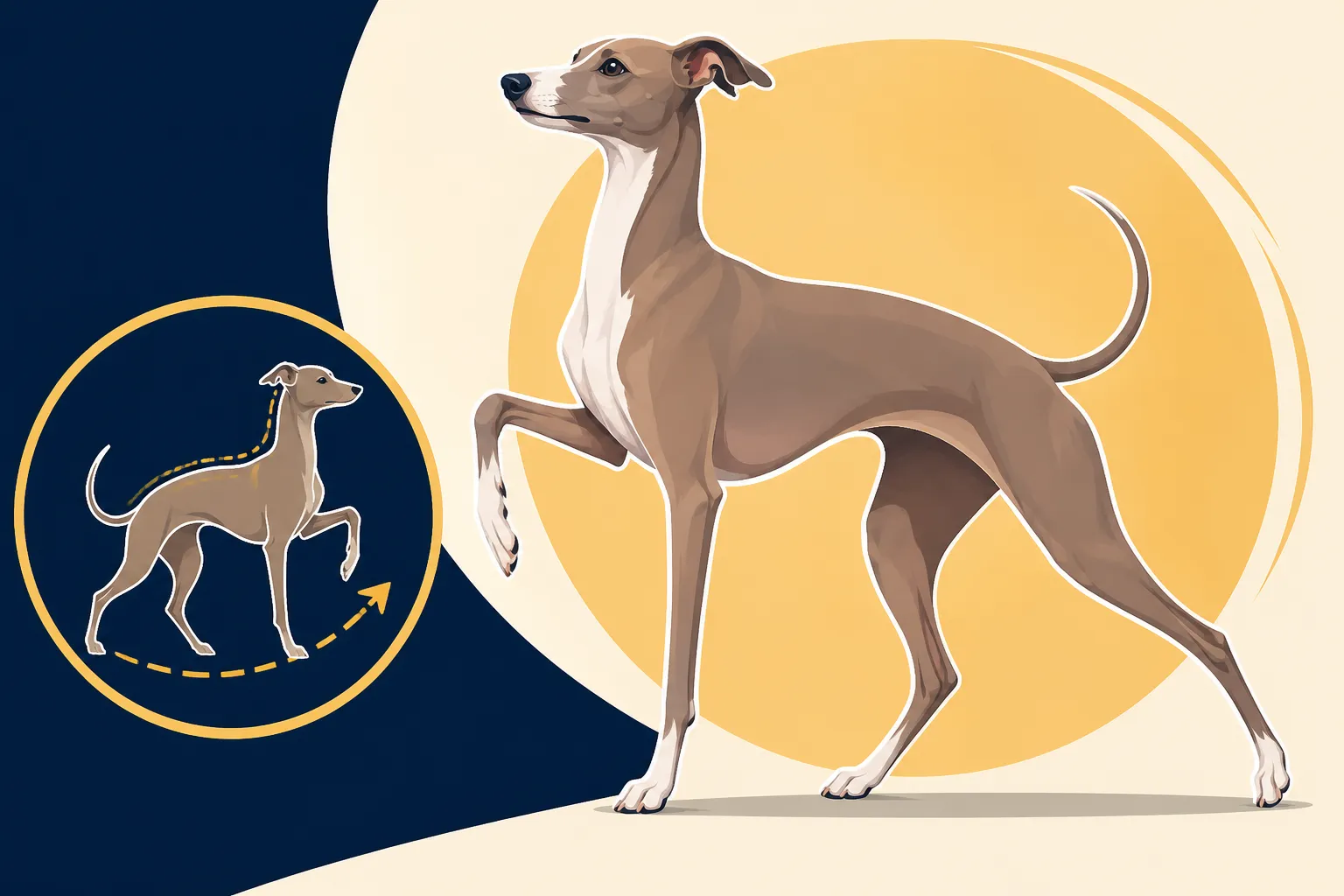
An Italian Greyhound's movement is often described as high-stepping or hackney-like, but it’s crucial to understand the nuances here. A true, correct Italian Greyhound gait is not actually a hackney gait, which is considered a fault in many breeds. Instead, it's a fluid, free-moving trot where the forelegs are lifted with a noticeable flex at the knee, and the feet are placed delicately but purposefully. It’s a purposeful action, not an exaggerated high kick. The rear legs follow through powerfully, providing the necessary drive to propel them forward smoothly.
This isn't just for show, either. This particular way of moving contributes to their ability to navigate various terrains with ease, from a quick dash across the yard to a graceful turn on a show ring. It speaks to their heritage as nimble companions, capable of both bursts of energy and elegant composure. Owners quickly learn to appreciate this unique aspect of their dog, as it informs everything from their play style to how they navigate household obstacles.
The Sighthound Stride: Efficiency and Grace
As part of the sighthound family, Italian Greyhounds share some general characteristics with their larger cousins, the Whippets and Greyhounds, particularly in their ability to gallop with incredible speed and efficiency. However, their smaller stature means their characteristic trot often appears more exaggerated than that of a Whippet. While a Greyhound's gallop is a double suspension run where all four feet are off the ground twice in each stride, the Italian Greyhound's trot, a two-beat diagonal gait, is what truly defines their everyday elegance.
The efficiency of their sighthound stride is still very much present, even in their daintier trot. Their long, lean muscles and flexible spine allow for excellent reach and extension, ensuring that each step covers ground effectively. They are built for grace and quick acceleration, making them incredibly agile dogs that can change direction on a dime. This balance of power and precision is what makes their gait so captivating to observe, whether they are enjoying The Indoor Zoomies an Italian Greyhound Gets or simply walking by your side.
Why Gait Matters in the Italian Greyhound
Understanding the correct gait isn't just about winning ribbons in the show ring, though it's certainly a critical component there. For the average Italian Greyhound owner, appreciating the ideal gait helps you recognize when your dog is moving soundly and healthily. A deviation from this characteristic movement can be an early indicator of pain, injury, or underlying health issues. For a breed known for its delicate bones, particularly the radius, monitoring how your dog moves can be a proactive step in their care.
Furthermore, the breed standard describes this movement in detail because it reflects the overall health, balance, and correct conformation of the dog. A dog with excellent gait is typically well-structured, with appropriate angulation, strong muscles, and a healthy skeletal system. It's a testament to good breeding and proper development. For instance, a dog exhibiting a truly correct high-stepping, ground-covering trot is likely to have good joint health and muscle tone, which are essential for their overall well-being and longevity.
Deconstructing the "High-Stepping" Action
When we talk about the Italian Greyhound's "high-stepping" gait, we're not talking about a prance that expends unnecessary energy. Instead, it's a refined, elegant lift of the forelegs that allows for precise foot placement and a smooth, flowing motion. It’s a harmonious interplay between front and rear, all contributing to that distinct Italian Greyhound presence.
Foreleg Action: Lifting and Placing
In a correct Italian Greyhound trot, the front legs should show a definite lift, flexing at the elbow and wrist, bringing the foot up before it is placed forward. This isn't a stiff, goose-stepping motion, nor is it an exaggerated "hackney" action where the knee lifts excessively high with a lack of forward reach. Instead, think of it as a graceful, almost elastic suspension as the leg moves forward. The foot should clear the ground well, but the primary goal is efficient forward motion, not height for height's sake.
The forelegs should extend freely from the shoulder, reaching out with purpose, allowing the paw to be placed neatly in front of the dog. There should be no outward paddling or inward knitting of the legs. This particular lift helps them navigate surfaces, especially uneven ones, with precision and minimizes stumbling. It also plays a role in their quick turning ability, showcasing their agility.
Rear Leg Drive: Power and Reach
While the forelegs provide the high-stepping elegance, the rear legs are the powerhouse of the Italian Greyhound's movement. They should exhibit strong, propelling drive, pushing off with great force and extending well to the rear. This powerful push-off is what gives the Italian Greyhound its ground-covering ability, allowing them to move efficiently and gracefully. Without adequate drive from the rear, the dog would appear to be pulling itself along with its front legs rather than moving with smooth, balanced propulsion.
The hocks should be strong and well-let-down, flexing appropriately to absorb impact and provide spring. During the trot, the rear foot should track in line with the front foot on the same side, creating a narrow path of travel. This balance between foreleg lift and rear-leg drive is what creates the impression of a dog gliding effortlessly, covering ground with minimal wasted motion.
The Role of Angulation in Movement
Good angulation – the angles formed by the bones in the shoulder and hip – is absolutely critical for a correct Italian Greyhound gait. Without proper angulation, the dog simply cannot achieve the desired reach and drive. In the front, good shoulder layback and angulation allow the foreleg to reach forward effortlessly, giving that characteristic "high-stepping" appearance without being restrictive or choppy. It's not about how high the foot lifts, but how freely the leg extends from the shoulder.
Similarly, correct angulation in the rear allows for powerful propulsion. A well-angulated stifle (knee) and hock joint provide the leverage needed for strong push-off, ensuring the rear legs can extend far behind the body and track smoothly forward. When angulation is off, you might see a dog with a short, choppy stride, or one that struggles to cover ground efficiently. The skeletal structure described in posts like What a Correct Italian Greyhound's Topline Looks Like is directly tied to their ability to move correctly.
The Ideal Italian Greyhound Gait: What to Look For
Observing an Italian Greyhound's gait is about more than just watching their legs; it's about seeing the whole picture. The ideal gait is a symphony of coordinated movements, reflecting a dog in perfect balance and soundness. It’s the kind of movement that makes you stop and stare, not because it’s showy, but because it’s so harmoniously executed.
Head and Neck Carriage
When an Italian Greyhound moves with a correct gait, their head and neck carriage are integral to the overall picture of elegance. The neck should be long and gracefully arched, blending smoothly into the shoulders. As they trot, the head should be carried high and alert, often slightly forward, with an intelligent expression in their eyes. This noble carriage contributes to their proud and refined appearance, making them look as if they are floating across the ground.
A lowered or stiff head and neck can indicate discomfort, poor conformation, or even a lack of confidence. You want to see an easy, natural extension, not a forced posture. This high head carriage also allows them to maintain their sighthound awareness, scanning their surroundings with ease, whether they're in the backyard or enjoying a walk through the neighborhood.
Topline and Tail Set During Movement
The Italian Greyhound's topline is another key indicator of correct movement. While standing, they typically have a distinct arch over the loin. In motion, this arch should remain, acting as a flexible spring that absorbs impact and facilitates the smooth transfer of energy from the rear to the front. The topline should appear firm and resilient, without excessive roll or sway. A soft or flat topline, or one that appears exaggeratedly roached during movement, can be a sign of structural weakness.
The tail set, too, contributes to the overall impression. Their tail is generally low-set, fine, and carried low with a slight curve. When trotting, it should typically be carried between the hind legs or just slightly raised in a gentle curve, often tucked a bit, reflecting their shy nature. A high-carried, flag-like tail is usually considered incorrect and detracts from the classic Italian Greyhound silhouette. It's all about that fluid, understated elegance.
Overall Impression: Smoothness and Balance
Ultimately, the ideal Italian Greyhound gait conveys an impression of effortless grace, smoothness, and perfect balance. Each step should flow seamlessly into the next, creating a rhythm that is both captivating and efficient. There should be no wasted motion, no stumbling, no awkwardness. The dog should appear to glide, covering ground with precision and purpose.
Imagine watching them from the side: the front legs reach, the rear legs drive, and the topline acts as a flexible bridge, all working in concert. From the front and rear, their legs should track straight, neither too wide nor too close, avoiding any tendency to paddle, weave, or cross. This overall impression of harmonious movement is the hallmark of a truly correct Italian Greyhound, a testament to its long history and careful breeding. It’s truly beautiful to behold.
Common Gait Faults in Italian Greyhounds
While the ideal Italian Greyhound gait is a joy to behold, not every dog moves perfectly. There are several common gait faults that can indicate structural issues, discomfort, or simply deviate from the breed standard. Recognizing these faults can help owners identify potential problems early on.
Hackneying: A Misstep to Avoid
One of the most frequently discussed gait faults in Italian Greyhounds is hackneying. This is often confused with the "high-stepping" action, but there's a crucial difference. Hackneying involves an exaggerated, high-lifting action of the forelegs, where the knee bends sharply and the foot is thrown forward with very little forward reach. It's almost like a pony trot, lifting up rather than extending out. While it might look flashy to some, it's actually inefficient and can indicate poor shoulder angulation or stiffness.
A hackney gait sacrifices reach and efficiency for height. Instead of a smooth, ground-covering stride, the hackneying dog will have a choppy, short stride that covers less ground with more effort. It's important for breeders and owners to distinguish between the correct high-stepping action, which has good reach and flex, and the undesirable hackney gait, which lacks forward extension and is ultimately detrimental to athletic movement.
Crabbing and Pacing: Signs of Imbalance
Crabbing, also known as sidewinding, is another gait fault where the dog moves with its body at an angle to its direction of travel, often moving diagonally. It’s like the dog is moving a little sideways as it goes forward. This can be caused by various factors, including uneven leg length, spinal issues, or simply an attempt to balance an unbalanced structure. A slight crab might be seen occasionally, but consistent crabbing indicates a fundamental issue with coordination or structure.
Pacing is a two-beat lateral gait where the dog moves both legs on one side of its body at the same time (e.g., both right legs move forward, then both left legs). This creates a rolling, swaying motion that is very inefficient and tires the dog quickly. While some breeds are natural pacers, it is incorrect for an Italian Greyhound, which should exhibit a diagonal trot. Pacing often suggests a lack of muscle tone, structural imbalance, or sometimes even pain. If your Italian Greyhound consistently paces, it's worth a chat with your vet to rule out any underlying discomfort or orthopedic issues.
Stiffness and Lack of Reach
Any form of stiffness in an Italian Greyhound's movement is a significant red flag. This can manifest as short, choppy steps, reluctance to extend limbs fully, or a general lack of fluidity. Stiffness can be a sign of anything from minor muscle soreness to more serious conditions like arthritis, particularly in older dogs, or even issues like Patellar Luxation in an Italian Greyhound. A dog that appears stiff in its front or rear, or lacks the typical elastic spring in its step, is not moving soundly.
A related fault is a lack of reach and drive. If the front legs don't extend forward sufficiently, or the rear legs don't push off powerfully enough, the dog's stride will be short and inefficient. This can make the dog appear to be mincing along rather than trotting purposefully. It often points to poor angulation in the shoulders or hips, or perhaps muscle weakness. Addressing these issues early on can often improve comfort and mobility for your Italian Greyhound.
How Health and Conformation Impact Gait
It’s impossible to talk about an Italian Greyhound’s gait without talking about their overall health and conformation. These two elements are intrinsically linked; a healthy, well-built dog will naturally move better than one with underlying issues or structural flaws. For a breed as delicate as the Italian Greyhound, understanding this connection is paramount.
Skeletal Structure and Movement Mechanics
The bones are the framework, and their alignment is everything. The elegant, arched topline, the delicate bone structure of the legs, and the angulation of the joints—all these play a critical role in how an Italian Greyhound moves. For instance, the length of their upper arm relative to their shoulder blade, and the angulation of their femur and tibia, directly dictate how much reach and drive they can achieve.
If a dog has a very straight shoulder, it won't be able to extend its front leg forward as much, leading to a restricted, choppy gait. Similarly, if the rear angulation is too straight, the dog won't have the spring and power needed for a strong push-off. This can lead to conditions that affect movement, such as Legg Calve Perthes Turns Up in an Italian Greyhound at Six Months or issues with patellar luxation. These structural components are literally the mechanics behind the beautiful, flowing motion, and any deviation can disrupt the entire system.
Muscle Development and Conditioning
Beyond the bones, the muscles provide the power and stability for movement. A well-conditioned Italian Greyhound will have lean, strong muscles that allow for free, uninhibited movement, supporting their joints and propelling them with grace. Regular, appropriate exercise, as detailed in How Much Exercise an Italian Greyhound Needs, helps build and maintain this crucial musculature. If an Italian Greyhound is underweight or lacks proper muscle development, their gait might appear weak, unsteady, or less coordinated.
Conversely, an overweight Italian Greyhound can also suffer from gait issues, as extra weight puts undue strain on their delicate joints and bones, making efficient movement difficult. Ensuring your Italian Greyhound maintains a healthy weight and gets consistent, low-impact exercise is vital for supporting their unique movement. You should be able to feel their ribs easily, but they shouldn't be protruding, as discussed in How Much of an Italian Greyhound's Ribs Should Show.
The Impact of Injury or Pain
Perhaps one of the most immediate and noticeable impacts on an Italian Greyhound's gait comes from injury or pain. Given their propensity for delicate bones, even a minor stumble can lead to a limp or a change in how they bear weight. A broken leg, tragically common in this breed, will drastically alter their movement, and even after healing, the dog may move differently, as discussed in Whether an Italian Greyhound Regains Full Use of the Leg.
But it's not always as obvious as a broken bone. Subtle changes like a slight reluctance to jump, a shortened stride, or a shift in how they place their paws can signal discomfort in a joint, muscle strain, or even issues with their paw pads. Italian Greyhounds are remarkably stoic animals, often hiding pain, so keen observation of their gait can be your first clue that something is amiss. If you notice any sudden or persistent changes in your dog's movement, a veterinary check-up is always prudent. Even mild stiffness can be a sign of an underlying problem that warrants investigation.
Observing and Appreciating Your Italian Greyhound's Gait
As an Italian Greyhound owner, becoming attuned to your dog's natural movement is one of the best things you can do for their health and well-being. It’s not just about what you see in the show ring; it's about appreciating their unique way of navigating the world every single day.
At Home: Everyday Movement Patterns
Your home is your primary laboratory for observing your Italian Greyhound's gait. Watch them as they trot across the living room to greet you, as they navigate furniture, or as they climb onto their favorite bed. Pay attention to how they get up from a lying position, how they turn corners, and whether they seem equally agile on both sides. Do they favor one leg? Do they hesitate before jumping?
Even subtle changes, like a slight head bob or an uneven stride, can be indicators of discomfort. Remember, Italian Greyhounds are generally quiet and graceful movers indoors. Any clunky, stiff, or hesitant movements should catch your eye. This intimate knowledge of their everyday patterns will make you the first to notice if something seems off, allowing you to address potential issues promptly.
On Leash: Controlled Observation
Taking your Italian Greyhound for a walk offers a more controlled environment to observe their gait, especially on an even surface like a sidewalk or a paved path. This is where you can clearly see their trot without the distractions of play or uneven terrain. Walk them at a moderate pace, allowing them to settle into a comfortable, rhythmic trot. Observe them from the side, then from behind, and finally, from the front if you have someone to help you.
- From the side: Look for reach and drive, the flow of the topline, and head carriage.
- From behind: Check for tracking – do the rear legs move straight, or do they cross over or paddle out? Look at the hocks; do they stay parallel?
- From the front: Observe the foreleg action. Do they track straight, or do they show any paddling or weaving?
Walking on different surfaces can also reveal things. A dog might move perfectly on grass but show stiffness on hard pavement. Using a comfortable harness, such as those available at Chewy, can also ensure their movement isn't restricted by their collar.
The Joy of the "Zoomies"
While controlled observation is key, there's also immense joy in simply watching your Italian Greyhound let loose during a bout of "zoomies." This is when their true athletic prowess and unbridled joy come to the forefront. During these bursts of energy, you'll see them stretch out into a full gallop, showing off their sighthound heritage with impressive speed and agility. They twist, turn, and brake on a dime, often with hilarious and heartwarming abandon.
While not a formal gait observation, the zoomies give you an incredible view of their full range of motion. Observe how they handle these sudden changes in speed and direction. A healthy Italian Greyhound should move with incredible fluidity and resilience during these moments, recovering quickly and showing no signs of pain or awkwardness. It’s a wonderful reminder of their vibrant spirit and the sheer delight they take in movement.
Supporting a Healthy Gait Through Care and Environment
A beautiful, correct gait isn't just about genetics; it's also profoundly influenced by the care and environment we provide for our Italian Greyhounds. As responsible owners, we have a significant role to play in ensuring their delicate bodies are supported throughout their lives.
Nutrition for Strong Bones and Muscles
Just like any athlete, an Italian Greyhound needs proper nutrition to build and maintain strong bones and lean muscle mass, both essential for a healthy gait. A high-quality diet, appropriate for their age and activity level, is crucial. Look for dog foods that list real meat as the first ingredient and avoid excessive fillers. Ensuring they receive adequate protein, healthy fats, and essential vitamins and minerals supports bone density and muscle function.
While Italian Greyhounds are generally efficient eaters and don't require large quantities of food, the quality matters immensely. Discussing their diet with your vet can help ensure they're getting everything they need. For instance, growing puppies need specific nutrient balances to support healthy bone development, while older Iggies might benefit from joint-supporting supplements. Products from reputable brands often found on sites like Chewy can be a good starting point for choosing quality food and supplements.
Exercise and Conditioning Tailored for Iggies
While Italian Greyhounds love to run and play, their exercise regimen needs to be tailored to their delicate build. Regular, moderate exercise is key to building and maintaining the muscle tone that supports their joints and allows for a fluid gait. This can include daily walks, safe playtime in a securely fenced yard, or even short bursts of fetch. However, high-impact activities, jumping from heights, or rough play with larger, heavier dogs should be carefully managed or avoided to prevent injuries, which could severely impact their gait for life.
Many Italian Greyhound owners incorporate gentle conditioning exercises, such as short, controlled trots on a leash or even short sessions of lure coursing in a safe, enclosed space, to maintain their athleticism. The goal is to build strength and endurance without stressing their fragile bones. Always be mindful of their limits and avoid overexertion, especially in extreme weather conditions.
Creating a Safe Movement Environment
One of the most proactive steps you can take to support your Italian Greyhound's gait and prevent injuries is to create a safe home environment. Their delicate bones mean that falls from even moderate heights, like a sofa or a bed, can lead to serious fractures. Installing ramps or steps to allow them safe access to furniture is a game-changer. You might be interested in reading Ramps and Steps for an Italian Greyhound's Furniture for more ideas on setting up your home.
Additionally, non-slip flooring can make a huge difference. Hardwood, tile, and laminate floors can be slippery for their slender paws, leading to falls or compensatory movements that stress their joints. Adding rugs or carpet runners in high-traffic areas provides better traction and reduces the risk of slips and tumbles. Even small modifications like these can significantly reduce the risk of injury, helping your Italian Greyhound maintain their beautiful, effortless gait for years to come. Thinking ahead about prevention can save a lot of heartache and vet bills in the long run.
Comparative Gait Analysis: Italian Greyhound vs. Other Breeds
To truly appreciate the unique gait of the Italian Greyhound, it helps to compare it to the movement styles of other breeds, especially those within the sighthound family or other small breeds. This context highlights the distinctive characteristics that define the Italian Greyhound's movement.
Italian Greyhound vs. Whippet: Similarities and Subtle Differences
Both Italian Greyhounds and Whippets are sighthounds, and as such, they share a common ancestry and purpose-bred athleticism. They both possess a flexible topline, deep chest, and well-angulated hindquarters built for speed. When galloping, their double suspension gait is remarkably similar, allowing them incredible bursts of speed. However, their size difference leads to subtle but distinct variations in their typical trot.
A Whippet, being larger and more robust, tends to have a slightly longer, lower stride in its trot. While still elegant and efficient, it generally doesn't exhibit the same degree of "high-stepping" foreleg action as the Italian Greyhound. The Whippet's movement is perhaps more about ground coverage with minimal fuss, whereas the Italian Greyhound's trot carries that added element of lift and delicate placement, a testament to its refinement over centuries as a companion and elegant toy breed. Whether an Italian Greyhound Is Smaller Than a Whippet directly influences these differences in stride length and perceived action.
Italian Greyhound vs. Terrier Breeds: Structure and Purpose-Driven Movement
Comparing an Italian Greyhound's gait to that of a typical terrier breed provides a stark contrast. Terriers, bred for tenacity, digging, and often more robust activity, typically have a more compact, square build. Their movement often reflects this, with a shorter, powerful stride and less emphasis on extreme reach and drive. They are built for agility and strength in tight spaces, not long, flowing strides across open fields.
For example, a Jack Russell Terrier might have a lively, bouncy gait, but it lacks the smooth, extended reach and the distinctive high-stepping foreleg action of an Italian Greyhound. Their topline might be flat and firm, but it won't have the flexible arch over the loin that gives the Italian Greyhound its spring. These differences are a direct result of their differing historical purposes and breed standards, showcasing how structure dictates function and aesthetic in movement.
Italian Greyhound vs. Poodle: Elegance in Different Forms
Poodles, especially the toy or miniature varieties, are also known for their elegant movement, but it's a very different kind of elegance. Poodles often exhibit a jaunty, springy gait with a proud carriage and good extension, but it lacks the sighthound specificity. Their topline is often flat, and their body proportions are generally square, designed for balance and agility in a different way.
The Italian Greyhound's elegance comes from its unique combination of strength, speed, and delicate grace, with its particular high-stepping, ground-covering trot. The Poodle's elegance is more about a showy, proud, and often higher-set tail, with a robust, well-muscled body. Both breeds move beautifully, but their biomechanics and aesthetic priorities are distinct, highlighting the specialized nature of the Italian Greyhound's characteristic movement.
Breeding for Soundness and Correct Gait
For those involved in the preservation and improvement of the Italian Greyhound breed, focusing on soundness and correct gait is paramount. It's not just about aesthetics; it's about ensuring the dogs are healthy, comfortable, and true to their historical type. A correct gait is a direct reflection of correct conformation, and careful breeding practices are essential to achieving this.
The Importance of Health Testing and Pedigree Review
Responsible breeders prioritize health testing and thorough pedigree review to minimize the risk of inherited conditions that could impact gait and overall soundness. This includes screening for issues like patellar luxation, which directly affects stifle stability and can cause a skipping or limping gait. Reputable breeders will be transparent about their health testing results and those of their breeding stock. You can learn more about this in What an Italian Greyhound Breeder Should Have Tested.
Beyond specific health tests, understanding the lineage of the dogs can provide insight into the prevalence of good or poor conformation within a line. A breeder should be able to discuss the movement of the ancestors and how they strive to produce puppies that exemplify the breed standard's requirements for gait. This diligent approach helps ensure that puppies are structurally sound and capable of that distinctive Italian Greyhound trot.
Selecting for Correct Conformation
Breeders actively select for correct conformation, which forms the foundation of a good gait. This means choosing dogs with appropriate angulation in both front and rear, a strong and flexible topline, and well-muscled bodies. It's a careful balancing act, as breeders must also consider temperament, health, and overall breed type. They often spend years studying pedigrees, attending dog shows, and evaluating their own stock to make informed breeding decisions.
The goal isn't to create an exaggerated version of the high-stepping gait, but rather to produce dogs whose structure naturally allows for the elegant, efficient movement described in the breed standard. This involves understanding the nuances of how each structural component contributes to the whole, from the set of the shoulder to the length of the hock.
The Breeder's Role in Early Development
A responsible Italian Greyhound breeder also plays a crucial role in a puppy's early development, which impacts their musculoskeletal health and future gait. Providing a stimulating, safe environment with appropriate surfaces for puppies to move on helps them develop strength and coordination. Things like proper nutrition for growing bones, early socialization, and preventing rough play are all part of giving puppies the best start.
For example, ensuring puppies have adequate traction to run and play without slipping helps their muscles and joints develop correctly. A breeder's commitment to early care and attention to sound development contributes significantly to a puppy's ability to move with that coveted Italian Greyhound grace throughout its life. It's truly a dedication to the health and future of the breed.
| Gait Characteristic | Ideal Italian Greyhound Trot | Common Faults | Potential Implications |
|---|---|---|---|
| Foreleg Action | High-stepping with good reach, elastic flex at knee/wrist, precise foot placement. | Hackneying (exaggerated lift, short reach), paddling (feet swing out), knitting (feet cross over). | Inefficiency, stress on joints, poor angulation, potential pain. |
| Rear Leg Drive | Strong propulsion, good extension, hocks flex appropriately, tracks in line with front. | Insufficient drive (weak push-off), cow-hocked (hocks turn in), bowed (hocks turn out), straight stifles. | Lack of power, poor endurance, joint strain, hip/stifle issues. |
| Topline | Flexible arch over loin, firm and resilient, acts as a spring. | Flat, soft, or excessively roached in motion. | Poor shock absorption, structural weakness, discomfort. |
| Head/Neck Carriage | High and alert, graceful arch, blends smoothly into shoulders. | Low, stiff, or tucked. | Lack of confidence, discomfort, spinal issues. |
| Overall Impression | Smooth, balanced, effortless, ground-covering, harmonious coordination. | Choppy, stiff, crabbing (moving diagonally), pacing (lateral gait), awkward, uneven. | Pain, structural flaws, poor conditioning, neurological issues. |
Living with an Italian Greyhound and Their Unique Movement
Bringing an Italian Greyhound into your life means embracing their unique movement, from their elegant trot to their sudden bursts of zoomies. It's a constant source of fascination and a key part of their charm. Understanding their gait helps us not only appreciate their beauty but also care for their delicate bodies responsibly.
Adapting Your Home and Lifestyle
One of the most immediate ways to support your Italian Greyhound's movement is by adapting your home. We've talked about ramps for furniture and non-slip rugs, but it also extends to how you interact with them. Always be mindful of their fragility when picking them up, ensuring you support their chest and hindquarters. Teach children to interact gently and safely, explaining why these small dogs need extra care. Why Children Should Not Carry an Italian Greyhound is an important read for any family.
Your lifestyle might also adapt to accommodate their need for safe exercise. Instead of off-leash adventures in uncontrolled areas, perhaps you’ll find joy in securely fenced dog parks or even engaging in activities like lure coursing, where their natural sighthound instincts for chasing are safely channeled. This ensures they can stretch their legs and enjoy their incredible speed without unnecessary risks.
The Enduring Appeal of the Italian Greyhound's Gait
Despite the care required, the enduring appeal of the Italian Greyhound's gait is undeniable. It's a living testament to centuries of selective breeding for elegance, grace, and companionship. That high-stepping, almost ethereal trot is more than just a way of moving; it's an expression of their aristocratic heritage and their unique place in the canine world.
Whether they are prancing across the floor, darting across the yard, or curling up beside you, their distinctive movement is a constant reminder of their beauty and resilience. It's a joy to watch and a privilege to care for. By understanding and appreciating this crucial aspect of the breed, we can ensure our Italian Greyhounds lead happy, healthy, and gracefully mobile lives.
Disclaimer
This article is for general informational purposes only and does not constitute professional advice. Laws, prices and regulations vary by location and change over time. Consult a qualified professional for guidance on your specific situation.