Whether an Italian Greyhound Has Won Best in Show at Westminster
An Italian Greyhound’s elegant outline can make it look like a natural Westminster winner, but the breed has not won the show’s Best in Show title. This guide explains how Westminster judging works, where Italian Greyhounds compete, and why a dog can be an excellent example of its breed without taking home the top award.
Has an Italian Greyhound won Best in Show at Westminster
No Italian Greyhound has won Westminster Kennel Club Dog Show Best in Show. That answer refers to the show’s final award: the winner selected from the dogs that advance through the group competitions.
It does not mean Italian Greyhounds have never appeared at Westminster or that an individual dog cannot earn recognition there. Breed judging, group judging, and Best in Show are different stages, and an Italian Greyhound can perform well at one stage without reaching the next.
What the Best in Show title means
Westminster is a conformation dog show. Judges assess how closely each dog matches its breed’s written standard, including its structure, movement, proportions, and overall presentation. They are not simply choosing the dog they find prettiest or the one with the most dramatic personality.
Dogs first compete against others of their own breed. The winners move on to compete within their assigned group. Group winners then advance to the Best in Show round, where the judge selects one overall winner. A dog must therefore succeed in several rounds to claim the top title.
For an Italian Greyhound, the route runs through breed judging and then the Toy Group. Winning at breed level would be a meaningful achievement, but it would not make the dog Westminster’s Best in Show winner. The distinction matters because headlines and casual conversation sometimes use “won at Westminster” to refer to very different accomplishments.
What the result does and does not say about the breed
The absence of an Italian Greyhound Best in Show winner is a historical result, not a verdict on the breed’s quality. A show champion is one dog judged in one competition by particular judges. The result does not establish that a breed is less healthy, less intelligent, or less worthy as a companion.
Nor does it mean the breed is poorly suited to conformation competition. A dog can be beautifully presented, move well, and represent its breed convincingly while facing strong competition from other Toy Group entries. The final Best in Show decision compares dogs from different breeds, each with a different purpose and standard.
If you are exploring the breed’s show classification, Why the Italian Greyhound Is in the Toy Group explains why this small sighthound belongs in that group rather than the Hound Group. Its history and purpose help explain why a lean, long-legged dog can be classified as a toy breed.
How an Italian Greyhound would reach Westminster Best in Show
Understanding the show’s progression makes it easier to interpret results accurately. A Best of Breed win, a group placement, and Best in Show are not interchangeable awards. Each is earned at a different point in the competition.
Breed judging comes first
At the breed level, Italian Greyhounds are judged against other Italian Greyhounds entered in the show. The judge examines how each dog compares with the breed standard, including its characteristic outline, proportions, movement, and condition. The dog’s handling also affects how clearly the judge can assess it, but presentation cannot replace sound structure or correct type.
A Best of Breed result means that a particular dog has been selected as the strongest representative of its breed in that competition. It is an important result for the dog and its owner, but it does not mean that the dog has defeated every other breed at Westminster.
This is a useful distinction for anyone reading show coverage. If a report says an Italian Greyhound “won,” look for the name of the award. The dog may have won its breed competition, received a placement, or advanced to another round. Only the final Best in Show result answers whether it won the show’s top title.
The Toy Group is the next hurdle
After breed judging, qualifying dogs compete in their assigned group. Italian Greyhounds compete in the Toy Group, where they are compared with dogs of other toy breeds. The group judge considers each dog within the framework of its own breed standard while also making a selection among the group’s entries.
This can feel like a strange comparison to spectators. A compact companion breed and a fine-boned Italian Greyhound do not have the same silhouette, movement, or historical function. The judge is not asking which dog would make the best version of every other breed. The task is to choose the dog that best represents its own breed and stands out in the group competition.
A group win advances a dog to Best in Show. Without that step, even a breed winner cannot compete for the overall title. That is why “Best of Breed at Westminster” and “Westminster Best in Show” should always be treated as separate achievements.
The final round compares different kinds of dogs
At Best in Show, the judge considers the group winners from across the competition. Each finalist represents a different group and a different breed standard. The winner is selected from those finalists, rather than from every individual dog entered at the event.
This last stage is especially difficult to interpret as a casual viewer because the finalists can look dramatically different. One may have a flowing coat, another a powerful working build, and another the refined outline associated with a sighthound. The judge’s task is to evaluate each dog’s quality and presentation in relation to its own standard before selecting one overall winner.
An Italian Greyhound would need to win its breed competition, advance through the Toy Group, and then be selected over the other group winners to take Best in Show. The breed has not completed that full route to the title.
| Westminster result | What it means for an Italian Greyhound | Is it Best in Show? |
|---|---|---|
| Breed competition win | The dog is selected as a top representative of the Italian Greyhound entries | No |
| Toy Group placement | The dog is recognized among Toy Group competitors | No |
| Toy Group win | The dog advances to the final Best in Show round | No |
| Best in Show win | The dog is selected as the show’s overall winner | Yes |
What judges look for in an Italian Greyhound
Knowing what makes an Italian Greyhound distinctive helps explain how the breed is evaluated. The goal is not simply to reward a dog for being small, delicate, or fashionable. Judges assess whether the dog presents the structure and movement expected of an Italian Greyhound.
Outline, proportions, and movement
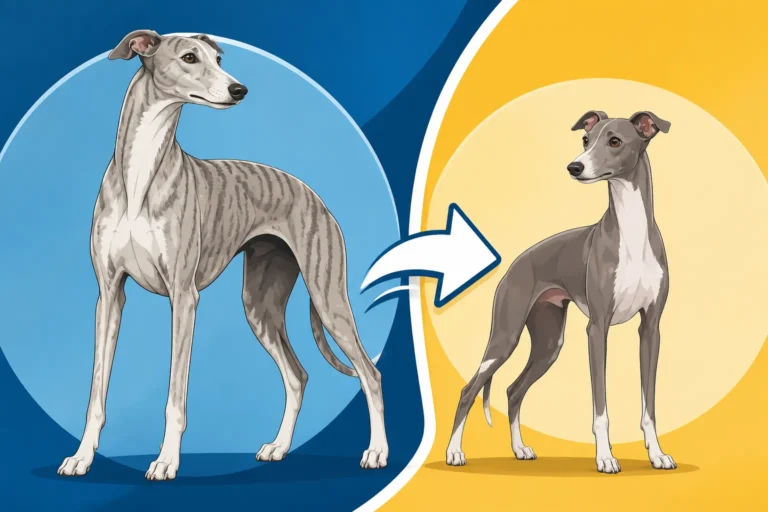
The Italian Greyhound is a small, fine-boned sighthound with a notably elegant outline. Its proportions, topline, chest, tuck-up, and overall balance contribute to the breed’s characteristic appearance. The dog should look refined without seeming weak or poorly constructed.
Movement is part of that picture. A dog’s gait gives the judge an opportunity to assess how its structure works in motion, not just how it looks standing still. The breed’s expected gait is an important part of its presentation; What the Italian Greyhound's Gait Should Look Like offers a closer look at that feature.
A spectator may focus on a dog’s height, coat color, or striking expression, but a conformation judge has a more specific task. The question is whether the dog’s structure and movement fit the breed standard. A glamorous appearance can catch the eye, but it is only one part of a much broader assessment.
Breed type is not the same as fragility
Italian Greyhounds are fine-boned, and their delicate appearance is one reason they can stand out in the ring. But refinement is not the same as fragility. The breed standard calls for a sound, balanced dog, not an animal that looks so slight that it cannot move comfortably or hold itself well.
That distinction also helps explain why an individual dog’s success in the ring should not be treated as a measure of what every Italian Greyhound should look like. Puppies and adults vary in size, build, and expression. A pet owner does not need a show winner for their dog to be a wonderful companion, and a show prospect is not automatically the right match for every household.
Italian Greyhounds are also often compared with Whippets because the breeds share a sighthound outline. They are distinct breeds with different size and type expectations, though. How the Italian Greyhound Differs From a Whippet explains why a smaller dog should not simply be thought of as a miniature version of its larger relative.
Color is only one part of the picture
Coat color can be one of the first things people notice when an Italian Greyhound enters the ring, but color alone does not earn a major award. Judges assess the whole dog, including its outline, movement, condition, and how well it represents the breed standard.
The range of accepted and commonly seen colors can also prompt questions from prospective owners. If color is part of your research, Which Colors an Italian Greyhound Comes In provides useful context. A puppy’s color may be visually appealing, but it should not replace careful consideration of health, temperament, breeder practices, and whether the breed fits your life.
For a companion dog, those everyday factors matter much more than Westminster history. Someone deciding whether to bring one home should consider the breed’s exercise needs, sensitivity, training, and care requirements. Whether an Italian Greyhound Suits a First Time Owner can help with that broader decision.
Why Westminster wins are not a measure of a good pet
Dog shows can be fascinating, but show results answer a narrow question: which dog best met a judge’s criteria in a particular competition? They do not answer whether the breed is right for your home or whether one dog will be affectionate, easy to train, or comfortable living with your family.
A show champion and a family companion have different roles
A conformation dog is assessed for how closely it matches a breed standard and how it performs in the ring. A family companion is part of daily life: sharing the sofa, learning household routines, coping with visitors, and adapting to the people and other animals around it.
Those roles can overlap, but they are not identical. A dog does not need a show title to be a lovely companion. Likewise, a show title does not guarantee that a particular dog will suit every home. Temperament, socialization, health, and the owner’s expectations all matter.
If you are weighing the breed’s everyday realities rather than its show history, What Italian Greyhound Owners Wish They Had Known is a helpful next read. It focuses on the kinds of practical considerations that can get lost when the conversation centers on a breed’s appearance or reputation.
Choose a dog for the life you can offer
An Italian Greyhound may be appealing because of its graceful build and affectionate reputation, but prospective owners should think about the whole package. The breed’s fine coat and lean body can mean extra attention to warmth and comfort. Its small size and delicate frame also call for thoughtful handling, especially around rough play or household hazards.
It is worth asking practical questions before choosing a puppy or adult dog: How much time will the dog spend alone? Is there a secure place for exercise? Are household members prepared to handle a sensitive, athletic dog gently? Can the family manage routine veterinary care and the breed’s specific needs? These questions are more useful for predicting a good match than whether the breed has won Westminster’s top award.
For fans of the show, it is perfectly reasonable to enjoy the spectacle and appreciate an Italian Greyhound’s performance in the ring. Just keep the result in perspective. Westminster honors a dog’s performance in a specific competition; it does not rank breeds as pets or determine which dog will be most loved at home.
The answer to remember
An Italian Greyhound has not won Westminster Best in Show. The breed competes in the Toy Group, and a dog would need to win its breed competition, advance through the group, and then beat the other group finalists to claim the overall title.
That history does not diminish the Italian Greyhound’s qualities or its place in dog shows. It simply separates a specific show record from the broader question of what makes a good dog. For an owner, the best Italian Greyhound is not necessarily the one that wins in a ring. It is the one whose needs, temperament, and lifestyle fit the home it will share.
Disclaimer
This article is for general informational purposes only and does not constitute professional advice. Laws, prices and regulations vary by location and change over time. Consult a qualified professional for guidance on your specific situation.