Whether an Italian Greyhound’s Nose Color Matters
A black, brown, or partly pink nose can leave an Italian Greyhound owner wondering whether the dog’s pigmentation is normal, connected to coat color, or a sign of illness. Nose color can vary, and a change does not automatically mean something is wrong. This guide explains what to look for, what breed standards can tell you, and when a vet should check your dog.
What nose color is typical in an Italian Greyhound
Nose color can vary with pigmentation
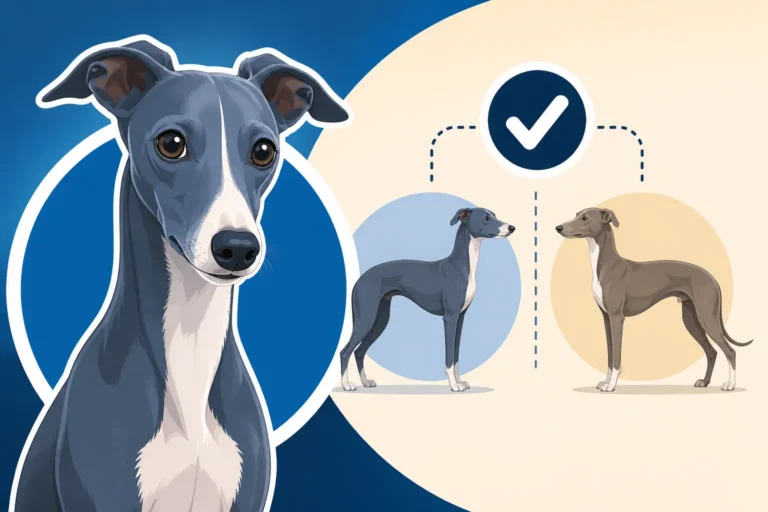
Italian Greyhounds may have dark noses that look black or brown, and the shade can relate to the dog’s overall pigmentation. A nose may also have areas with less pigment. The exact appearance varies among individuals, so a brown nose or a small patch of pink is not, by itself, proof of a health problem or a reason to assume a dog is not an Italian Greyhound.
Breed standards describe the desired appearance for dogs shown in conformation; they are not a complete guide to whether an individual pet is healthy. Standards can also differ between registries and countries. If you are comparing a dog with a particular standard, check the wording used by the registry or show organization involved. The nose is just one detail among many, not a reliable way to identify a dog’s breed on its own.
Coat color and nose pigment are related, but they do not offer a simple health diagnosis. If you are learning how coat shades and markings vary, Which Colors an Italian Greyhound Comes In and Which Colors the Italian Greyhound Standard Accepts give useful context. A dog’s nose should be considered alongside its skin, coat, eyes, and overall health rather than judged in isolation.
Appearance is different from a sudden change
The most useful question is often not “What color is my dog’s nose?” but “Has it changed?” A nose that has looked brown since puppyhood may simply be your dog’s normal pigmentation. A new pale patch, fading area, or dark mark deserves closer attention, especially if it appeared quickly or is changing.
Take a clear photo in ordinary light when you first notice a change. Compare it with older photos, if you have them, and note whether the area is growing, spreading, or becoming rough. This can help you describe the change to your veterinarian without relying on memory. Lighting, dirt, moisture, and camera settings can all make a nose look different in a photo, so compare images taken in similar conditions.
| What you notice | Possible explanation | A sensible next step |
|---|---|---|
| Long-standing black or brown color | Normal individual pigmentation | Mention it at routine checkups |
| Gradual, even fading without discomfort | Seasonal or other pigment change may be possible | Monitor it and ask your vet if it persists |
| New pale spots or spreading loss of color | Several causes are possible | Arrange a veterinary assessment |
| Crusting, sores, swelling, bleeding, or pain | Irritation, injury, infection, or another condition may be involved | Contact a veterinarian promptly |
| A new dark spot or raised area | Pigment change or a skin lesion, among other possibilities | Have a vet examine it, especially if it grows |
This table is a guide for deciding what to notice, not a way to diagnose the cause at home. If your dog seems unwell or the nose looks painful, do not wait for a photo comparison to settle the question.
How coat color and nose pigment relate
Coat shade does not tell the whole story
Pigment is influenced by inherited traits, but the relationship between a particular coat and nose color is not a simple one-to-one rule. Dogs with similar coats may not have identical noses, and a nose shade alone cannot confirm a dog’s genetic background. It is tempting to treat color as a shortcut—especially when a particular shade is less familiar—but coat and nose appearance should not be used to make broad claims about an individual dog’s health.
The same caution applies when you hear that a certain coat color is inherently unhealthy. Some color-linked conditions are relevant to particular pigmentation patterns, but nose color by itself does not establish that a dog has one. For more on the difference between appearance and health risk, see Whether Coat Color Predicts an Italian Greyhound's Health. If a breeder makes a health claim based only on nose shade, ask what evidence or veterinary assessment supports it.
Color can also develop as a puppy matures. A young dog’s nose and coat may not look exactly the same as they do later, and a puppy’s pigment may be less fully developed than an adult’s. That does not mean every pale area will darken, or that every change is normal. The practical step is to note what is changing and whether there are other symptoms. How an Italian Greyhound Puppy's Color Changes offers related context about coat development.
Breed standards are not a health test
A show standard describes how a dog should look for judging within that system. It does not replace a veterinary exam, and a color detail that matters in a show ring may have no bearing on a pet’s comfort or wellbeing. Conversely, a dog with a nose color that appears ordinary can still have a medical issue if the tissue is inflamed, cracked, or painful.
If you are evaluating a breeder or puppy, look beyond a photograph of the nose. Ask about the puppy’s veterinary care, the parents’ health, and the breeder’s approach to screening and responsible placement. A dog’s ancestry and health history are more informative than trying to infer its wellbeing from a single patch of pigment.
For example, a family might see a blue Italian Greyhound with a dark nose and assume the shade guarantees a healthy coat and skin. It does not. Coat color can be part of a broader discussion about inherited traits, but it cannot substitute for observing the dog and asking appropriate health questions. Whether a Blue Italian Greyhound Is Standard explains the distinction between color and breed-standard questions; it should not be treated as a health assessment.
When a nose color change may need veterinary attention
Look at the surface as well as the color
A color change without any change in texture or comfort may be less urgent than a change accompanied by physical symptoms, but it still deserves attention if it is new, persistent, or spreading. Watch for crusts, cracks, ulcers, bleeding, swelling, discharge, or a nose that seems unusually dry and painful. Also notice whether your dog rubs its face, sneezes more than usual, avoids having its muzzle touched, or seems uncomfortable eating or sniffing.
A veterinarian may ask when you first noticed the change, whether it followed an injury or exposure, and whether it has progressed. They may examine the nose and surrounding skin, and decide whether any further checks are appropriate. There is no dependable home test that can tell whether a pink area is a harmless pigment variation or a medical problem.
Contact a veterinarian promptly for a sore that is worsening, persistent bleeding, significant swelling, or obvious pain. If your dog has trouble breathing, seems very unwell, or has a severe reaction after an exposure, seek urgent veterinary care. For a small, stable change without discomfort, you can still raise it at a routine appointment or call the clinic for guidance on timing.
Possible causes are varied
A lighter area might reflect normal pigmentation, a gradual seasonal change, or a loss of pigment. Irritation, an injury, infection, or an immune-related skin condition can also affect the nose. These possibilities can look similar in a quick glance, which is why it is risky to label a change as “just winter nose” or “just a scratch” without considering the full picture.
Sun exposure may be relevant when the nose has little pigment, particularly if the skin is exposed for extended periods. That does not mean every pink-nosed dog needs a product applied immediately. Ask your vet whether your dog needs sun protection and what kind is safe for its skin. If you compare dog-safe sun-protection options at Chewy or another retailer, check the label carefully and confirm with your veterinarian before applying anything to the nose.
Avoid human sunscreens, medicated creams, essential oils, or home remedies unless your veterinarian specifically approves them. Dogs can lick their noses, and products intended for people may contain ingredients unsuitable for ingestion or sensitive skin. A vet can help you choose an appropriate approach based on the dog’s skin and habits.
How to care for an Italian Greyhound’s nose
Keep observation simple and consistent
You do not need to inspect your dog’s nose obsessively. A quick look during ordinary care is usually enough: check whether the surface looks smooth and comfortable, and whether any new area is spreading or becoming raised. If you are already brushing your dog or checking its ears and paws, you can include the nose in that brief routine.
For a change you are monitoring, keep a short note with the date, what you saw, and whether your dog showed discomfort. A photo taken in natural, indirect light can be helpful. Avoid repeatedly rubbing or scrubbing the area to see whether the color comes off. That can irritate delicate skin and will not explain the cause.
If the nose is dirty, use a soft, damp cloth and gentle pressure. Do not pick at crusts or apply a product simply because the nose looks dry. When asking about a cleanser or protective product at Chewy, use the ingredient list as a starting point rather than assuming that a product marketed for pets is appropriate for every dog. A veterinarian can tell you whether cleaning or treatment is needed at all.
Use practical protection, not color-based assumptions
A dog with a pale or partly pink nose may need more attention to sun exposure, but the right precautions depend on the individual dog and local conditions. Shade, shorter outdoor periods during intense sun, and avoiding long stretches of direct exposure are sensible topics to discuss with your vet. Do not rely on a coat color or nose shade alone to decide that your dog is either fully protected or definitely at risk.
When shopping for dog-safe sun protection through Chewy, compare the product’s directions and ingredients and ask your veterinarian whether it suits your dog. Keep any product away from the eyes and mouth unless its directions and your vet specifically say otherwise. If your dog licks off an application, develops redness, or seems uncomfortable, stop using it and contact your clinic for advice.
Most importantly, judge changes by their timing and accompanying signs. A long-standing brown nose on a comfortable dog is usually a different situation from a nose that suddenly develops painful sores. The first may simply be your dog’s natural coloring; the second needs a veterinary opinion. If you are also researching color-related skin concerns, Why a Blue Italian Greyhound Thins on the Back discusses a separate issue and should not be confused with nose pigmentation alone.
Disclaimer
This article is for general informational purposes only and does not constitute professional advice. Laws, prices and regulations vary by location and change over time. Consult a qualified professional for guidance on your specific situation.