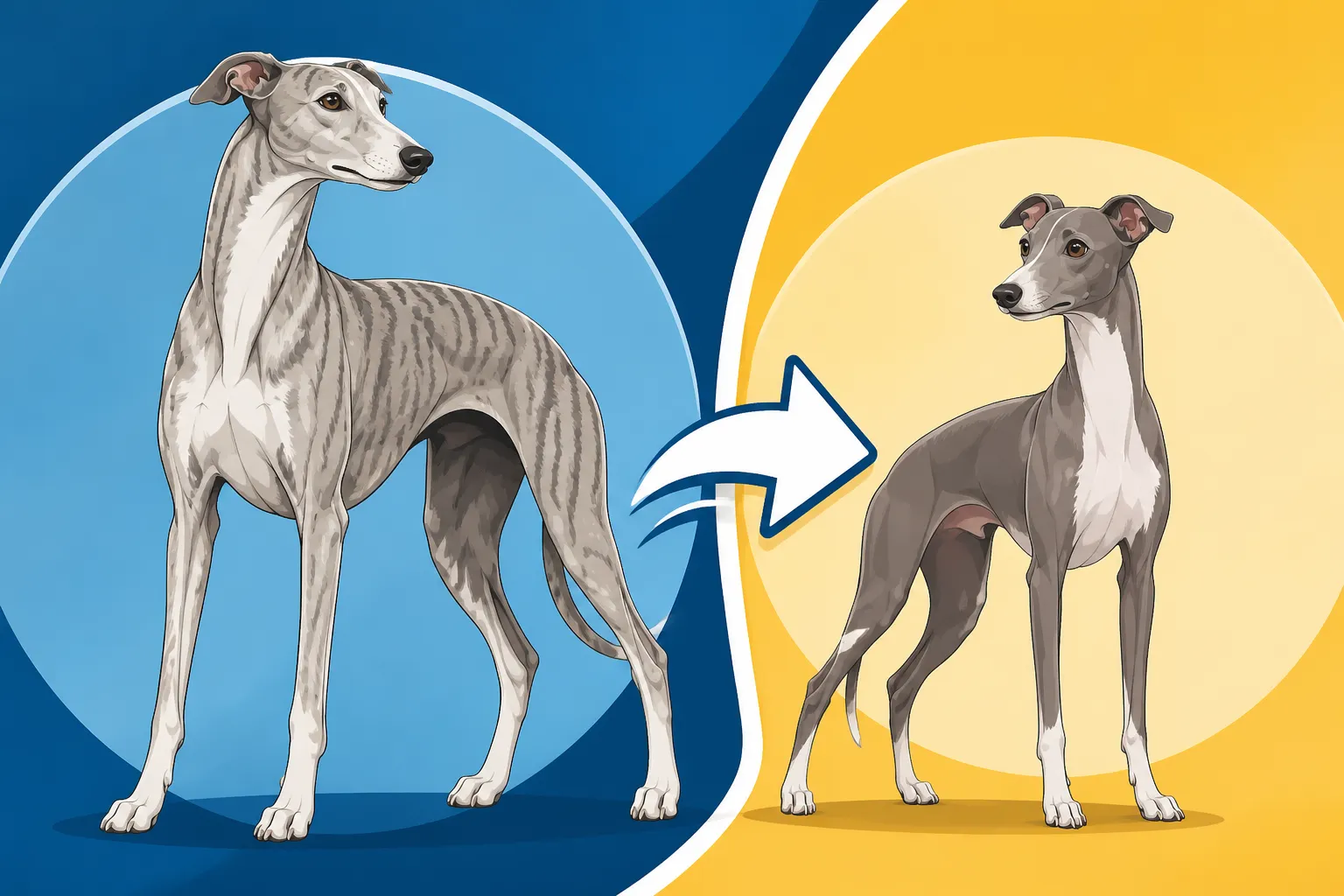
Whether the Italian Greyhound Was Bred Down From Greyhounds
It's a common thought when you first lay eyes on an Italian Greyhound: "Is that just a tiny Greyhound?" Many people assume these elegant, slender dogs were simply bred down from their much larger Greyhound cousins, a miniature version crafted through generations of selective breeding. This misconception is perfectly understandable, given their striking similarities in build and grace. However, the truth of the Italian Greyhound's origins is a fascinating journey that stretches back much further than many might realize, suggesting a history entirely distinct from merely being a scaled-down version of another breed. This guide will delve into the rich history and genetic evidence surrounding the Italian Greyhound to uncover whether they were, in fact, "bred down" from Greyhounds or if their story is uniquely their own.
The Ancient Lineage of the Italian Greyhound
When we talk about the history of the Italian Greyhound, we're not just discussing a few centuries; we're reaching back into antiquity, far before what we recognize as the modern Greyhound even existed. Archaeological evidence and ancient art suggest the presence of small sighthound-type dogs in the Mediterranean basin for thousands of years. These little hounds were prized companions, depicted in frescoes and statuettes from ancient Egypt, Greece, and Rome.
Imagine browsing through an old museum exhibit, and there, among the artifacts, you see depictions of dogs with that unmistakable sighthound silhouette – slender, arched back, tucked waist, and elegant long legs – but clearly much smaller than the coursing hounds of later eras. These weren't Greyhounds as we know them; they were ancestors, certainly, of the sighthound family, but specifically small sighthounds. Their purpose wasn't necessarily to chase down large game across open fields, but to be nimble, agile companions, sometimes used for hunting small prey or simply cherished for their beauty and affectionate nature. The earliest records show a dog similar to the Italian Greyhound was revered, symbolizing loyalty and grace. This deep, ancient history hints that the Italian Greyhound isn't a modern invention by shrinking a larger dog, but rather a preservation of an ancient, naturally small sighthound type. You can learn more about their long past in The Italian Greyhound Is Two Thousand Years Old.
The geographical spread of these small sighthounds also tells a story. While the modern Greyhound has strong ties to specific regions known for coursing, the ancestors of the Italian Greyhound appeared widely across various cultures where small, elegant companion dogs were valued. This broad, early presence indicates an established, distinct lineage rather than a derivative one. They were dogs of palaces and homes, cherished for their delicate form and engaging personalities, qualities that have remained central to the breed's appeal.
Debunking the "Bred Down" Myth
The idea of "breeding a dog down" usually implies taking a large breed and intentionally reducing its size over many generations. Think of how some miniature versions of larger working breeds came to be. However, with the Italian Greyhound, the evidence points away from this narrative. They were never "large" to begin with in their historical context. Instead, they appear to have always been a small sighthound, and their unique characteristics were refined over time, not reduced.
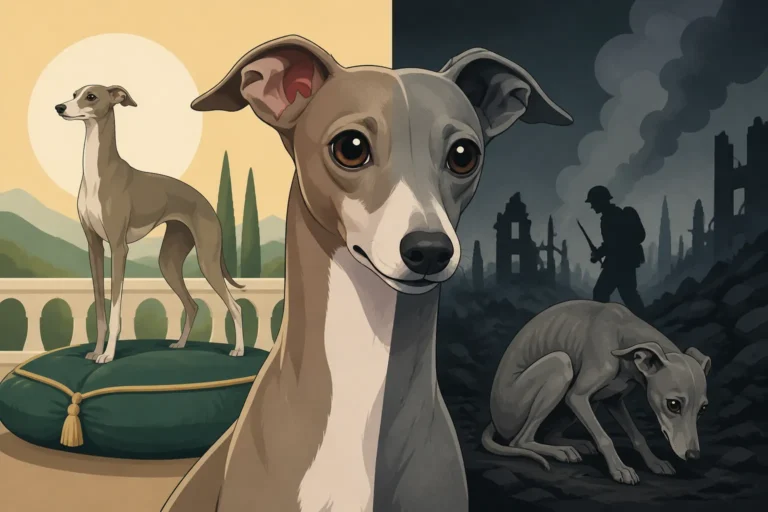
During the European Renaissance, particularly in Italy (hence the name!), these small sighthounds became incredibly popular among nobility and royalty. This period saw an intensified focus on their elegance, refinement, and companion qualities. Breeders weren't trying to make a Greyhound smaller; they were perfecting an already small, delicate breed, enhancing traits like their graceful movement, fine bones, and gentle temperament. The goal was to create the epitome of a noble companion, a dog that could sit on laps and adorn royal portraits, not one that was merely a miniature of a hunting dog. Many Renaissance painters immortalized these exquisite little dogs in their works, confirming their unique status and appearance centuries ago. The Renaissance Painters Who Put Italian Greyhounds in the Frame beautifully illustrates this point.
If they were truly bred down from Greyhounds, you'd expect a more direct lineage, perhaps a more recent divergence in their breed history. Instead, the Italian Greyhound seems to have maintained its unique small stature and characteristics throughout its recorded history, rather than undergoing a dramatic reduction from a larger form. Their history is one of consistent small size and continuous refinement, rather than a process of miniaturization from a larger ancestor. This distinction is crucial to understanding the breed's authentic heritage.
Genetic Insights into Italian Greyhound Lineage
Modern scientific tools, particularly DNA analysis, have provided incredible insights into canine ancestry and breed relationships. What these studies often reveal about the Italian Greyhound supports their ancient and distinct status within the sighthound family, rather than a direct "bred down" relationship from the larger Greyhound. While all sighthounds share common ancestors, the Italian Greyhound's genetic markers typically place them in an older, more basal branch of the sighthound family tree.
These genetic studies suggest that the Italian Greyhound, along with a few other ancient breeds, represents a more primitive form of dog, predating many of the specialized breeds we see today, including the modern Greyhound. This means that while they share a deep common ancestry as sighthounds—dogs bred for sight hunting and speed—the Italian Greyhound didn't come from the Greyhound. Instead, they likely evolved alongside, or even before, the specific development of the modern Greyhound breed. Think of them as parallel branches on the evolutionary tree of sighthounds, each developing their unique size and characteristics over millennia.
This understanding is important because it highlights the Italian Greyhound's own intrinsic value and ancient genetic makeup. They aren't an imitation or a manufactured novelty; they are a living link to some of the earliest companion dogs. When you consider Which Breeds Are Genetically Closest to the Italian Greyhound, you'll see that while they are related to other sighthounds, their position in the genetic tree underscores their distinct evolution. Their small size isn't a recent genetic modification of a larger dog but a trait that has been present and carefully maintained throughout their long and storied past.
Evolution of Breed Standards and Selective Breeding
The development of any purebred dog involves a process of selective breeding, where humans choose specific traits to emphasize over generations. For the Italian Greyhound, this process wasn't about making them small, but about maintaining and perfecting their inherent smallness, elegance, and distinct sighthound characteristics. The breed standard, which defines the ideal appearance and temperament of the Italian Greyhound, has always emphasized these qualities, focusing on their delicate bone structure, refined head, and graceful movement.
During periods like the Victorian era, there were indeed fads for extreme miniaturization in many toy breeds, and the Italian Greyhound was not entirely immune to this. However, reputable breeders quickly realized the health implications of breeding for excessively tiny dogs, leading to a focus on sound structure and healthy proportions within their naturally small size. The aim was to produce a healthy, robust small sighthound, not a fragile, unfunctional "teacup" version of a larger dog. You can explore What an Italian Greyhound Weighs and How Tall It Stands to understand the healthy size range for the breed.
So, while selective breeding certainly played a role in shaping the Italian Greyhound into the dog we adore today, it was a process of refinement rather than reduction. They were never a larger breed that was then systematically scaled down. Instead, their ancestors were already small, elegant sighthounds, and breeders worked to preserve and enhance those qualities. This makes the Italian Greyhound a truly unique and ancient breed, not merely a mini-me of the Greyhound. For essential supplies that cater to their unique build, from specialized harnesses to cozy beds, you can often find what you need on Chewy.
To further illustrate the differences between these two magnificent breeds, here's a quick comparison:
| Feature | Italian Greyhound | Greyhound |
|---|---|---|
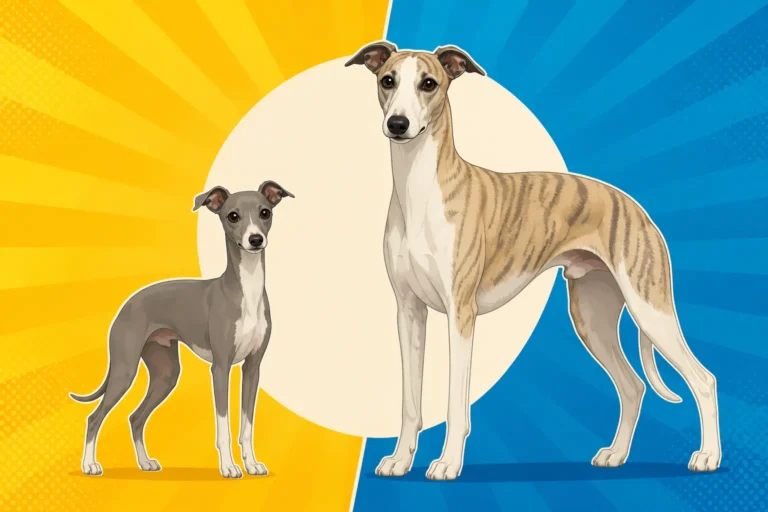
| Size | Small (typically 7-14 lbs, 13-15 inches tall) | Large (typically 60-70 lbs, 27-30 inches tall) |
| Historical Role | Companion, small game hunter, lap dog, royalty | Coursing, racing, large game hunter |
| Bone Structure | Very fine, delicate | Strong, muscular, built for speed |
| Energy Level | Moderate, bursts of energy, loves lounging | High bursts of speed, very calm indoors |
| Temperament | Affectionate, sensitive, intelligent, "Velcro" | Gentle, quiet, independent, loyal |
| Fragility | Prone to leg breaks due to fine bones | Generally robust, but fast injuries happen |
| Cold Tolerance | Very sensitive, needs layers indoors and out | Sensitive to cold, but generally more hardy |
This table clearly highlights that while they share the sighthound shape, their scale, original purpose, and physical characteristics diverge significantly. They are distinct breeds, each marvelous in their own right, and not simply different sizes of the same dog.
The Distinct Characteristics Beyond Size
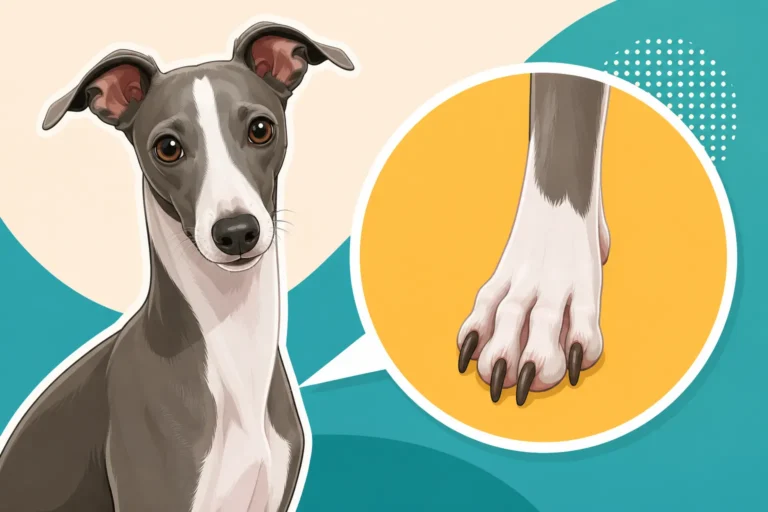
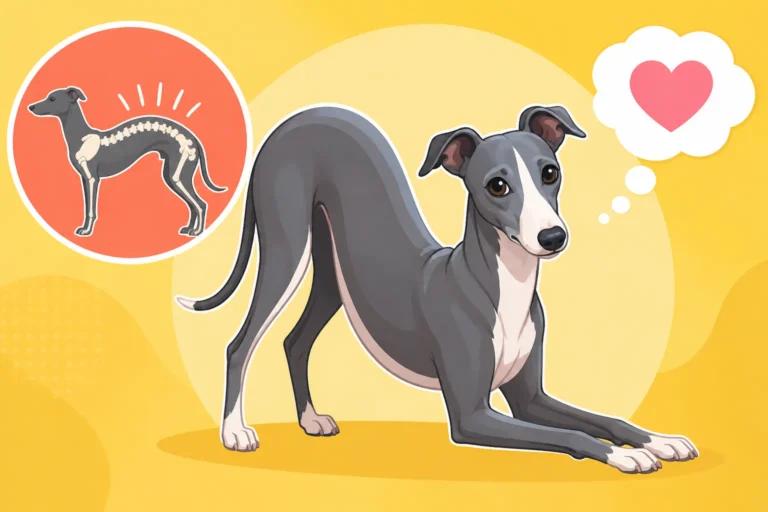
Beyond the sheer difference in size, Italian Greyhounds possess several characteristics that distinguish them from Greyhounds, further supporting the idea of their separate evolutionary paths. For one, their bone structure is notoriously delicate. While Greyhounds are lean and muscular, built for powerful bursts of speed and endurance, Italian Greyhounds have exceptionally fine bones. This delicacy makes them prone to specific injuries, particularly leg fractures, a concern that Italian Greyhound owners are keenly aware of. You'd certainly want to look for fracture protection accessories or specialized food on Chewy. This fragility is not merely a scaled-down version of a Greyhound's build; it's a unique aspect of their physiological makeup that has been part of their identity for centuries. Why an Italian Greyhound's Leg Bones Break So Easily goes into detail on this very topic.
Their temperament, while sharing the sighthound's quiet dignity, also has nuances. Italian Greyhounds are often described as "Velcro dogs," intensely devoted to their human companions and prone to separation anxiety if left alone too long. They thrive on constant companionship and warmth, often burrowing under blankets or snuggling deep into laps. While Greyhounds are also affectionate and gentle, they tend to be a bit more independent and self-assured, often content to nap quietly on their own. The Italian Greyhound's deep need for connection and warmth seems intrinsically linked to its historical role as a companion animal rather than a purely working dog.
Furthermore, the overall "type" of the Italian Greyhound, as defined by breed standards, emphasizes a more ethereal, elegant quality compared to the Greyhound's powerful, athletic build. Judges look for a specific "lightness" and refinement in the Italian Greyhound's movement and form that speaks to centuries of breeding for aesthetic appeal and companionship. This distinct set of desired traits reinforces that they were cultivated as a unique breed, not just a miniature of a larger one. If you're looking for toys or treats tailored to a delicate Italian Greyhound, exploring Chewy might yield some perfect finds.
Why This Distinction Matters to Owners
Understanding that Italian Greyhounds were not simply "bred down" from Greyhounds has significant implications for how we perceive and care for them. It encourages us to appreciate their unique history, their ancient lineage as small sighthounds, and their specific needs. Recognizing them as a distinct breed helps owners understand why their Italian Greyhound is so delicate, why they crave warmth, and why they might have different exercise requirements than a larger sighthound.
For instance, their delicate bone structure means that careful handling, puppy-proofing homes, and providing safe environments (like ramps for furniture) are paramount. This isn't just about managing a smaller version of a large dog; it's about respecting the inherent physical characteristics of the Italian Greyhound. Their intense need for companionship means they thrive in homes where they can be close to their people, often making them unsuitable for lifestyles where they would be left alone for extended periods. This characteristic is so strong that they are often referred to as The Velcro Dog: What Constant Company Means With an Italian Greyhound.
Moreover, this historical perspective helps us to value the Italian Greyhound for who they are, not for what they are not. They are not merely a shrunken version of a Greyhound; they are an ancient, distinct, and beloved breed with their own rich heritage and a truly unique set of qualities. Their elegance, their devotion, their charming quirks – all stem from a lineage that has focused on these very traits for thousands of years. So, the next time someone asks if your Italian Greyhound is a tiny Greyhound, you can confidently share the incredible story of their own ancient and distinguished ancestry.
Disclaimer
This article is for general informational purposes only and does not constitute professional advice. Laws, prices and regulations vary by location and change over time. Consult a qualified professional for guidance on your specific situation.