What DNA Studies Say About the Italian Greyhound
An Italian Greyhound’s DNA can reveal how closely it fits a breed population and which other breeds share parts of its ancestry, but it cannot tell the whole story of the dog in front of you. This guide explains what genetic studies can—and cannot—show about Italian Greyhounds, how breed ancestry differs from ancient history, and how to interpret consumer DNA results without overreading them.
What DNA studies can tell us about the Italian Greyhound
Breed identity is a genetic pattern, not a single marker
A modern dog breed is not defined by one “Italian Greyhound gene.” Breed identity reflects patterns across many parts of the genome that became more common in a population through generations of selective breeding and limited interbreeding. Researchers compare those patterns across dogs to see how populations relate to one another.
That means a study can often distinguish a sampled Italian Greyhound population from other breeds, even when those breeds share some ancestry. The result is a statistical picture of relatedness, not a biological dividing line that says every Italian Greyhound must have exactly the same genetic profile.
It also helps explain why two dogs of the same breed can look or behave differently. Each inherits a different combination of DNA from its parents. The breed’s shared ancestry influences typical traits, but it does not make every individual identical.
Relatedness does not mean one breed is simply a smaller version of another
Italian Greyhounds, Whippets, and Greyhounds share sighthound features, including a lean build and a history of selection for speed and visual pursuit. Their similarities are consistent with shared ancestry and related breeding histories. They do not, by themselves, establish that one present-day breed was directly created from another.
A genetic comparison can show that breeds are more closely related to one another than to many other breeds. It cannot always tell a simple, one-directional story about exactly which breed came first or which specific dogs were used to create another. Breed populations have changed over time, and historical records may be incomplete.
So, “related” is more accurate than “the same breed in a different size.” For a closer look at comparisons between sighthounds, see Which Breeds Are Genetically Closest to the Italian Greyhound and Whether the Italian Greyhound Is a Miniature Greyhound. Those distinctions matter when people use DNA results to make claims about a dog’s identity or history.
DNA cannot settle every question about ancient origins
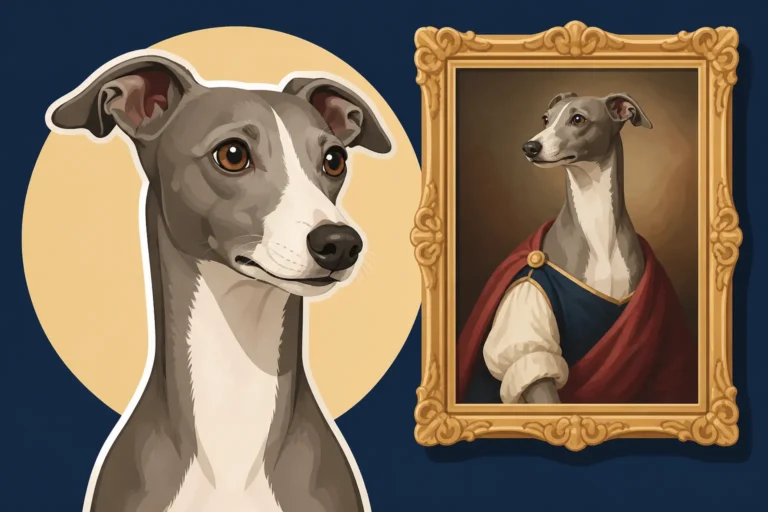
The Italian Greyhound is often connected to very old depictions of small, slender dogs. But resemblance in an artifact or painting is not genetic proof that the dog pictured belonged to the modern breed. A DNA study of living dogs can compare present-day populations; it cannot directly test the ancestry of an ancient animal unless usable biological material from that animal is available and studied.
Even then, ancient DNA findings would need careful interpretation. A dog that resembles an Italian Greyhound could belong to a related population without being part of the modern breed as it is recognized today. The name, appearance, and breeding rules associated with a modern breed developed in particular historical contexts.
For that reason, genetic evidence should be treated as one part of the history conversation rather than a final answer to it. Whether the Italian Greyhound Really Dates to Ancient Egypt and What DNA Studies Say About the Italian Greyhound are different kinds of questions: one concerns historical interpretation, while the other concerns what genetic comparisons can establish.
What consumer DNA tests can and cannot show
Breed estimates depend on the company’s reference samples
A consumer dog DNA test compares a dog’s genetic data with reference samples in the company’s database. The estimate depends in part on which breeds are represented, how those samples were collected, and how the company’s analysis separates closely related populations.
That is why a mixed-breed dog’s result may be reported as a set of percentages rather than a definitive family tree. A small percentage can be harder to interpret than a large, clear signal, especially when related breeds share many genetic patterns. Different testing services may use different reference panels and methods, so their estimates do not always match.
A result is best read as an estimate supported by a particular test’s database, not as a certificate of a dog’s complete history. If you are comparing kits on a marketplace such as Chewy, check what the test is designed to report and whether Italian Greyhounds are included in its breed reference panel. A product listing alone does not explain how well a test can distinguish neighboring breeds.
An ancestry estimate is not a health diagnosis
Some DNA tests also screen for specific inherited variants. That can be useful information, but a genetic result is not the same as a veterinary diagnosis. A variant may indicate increased risk, carrier status, or a particular inherited condition, depending on the test and the condition involved. It does not automatically mean a dog is ill or will become ill.
Health interpretation can also depend on inheritance. For some conditions, a dog may need to inherit a relevant variant from both parents to be affected; for others, the relationship between a variant and disease is more complicated. A veterinarian can help put a result in context, especially if the dog has symptoms or if the information may affect breeding decisions.
If you are considering a kit through Chewy or another retailer, review the test’s health-screening details separately from its breed-ancestry features. If a result raises a medical concern, bring the report to your veterinarian rather than treating the online explanation as a diagnosis.
A DNA test cannot certify breed quality or predict temperament
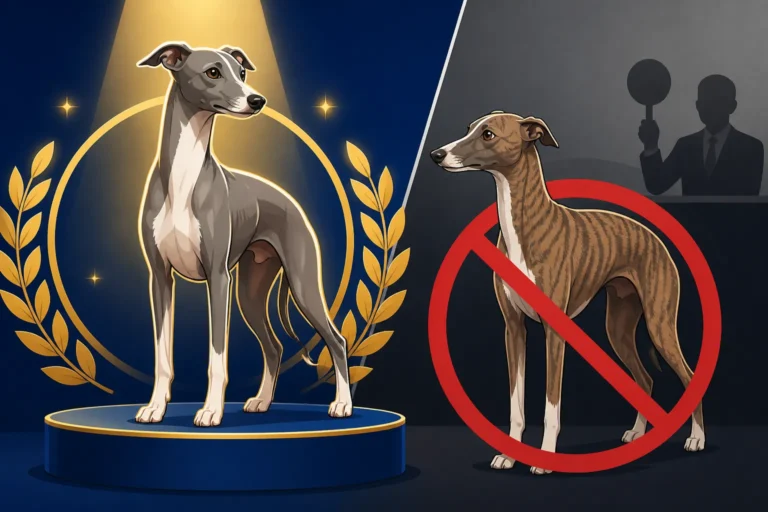
A test may estimate breed ancestry, but it cannot determine whether a dog meets a breed standard. Conformation involves observable structure and movement, assessed against the relevant standard—not a percentage on a DNA report. Nor does an ancestry result guarantee a particular personality, training response, or level of prey drive.
Genes can influence behavior, but behavior also develops through experience, socialization, health, environment, and individual temperament. Two dogs with similar ancestry can respond very differently to the same situation. A DNA result should not replace getting to know the dog, asking about its background, or working with a qualified trainer when behavior is a concern.
If you see a kit marketed as a way to prove that a dog is “pure” or to predict exactly how it will behave, read the claims carefully. Chewy can be a convenient place to compare available pet products, but it is still important to assess the test’s stated purpose and limitations—not just the way the kit is presented.
| Question | What DNA evidence may help with | What it cannot establish on its own |
|---|---|---|
| Is this dog genetically similar to Italian Greyhounds? | Whether the dog’s DNA resembles the test’s Italian Greyhound reference samples | A complete, verified pedigree |
| Which breeds may be in a mixed dog’s ancestry? | Estimated ancestry based on the company’s reference panel | An exact family tree or certain percentages for every breed |
| Is a dog at risk for a tested inherited condition? | Whether a particular variant was detected, if included in the test | A veterinary diagnosis or a guarantee of future health |
| Is the dog a show-quality Italian Greyhound? | No direct answer | Whether its structure and movement meet a breed standard |
| Will the dog have a particular temperament? | No reliable individual prediction from breed ancestry alone | How that dog will behave in every setting |
How Italian Greyhound ancestry fits into breed history
Modern breed populations have their own genetic histories
A breed’s current genetic profile reflects its more recent population history as well as older ancestry. Selective breeding can make some traits more common, while periods when relatively few dogs contribute to future generations can reduce genetic diversity. This helps explain why modern breed groups can be distinguishable in genetic analyses even when their histories overlap with other breeds.
The phrase “gene pool” describes the genetic variation available in a population. It is not a score of a breed’s quality, nor does it tell you whether any individual dog is healthy. A narrow population history can be relevant to inherited risk, but the practical meaning depends on the specific condition, the dogs involved, and responsible breeding decisions.
For background on that population question, see How Narrow the Italian Greyhound Gene Pool Became. Genetic findings are most useful when connected to careful health information and breeding records, rather than treated as a verdict about every member of the breed.
DNA evidence and physical appearance answer different questions
A dog can have the fine bones, tucked-up waist, and narrow profile commonly associated with Italian Greyhounds without a DNA test proving its ancestry. Conversely, a dog with a strong Italian Greyhound ancestry estimate may not match every feature people expect. Appearance is influenced by many genes and can also vary within a breed.
When breed identity matters—for example, when adopting, registering, showing, or choosing a breeding prospect—different evidence serves different purposes. Pedigree records document reported parentage. A DNA test estimates genetic similarity or checks selected variants. A judge or knowledgeable breed specialist evaluates visible structure and movement. None of these tools answers every question.
This distinction is especially helpful when a dog’s appearance leads to guesses about its background. A resemblance may suggest a possibility, but it is not proof. The same caution applies to mixed dogs: Whether an Italian Greyhound Mix Keeps the Build is a question about inherited traits, not something a single breed percentage can answer with certainty.
Coat color and health claims need specific evidence
A coat color may be associated with certain genetic variants, but color alone does not reveal a dog’s overall health or ancestry. To make a meaningful health claim, the evidence needs to connect a particular variant with a particular condition and explain how reliably that relationship applies to the dog being tested.
This is one reason broad statements such as “this color means the dog is unhealthy” are misleading. Risk varies by condition and genetic background. A responsible breeder uses relevant health information alongside veterinary care, family history, and sound breeding decisions; a consumer test result is only one piece of that picture.
For a more focused discussion of the limits of color-based assumptions, see Whether Coat Color Predicts an Italian Greyhound's Health. If a DNA report flags a possible concern, ask your veterinarian what it means for that individual dog, and whether additional testing or monitoring is appropriate.
How to interpret an Italian Greyhound DNA result carefully
Read the report in layers
Start by separating the report into what it actually measured: breed ancestry, health variants, traits, or some combination. These categories are not interchangeable. A breed estimate is not a health screen, and a health variant result does not confirm a dog’s breed.
Next, note how certain the report says each finding is. A broad or low-percentage ancestry estimate deserves more caution than a strong match, particularly for closely related breeds. Look for explanations of the reference panel, test scope, and limitations. If those details are unclear, avoid treating the most specific-looking number as the most reliable one.
Finally, ask what you need the result to help you decide. Curiosity about ancestry is different from planning a breeding, investigating a health concern, or documenting a dog’s background. In the latter situations, combine the report with records and professional advice rather than relying on the test alone.
Consider the test’s purpose before buying
Before ordering a kit, decide whether you mainly want an ancestry estimate, information about selected inherited conditions, or both. Then check the company’s description for the breeds and conditions included, how results are delivered, and what support is offered for interpreting them. Those details can vary between tests.
If you are comparing options through Chewy, use the retailer’s listing to identify the product, then review the test provider’s own description for the technical scope and instructions. Pay attention to how the sample must be collected and submitted, and follow the directions carefully so the sample is usable. A kit is only helpful if the test answers a question you genuinely have.
For health-related decisions, ask your veterinarian whether testing is appropriate before you buy. For breeding decisions, a single consumer report should not replace a broader conversation about family health, screening, and responsible pairing. A breeder’s transparency and documentation can be more informative than a broad claim that a dog has been “DNA tested.” See What an Italian Greyhound Breeder Should Have Tested for the distinction between genetic screening and a comprehensive health approach.
Use results as a starting point, not the final word
An Italian Greyhound DNA report can offer clues about ancestry and may flag selected inherited variants. It cannot reconstruct every generation of a dog’s family, establish ancient origins by itself, or tell you exactly what the dog will look or act like. The strongest interpretation comes from combining genetic information with the dog’s medical history, reliable records, and direct observation.
That approach also takes pressure off a result that does not match expectations. If a test gives a surprising breed estimate, consider the test’s reference panel and the possibility that related populations are difficult to distinguish. If it flags a health variant, have the finding interpreted in context before making decisions about treatment or breeding.
Genetic research is valuable precisely because it helps answer particular questions—not every question about a breed or an individual dog. Keeping that boundary clear makes DNA results more useful, and less likely to turn into a label that overshadows the dog itself.
Disclaimer
This article is for general informational purposes only and does not constitute professional advice. Laws, prices and regulations vary by location and change over time. Consult a qualified professional for guidance on your specific situation.