Whether Male and Female Italian Greyhounds Differ in Size
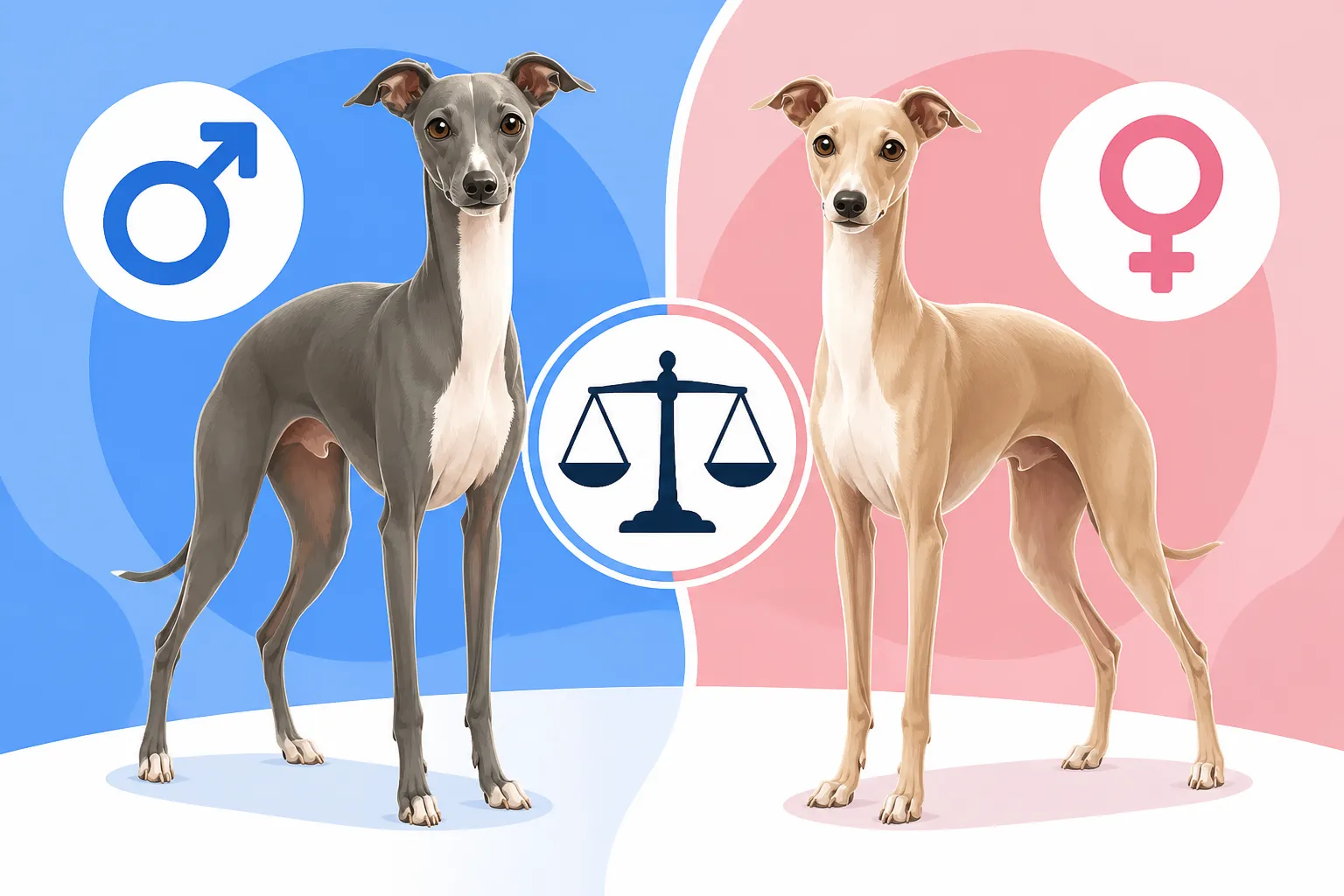
Male Italian Greyhounds are often a little larger or heavier than females, but the difference is usually subtle. Plenty of females are bigger than males, and both sexes fit the same breed standard. If you’re choosing a puppy, buying a harness, or wondering whether your dog’s weight is healthy, this guide explains what size differences to expect and what matters more than sex.
How male and female Italian Greyhounds compare in size
The breed standard does not set separate male and female sizes
Italian Greyhounds are generally expected to stand about 13 to 15 inches at the shoulder and weigh around 7 to 14 pounds. Those figures apply to the breed overall rather than establishing one range for males and another for females. A small male and a substantial female can both be entirely typical.
Males may average somewhat taller or heavier, but that is a tendency, not a dependable rule for an individual dog. A female from larger parents could outgrow a male from a lighter, smaller line. Littermates can also mature into noticeably different builds even when they had the same early care.
It helps to think of size as a range with considerable overlap, not two distinct categories. If you’re comparing puppies, their parents’ size and build can offer a more useful clue than sex alone. For a broader look at the breed’s proportions, see What an Italian Greyhound Weighs and How Tall It Stands.
Height and weight do not always tell the same story
Two Italian Greyhounds can weigh the same and still look quite different. One may be longer in the body or taller at the shoulder, while the other has a more compact frame. Bone structure, muscle, body length, and overall proportions all affect how large a dog appears.
Weight also changes with age and condition. A growing adolescent may look lanky before filling out, while an adult that has gained extra fat may weigh more without being larger in a healthy, well-proportioned way. Because the breed is naturally slim, a number on the scale needs context.
If you’re comparing your dog with a breed chart or another person’s Italian Greyhound, remember that neither comparison replaces an individual assessment. Your veterinarian can help you decide whether your dog is maintaining a suitable body condition. The guide What an Italian Greyhound Should Weigh offers more detail on interpreting weight alongside body shape.
What affects an Italian Greyhound’s adult size
Genetics and family build matter more than sex alone
A puppy’s inherited build is one of the strongest clues to its eventual size. Looking at both parents can help you understand whether the family tends to be small, tall, fine-boned, or more substantial. Even then, adult size is not perfectly predictable, and puppies from the same litter may not finish at the same height or weight.
Breeding choices also influence the range of sizes seen in the breed. Responsible breeders aim for sound, healthy dogs rather than extreme smallness. A puppy being unusually tiny is not automatically a sign of better quality or a promise that it will remain especially small. For questions about health screening and responsible breeding, What an Italian Greyhound Breeder Should Have Tested is a useful next read.
When you meet a puppy, focus on overall health and structure rather than trying to pick the “right” sex for a particular size. Ask the breeder about the parents’ adult measurements, the puppy’s growth so far, and the range of sizes in previous litters. Those details are more informative than a guess based only on whether the puppy is male or female.
Age, nutrition, and health shape growth
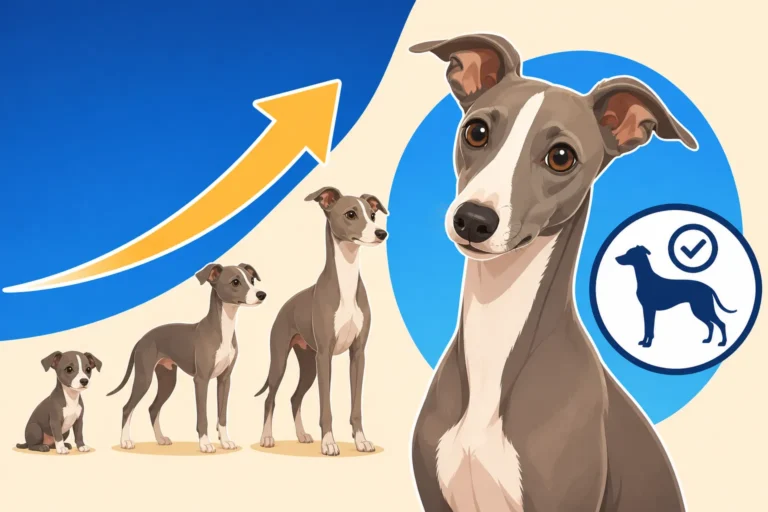
Italian Greyhounds grow quickly during puppyhood, but they do not all develop at precisely the same pace. A young dog may look all legs for a while, then gradually gain muscle and mature into its adult outline. Don’t try to speed up growth by feeding extra food or adding supplements without veterinary guidance.
A complete, age-appropriate diet supports normal development. The amount a puppy needs depends on its age, activity, food, and individual growth pattern—not simply whether it is male or female. If you’re comparing food portions or checking a feeding label, use your veterinarian’s advice as the anchor; retailers such as Chewy can be one place owners encounter product feeding directions, but a label cannot assess your puppy’s condition.
Growth and weight can also be affected by illness, dental discomfort, parasites, or other health concerns. If a puppy stops gaining as expected, loses weight, or seems unwell, contact a veterinarian rather than assuming it is just a naturally small dog. Weighing an Italian Greyhound Puppy Every Week explains how regular tracking can make gradual changes easier to spot.
How to tell whether your Italian Greyhound is a healthy size
Look at body condition, not just the scale
Italian Greyhounds are meant to look fine-boned and lean. Seeing some outline of the ribs can be normal, and a tucked-up waist is part of the breed’s shape. But there is a difference between a naturally slim dog and one that is losing too much weight or lacking muscle.
At home, look at your dog from above and from the side. You should generally see a waist behind the ribs and an abdominal tuck, while the spine and hip bones should not appear sharply prominent. These observations are helpful, but they are not a substitute for a veterinary body-condition assessment—especially if your dog’s appearance has changed.
A scale reading is most useful when you track it over time under similar conditions. If your adult dog’s weight shifts unexpectedly, or you’re unsure whether its ribs and hips look normal, ask your vet to assess its body condition. The breed’s naturally slim silhouette can make owners worry unnecessarily, while gradual weight changes can also be easy to miss.
Sex is not a reliable shortcut for judging weight
A female is not automatically meant to weigh less than a male, and a heavier male is not automatically overweight. A healthy adult’s appropriate weight depends on its frame and condition. Two dogs of the same sex can have different healthy weights because they have different builds.
This matters when you shop for equipment, too. A label such as “male” or “female” is less useful for choosing a coat or harness than actual measurements. Measure around the chest and neck, and check the maker’s sizing chart before ordering. Chewy product listings may provide measurements, but compare those numbers with your dog rather than relying on a general breed description. For clothing-fit tips, see Where Italian Greyhound Clothing Actually Fits.
If a harness or coat is between sizes, look at the product’s adjustment range and return policy before buying. Italian Greyhounds have a deep chest and narrow waist, so an item that fits across the chest may still be loose elsewhere. A careful fit check helps prevent rubbing, slipping, or discomfort on walks.
Choosing between a male and female Italian Greyhound
Choose for temperament and lifestyle, not a size prediction
If you are deciding between a male and female puppy, size alone is rarely a strong reason to choose one. The expected difference is modest, and individual dogs vary widely. A calm, confident puppy whose needs fit your home may be a better match than a puppy selected because you expect it to be a particular size.
Ask the breeder or rescue about each dog’s personality, energy, confidence, and comfort with handling. Consider your household routine, other pets, and the time you can offer for training and companionship. For more on whether the breed suits different households, read Who the Italian Greyhound Actually Suits.
It’s also sensible to plan for a small, delicate dog whichever sex you choose. Italian Greyhounds benefit from careful handling, secure spaces, and thoughtful supervision around rough play. Their fine limbs and light build are part of the breed, not a male-or-female distinction. A Broken Leg Is the Emergency Every Italian Greyhound Owner Fears explains why preventing risky jumps and collisions deserves attention.
Plan for the individual dog in front of you
Before bringing a puppy home, prepare for its needs rather than buying everything according to an assumed adult weight. Choose adjustable equipment where possible, check fit as the puppy grows, and avoid leaving a loose harness or collar on an unsupervised dog. A retailer such as Chewy can help you compare product measurements, but the dog’s actual fit should guide your final choice.
Once your dog is home, keep notes on weight, appetite, activity, and any changes in body shape. That history can make vet visits more useful and help distinguish normal growth from a concerning trend. If your dog is healthy and energetic but sits outside a generic weight estimate, that alone does not necessarily mean something is wrong.
| Question | What to keep in mind |
|---|---|
| Are males usually larger? | They may average slightly larger, but the difference is not reliable for every dog. |
| Do males and females have separate breed-standard sizes? | No. The usual size guidance applies to the breed as a whole. |
| Is weight enough to judge health? | No. Frame, body condition, age, and health matter too. |
| How should I choose a harness or coat? | Measure your dog and compare those measurements with the item’s sizing chart. |
| What should guide puppy choice? | Individual health, temperament, family background, and fit with your household—not sex alone. |
Disclaimer
This article is for general informational purposes only and does not constitute professional advice. Laws, prices and regulations vary by location and change over time. Consult a qualified professional for guidance on your specific situation.