The Italian Greyhound Nearly Died Out Twice in Europe
Imagine a world where your beloved Italian Greyhound, with their delicate form and ancient lineage, almost ceased to exist, not just once, but twice. It's a sobering thought for any breed enthusiast, highlighting the incredible fragility of even the most cherished canine companions. This guide will take you through the harrowing history of the Italian Greyhound, exploring the two critical periods in Europe when this elegant sighthound nearly vanished from the face of the earth, and the dedicated individuals who fought tirelessly to bring them back from the brink.
A Royal Favorite: The Italian Greyhound's Early Popularity
The Italian Greyhound isn't just a pretty face; this breed carries a storied history that stretches back millennia. Their elegance, gentle nature, and aristocratic bearing made them darlings of royalty and nobility across Europe for centuries. To think that such a deeply ingrained part of canine history could have been lost is truly startling.
Ancient Roots and European Arrival
These little sighthounds have an ancestry that reaches back into antiquity, with evidence suggesting their presence in ancient Egypt and later, the Mediterranean basin. It's truly fascinating to consider how long they've been by human sides. While the exact path they took to become specifically known as the "Italian" Greyhound is debated, their strong ties to Italy, particularly during the Renaissance, are undeniable. They were treasured companions, small enough to be portable, yet possessing the grace and refinement that spoke of their sighthound heritage. This early adoption by discerning owners meant they spread through various European courts, valued for their charming personalities and distinctive appearance. They weren't just pets; they were living accessories, symbols of status and good taste. The Italian Greyhound Is Two Thousand Years Old delves deeper into their incredibly long history.
From their probable origins in areas like Greece and Turkey, these elegant dogs made their way through the Roman Empire and eventually found a stronghold in Italy. Their physical characteristics, much like today, were admired: their slender build, graceful arch, and attentive eyes. They weren't bred for hunting large game like their larger sighthound cousins, but rather as companions, lap warmers, and charming additions to stately homes. They offered quiet companionship and a beautiful aesthetic, qualities that appealed to the educated and wealthy elite of the time. The transition from ancient companion to European noble's pet was seamless, cementing their place in history.
Renaissance and Aristocratic Status
It was during the Renaissance that the Italian Greyhound truly hit its stride in terms of popularity. Artists of the period frequently depicted them in their works, showcasing their status as beloved pets of the aristocracy. You can see them gracing the laps of duchesses and accompanying princes in paintings, often positioned to emphasize their owner's sophistication and refinement. These dogs weren't just present; they were integral to the visual narrative of luxury and leisure. Owning an Italian Greyhound became a quiet statement, an affirmation of one's place in high society.
This era cemented their reputation as a delicate, high-status breed. They were kept in warm homes, often dressed in tiny garments, and fed the finest foods. The perception of them as fragile, requiring special care, was already well-established. This delicate image, while endearing, would ironically contribute to some of the challenges the breed would face later on. Their small size made them perfect for palace life, able to trot alongside or be carried by their noble owners without being cumbersome. They represented beauty, grace, and loyalty, qualities universally admired, making them the ultimate accessory for the discerning European noble.
Imperial Companions
Beyond the Renaissance, Italian Greyhounds continued their reign in royal courts across Europe. Figures like Frederick the Great, King of Prussia, famously doted on his Italian Greyhounds, even requesting to be buried alongside them. This wasn't just a passing fancy; it was a deep, personal bond that transcended mere pet ownership. Frederick the Great Asked to Be Buried Beside His Italian Greyhound tells a moving story of this devotion. Queen Victoria of England was another prominent enthusiast, further popularizing the breed and ensuring its presence in the upper echelons of society.
Their consistent presence in royal households speaks volumes about their enduring appeal. They offered comfort, amusement, and unwavering affection to monarchs and emperors, who often found solace in their quiet presence amidst the pressures of ruling. This long history of being cherished by the powerful cemented their image as a breed of distinction, securing their place in the lineage of European dog breeds. The commitment of these historical figures to the breed undoubtedly helped its survival through various periods, providing a continuous line of dedicated fanciers even as broader trends might have wavered. These dogs were never primarily working animals; their sole purpose, for millennia, has been companionship, as explored in Why the Italian Greyhound Was Bred Purely for Company.
The First Shadow: The Early Threats to the Breed
Despite their esteemed status, the Italian Greyhound was not immune to the whims of fashion and the misguided efforts of breeders. The first major threat to their existence emerged from within, driven by a desire for extreme traits that ultimately compromised the breed's health and vitality.
Changing Fashions and Breeding Fads
As centuries passed, dog breeding, like all cultural trends, saw shifts in what was considered desirable. The Italian Greyhound, already small, sometimes fell victim to a drive for "miniaturization" – a trend seen in many toy breeds throughout history. People began to favor dogs that were smaller, sometimes even significantly smaller, than the established breed standard. This wasn't just about size; it often led to a departure from the elegant, balanced conformation that had been painstakingly developed over generations. The breed's unique "type" began to erode as other physical traits were emphasized, or simply lost, in the pursuit of tininess.
This push for extreme characteristics often overlooked the fundamental aspects of breed health and soundness. When breeders prioritize one single trait, like diminutive size, over all others, it can have detrimental effects on the overall genetic health and vigor of the entire population. The focus shifted from preserving the classic Italian Greyhound to creating a novelty, a "teacup" version that was aesthetically appealing to some, but often physically compromised. This kind of selective pressure, while well-intentioned in some cases, ended up being a significant challenge for the breed's integrity and future.
The Lure of the "Teacup" and Its Devastation
The concept of a "teacup" Italian Greyhound became particularly problematic. Breeders, in an attempt to create ever-smaller dogs, sometimes resorted to breeding the runts of litters, or dogs that were simply too small and delicate to be truly healthy. This practice led to a proliferation of Italian Greyhounds that, while tiny, suffered from a host of health issues directly related to their extreme size. We're talking about dogs with incredibly fragile bones, making them highly susceptible to fractures – a painful reality that many Italian Greyhound owners already know is a risk even in standard-sized Iggys.
Beyond bone fragility, these ultra-small Italian Greyhounds often had compromised immune systems, dental problems exacerbated by tiny jaws, and issues with thermoregulation, making them even more sensitive to cold than the already cold-sensitive standard IGs. Why Very Small Italian Greyhounds Are Unsound details many of these problems. The allure of having the "smallest" dog was a powerful motivator for some, but the cost to the dogs themselves was immense. Many of these animals struggled to thrive, leading to shortened lifespans and significant veterinary expenses for their owners. This period was a harsh lesson in the dangers of breeding for aesthetics above all else.
Loss of Type and Health
The consequences of this "teacup" fad were twofold: a significant loss of true Italian Greyhound type and a severe decline in overall breed health. The elegant arch of the back, the refined head, the characteristic high-stepping gait – all these defining features became less common as random breeding for size took precedence over careful selection for correct conformation. The gene pool became narrowed by the focus on a single trait, and undesirable genetic traits, including predispositions to various illnesses, became more prevalent.
What resulted was a population of dogs that, while still called Italian Greyhounds, often bore little resemblance to their proud ancestors and were significantly less healthy. This posed a serious threat to the breed's long-term viability. When a breed loses its distinctive physical characteristics, it risks becoming indistinguishable from other small dogs, and when its health declines, it becomes a shadow of its former self. This period was a wake-up call for serious fanciers who understood that the breed's survival depended on a return to its established standards and a renewed focus on robust health. The collective efforts of dedicated individuals would be needed to reverse this damaging trend.
Rescue and Rebuilding: The First Comeback
Thankfully, the Italian Greyhound had its champions. Faced with the degradation of the breed, a dedicated group of enthusiasts rose to the challenge, committing themselves to restoring the Italian Greyhound to its former glory and securing its future. This first comeback was a testament to passion and perseverance.
Dedicated Breeders and Preservation Efforts
As the detrimental effects of the extreme miniaturization trend became undeniable, conscientious breeders and breed club members recognized the urgent need for intervention. They understood that the Italian Greyhound was on a dangerous path, risking not only its unique appearance but also its fundamental health. These individuals made it their mission to reverse the tide, focusing on breeding practices that prioritized genetic diversity, sound structure, and the preservation of the breed's historical type. They painstakingly researched pedigrees, sought out dogs that still embodied the correct standard, and implemented more rigorous selection criteria for their breeding programs.
This was often an uphill battle, requiring immense dedication and a willingness to go against prevailing fads. They weren't just breeding dogs; they were stewarding a legacy. They collaborated across different regions and countries, sharing knowledge and sometimes even precious breeding stock to widen the genetic base and correct conformational faults that had crept into the lines. Their efforts laid the groundwork for the breed's initial recovery, ensuring that the elegant Italian Greyhound we know today did not disappear entirely during this challenging period.
Focus on Health and Soundness
A critical component of this first resurgence was a renewed emphasis on health and soundness. The lessons learned from the "teacup" era were stark: sacrificing health for extreme aesthetics leads to suffering and breed instability. Breeders began to prioritize robust health, strong bones, and good dentition, actively seeking to eliminate the frailties that had become too common. This meant making difficult decisions about which dogs to breed and which to remove from the breeding pool, even if they were otherwise beautiful or had popular pedigrees.
This commitment to health involved a deeper understanding of genetics and a more scientific approach to breeding. While formal health testing as we know it today was less prevalent, breeders paid close attention to the health history of their lines, striving to produce puppies that were not only beautiful but also resilient. This shift in focus was instrumental in strengthening the breed and preparing it, perhaps unwittingly, for the even greater challenges that lay ahead. It was about creating dogs that could truly thrive, not just exist, embodying the elegant vitality of their ancestors.
Re-establishing the Breed Standard
Central to the rescue efforts was the steadfast commitment to re-establishing and adhering to the recognized breed standard. This standard, developed by various kennel clubs and breed associations, served as the blueprint for the ideal Italian Greyhound, outlining everything from their appropriate size and weight to their head shape, gait, and overall conformation. It was a guide that ensured continuity and preserved the distinctive characteristics that made an Italian Greyhound an Italian Greyhound. By breeding strictly to this standard, enthusiasts could slowly but surely steer the breed back from the brink of genetic and conformational chaos.
This often meant educating the public and potential buyers about what constituted a true Italian Greyhound, distinguishing it from the poorly bred, overly delicate examples that had become prevalent during the fad years. They worked to change perceptions and instill an appreciation for the balanced, elegant dog the standard described. Through careful selection, patient breeding, and sometimes even the introduction of new bloodlines that still maintained good type, they gradually brought the Italian Greyhound back into alignment with its historical and intended form. This dedication to preserving "type" was as crucial as safeguarding health, ensuring the breed's unique identity endured.
Twice on the Brink: The World Wars and Their Impact
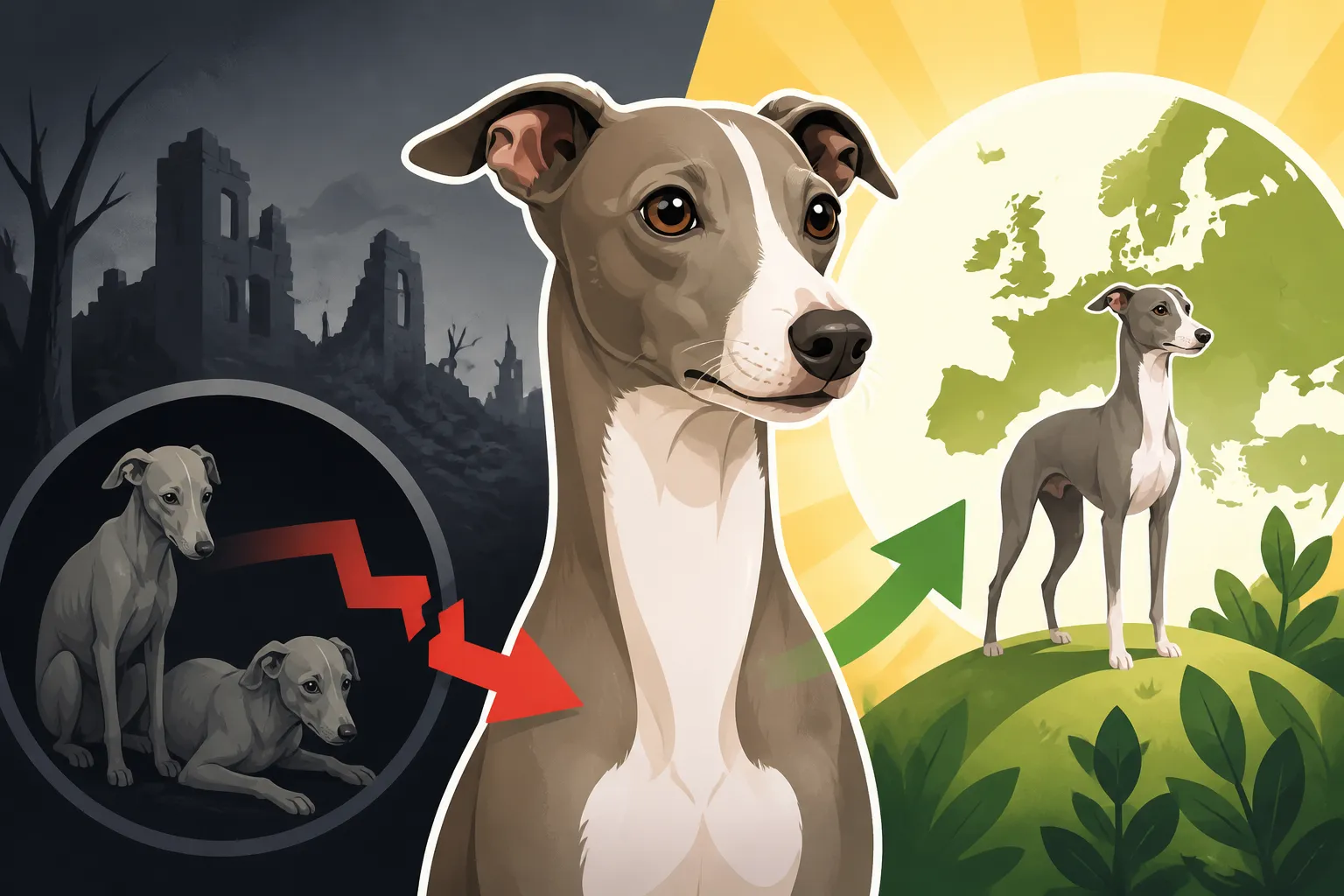
Just as the Italian Greyhound was recovering its health and type, Europe was plunged into two devastating global conflicts. These wars presented an external threat far more insidious than breeding fads, pushing the delicate breed to the very precipice of extinction, not once, but twice again.
World War I: The Devastation of European Kennels
The outbreak of World War I in 1914 brought unprecedented challenges to dog breeding across Europe. Kennel resources, once dedicated to the care and perpetuation of purebred dogs, were diverted to the war effort. Food became scarce, fuel was rationed, and the luxury of keeping non-working dogs, especially delicate breeds like the Italian Greyhound, became nearly impossible for many. Breeders faced the agonizing choice of trying to feed their dogs with dwindling supplies or, in some heartbreaking cases, euthanizing them to prevent suffering. Travel became dangerous, severing the vital lines of communication and exchange between breeders that were necessary for maintaining genetic diversity.
Many prominent European kennels, which had been the heart of Italian Greyhound breeding, were decimated or entirely lost. Dogs died from starvation, disease, or simply the chaos of war-torn regions. The gene pool, which had only just begun to recover from the earlier breeding fads, was once again dramatically shrunk. This wasn't a deliberate culling for specific traits; it was a wholesale, indiscriminate loss of life that threatened to wipe out entire lines. The war effort demanded every resource, and the beautiful, but non-essential, Italian Greyhound suffered immensely as a result. The very fabric of European dog breeding was torn apart.
World War II: A Near Total Annihilation in Europe
If World War I was a severe blow, World War II was a catastrophe for the Italian Greyhound in Europe. The scale of destruction, the widespread famine, and the relentless bombing campaigns made the survival of any purebred dog a miracle. People were fighting for their own survival, let alone that of their pets. Kennels that had managed to rebuild after the first war were often destroyed in the second, and the remaining Italian Greyhounds faced an even harsher reality. Many owners had to abandon their pets during evacuations or simply couldn't feed them.
Entire countries were engulfed in conflict, leading to an almost complete cessation of organized breeding. The number of Italian Greyhounds in Europe dwindled to dangerously low levels, with some estimates suggesting only a handful of individuals remained in certain regions. This wasn't just a threat to the breed; it was a potential annihilation. The war years were a dark chapter, pushing the breed to the very edge of non-existence, creating a genetic bottleneck so severe that every surviving dog became immensely valuable. The story of What the World Wars Did to the Italian Greyhound is truly heartbreaking, detailing this dramatic period.
Scarcity and Isolation
The immediate aftermath of both World Wars left the remaining Italian Greyhound population in Europe incredibly scarce and isolated. With borders closed, transportation systems in ruins, and widespread economic hardship, it was nearly impossible for breeders to connect, share dogs, or even determine which lines still existed. The genetic diversity that is crucial for a healthy breed population was severely compromised. Any surviving dogs were often geographically isolated, making it difficult to find suitable mates outside of closely related individuals. This led to an unavoidable degree of inbreeding, further weakening the gene pool.
The few breeders who had managed to hold onto their dogs through the wars faced immense challenges. They had to rebuild their kennels from scratch, source food and veterinary care in devastated economies, and painstakingly search for any other surviving Italian Greyhounds. It was a monumental task, often driven by sheer love and dedication to the breed. The isolation meant that individual pockets of Italian Greyhounds might have developed unique traits due to limited gene flow, which, while interesting, didn't help the overall goal of restoring a unified, healthy breed. The future of the Italian Greyhound in Europe looked bleak indeed.
The American Lifeline: Saving the Italian Greyhound a Second Time
In this dire moment, with Europe's Italian Greyhound population on the verge of disappearing, a lifeline emerged from across the Atlantic. American breeders, who had maintained a relatively stable population of Italian Greyhounds, stepped up to play a critical role in the breed's second, and perhaps most significant, comeback.
American Breeders Step In
While Europe was engulfed in conflict, a small but dedicated community of Italian Greyhound fanciers in the United States had been working diligently to preserve and develop the breed. They had largely been spared the direct devastation of the wars, allowing their lines to remain relatively intact and healthy. When news of the dire situation in Europe reached them, many American breeders realized the immense responsibility they held. They understood that their dogs represented a crucial genetic reservoir, potentially the last hope for the Italian Greyhound in its ancestral homeland.
These American enthusiasts rallied, forming a vital bridge to help rebuild the European stock. This wasn't just about selling dogs; it was about a global effort to save a cherished breed. They meticulously planned exports, navigating complex post-war logistics and regulations to send carefully selected Italian Greyhounds back to Europe. This act of transatlantic collaboration was a testament to the international spirit of dog breeding and the deep commitment these individuals held for the future of the breed. How American Breeders Saved the Italian Greyhound tells a fascinating story of this pivotal moment.
Exporting and Rebuilding European Stock
The process of exporting American Italian Greyhounds to war-torn Europe was complex and costly, yet it was essential. American dogs, representing healthier and more diverse bloodlines, provided the much-needed genetic outcrosses to revitalize the fragmented European population. These dogs brought renewed vigor, improved health, and a stronger adherence to the breed standard, helping to dilute the effects of the severe genetic bottleneck caused by the wars. Without this influx of new blood, many European lines might have died out entirely, or at best, become severely inbred and unhealthy.
This wasn't an overnight fix. It was a painstaking, multi-generational effort. The imported American Iggys were carefully integrated into existing European breeding programs, and their progeny were thoughtfully selected to perpetuate the best traits while gradually expanding the gene pool. This collaborative effort ensured that the Italian Greyhound could once again thrive in Europe, standing as a living monument to its ancient heritage. The success of this rebuilding effort speaks volumes about the dedication of those involved, who literally ensured the breed's continuation.
The Narrow Gene Pool and Its Legacy
Even with the influx of American bloodlines, the Italian Greyhound population, particularly in Europe, had passed through an incredibly narrow genetic bottleneck. This means that a significant portion of the breed's historical genetic diversity was lost forever during the war years. While the breed was saved, it emerged with a much smaller genetic foundation than it had possessed before the 20th century. This narrow gene pool is a lasting legacy, a reminder of how close the breed came to extinction. How Narrow the Italian Greyhound Gene Pool Became explains the implications of this.
This limited genetic diversity can present challenges even today, as it means there's less genetic variation to draw upon, potentially making the breed more susceptible to certain hereditary conditions if not carefully managed. It underscores the ongoing importance of responsible breeding practices and health screening. Dedicated breeders today continue to work on expanding the effective breeding population and maintaining genetic health, always mindful of the historical events that so drastically shaped the breed's genetic makeup. It's a continuous balancing act to preserve type while also safeguarding genetic robustness.
Here's a table summarizing the two major periods of crisis and recovery:
| Period | Primary Cause of Decline | Impact on Breed | Rescuing Efforts | Key Outcomes |
|---|---|---|---|---|
| Pre-WWI (Late 19th/Early 20th Century) | Breeding for extreme "teacup" size, sacrificing health and type. | Loss of breed type, increased fragility, dental problems, reduced vitality. | Dedicated breeders focused on restoring correct conformation and health; adherence to breed standards. | Re-establishment of healthy, typey Italian Greyhounds in Europe; first comeback. |
| World Wars (WWI & WWII) | War-time devastation, scarcity of resources, famine, destruction of kennels, isolation. | Near annihilation of the European population; severe genetic bottleneck; loss of diversity. | American breeders provided crucial genetic outcrosses; transatlantic collaboration to export dogs; slow, painstaking rebuilding. | Second comeback; breed saved globally, but with a significantly narrowed genetic foundation. |
Ensuring Future Survival: Lessons from Near Extinction
The Italian Greyhound's journey through multiple near-extinction events offers profound lessons for all dog lovers and, especially, for those dedicated to purebred dogs. It highlights the delicate balance required to maintain a healthy, vibrant breed for future generations.
The Importance of Responsible Breeding
The most crucial lesson from the Italian Greyhound's history is the paramount importance of responsible breeding. Both the "teacup" fad and the post-war recovery underscore that breeding should never prioritize fleeting trends or extreme aesthetics over the fundamental health, temperament, and genetic soundness of the dogs. Responsible breeders meticulously research pedigrees, conduct thorough health testing, and adhere strictly to the breed standard. They understand that they are custodians of a living legacy, not creators of disposable fashion items.
This responsibility extends to understanding the genetic health of the lines, including screening for conditions relevant to Italian Greyhounds. What Health Testing an Italian Greyhound Breeder Should Show provides invaluable insight into this. They also ensure that puppies are raised in a nurturing environment, properly socialized, and placed in suitable homes. A responsible breeder will be transparent about potential health concerns within the breed and will be a lifelong resource for their puppy buyers. This conscientious approach is the bulwark against future declines, ensuring the breed remains robust and true to its heritage. You might even find essential supplies for ethical breeders, like specialized puppy food or warming pads, on platforms like Chewy, which cater to a wide range of pet needs.
The Value of Diverse Genetics
The genetic bottlenecks created by the desire for extreme size and, more dramatically, by the World Wars, serve as stark reminders of the immense value of diverse genetics within any breed. A broad gene pool helps buffer a breed against hereditary diseases, enhances overall vitality, and allows for adaptation over time. When a gene pool becomes too narrow, undesirable traits can become fixed, and the breed becomes more vulnerable to health issues.
For breeds like the Italian Greyhound, which have experienced such severe genetic reductions, maintaining and, where possible, expanding genetic diversity is an ongoing, critical endeavor. This involves careful planning, sometimes collaborating with breeders internationally, and an avoidance of popular sire syndrome (where one stud dog is overused, inadvertently narrowing the gene pool again). It means making informed choices that look beyond immediate show ring success to the long-term health and survival of the entire breed. It's a commitment to ensuring that the Italian Greyhound continues to be Whether the Italian Greyhound Is a Healthy Breed for generations to come.
The Ongoing Role of Breed Clubs and Enthusiasts
The survival and resurgence of the Italian Greyhound can largely be attributed to the tireless efforts of breed clubs and individual enthusiasts. These dedicated groups play a vital role in preserving the breed by maintaining standards, promoting ethical breeding practices, funding health research, and educating the public. They are the guardians of the breed's past, present, and future. From maintaining stud books to organizing events that celebrate the breed, their work is continuous and indispensable.
For anyone considering an Italian Greyhound, connecting with reputable breed clubs and experienced enthusiasts is paramount. They can provide invaluable guidance, help you understand the breed's unique needs, and point you towards responsible breeders. Finding a breeder who is genuinely committed to the breed's health and longevity, and who may even have a waitlist because of their dedication, is crucial. Finding an Italian Greyhound Breeder Worth the Waitlist explains what to look for. These individuals and organizations are the reason the Italian Greyhound is still with us today, and they will continue to be essential for its future well-being, advocating for responsible ownership and breeding practices. You can often find resources and recommended products, even specific types of bedding or coats that Iggys need to stay warm, through these clubs or on major pet retail sites like Chewy.
The story of the Italian Greyhound's brushes with extinction is a powerful narrative of resilience, human dedication, and the sometimes-perilous journey of purebred dogs. It's a reminder that while these elegant creatures have graced our lives for thousands of years, their continued existence relies heavily on our responsible stewardship. By understanding their past, we are better equipped to protect their future, ensuring that the charm and grace of the Italian Greyhound endure for countless generations to come.
Disclaimer
This article is for general informational purposes only and does not constitute professional advice. Laws, prices and regulations vary by location and change over time. Consult a qualified professional for guidance on your specific situation.