Whether an Italian Greyhound Suits Someone Who Works Full Time
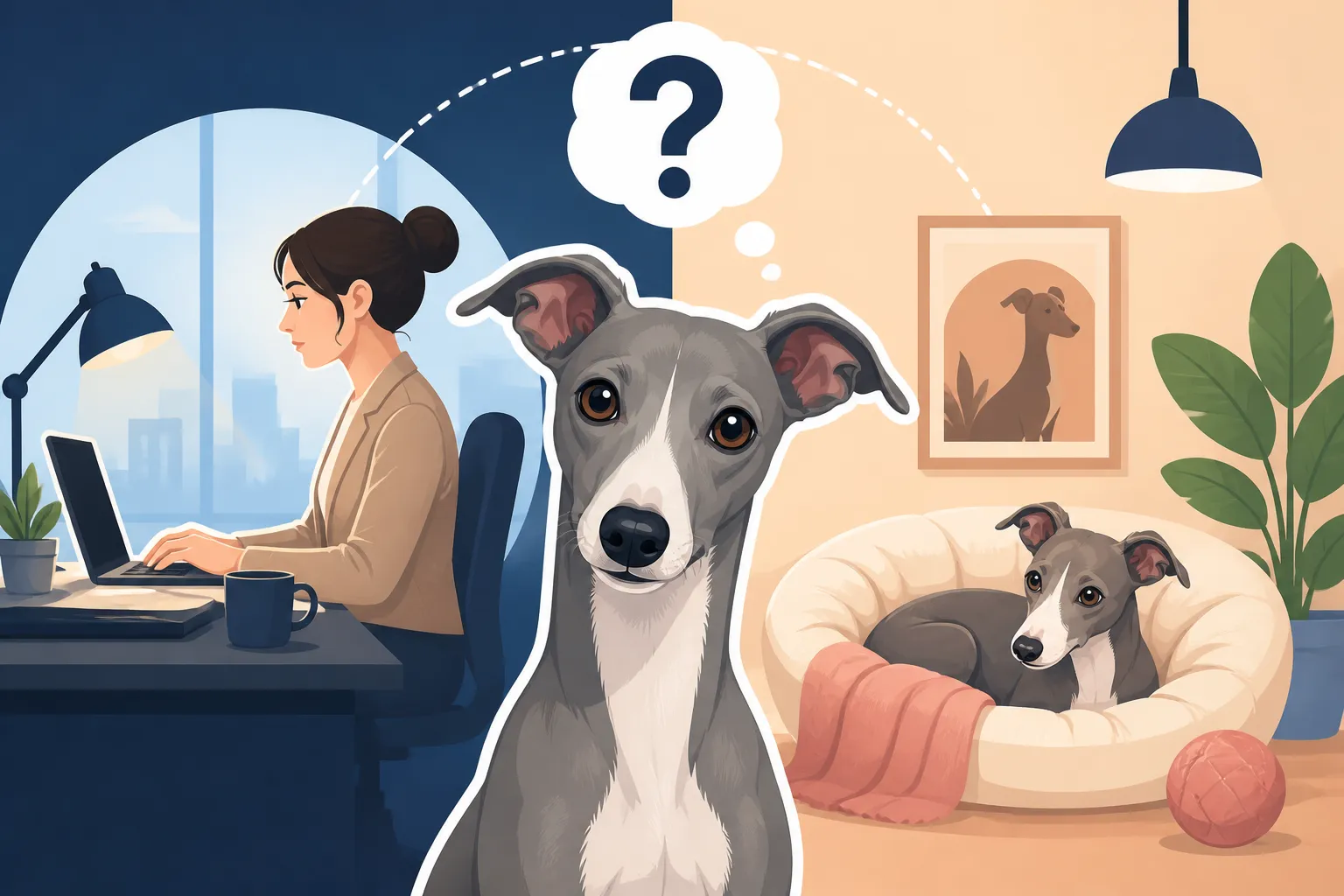
An Italian Greyhound can live with someone who works full time, but a standard workday alone may be difficult for this affectionate, people-focused breed. The practical question is not simply whether you have a job; it is how long your dog would be alone, what care you can arrange during the day, and whether you can build in companionship, exercise, and a reliable bathroom routine.
Can an Italian Greyhound Be Left Alone During a Workday
Why long stretches alone can be hard
Italian Greyhounds often bond closely with their people and enjoy being near them, whether that means curling up beside a desk or following someone from room to room. That closeness can make a sudden change to several hours of solitude stressful. Some dogs settle after learning the household routine; others become restless, vocal, destructive, or distressed when left.
A quiet dog is not necessarily a comfortable dog. An Italian Greyhound may spend the day sleeping, but you still need to consider whether it can relax rather than simply endure being alone. A camera can help you see what happens after you leave: does your dog settle, or does it pace, whine, scratch at the door, or refuse food? These clues are more useful than assuming everything is fine because the neighbors have not complained.
The breed’s social nature is part of why owners describe it as a companion dog. The Velcro Dog: What Constant Company Means With an Italian Greyhound explains that attachment in more detail, while How Long an Italian Greyhound Copes Alone can help you think about solitude as an individual dog’s tolerance rather than a one-size-fits-all number.
Puppies and adult dogs have different needs
An Italian Greyhound puppy is usually a more complicated fit for a full-time schedule than a settled adult. Puppies need frequent opportunities to toilet, supervision to prevent accidents and unsafe chewing, and short, positive training sessions. Leaving one alone for a whole workday is not a realistic plan without substantial help. If you are considering a puppy, think through the first months in particular, not just the appealing image of an adult dog snoozing beside you. The First Year With an Italian Greyhound Puppy covers the broader demands of that stage.
An adult dog may have a more predictable routine, but age alone does not guarantee comfort with being left. A rescue dog might be accustomed to a quiet home, or it might have a history that makes separation especially challenging. A dog that has always lived with people at home may also need a gradual adjustment period when its owner’s schedule changes.
If you are adopting, ask the rescue or previous caregiver what the dog does when left alone, how long it has been left successfully, and whether it has shown signs of distress. Treat those answers as a starting point, not a promise. New surroundings, new noises, and a new routine can change how a dog responds.
What a Full-Time Schedule Needs to Include
Plan for a midday break
For many households, the most workable arrangement is a midday visit from a trusted person. That might be a dog walker, a neighbor, a family member, or a sitter who can provide a bathroom break and some company. The right visit is not necessarily a long outing. For an individual Italian Greyhound, a calm toilet break, a little sniffing, and a chance to reconnect may be more useful than an exhausting walk.
Be specific when arranging care. Explain how your dog reacts to other dogs, what equipment it wears, how it behaves around doors, and whether it is nervous outside. Italian Greyhounds are small, quick, and physically delicate, so a caregiver should know how to handle the dog gently and prevent escapes. A secure harness and careful door routine matter more than an ambitious walking route.
If your workday includes a long commute or unpredictable overtime, make a backup plan before you need one. A walker who is unavailable, a canceled visit, or a late train can turn an otherwise reasonable day into too much time alone. Some owners compare in-home care with boarding or daycare; Why Italian Greyhound Owners Use Sitters Instead of Kennels discusses why a home-based arrangement can suit some dogs better.
Make the home comfortable and safe
A safe resting area gives your dog somewhere familiar to settle. It might be a dog-proofed room, a pen, or a crate if the dog has been introduced to it positively and can relax there. A crate should not be used as a way to contain a panicking dog for hours. If your Italian Greyhound struggles in confinement, consult a qualified trainer or veterinary professional about a safer plan.
Check the space from the dog’s perspective. Secure cords, medications, small objects, and food. Block access to stairs or furniture if jumping down could be risky, and add rugs or other traction where slippery floors are a concern. Leave comfortable bedding and access to fresh water. Some owners source beds, safe enrichment toys, or feeding supplies through retailers such as Chewy; whatever the source, choose items suited to your dog’s size, chewing habits, and supervision needs.
Food puzzles or a familiar chew can help some dogs settle, but they are not a substitute for company or a bathroom break. Test any new item while you are home first. A toy that seems harmless can become a choking or ingestion risk if a dog is a determined chewer.
Build Alone-Time Skills Without Rushing
Practice short departures
A dog that has always had company may not know how to settle when the household empties. Begin with brief absences that your dog can handle, then increase the time gradually. You might step outside for a moment, return before the dog becomes distressed, and repeat. Keep departures and arrivals calm rather than turning them into dramatic events.
Notice the earliest signs of discomfort. A dog may start watching the door, panting, pacing, or refusing a normally appealing treat before it begins barking or scratching. If you see those signs, make the next practice session easier. Progress is not a straight line, and pushing through visible panic can make alone time harder rather than teaching independence.
You can also practice settling while you are still home. Reward your dog for resting on a bed across the room, or let it spend a few minutes in a comfortable safe area while you move around the house. Teaching an Italian Greyhound to Settle Alone offers a useful companion topic, and Signs an Italian Greyhound Has Separation Anxiety can help distinguish ordinary protest from more serious distress.
Fit the training around the real schedule
Training should reflect the longest absence the dog will actually face. Practicing five minutes of solitude does not automatically prepare a dog for an eight-hour day. If you cannot increase the time gradually because you must leave for work, arrange help during the transition. A sitter, walker, or trusted person can reduce the gap while the dog learns.
Keep notes for a week or two. Record when you leave, when someone visits, whether the dog eats, and what you observe on a camera. That record can reveal patterns: perhaps the dog settles after a short period, but struggles when left after a rushed morning; perhaps noise from the hallway triggers barking; perhaps the hardest day is the one with an unusually long commute.
If distress is intense or persistent, contact your veterinarian and consider a qualified behavior professional. Separation-related problems can have several causes, and a tailored plan is more effective than scolding or relying on a second dog to solve the problem. Whether a Second Italian Greyhound Fixes the Anxiety explores why another dog is not a guaranteed fix.
Decide Whether Your Routine Is a Good Match
Compare common work arrangements
The same breed can fit one full-time worker’s life and struggle in another’s. The deciding factors are the dog’s temperament, prior experience, the amount of time alone, and the dependable support available.
| Work arrangement | Likely fit | What to plan for |
|---|---|---|
| Work from home with short errands | Often manageable | Practice brief separations so the dog does not rely on constant access to you |
| Office schedule with a reliable midday visit | Possible for some dogs | Arrange a consistent visit and a backup caregiver |
| Long commute with frequent late days | More challenging | Build a stronger care plan, including emergency coverage |
| Puppy left alone through a full workday | Usually a poor fit without extensive help | Frequent toilet breaks, supervision, and gradual training |
| Adult dog with a demonstrated history of settling alone | Potentially workable | Confirm the dog’s needs in your home and monitor the adjustment |
Use the table as a planning tool, not a verdict. For example, an adult Italian Greyhound who has previously relaxed alone may still need a gradual transition after moving into a new apartment. A puppy may be more feasible for a full-time worker who has flexible hours, family nearby, or a dependable sitter than for someone whose day regularly runs long.
Ask yourself practical questions before committing
Start with the hours your dog would truly be alone from the time you leave home until someone returns. Include commuting, errands, and meetings that run over. Then ask whether you can arrange a dependable midday break, not just one when your schedule happens to cooperate.
Consider your flexibility during the first weeks. Could you take time off, work from home temporarily, or have someone stay with the dog while it adjusts? Think about the evenings too: an Italian Greyhound that has spent much of the day alone still needs connection, play, training, and a chance to go outside. A rushed walk followed by another long stretch of separation may not meet the dog’s needs.
Finally, be honest about what you can sustain. A plan that depends on a friend volunteering every day, or on never working late, may fall apart quickly. If you need equipment or enrichment supplies, retailers such as Chewy can be one place to compare options, but the bigger decision is whether your routine can provide reliable human support. An Italian Greyhound can suit a full-time worker when the schedule is built around the dog’s welfare; without that structure, the match may be frustrating for both of you.
Disclaimer
This article is for general informational purposes only and does not constitute professional advice. Laws, prices and regulations vary by location and change over time. Consult a qualified professional for guidance on your specific situation.