Which Country Rebuilt the Italian Greyhound
The Italian Greyhound’s modern survival is often credited to one country, but the story is more complicated than a single rescue. European wars disrupted breeding and left populations dangerously small. This guide explains why the United States became an important reserve for the breed, how British and other European breeders helped rebuild it, and what “rebuilt” really means.
The United States Helped Preserve the Italian Greyhound
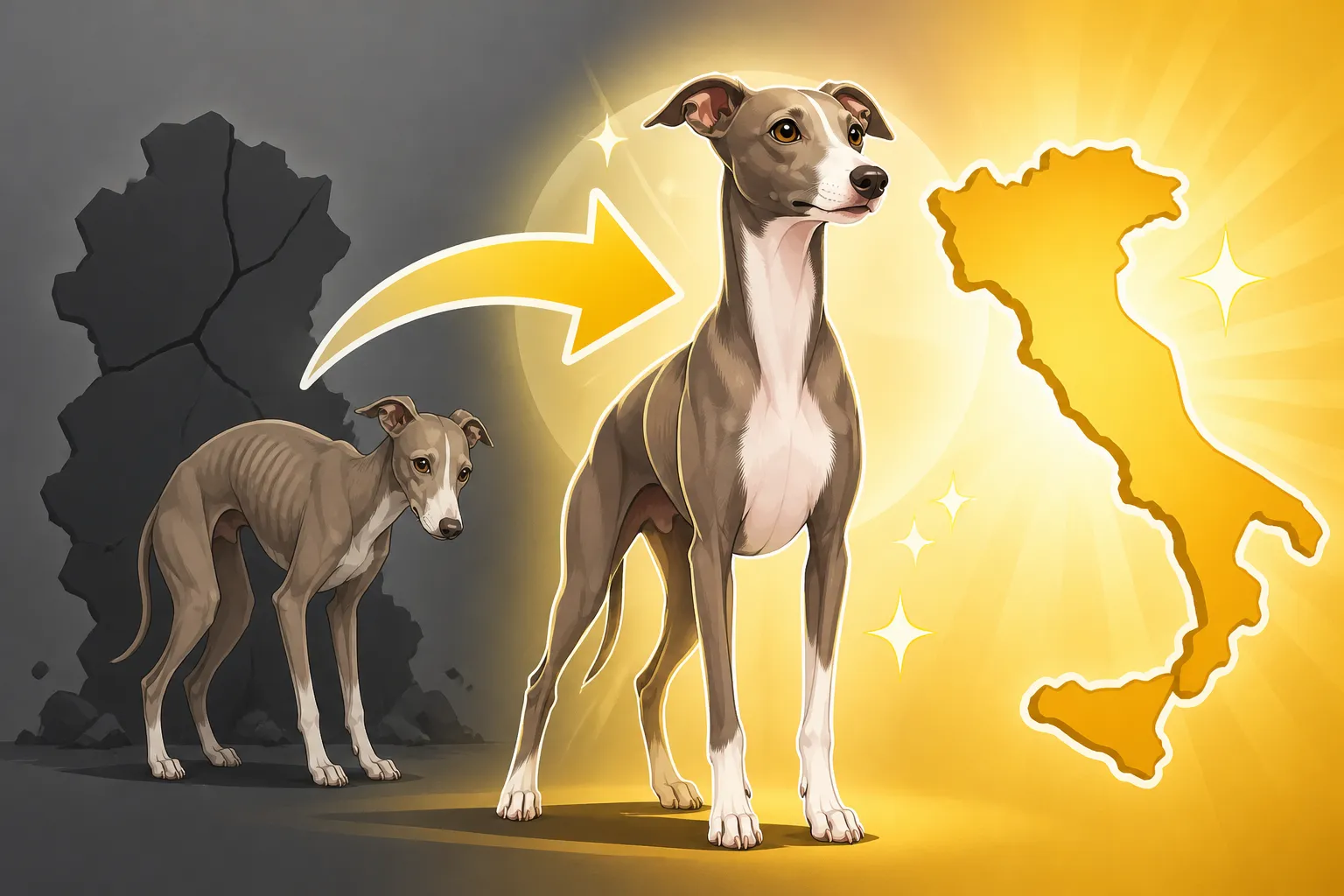
The Italian Greyhound originated in Europe, but the United States became an important refuge for breeding stock when war and upheaval reduced the breed’s numbers on the continent. American breeders maintained dogs and breeding lines that could later help replenish British and European populations.
That makes the United States a central part of the recovery story, not the breed’s birthplace or sole savior. The rebuilding depended on breeders in more than one country, as well as the movement of dogs across borders when that became possible.
Why American breeding stock mattered
Before the world wars, Italian Greyhounds were kept and bred in several European countries. War disrupted that ordinary network. People were displaced, resources became scarce, and maintaining a small companion breed could become an extremely low priority. Even where individual dogs survived, a small number of animals does not automatically make a healthy, sustainable breeding population.
American breeders offered a reserve outside the worst of the European disruption. Dogs and lines maintained in the United States could be used by British and European breeders when they sought to restore their populations. This is the practical sense in which the United States helped “save” the breed: it helped preserve living breeding stock that could contribute to recovery elsewhere.
The history is explored further in How American Breeders Saved the Italian Greyhound and The Italian Greyhound Nearly Died Out Twice in Europe. These histories are related, but the phrase “American breeders saved the breed” should not be taken to mean that the Italian Greyhound disappeared everywhere else or that one country acted alone.
Britain and Europe rebuilt through imports and local breeding
British breeders played a major role in rebuilding the breed at home. Imports from the United States helped restore available breeding options, but imported dogs were only a starting point. Local breeders still had to plan matings, raise litters, evaluate health and temperament, and maintain populations over generations.
The distinction matters because importing a few dogs does not instantly restore a breed. A population needs enough unrelated or suitably diverse breeding animals, careful record-keeping, and breeders willing to keep working even when progress is slow. European breeders also relied on dogs from other countries at different points, so the recovery is better understood as international cooperation than as a one-way shipment from America.
| Place | Role in the recovery story | What that role does not mean |
|---|---|---|
| Italy and other parts of Europe | The breed’s historical home and part of its wider European presence | That European populations remained unaffected by war |
| United States | Preserved breeding stock that could support recovery elsewhere | That the United States originated the breed or rebuilt it alone |
| Britain | Imported dogs and developed breeding populations after disruption | That imports alone were enough to restore a stable population |
| Other European countries | Contributed dogs, breeders, and regional breeding efforts | That every country followed the same recovery path |
How War Disrupted the Breed
Italian Greyhounds are not a large, widely distributed working breed with huge numbers in every region. Their populations were comparatively small, and that made them vulnerable when ordinary breeding and transport networks broke down. The effects of the two world wars were different in detail, but both disrupted the people, kennels, and exchanges that help a breed continue across generations.
World War One and the fragile European population
World War One brought severe disruption to many European communities. Kennels closed, breeding plans were interrupted, and moving dogs across borders became difficult. For a small breed, the loss of even a limited number of dogs or breeding programs could have a disproportionate effect.
The Italian Greyhound’s recovery after this period was not simply a matter of finding more puppies. Breeders needed suitable dogs that could contribute to healthy future generations. This is why the existence of populations beyond the most affected areas mattered. What World War One Did to the Italian Greyhound provides more context on the first major disruption.
World War Two and the need to reconnect breeding populations
World War Two brought another period of hardship across Europe. When breeders resumed their work, they faced the consequences of interrupted records, limited numbers, and reduced access to dogs in other countries. Some populations had to be rebuilt from what remained locally and what could be brought in from elsewhere.
Imports from the United States were one part of that process, particularly for British breeders. But recovery took time. A dog imported after the war could widen the available breeding choices; it could not, by itself, recreate a population that had been reduced over many years. For more on this period, see What World War Two Did to the Italian Greyhound and How American Italian Greyhounds Went Back to Britain.
What “Rebuilt” Means in Breed History
The word “rebuilt” can sound as though one country gathered a few surviving dogs and restored the breed in a short time. In reality, recovery usually means rebuilding a viable breeding population over generations. That requires more than increasing the number of dogs: breeders also need to preserve soundness, recognizable breed type, and a manageable level of genetic diversity.
Rebuilding is more than restoring head count
A population can grow in numbers while remaining genetically narrow. If many dogs descend from a small number of ancestors, the breed may still have limited options for future breeding. Responsible breeders therefore consider pedigrees and health, not just whether a dog looks like a typical Italian Greyhound.
This challenge is especially important for breeds with relatively small populations. Rebuilding after a crisis can place pressure on breeders to use whatever animals are available. That can help increase numbers, but it also makes thoughtful planning essential. The history of recovery connects directly to How Narrow the Italian Greyhound Gene Pool Became.
For the Italian Greyhound, the aim was not simply to recreate a particular look as quickly as possible. Breeders needed to continue producing dogs that were recognizably Italian Greyhounds while avoiding careless choices that could narrow the breeding base further. That is careful, multi-generation work, not a single event.
Imported dogs contributed, but local breeders did the long work
An imported dog can become an important part of a recovery effort, but its influence depends on what happens next. Breeders must decide whether the dog is suitable to breed, choose an appropriate mate, raise and assess the offspring, and make further choices based on health and quality.
Think of it as rebuilding a bridge between separated populations. The first imported dogs create a connection, but the bridge becomes useful only when breeders continue exchanging dogs and information and maintain healthy populations on both sides. American dogs could contribute to British and European recovery, while local breeders shaped the next generations in their own countries.
That is why “the United States rebuilt the Italian Greyhound” is an incomplete answer. The United States helped preserve and supply breeding stock; British and European breeders did the work of establishing and sustaining their populations. The country most associated with the external reserve was the United States, while the recovery itself was shared.
The Italian Greyhound’s Recovery and Its Legacy Today
Knowing this history helps explain why breed preservation is not just about keeping a dog’s appearance familiar. It is also about sustaining healthy populations, sharing accurate information, and making breeding decisions with the future in mind.
Why the story is sometimes simplified
A short version of the story often says that the breed nearly vanished in Europe and was saved by American breeders. That shorthand captures an important truth: American breeding populations provided a valuable source of dogs when European breeders needed them. But it can hide the work of British and continental breeders who imported, bred, evaluated, and maintained dogs over time.
It can also blur the difference between a breed’s origin and its recovery. The Italian Greyhound’s name and long history are closely tied to Italy and Europe, while the United States played a major role as a reserve population. Those are different parts of the same story, not competing claims.
A more precise description is that the United States helped preserve Italian Greyhounds and supplied dogs that supported postwar rebuilding in Britain and elsewhere. European breeders then carried on the work locally. That wording gives credit without suggesting that recovery happened in one place or all at once.
What modern owners can take from the history
For today’s owners, the most useful lesson is that breed survival depends on informed, responsible choices. When researching a puppy, ask about health testing, the breeder’s plans for the litter, and the broader family history. A careful breeder should be willing to discuss why particular dogs were paired and how they think about health and temperament, rather than focusing only on color or appearance.
The breed’s delicate build and thin coat also make practical care part of everyday ownership. If you are preparing a home for an Italian Greyhound, you may compare ordinary supplies—such as washable bedding, a well-fitting coat, or dental-care basics—at a local shop or a general retailer such as Chewy. Whichever store you use, check that clothing fits the dog’s long, narrow body and ask your veterinarian about products that involve health or safety decisions.
A retailer like Chewy can be one option for routine supplies, but it is not a substitute for a veterinarian or a knowledgeable breed club when you need advice about health, breeding, or a dog’s individual needs. And when comparing a coat at Chewy or elsewhere, measurements matter more than the size printed on the label: a garment that fits a broad-chested dog may pinch an Italian Greyhound or leave its back exposed.
The country that helped preserve the Italian Greyhound most visibly was the United States, but no single country rebuilt the breed by itself. American breeding stock helped bridge a dangerous gap; British and European breeders turned that support into lasting populations. The result is a shared preservation story—one that depends, even now, on careful decisions across generations.
Disclaimer
This article is for general informational purposes only and does not constitute professional advice. Laws, prices and regulations vary by location and change over time. Consult a qualified professional for guidance on your specific situation.