How Cold Weather Undoes an Italian Greyhound’s Training
It's incredibly frustrating, isn't it? You spend months diligently housetraining your delicate Italian Greyhound, celebrating every outdoor success, only to have all that hard work seem to evaporate the moment the temperature drops. One cold snap or a surprise rain shower, and suddenly your perfectly trained little companion is having "accidents" right by the back door. This guide is here to shed light on why cold weather wreaks havoc on an Italian Greyhound's housetraining and, more importantly, what practical steps you can take to prevent those chilly regressions.
The Physiological Impact of Cold on Italian Greyhounds
Let's start with understanding why your Italian Greyhound seems to melt at the mere thought of a cold breeze. It's not just an act; they genuinely feel the cold in a way many other breeds simply don't. Their unique physiology makes them incredibly susceptible to temperature drops, which directly influences their willingness to venture outdoors for potty breaks.
Why Iggies Feel the Cold So Intensely
Imagine wearing only a thin silk sheet in a snowstorm. That's a bit like what it's like for an Italian Greyhound in cold weather. They possess an incredibly fine, short coat with no insulating underlayer, coupled with very little body fat. Unlike many breeds that evolved in colder climates with thick, double coats, Italian Greyhounds originated from warmer regions and were historically companions, often kept indoors or wrapped in warm blankets. Their lean, sighthound build, while beautiful, is simply not designed for thermal regulation in anything but mild temperatures.
This lack of natural insulation means their bodies struggle to maintain a comfortable core temperature. You'll often see them shivering, even indoors if the thermostat isn't set quite high enough. This isn't necessarily fear; it's a physiological response as their muscles rapidly contract to generate heat. The moment they step outside into brisk air, that shiver can intensify, making the experience deeply unpleasant for them. It's crucial to remember that this isn't stubbornness; it's genuine physical discomfort. For more on this, you might find Why an Italian Greyhound Cannot Hold Its Own Heat insightful.
The Small Bladder and Frequent Urination
Adding to their cold sensitivity is the fact that Italian Greyhounds are small dogs, and small dogs generally have smaller bladders. This means they need to urinate more frequently than larger breeds. When you combine a small bladder with cold weather, the need to go becomes even more urgent and frequent. Cold exposure can also cause blood vessels to constrict, redirecting blood flow to vital organs, which can, in turn, increase urine production.
So, while your Iggy might be able to "hold it" for a reasonable amount of time in warm weather, that capacity significantly decreases when it's cold. The desperate need to relieve themselves clashes directly with their intense aversion to the cold. They're caught between a rock and a hard place, often choosing the warmth and safety of indoors over the perceived threat of the chilly outdoors. You might observe them pacing, whining, or sniffing around, indicating discomfort, but still hesitating to ask to go out because they know what awaits them. This is a common issue, and understanding Why an Italian Greyhound Has a Small Bladder can help you prepare.
The Mental Aversion to Inclement Weather
It's not just the physical cold; Italian Greyhounds can develop a strong psychological aversion to bad weather. They are smart, sensitive creatures, and they quickly learn that "outside" in the winter often means discomfort, wetness, and shivering. A few negative experiences with snow, rain, or icy wind can be enough to create a lasting impression. They might associate the leash, the door, or even your suggestion to go out with an unpleasant ordeal.
This mental block can be a significant hurdle in maintaining housetraining. They may become hesitant, even when dressed warmly, because the memory of past discomfort overrides the immediate protection of their sweater. Some Italian Greyhounds will even try to hide or avoid eye contact when they sense it's time for a chilly potty break. This isn't them being "naughty"; it's a learned avoidance behavior driven by self-preservation. They're weighing the momentary relief of urinating against the prolonged discomfort of the elements, and often, the elements win in their minds.
How Cold Weather Directly Undermines Housetraining
Once you understand why your Italian Greyhound feels the cold so acutely, it becomes clearer how this physiological and psychological aversion directly sabotages all your diligent housetraining efforts. The winter months can turn a well-behaved pup into one that seems to have forgotten everything they learned.
The "Hold It In" Strategy Gone Wrong
The most common way cold weather undoes housetraining is when your Iggy decides to hold their bladder or bowels for as long as humanly (or dog-ly) possible to avoid going outside. They’ll stand at the door, gaze longingly, maybe even whine a little, but as soon as you open it and the cold air hits, they might hesitate, turn around, and look for an indoor alternative. They're negotiating with themselves: "Can I just wait another ten minutes? Maybe it will get warmer?"
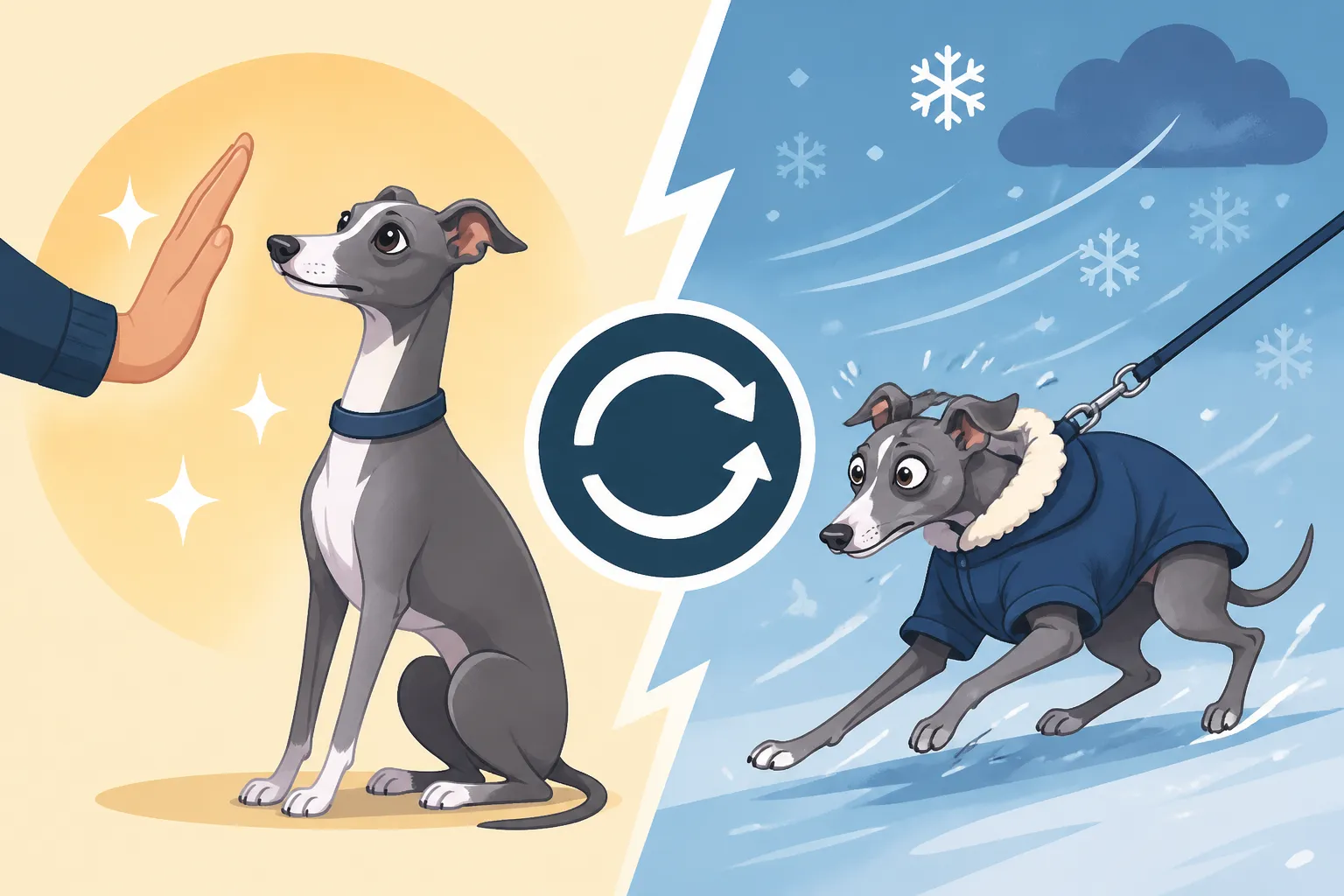
This delaying tactic often backfires. They hold it until they absolutely cannot anymore, and by that point, the urge is too strong to make it all the way outside. The result? An "accident" right there on the rug or by the back door, perhaps even on their bed if they're particularly desperate. Each indoor accident, even if unintentional, reinforces the idea that it's okay to go inside, slowly eroding the foundation of their housetraining. It's a vicious cycle where discomfort leads to holding it, which leads to indoor accidents, further teaching them that the house is a viable toilet when the weather is unpleasant.
The Dash-and-Done Approach
Even when your Italian Greyhound does agree to go outside in the cold, their goal is usually to get the job done as quickly as humanly possible. They dash out, squat, and relieve themselves with minimal effort, often not fully emptying their bladder or bowels, just enough to alleviate the immediate pressure. This "dash-and-done" approach means they might only partially empty, and then they're running back to the warmth of the house.
The problem? They’ll need to go again much sooner than usual. What might have been a solid four-hour window between potty breaks in warmer weather can shrink to an hour or two when they're only doing partial eliminations. This increased frequency, combined with their reluctance to go out, greatly increases the chance of an indoor accident. It creates a frustrating loop where you think they've just gone, but then they're peeing on the floor 30 minutes later because they simply didn't finish the job outside. This behavior is a direct consequence of their desire to minimize cold exposure.
Preference for Indoor Warmth Over Outdoor Needs
Ultimately, repeated negative experiences with cold weather can lead your Italian Greyhound to simply prefer the indoor environment for all their needs, including potty breaks. If stepping outside always means shivering, wet paws, and discomfort, while the living room rug is always warm and dry, guess which option looks more appealing? Over time, the association between "outside" and "potty" weakens, and the association between "inside" and "comfort" for elimination grows stronger.
You might notice them trying to sneak off to a quiet corner, or finding a hidden spot to relieve themselves, especially if they've been scolded for an indoor accident. They're not being malicious; they're simply seeking the most comfortable and safe place to do their business, and the cold weather has made the outdoors a hostile environment. This is why many Iggy owners consider Setting Up an Indoor Bathroom for an Italian Greyhound as a proactive measure, rather than waiting for accidents to happen. Providing a comfortable, warm indoor potty option can actually save your housetraining, rather than destroy it.
Strategies to Maintain Housetraining in Winter
It might feel like an uphill battle, but you absolutely can maintain your Italian Greyhound's housetraining even when the temperatures plummet. It requires a bit of extra effort, a lot of empathy, and sometimes, a slight adjustment to your routine and expectations.
Essential Winter Wardrobe for Your Iggy
One of the most effective ways to combat the cold's impact on housetraining is to keep your Italian Greyhound warm. This means investing in a proper winter wardrobe. A thin sweater for indoor wear, especially if your house isn't kept super warm, and a thicker, waterproof coat for outdoor excursions are non-negotiable. Don't underestimate the power of layers! A fleece vest under a waterproof coat can make all the difference on a truly biting day.
Consider a well-fitting coat that covers their chest and belly, as these areas are particularly sensitive to cold. Many standard dog coats don't fit the unique sighthound body shape, leaving them exposed. You might need to look for brands that specialize in sighthound apparel or browse online marketplaces like Amazon, where you can often find custom or specialized fits. For icy sidewalks or snow, dog boots are also a game-changer. Not only do they protect delicate paw pads from frostbite and de-icing chemicals, but they also prevent the general chilling effect that cold paws can have on their entire body. Just remember, introducing boots takes patience and positive reinforcement. Keeping your Iggy warm isn't just about comfort; it's a vital part of their overall care, as highlighted in Keeping an Italian Greyhound Warm Is Daily Work, Not a Winter Job.
Creating a Positive Outdoor Experience
Once your Iggy is bundled up, you need to make the outdoor potty experience as quick and positive as possible. This means stepping out with them, even in the bitter cold. Don't just open the door and expect them to brave it alone. Go with them, offer enthusiastic praise the instant they start to squat or lift a leg, and have a high-value treat ready to deliver the second they're done. This positive reinforcement must be immediate and consistent.
You might also consider creating a designated "potty spot" that's as sheltered as possible. This could be a small fenced-in area with an overhang, a covered patio, or even just a spot close to the house that blocks the wind. Keep this area clear of deep snow if possible. The goal is to minimize their exposure to the harshest elements while they're doing their business. On particularly frigid days, frequent, very short potty trips are better than trying to make them stay out longer. If they only partially empty, take them out again 30-60 minutes later, even if they protest. The more positive (and brief) their outdoor experiences are, the less likely they are to develop an aversion.
Managing Indoor Potty Solutions
Sometimes, despite your best efforts, the weather is just too severe, or your Iggy's aversion is too strong. In these cases, having a viable indoor potty solution can be a lifesaver for your housetraining. This isn't giving up; it's adapting. Options include potty pads, pee trays, or even a designated litter box. Many Italian Greyhounds take well to Litter Box Training an Italian Greyhound, as their small size and naturally clean habits lend themselves to it.
If you introduce an indoor option, make sure it's placed in a low-traffic, warm, and easily accessible area. Consistency is key here too. Take them to the indoor spot proactively, especially if they're showing signs of needing to go but are refusing the outdoors. Praise and reward them for using it. The aim is to prevent accidents, which reinforce bad habits, by providing an acceptable alternative. It’s far better for your Italian Greyhound to relieve themselves on a pad indoors than to have an accident on your carpet, especially if it means less stress for both of you during inclement weather. Remember, a successful elimination, wherever it happens, is a win for housetraining.
| Feature | Summer Potty Habits | Winter Potty Challenges |
|---|---|---|
| Urgency | Moderate, predictable intervals | High, frequent, often sudden |
| Motivation | Enjoyment of outdoors, routine, comfort | Aversion to cold, desire for warmth, physical discomfort |
| Outdoor Time | Willing to linger, explore, fully empty | Dash-and-done, minimal time spent outside, partial elimination |
| Accidents | Less common if trained, usually due to oversight | More common due to holding it too long or incomplete emptying |
| Owner Effort | Standard leash walks, monitoring for cues | Bundling up Iggy, going outside with them, creating sheltered spots |
| Preferred Spot | Any suitable outdoor patch | Sheltered, warm, quickest path back to indoors, or indoor alternative |
| Training Impact | Reinforces outdoor-only elimination | Can lead to regression if not managed proactively |
Long-Term Prevention and Training Reinforcement
Cold weather regression doesn't have to be a permanent setback. By understanding the underlying reasons and implementing consistent strategies, you can prevent it from undoing all your hard work and even strengthen your Italian Greyhound's housetraining in the long run.
Consistent Training Year-Round
The biggest mistake we often make is assuming housetraining is "done" once our Italian Greyhound reaches a certain age or goes a few months without an accident. For a breed as sensitive to environmental factors as the Iggy, housetraining is an ongoing process that benefits from consistent reinforcement across all seasons. Even in warm weather, continue to praise and reward successful outdoor potty breaks. Don't become complacent.
Think of it like building muscle memory. The more consistently your Italian Greyhound is rewarded for going outside, regardless of the weather, the stronger that positive association becomes. If you're looking for structured ways to keep training fresh and reinforce good habits, online platforms like BAXTER & Bella offer comprehensive training programs that you can follow from the comfort of your warm home. Regular check-ins and practice sessions, even when everything seems to be going perfectly, will make your Iggy more resilient when challenges like cold weather arise. It's about maintaining the habit, not just establishing it once. For more on the training timeline, consider How Long Housetraining an Italian Greyhound Takes.
Building Resilience to Weather
While you can't force an Italian Greyhound to love snow, you can help them build a better tolerance and resilience to different weather conditions. This involves gradual, positive exposure, rather than forcing them out into a blizzard. On mild, breezy days, make outdoor time extra fun with play or special treats. Slowly introduce them to slightly cooler temperatures, always with their appropriate clothing, and ensure every experience is overwhelmingly positive.
Never scold or punish your Italian Greyhound for hesitating at the door or for an accident caused by weather aversion. This will only increase their fear and anxiety around outdoor potty breaks. Instead, maintain a calm, encouraging demeanor. If they refuse to go, bring them back inside, try again in 15-20 minutes, or direct them to an indoor potty solution. Over time, consistent positive experiences can help them understand that while the weather might be unpleasant, it's a quick, rewarding task, especially when you're there to support them.
Understanding and Addressing Anxiety
Sometimes, what looks like stubbornness or naughtiness is actually anxiety or fear. Italian Greyhounds are incredibly sensitive dogs, and extreme cold, strong winds, or even the feeling of snow or rain on their delicate skin can be genuinely frightening. If your Iggy is showing signs of intense fear – trembling excessively, trying to hide, or outright refusing to move once outside, even when bundled – it's more than just discomfort; it's likely anxiety.
In these cases, your focus should shift to comforting and reassuring them. Pick them up, cuddle them, and gently encourage them towards a sheltered outdoor spot or their indoor potty. You might need to make very short, high-frequency trips, staying right by their side. Never use harsh tones or physical correction. If the anxiety is severe, you might want to talk to your vet or a professional positive reinforcement trainer about strategies to reduce their fear. Building trust and a sense of security is paramount, especially when tackling deeply ingrained aversions like fear of bad weather, which is often discussed in detail when looking at issues like Why an Italian Greyhound Refuses to Go Out in Rain. Your bond and their comfort are always more important than a perfectly clean floor.
Disclaimer
This article is for general informational purposes only and does not constitute professional advice. Laws, prices and regulations vary by location and change over time. Consult a qualified professional for guidance on your specific situation.