Why an Italian Greyhound Holds It Rather Than Go Outside
Oh, the sheer frustration of watching your Italian Greyhound pace around the house, giving you all the "I need to go" signals, only to then freeze at the door or even just inside the door, refusing to step foot outside! Many of us have been there, wondering why our otherwise intelligent and affectionate companions suddenly develop an irrational fear of their own backyard. This guide is all about delving deep into the mysteries of why Italian Greyhounds often prefer to hold it rather than brave the great outdoors and, more importantly, what we can do to help them overcome this peculiar behavior.
Understanding the Italian Greyhound's Unique Sensitivities
Italians Greyhounds, or Iggies as we lovingly call them, are not your average tough-as-nails dog breed. They are creatures of comfort, built for companionship and warmth, not for harsh outdoor elements. Their physical and psychological makeup often leads to a strong aversion to anything that makes them feel uncomfortable, and this plays a huge role in their potty habits.
Thin Skin and Minimal Body Fat
One of the most defining characteristics of an Italian Greyhound is their incredibly thin skin and almost non-existent layer of body fat. If you've ever held an Iggy, you know they feel like delicate, warm bundles of muscle and bone. This means they get cold very easily. What feels like a mild breeze to us can be genuinely bone-chilling to them. Rain isn't just a little sprinkle; it's a cold, wet assault on their sensitive skin. Snow and icy sidewalks are not only freezing but also rough and uncomfortable on their delicate paw pads.
Imagine stepping outside barefoot on a chilly, damp morning or walking through a patch of icy slush. That's likely how your Iggy experiences it, but amplified. Their short, fine coat offers next to no insulation. This profound sensitivity to temperature and wetness means that for many Italian Greyhounds, the thought of going outside to do their business, especially if the weather isn't perfectly sunny and mild, is deeply unappealing. They'd much rather hold it in the comfort and warmth of their home, even if it means discomfort later. It's not defiance; it's often genuine physical discomfort or anticipation of it.
The Impact of Past Negative Experiences
Dogs, just like people, learn from their experiences. If your Italian Greyhound has had a few unpleasant outdoor potty trips, it can quickly develop a negative association with the entire process. Maybe they were startled by a loud noise while squatting, or perhaps a sudden downpour caught them off guard. For a sensitive breed like the Italian Greyhound, one bad experience can create a lasting impression. This can lead to them developing a strong preference to eliminate indoors, where they feel safe and secure.
This isn't always a dramatic event either. Sometimes it's a gradual accumulation of minor annoyances. Perhaps you hurried them once or twice when they were taking their sweet time, or they got a bit too cold one too many times. Over time, these small negative inputs can build up, transforming what should be a natural bodily function into a source of anxiety. It's why consistent, positive experiences are so crucial, especially for such a delicate breed.
Common Reasons for Outdoor Potty Reluctance
Beyond their inherent sensitivities, there are several practical and behavioral reasons why an Italian Greyhound might choose to hold it rather than relieve themselves outside. Pinpointing the exact cause for your dog is the first step toward finding a solution.
The Weather Isn't "Just Right"
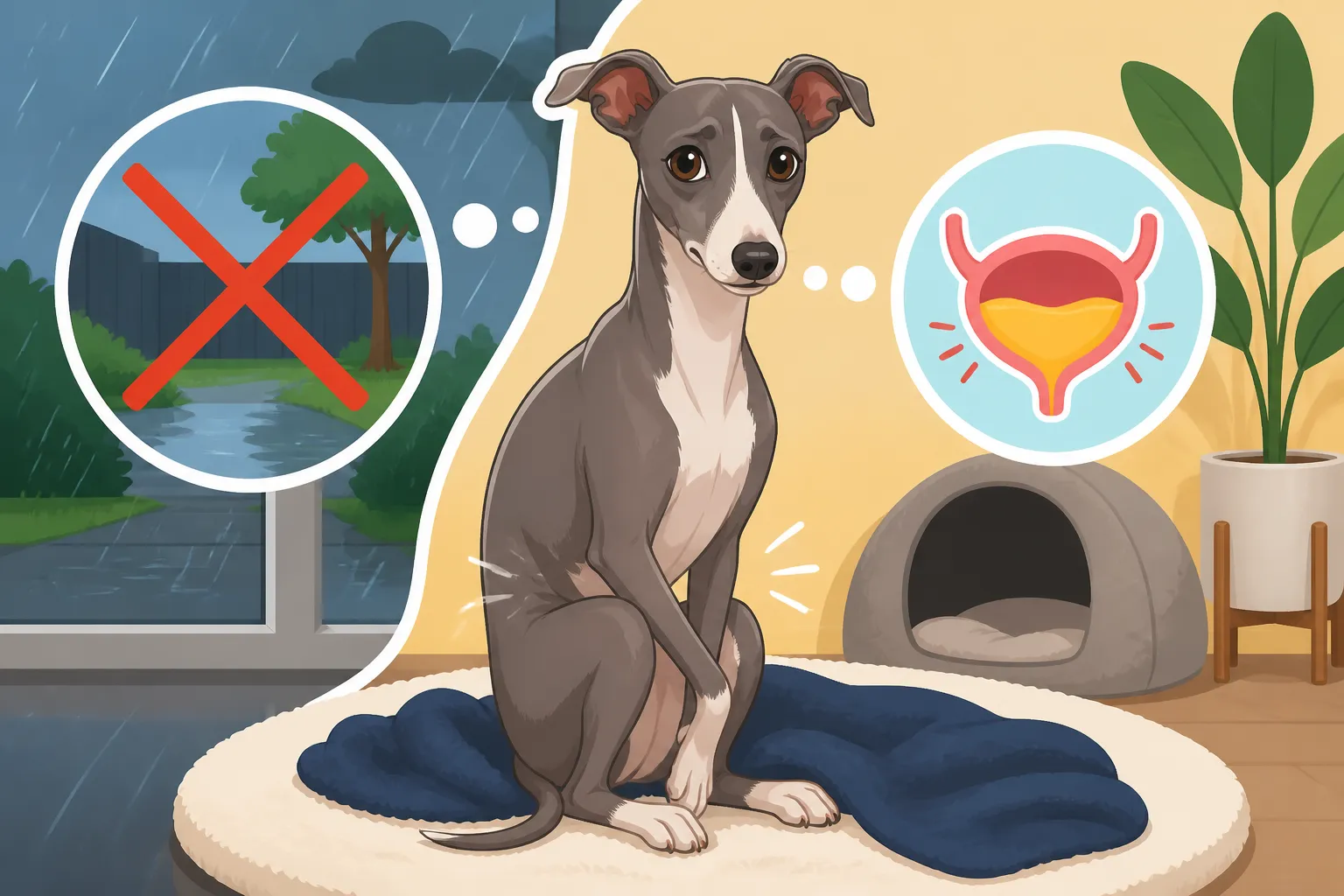
This is perhaps the most common culprit. Italian Greyhounds are fair-weather friends when it comes to outdoor activities. A tiny drop in temperature, a light drizzle, or even a gust of wind can make them reconsider their potty break. We often joke that Iggies melt in the rain, and there's a good reason for that perception. They genuinely dislike being wet and cold.
- Rain: Many Italian Greyhounds absolutely loathe rain. The feeling of cold, wet drops hitting their bare skin, coupled with the damp ground, is a major deterrent. They might dart out, quickly realize it's raining, and then bolt back inside, crossing their legs as they go.
- Cold: Even if it's not raining, cold weather can be enough to send them packing. Without proper insulation, their bodies rapidly lose heat. If you’ve ever had to bribe your Iggy into wearing a sweater or coat, you know this struggle. For more on this, you might find The Italian Greyhound That Refuses to Go Out in the Cold insightful.
- Snow and Ice: These conditions combine cold with uncomfortable textures. The snow is cold and wet, and ice can be slippery and painful on their pads. They might lift their paws, shiver, and look at you with an expression that clearly says, "Are you serious right now?"
- Wind: A brisk wind can feel like a direct assault on their thinly furred bodies, making even a mild day feel much colder to them.
Lack of a Positive Routine or Past Inconsistent Training
Housetraining an Italian Greyhound can be notoriously difficult, and inconsistency from our end often exacerbates the issue. If the routine isn't clear, predictable, and rewarding, they're more likely to "hold it" or, worse, find a discreet indoor spot.
- Inconsistent Schedule: Dogs thrive on routine. If potty breaks happen at random times, or if the duration of outdoor time varies greatly, your Iggy might not learn to associate "going outside" with "potty time." They might hold it, hoping for a more opportune moment, or simply get confused.
- Lack of Positive Reinforcement: When they do go outside, are they lavishly praised and rewarded? A high-value treat immediately after eliminating in the correct spot reinforces the behavior. If the outdoor potty trip is just a quick, cold, unrewarded affair, there's little incentive for them to choose it over an indoor alternative.
- Punishment for Indoor Accidents: This is a big one. Punishing an Italian Greyhound for an indoor accident almost always backfires. They don't understand that they're being punished for where they went; they think they're being punished for going potty at all. This can lead them to hide their accidents or hold it for extended periods, making them even more reluctant to go outside where they might be "caught." For more on this, consider Why Punishment Makes an Italian Greyhound Hide to Go.
- Unclear Communication: Are you clearly communicating that it's potty time? Using a consistent phrase like "Go potty!" or "Outside to pee!" every single time can help them understand the purpose of the trip. If you just open the door and stand there, they might assume it's just a general outdoor excursion, not a specific bathroom break.
Anxiety or Fear of the Outdoors
Sometimes, it's not just the weather; it's a general unease with the outdoor environment itself. Italian Greyhounds can be quite sensitive and prone to anxiety, especially in new or overwhelming situations.
- Loud Noises: A sudden loud noise – a car backfiring, a siren, a neighbor's dog barking aggressively – can be terrifying for a sensitive Iggy. If such an event occurs while they're outside for a potty break, they can develop an aversion to that spot or even the entire outdoor experience.
- Unfamiliar Objects or People: A new trash can on the curb, a delivery person, or even a child playing down the street can be enough to make some Iggies feel vulnerable and exposed. They might feel too anxious to relax and do their business, preferring the perceived safety of indoors.
- Feeling Unsafe or Vulnerable: Their small size and delicate build can make them feel naturally vulnerable outdoors. If they've ever been startled by another dog, a person, or even a large bird, it can heighten their sense of insecurity when outside.
Strategies to Encourage Outdoor Elimination
Once you understand why your Italian Greyhound might be holding it, you can start implementing strategies to make outdoor potty breaks more appealing and successful. It’s all about creating a positive, comfortable, and predictable experience.
Making Outdoor Potty Breaks More Appealing
The key here is to mitigate the discomforts and fears that are driving your Iggy indoors. Think of it from their perspective and try to make the outdoor experience as pleasant as possible.
- Appropriate Attire: This is non-negotiable for many Italian Greyhounds in cooler or wet weather. Invest in a good quality, well-fitting coat or sweater that covers their chest and back. In very cold or wet conditions, consider raincoats or even little booties for their sensitive paws. Brands like Hurtta or Ruffwear, available on sites like Amazon, offer options that can provide significant protection. Don't just throw it on them and send them out; let them get used to wearing it indoors first.
- Designated Potty Spot: If possible, create a small, sheltered area in your yard specifically for potty breaks. This could be a patch of artificial turf under an awning, a small fenced-off area with a windbreak, or even a covered litter box setup for ultimate comfort. Having a consistent, less exposed spot can make a huge difference, especially if Setting Up an Indoor Bathroom for an Italian Greyhound is currently your only successful strategy.
- Warm-Up Period: Before heading outside in chilly weather, spend a few minutes playing or cuddling indoors to get their body temperature up. A warm dog is less likely to shiver the moment they step out.
- Walk Them, Don't Just Let Them Out: While having a yard is convenient, many Iggies benefit from a short walk specifically for potty purposes. The change of scenery, combined with the gentle exercise, can stimulate their urge to go. Always use a secure harness, like a Martingale-style one, as Italian Greyhounds can slip out of regular collars easily.
- Timing is Everything: Take your Iggy out immediately after waking up, after eating or drinking, and after a play session. These are prime times when they are most likely to need to go. Consistency in timing helps establish a routine.
Positive Reinforcement and Consistent Training
This is the cornerstone of successful housetraining for any dog, but especially for sensitive breeds like Italian Greyhounds. It's about rewarding the desired behavior so they want to repeat it.
- High-Value Rewards: When your Italian Greyhound eliminates outside, celebrate! Immediately offer a very high-value treat (something they only get for outdoor potties, like a tiny piece of cheese or cooked chicken) and lavish praise. The reward needs to be given within 3 seconds of them finishing to create a strong association.
- "Potty Word" Association: Use a consistent "potty word" (e.g., "Go potty," "Do your business") every single time you take them out. Say it as they are squatting or lifting a leg. Over time, they will associate the word with the action, and you can even prompt them with it.
- Patience and Persistence: Housetraining an Iggy can take time, sometimes longer than other breeds. Avoid frustration. Every successful outdoor potty is a step forward. Don't give up if there are setbacks; simply clean up accidents without fuss and recommit to your routine. Remember, Housetraining an Italian Greyhound Is the Hardest Part of Owning One for a reason!
- Structured Training Programs: If you're struggling, consider an online training program. Some owners find value in structured guidance, and resources like BAXTER & Bella offer virtual puppy classes that can provide consistent techniques and support for challenging behaviors like housetraining reluctance. They emphasize positive reinforcement which is crucial for sensitive Iggies.
Managing Indoor Potty Options Thoughtfully
While the goal is outdoor elimination, sometimes an indoor option can be a valuable tool, especially during the training process or in extreme weather.
- Temporary Indoor Solutions: For brutal winter days or prolonged periods of rain, an indoor potty setup can prevent accidents and reduce stress. This could be pee pads, a real grass patch delivery service, or even a Litter Box Training an Italian Greyhound setup. If you do use an indoor option, ensure it's in a consistent spot and still use your "potty word" and high-value rewards. The trick is to clearly differentiate it from the outdoor expectation once the weather improves.
- Gradual Transition: If your Iggy is currently relying heavily on indoor pads, you can try a gradual transition. Slowly move the pad closer to the door over several days, then just outside the door, and eventually phase it out entirely. This helps them adjust to the idea of going outside for their relief.
- Clean Accidents Thoroughly: Use an enzymatic cleaner specifically designed for pet urine. This eliminates the scent that can attract your Iggy back to the same indoor spot for future accidents. Standard cleaners often don't fully neutralize the odor, leaving a lingering invitation for your dog.
When to Seek Professional Help and Be Patient
Sometimes, despite your best efforts, the issue persists, or you suspect there's more to it than just weather aversion. Knowing when to get professional help and maintaining patience are critical.
Consulting Your Veterinarian
If your Italian Greyhound suddenly starts holding it or having frequent accidents after being previously housetrained, a vet visit is always the first step.
- Rule Out Medical Issues: A sudden change in potty habits can often be a sign of an underlying medical condition. Urinary tract infections, bladder stones, kidney issues, or even pain (such as from arthritis or a developing orthopedic issue like Legg Calve Perthes Turns Up in an Italian Greyhound at Six Months) can make a dog reluctant to squat or go outside. Your vet can perform a physical exam and urinalysis to rule out these possibilities.
- Anxiety Medication: In some cases, severe anxiety about going outside might require a short course of anti-anxiety medication from your vet to help break the cycle of fear and allow behavioral training to be more effective. This is usually considered a last resort after other methods have been exhausted.
Working with a Certified Professional Dog Trainer or Behaviorist
For persistent behavioral challenges, a professional can offer tailored guidance and support.
- Individualized Plans: A certified professional dog trainer or veterinary behaviorist can assess your specific situation, observe your Italian Greyhound's behavior, and develop an individualized training plan. They can help identify subtle cues you might be missing and offer strategies specific to your dog's personality and environment. They often utilize positive reinforcement techniques, much like those advocated by BAXTER & Bella, ensuring a humane and effective approach.
- Addressing Underlying Fears: If the reluctance stems from deep-seated fears or anxieties, a behaviorist can help you implement desensitization and counter-conditioning protocols. This involves slowly exposing your dog to the feared stimulus (e.g., rain, loud noises) in a controlled way while associating it with positive experiences.
- Consistency is Key: A professional can also help you implement a more consistent training routine and provide accountability. Sometimes, just having an expert to check in with can make a huge difference in your commitment and success.
The Virtue of Patience
Housetraining an Italian Greyhound, especially one that has developed a strong preference for holding it or going indoors, requires an abundance of patience. This breed is sensitive, intelligent, and deeply connected to their people, but they can also be creatures of habit and comfort.
| Outdoor Deterrent | Why It's a Problem for Iggies | Suggested Solution |
|---|---|---|
| Cold Weather | Thin skin, no body fat, shivers quickly | Well-fitting winter coat/sweater, heated bed (indoors), quick trips, pre-warm indoors |
| Rain/Wet Ground | Dislikes getting wet, cold to the touch | Raincoat, covered potty area, artificial turf, umbrella for handler and dog |
| Snow/Ice | Cold, wet, uncomfortable texture, slippery, painful | Waterproof boots, cleared path to potty spot, covered area, temporary indoor potty |
| Loud Noises/Strangers | Sensitive, easily startled, feels vulnerable | Quiet potty spot, consistent routine, positive association with outdoor sounds (treats) |
| Inconsistent Routine | Confusion, no clear expectation of potty time | Strict, predictable potty schedule, specific "potty word," immediate high-value rewards |
| Previous Bad Experience | Negative association with outdoors | Overwrite with overwhelmingly positive experiences, identify and avoid triggers, gentle coaxing |
Understand that setbacks are normal. There will be days when they seem to have forgotten everything, and accidents might happen. Don't get discouraged. Clean up, recommit to your plan, and remember that every successful outdoor potty break is a victory. With consistent effort, patience, and understanding of their unique needs, your Italian Greyhound can learn to embrace outdoor potty breaks, or at least tolerate them enough to keep your carpets clean!
Disclaimer
This article is for general informational purposes only and does not constitute professional advice. Laws, prices and regulations vary by location and change over time. Consult a qualified professional for guidance on your specific situation.