Whether to Fly an Italian Greyhound Puppy Home
Bringing a new Italian Greyhound puppy home is such an exciting time, but if your perfect little companion is across the country, the logistics of getting them to you can feel incredibly overwhelming. The thought of sending such a tiny, delicate creature on a flight can trigger all sorts of worries about their safety, comfort, and fragile bones. This guide is here to walk you through all the considerations, options, and essential preparations for flying an Italian Greyhound puppy home, ensuring you make the safest and most informed decision for your new family member.
The Initial Considerations: Is Flying Even the Best Option?
Before you even start looking at airline tickets, it’s really important to pause and think about whether flying is truly the best method for your particular Italian Greyhound puppy. While it might seem like the quickest route, there are several factors that could make alternative transport options more appealing, especially given the unique needs of this breed.
Breeder's Policy and Location
First things first, what does your breeder say? Reputable Italian Greyhound breeders often have very strong opinions, and sometimes strict policies, about how their puppies leave their care. Some breeders will outright refuse to ship puppies in cargo, and many will prefer that you pick up your puppy in person. This isn't just about their peace of mind; it's often rooted in a deep understanding of the breed's vulnerabilities. They might be located far from a major airport, making early morning or late night drop-offs stressful for them and the puppy. Considerations like extreme local weather conditions – scorching summers or freezing winters – near the breeder's location or connecting airports can also make flying a non-starter during certain times of the year. Always have a frank conversation with your breeder about their experiences and recommendations; they are your best resource here.
The Puppy's Age and Size
Italian Greyhounds are famously delicate, especially as puppies. Their bones are incredibly fragile, and they are prone to breaks, even from seemingly minor falls or bumps. A young puppy, typically under 12 weeks, is at a much higher risk during travel due to their undeveloped immune system, inability to regulate body temperature effectively, and sheer vulnerability. Most airlines have minimum age requirements, usually 8 to 10 weeks, for puppies to fly, but for an Italian Greyhound, waiting until they are a little older, perhaps closer to 12-16 weeks, might offer a bit more sturdiness. We all know The Age an Italian Greyhound's Bones Finish Hardening is well past puppyhood, so any extra development can only help. A smaller, very tiny puppy might also struggle more with temperature changes and the general jostling of travel. It's not just about meeting the airline's minimums; it's about what’s genuinely safest for your specific, tiny Italian Greyhound.
Your Own Availability and Comfort Level
Let's be honest, flying can be stressful for humans, let alone a tiny puppy. Think about your own schedule and comfort with the process. Are you able to take time off work or other commitments to either fly with the puppy yourself, or even drive to pick them up? If the idea of your puppy traveling alone in cargo gives you sleepless nights, that's a valid feeling, and it might mean an alternative is better for your peace of mind too. Consider the entire journey: from the breeder's home to the airport, the flight itself, layovers (if any), and then the journey from your arrival airport to your home. Each step adds potential stress for a puppy. Sometimes, a longer drive, where you have complete control over stops, temperature, and comfort, might be less stressful for everyone involved.
Flying with Your Italian Greyhound Puppy: In-Cabin vs. Cargo
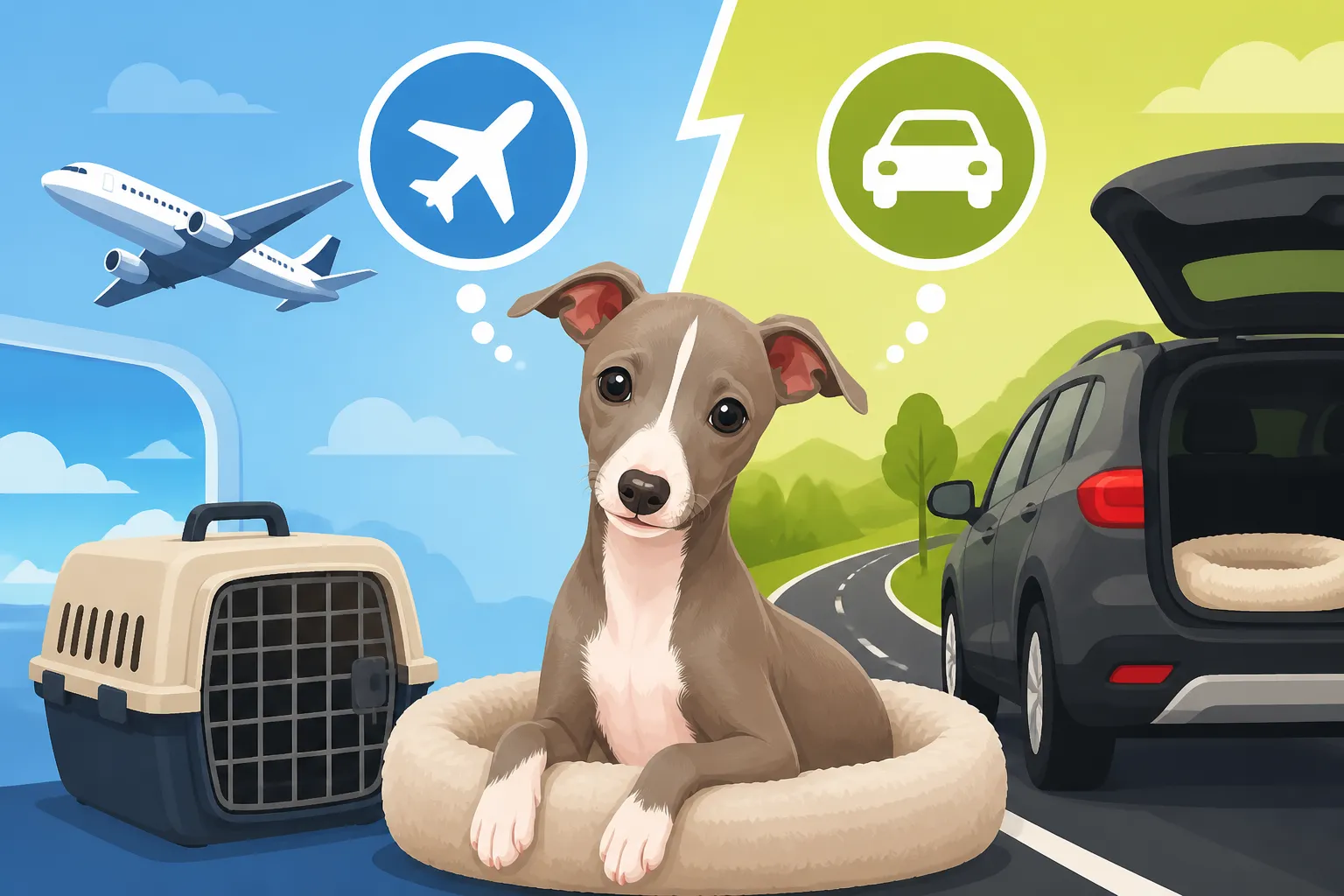
When it comes to air travel for dogs, there are generally two main ways: in the cabin with you, or in the cargo hold. For an Italian Greyhound puppy, this distinction is absolutely crucial, and understanding the differences can literally be a matter of life or limb.
The In-Cabin Experience (Carry-On)
For an Italian Greyhound puppy, traveling in the cabin with you is, without a doubt, the preferred and often only recommended option. This means your puppy travels under the seat in front of you, tucked away in an approved carrier. The benefits here are huge: you can monitor them directly, provide reassurance, control their environment, and ensure they stay warm. Italian Greyhounds, being such a lean breed, are incredibly sensitive to cold, so staying in the climate-controlled cabin is vital.
However, there are strict requirements you need to be aware of. Airlines typically have size and weight restrictions for in-cabin pets, and your Italian Greyhound puppy, along with their carrier, must fit comfortably under the seat. The carrier itself needs to be airline-approved, usually soft-sided, well-ventilated, and large enough for your puppy to stand up and turn around in naturally, but also flexible enough to fit in the tight space. You'll need to book your puppy's spot well in advance, as airlines limit the number of pets allowed in the cabin per flight. Be prepared for a pet fee, which is separate from your own ticket. On the day of travel, ensure your puppy has had a potty break right before boarding and pack absorbent pads in the carrier. Keep a small water bottle with a no-spill spout and a few familiar, soft toys to provide comfort. Many owners use a familiar blanket from home to line the carrier, providing a sense of security and warmth. You'll find a great selection of carriers and travel accessories on sites like Chewy. Getting your puppy accustomed to the carrier before the trip, making it a safe and positive space, will make the actual journey much smoother. For more on ensuring their comfort, check out How an Italian Greyhound Handles Flying.
Understanding Cargo Travel Risks and Realities
This is where we strongly advise caution, especially for Italian Greyhounds. Traveling in cargo is generally not recommended for this breed, particularly puppies. The cargo hold, while pressurized, is often not temperature-regulated to the same degree as the cabin, and Italian Greyhounds lack the body fat and dense coat to withstand colder temperatures, making them highly susceptible to hypothermia. Think about Why a Nine Pound Italian Greyhound Gets Cold on the Table during a vet visit; imagine that cold exacerbated in an unfamiliar, noisy, and potentially chilly cargo hold.
Beyond temperature, there's the immense stress. The noise, vibrations, unfamiliar smells, and separation from their human can be terrifying for any dog, but especially a sensitive breed like the Italian Greyhound. Their delicate build also makes them more vulnerable to injury if the crate is jostled. Many airlines have breed restrictions for cargo travel, often excluding brachycephalic (short-nosed) breeds due to breathing issues, but even sighthounds like IGs can be impacted by the stress and environmental factors. Some airlines also have embargoes on pet cargo travel during extreme hot or cold weather at departure, arrival, or connecting airports. Given the fragility and emotional sensitivity of an Italian Greyhound puppy, the risks associated with cargo travel far outweigh any convenience.
Airline Specific Policies and Restrictions
You simply cannot assume that all airlines operate under the same rules when it comes to pet travel. Each airline has its own detailed policy, and it's your responsibility to research and understand them thoroughly before booking any flights. Key things to check include:
- Pet Fees: These vary widely.
- Carrier Dimensions: Exact maximum dimensions for in-cabin carriers.
- Weight Limits: Combined weight of pet and carrier for in-cabin.
- Breed Restrictions: Whether Italian Greyhounds are permitted, especially in cargo (again, try to avoid cargo).
- Health Certificate Requirements: Most airlines require a veterinary health certificate issued within a certain timeframe (e.g., 10 days) of travel. This certificate confirms your puppy is healthy enough to fly and is up to date on necessary vaccinations.
- Booking Procedures: How to add a pet to your reservation, as this usually can't be done online.
- Layover Policies: What happens during connecting flights.
- Temperature Restrictions: If cargo is even a remote consideration, inquire about minimum and maximum temperature cut-offs at all points of travel.
Creating a checklist for each airline you consider is a smart move. Remember, even a small detail missed could lead to your puppy being denied boarding, causing immense stress and logistical nightmares.
Preparing Your Italian Greyhound Puppy for Travel
Once you've decided that flying is the best route and you've nailed down the airline specifics, the next crucial step is to prepare your Italian Greyhound puppy for the journey. Preparation isn't just about paperwork; it's about minimizing stress and maximizing comfort for your tiny traveler.
Health Checks and Veterinary Clearances
A visit to the veterinarian is non-negotiable before any significant travel. Your puppy will need a thorough health check to ensure they are fit for the journey. This includes verifying vaccinations are up-to-date and confirming they are free of any contagious diseases or underlying health issues. Many airlines require a health certificate signed by a licensed veterinarian within a specific window prior to travel – usually 10 days, but sometimes less. This certificate essentially gives your puppy a "green light" for flying. Discuss any concerns you might have with your vet, such as potential motion sickness or anxiety. They might offer advice or even mild, non-sedative remedies if deemed necessary, though sedatives are generally discouraged for air travel as they can interfere with a dog's ability to regulate body temperature and balance. It's also a good idea to ensure your puppy is microchipped and that your contact information is up-to-date, just in case. When choosing a breeder, make sure you ask What Health Testing an Italian Greyhound Breeder Should Show for peace of mind.
Acclimating the Puppy to the Carrier
Imagine being crammed into an unfamiliar box for hours – it's naturally anxiety-inducing. To make the flight less stressful, start acclimating your Italian Greyhound puppy to their travel carrier well in advance. Leave the carrier open in a comfortable part of your home, perhaps with a soft blanket or a favorite toy inside. Encourage your puppy to explore it on their own terms. Place treats inside, feed them meals near or even inside the carrier, and praise them for entering. Gradually, close the door for short periods, extending the time as they become more comfortable. This process transforms the carrier from a scary, confining space into a familiar, safe den. A comfortable, familiar carrier can significantly reduce stress on travel day.
Packing Essentials for the Journey
Think of it like packing for a baby – you need all the necessities close at hand. For your Italian Greyhound puppy's journey, here’s a list of essentials:
- Airline-Approved Carrier: As discussed, ensure it meets all specifications.
- Absorbent Pads: Line the bottom of the carrier with several layers of absorbent puppy pads in case of accidents.
- Familiar Blanket/Towel: A blanket that smells like home or their littermates can provide immense comfort and warmth. Remember, how much more they feel the cold (Why an Italian Greyhound Cannot Hold Its Own Heat) is a significant factor.
- Small Water Bottle and Bowl: A collapsible travel bowl and a small bottle of water (or a special water dispenser that attaches to the crate door) are essential. Offer water during layovers or when safely able to do so in the cabin.
- Small Amount of Food: Pack a small portion of their regular food (you can get this from a variety of places, including Chewy or even Ollie if your breeder uses fresh food) in a sealed bag. Avoid feeding a large meal right before the flight to prevent an upset stomach, but having some on hand for after landing or during a long layover is wise.
- Chew Toy/Distraction: A soft chew toy (not one that could be swallowed or shredded) can help relieve stress.
- Waste Bags: For potty breaks before and after the flight.
- Health Certificate and Vet Records: Keep these in an easily accessible folder, along with your breeder's contact information and your own emergency contacts.
- Leash and Harness: For bathroom breaks, use a secure harness like Which Harness Suits an Italian Greyhound's Neck rather than a collar, which they can easily slip.
Having everything organized will reduce your own stress, which in turn helps keep your puppy calm.
Alternatives to Flying: Ground Transport & Personal Pick-Up
Sometimes, the best flight plan is no flight plan at all. Given the delicate nature of Italian Greyhounds, especially as puppies, exploring alternatives to air travel is always a wise move. These options often provide more control, less stress, and direct human supervision throughout the journey.
Driving to Pick Up Your Puppy
Making the drive yourself to pick up your Italian Greyhound puppy is often the safest and most recommended option, even if it means a significant road trip. While it costs time and gas, you gain invaluable control. You set the pace, decide when and where to stop for potty breaks, and manage the temperature and environment in the car. This allows for a much more gradual introduction to travel, without the abrupt noises and confines of an airplane cabin. You can spend those first few hours bonding with your new puppy, offering comfort and reassurance directly.
The downsides are primarily the time commitment and potentially higher cost compared to an economy flight. However, when you consider the possible emotional and physical stress on a puppy from flying, the personal pick-up often becomes the superior choice. You can make it an adventure, planning stops, ensuring your car is puppy-proofed, and bringing all their essentials for a comfortable ride. For tips on preparing for their arrival, you might want to look at Setting Up a House an Italian Greyhound Cannot Break a Leg In.
Professional Ground Pet Transport Services
If driving isn't feasible for you, a professional ground pet transport service can be an excellent middle-ground. These services specialize in safely transporting pets cross-country in vehicles designed for animal comfort. They often feature climate-controlled environments, individual crates, and regular stops for potty breaks, food, and water. The key is to find a reputable, insured, and experienced transporter. Look for companies with strong references, transparent communication, and drivers who are knowledgeable about handling delicate breeds like Italian Greyhounds. Ask about their protocols for emergencies, how often they stop, and what kind of supervision the animals receive. This option generally costs more than flying in cargo (which we already established to avoid for an IG puppy anyway) but less than a dedicated "puppy nanny" service, and provides a much lower stress environment than air cargo.
The "Puppy Nanny" or Escorted Travel
This is a premium service that bridges the gap between flying your puppy alone and picking them up yourself. A "puppy nanny" is essentially a professional pet escort who flies in the cabin with your puppy. They handle all the logistics, from check-in to ensuring the puppy has potty breaks during layovers, and deliver the puppy directly to you at your arrival airport. Since the puppy is with a human companion and in the cabin, it significantly reduces the stress and risks associated with unaccompanied travel. This option provides the benefits of in-cabin flight for your puppy without you having to travel yourself. It's typically the most expensive alternative to personal pick-up, but for Italian Greyhound puppies, especially if you live very far from the breeder and cannot make the drive, it can be a fantastic investment in your puppy's well-being. This is where researching experienced services who understand How an Italian Greyhound Handles Flying can really pay off.
Remember, the goal is to get your Italian Greyhound puppy to their new home as safely and stress-free as possible. Weigh all these options carefully, considering your puppy's delicate nature and temperament above all else.
| Transportation Method | Pros for Italian Greyhound Puppy | Cons for Italian Greyhound Puppy | Cost Implications |
|---|---|---|---|
| In-Cabin Flight (with owner) | Direct supervision, climate control, reduced stress, immediate comfort. | Requires owner travel, strict carrier size limits, limited airline availability. | Moderate (pet fee + your ticket) |
| Cargo Flight (unaccompanied) | Generally quicker than driving long distances. | NOT RECOMMENDED: Extreme stress, temperature risks (hypothermia), high injury risk for fragile IGs. | Low to Moderate (pet fee only) |
| Personal Car Pick-Up (owner drives) | Maximum control over environment, stops, bonding, lowest stress. | Significant time commitment, fuel costs, wear and tear on vehicle. | Moderate (fuel, lodging if needed) |
| Professional Ground Transport | Climate-controlled, supervised, less stressful than cargo flight. | Longer travel time than flying, less direct control than personal pick-up. | Moderate to High |
| "Puppy Nanny" Escorted Flight | In-cabin safety, direct human care, minimal owner travel required. | Highest cost among all options. | High (nanny fee + puppy ticket) |
Disclaimer
This article is for general informational purposes only and does not constitute professional advice. Laws, prices and regulations vary by location and change over time. Consult a qualified professional for guidance on your specific situation.