Why Painters Used the Italian Greyhound as a Symbol
A slender dog tucked beside a richly dressed sitter can look like a decorative detail, but in Renaissance and later European paintings, it could also signal loyalty, intimacy, wealth, or social refinement. The meaning was rarely fixed, though. This guide explains why artists included Italian Greyhounds, what viewers might have understood, and why the same little dog can carry several interpretations at once.
Why Italian Greyhounds Appeared in Portraits
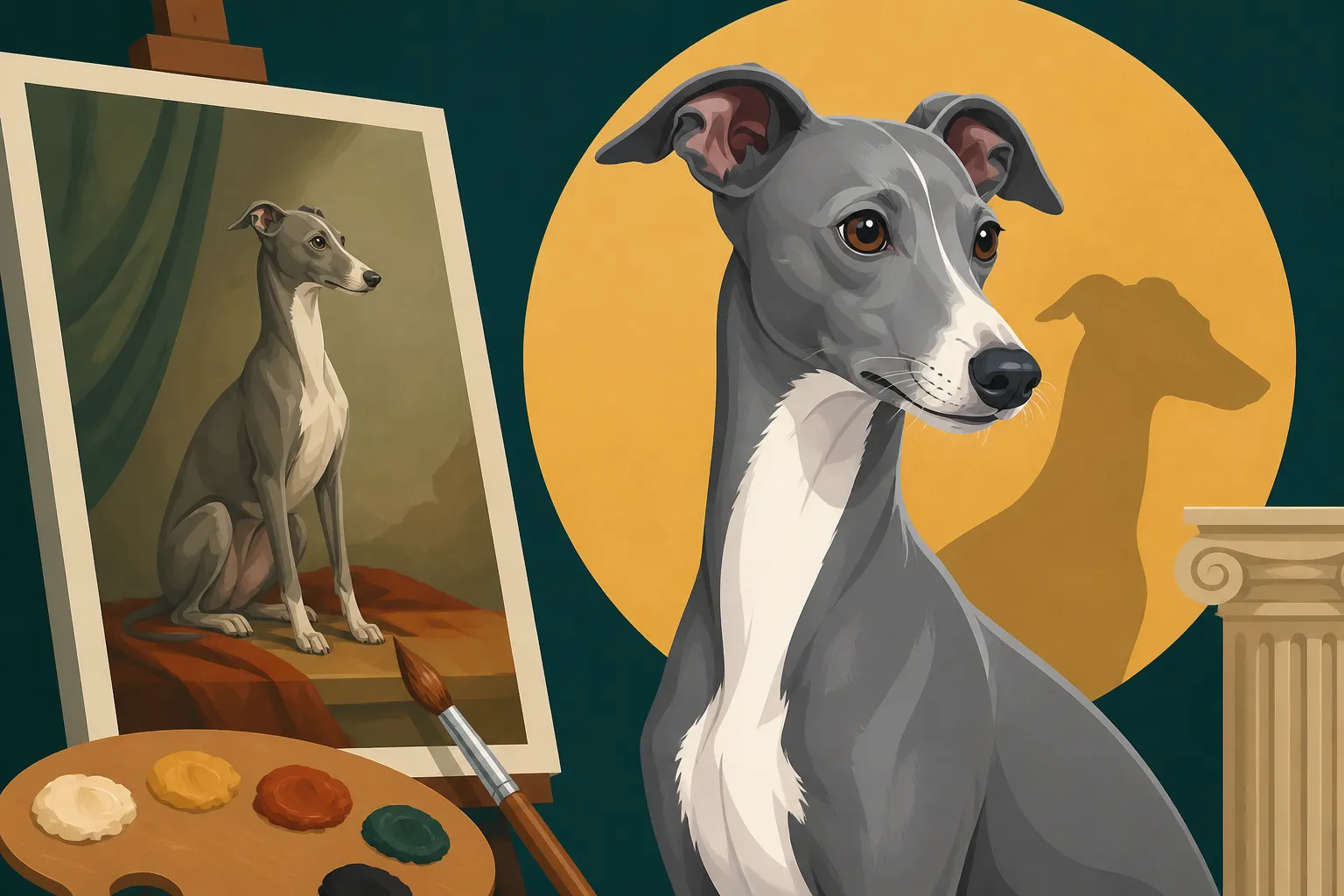
Their appearance suited the language of elite portraiture
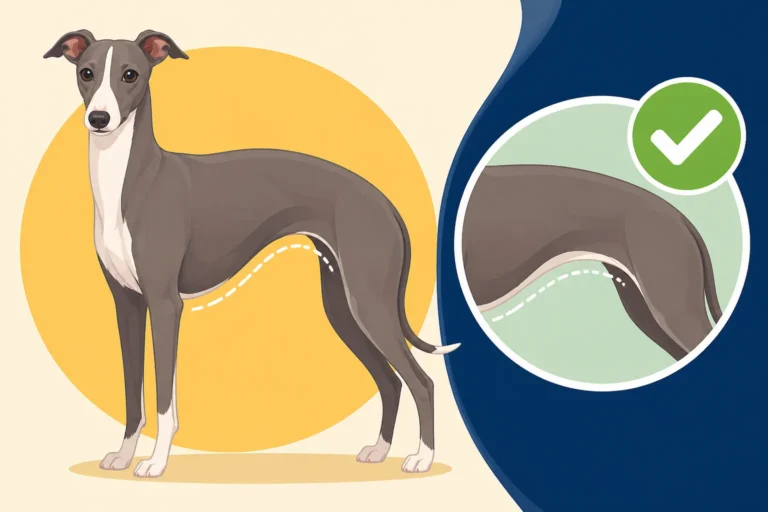
Italian Greyhounds have a distinctive silhouette: long legs, a narrow waist, a tucked abdomen, a fine head, and a light, elegant outline. In a painting, those features could echo the careful posture and expensive clothing of the person beside them. The dog was not merely a small animal added to fill empty space. Its shape helped make the whole composition feel graceful and composed.
That visual effect mattered in portraits made for wealthy households and courts. A slim dog could complement a sitter’s profile or draw the eye toward a hand resting on its back. Artists could use its pale, fine-boned body against dark fabric, or place it at a sitter’s feet to balance a broad skirt or elaborate furnishings. Even when the dog was not the main subject, its body could quietly organize the picture.
The breed’s association with aristocratic homes also made it a fitting companion for people who wanted their portraits to express status. Keeping a delicate, carefully bred dog suggested that a household had the time, space, and resources to care for an animal whose role was companionship rather than farm work. For more on the breed’s historical presence in art, see The Renaissance Painters Who Put Italian Greyhounds in the Frame.
A small companion could make a portrait feel personal
A formal portrait can seem distant: the sitter is dressed for display, posed carefully, and surrounded by objects chosen to communicate rank or wealth. A dog introduces a different kind of relationship. It may look up at the sitter, lean against a leg, or rest close to a hand. Those gestures can make the subject seem affectionate, approachable, or at ease within their private world.
That sense of intimacy should not be mistaken for proof of a specific personal story. A dog in a portrait does not automatically mean the sitter loved that particular animal more than anything else, nor does it tell us the dog’s name. But the animal can create an impression of attachment that a jewel or piece of furniture cannot. The viewer sees not only what the sitter owns, but also a living companion with whom the sitter appears to share space.
This is one reason small dogs appear so effectively in portraits of women and families. Their scale allows them to be held or touched without dominating the composition. They can signal tenderness while remaining part of a carefully staged image. Interpretations of individual works vary, as discussed in What an Italian Greyhound Signaled in a Portrait.
What the Dog Could Symbolize
Fidelity and loyalty
Dogs had a long-standing association with fidelity and loyalty in European visual culture. A dog shown close to a person could suggest devotion, steadfastness, or trustworthy companionship. In some portraits, those associations may have resonated with ideas about marriage and household life, especially when a dog appears near a couple or in a work with other references to family bonds.
But there was no single visual dictionary in which every dog meant exactly the same thing. A dog’s position, the identities of the sitters, the surrounding objects, and the purpose of the painting all affect how it might be read. A companion dog beside one sitter may suggest affection; in another painting, it may mainly emphasize the sitter’s wealth or taste. The symbolism is a possibility to weigh, not a code to decode mechanically.
The breed’s poised, attentive look could strengthen the impression of loyalty. Unlike a hunting scene filled with action, a small sighthound resting beside a sitter often appears controlled and close to home. That stillness can make the dog read as a dependable companion. For related context about the breed’s presence in earlier art, see The Italian Greyhounds in Giotto's Frescoes.
Wealth, rank, and refined taste
A fashionable companion animal could also function as a status marker. The dog itself might be valuable, but the larger message was about the household that could keep it. A well-groomed, elegant dog in a carefully appointed room helped present a world of leisure, polished manners, and privileged access to courtly culture.
This meaning is not limited to the animal’s purchase or breeding. The portrait could imply that the sitter’s life was far removed from labor that required working animals. A dog kept for companionship became part of the visual language of domestic comfort. Its presence could suggest that the sitter had the means to treat an animal as a loved household member rather than as a tool.
An Italian Greyhound’s slim shape made it especially useful to artists representing refinement. The breed’s appearance could harmonize with luxurious fabrics, delicate furnishings, and a sitter’s carefully arranged posture. The dog was an accessory in the composition, but not necessarily an impersonal one. In portraits, affection and social display often coexist: the sitter might genuinely cherish the dog, while the image also uses it to communicate status.
Beauty, elegance, and controlled movement
Artists also had a straightforward visual reason to include the breed: it is beautiful to paint. The contrast between a narrow body and long legs gives the animal a lively outline, while its smooth coat catches light differently from heavy clothing or patterned textiles. Its shape can add movement even when the dog is sitting still.
A dog’s alert posture may also suggest contained energy. Sighthounds were bred for speed, yet a portrait usually presents them in a controlled, domestic setting. That contrast can be appealing: the animal appears graceful and ready to move, but also calm enough to remain close to the sitter. It gives the scene a touch of life without disrupting its formality.
Artists were not always making a symbolic statement when they painted a dog. Sometimes a patron asked to be shown with a beloved pet; sometimes the animal helped balance the composition; sometimes it contributed to the portrait’s fashionable atmosphere. The most convincing interpretation usually accounts for all these possibilities rather than choosing only one.
| Possible meaning | What to look for in the painting | Why the interpretation needs care |
|---|---|---|
| Loyalty or fidelity | The dog stays close to a sitter or couple | Dogs had broad associations, and context changes the reading |
| Affection and intimacy | A hand touches the dog, or the dog looks toward the sitter | A pose suggests closeness but cannot prove a private relationship |
| Wealth and rank | The dog appears with costly clothing or an elite interior | The portrait may communicate status as well as personal attachment |
| Elegance and refinement | The dog’s slender form echoes the sitter’s pose or clothing | Its visual role may matter as much as any symbolic meaning |
| Domestic companionship | The dog is settled within a household setting | Not every pictured dog is necessarily an Italian Greyhound |
How to Read an Italian Greyhound in a Painting
Start with the whole composition
When you spot a small sighthound in a painting, begin by looking beyond the dog. Ask who commissioned the portrait, who is represented, and where the scene takes place. Is it a formal likeness, a family portrait, a religious work, or a mythological scene? A dog’s meaning can shift substantially depending on the painting’s purpose.
Next, notice the dog’s relationship to the people and objects around it. Is it touching the sitter? Looking up? Resting at a distance? Is it prominent enough to attract attention, or is it nearly hidden near the edge of the scene? A dog placed close to the sitter’s hand may invite a reading of companionship, while a dog positioned beside costly furnishings may contribute more to the overall display of household status.
Also consider the painting’s date and local artistic traditions. Artists across Europe borrowed and adapted visual conventions, but details did not always mean the same thing in every place or period. A symbolic reading that makes sense in one setting may be less convincing in another. For broader context on the painters and their use of the breed, see Which Renaissance Painters Included Italian Greyhounds.
Be cautious about identifying the breed
A dog with long legs, a fine head, and a narrow body may look like an Italian Greyhound to modern viewers, but paintings are not always precise enough to settle the breed. Artists used different levels of naturalism, and small dogs could be stylized to fit a composition. Some may be Italian Greyhounds; others may be related sighthounds or dogs whose exact type is unclear.
The name itself can make identification tempting. If a painting is famous for containing a small, elegant dog, it may be described online as featuring an Italian Greyhound even when the evidence is not conclusive. It is more careful to say that a dog resembles an Italian Greyhound or belongs to the general sighthound type unless specialists have made a strong case for a specific identification.
This distinction matters because symbolic interpretation depends partly on what the animal was understood to be. If the breed is uncertain, claims about a specifically Italian Greyhound meaning should be treated with extra caution. A dog may still communicate loyalty, refinement, or status even if its precise breed cannot be established. For an example of the challenges involved in identifying small dogs in complex imagery, explore Where Bosch Put an Italian Greyhound.
Why the Meaning Is Rarely Just One Thing
Symbolism and real affection can overlap
It is easy to imagine that a dog in a portrait was included only as a symbol, as though the animal were a prop with no personal connection to the sitter. That can flatten the picture. A pet might have been beloved and, at the same time, useful in presenting a certain image of the household. Personal affection and social messaging are not mutually exclusive.
A sitter could have wanted a portrait with a cherished companion, while the artist and patron also understood that the dog made the painting appear more intimate or fashionable. The dog might comfort the sitter during a long posing session, give the hands something natural to do, or bring warmth to a stiff composition. These practical artistic functions can sit alongside symbolic ones.
A more balanced reading asks what the dog does in the image, rather than insisting on one answer. Does it make the sitter look approachable? Does it echo the luxury of the setting? Does it suggest loyalty? Does it help balance the design? Often, the answer is “several of these at once.”
Let the evidence guide the interpretation
A convincing interpretation connects the dog to visible details in the painting and to the broader context of the work. It avoids treating the animal as a universal symbol whose meaning never changes. Look at the sitter’s expression, the dog’s posture, the objects nearby, and the way the artist directs the viewer’s attention.
If the dog is central and engaged with the sitter, companionship may be an important part of the image. If it is small and tucked into a lavish room, it may help signal refinement or wealth. If it appears alongside other signs associated with marriage or family, fidelity could be relevant—but should still be presented as an interpretation, not a certainty.
The most useful way to think about Italian Greyhounds in paintings is as expressive companions whose meaning depends on context. Their elegance made them visually compelling, their association with elite households made them socially meaningful, and their closeness to people allowed artists to suggest affection and loyalty. A little dog in a portrait could therefore be both a beloved presence and a carefully chosen part of the image’s message.
Disclaimer
This article is for general informational purposes only and does not constitute professional advice. Laws, prices and regulations vary by location and change over time. Consult a qualified professional for guidance on your specific situation.