What an Italian Greyhound Signaled in a Portrait
A small, elegant dog beside a sitter can look like a straightforward sign of affection, but portrait symbolism was rarely that simple. An Italian Greyhound might suggest refinement, wealth, intimacy, or fashionable taste—and sometimes several things at once. This guide explains how to read the dog in context, why its meaning varied, and how to avoid mistaking a charming visual detail for a fixed symbol.
The Italian Greyhound as a sign of status and refinement
A fashionable companion in an elite world
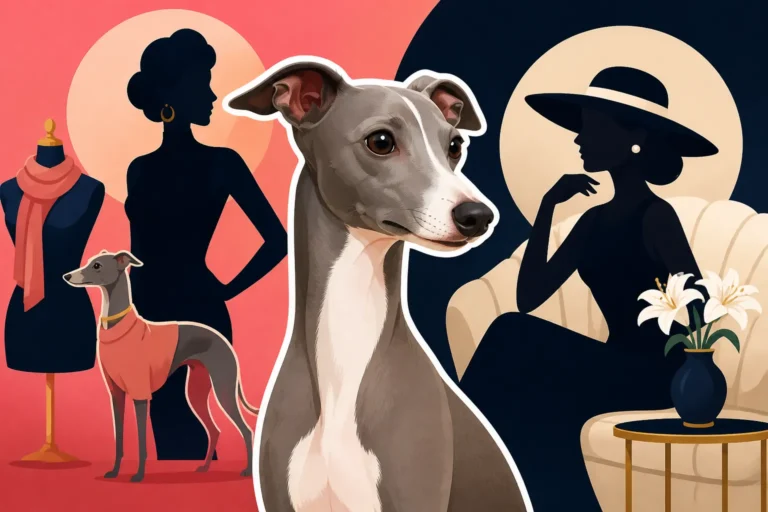
In a formal portrait, an Italian Greyhound could help present its owner as someone with leisure, resources, and access to fashionable company. Keeping a delicate companion dog required time and care, and the dog’s polished appearance suited settings where clothing, posture, furnishings, and even small decorative details communicated social standing.
Its slim body, fine features, and poised stance also made it visually distinctive. A painter could use the dog’s graceful outline to echo the sitter’s elegant clothing or balance a composition. The animal was not merely an accessory in the room; it could become part of the portrait’s carefully arranged display of taste.
That does not mean every Italian Greyhound in a portrait was intended to announce wealth. A dog might simply have belonged to the sitter. But the choice to include it—and the care taken to show its coat, collar, or relationship to the person—could contribute to a broader image of cultivated domestic life. For more context on the breed’s place in art, see The Renaissance Painters Who Put Italian Greyhounds in the Frame.
A marker of courtly and artistic taste
Italian Greyhounds have long been associated with elite households and courtly life. In a portrait, their presence could evoke a world of gardens, private rooms, hunting traditions, and carefully managed household spaces. The dog’s refined appearance made it well suited to images that presented a sitter as graceful, educated, or connected to fashionable circles.
Still, “Italian Greyhound” is a modern breed label, and identifying a dog in an old painting is not always straightforward. Artists stylized animals, and small sighthounds could resemble one another. A slender dog with a tucked waist and long legs may look like an Italian Greyhound to a modern viewer, but those features alone do not prove its exact breed. When considering a historical portrait, it is safer to describe what can be seen—a small, fine-boned sighthound, for example—unless the dog’s identity is documented.
This distinction matters because the interpretation depends partly on identification. A small dog may signal companionship or luxury without being an Italian Greyhound specifically. Looking at the portrait’s date, location, clothing, and setting helps avoid treating a resemblance as certainty. The breed’s broader history is explored in The Italian Greyhound Is Two Thousand Years Old and Why the Italian Greyhound Was Bred Purely for Company.
Affection, loyalty, and the private self
The dog as a companion rather than a prop
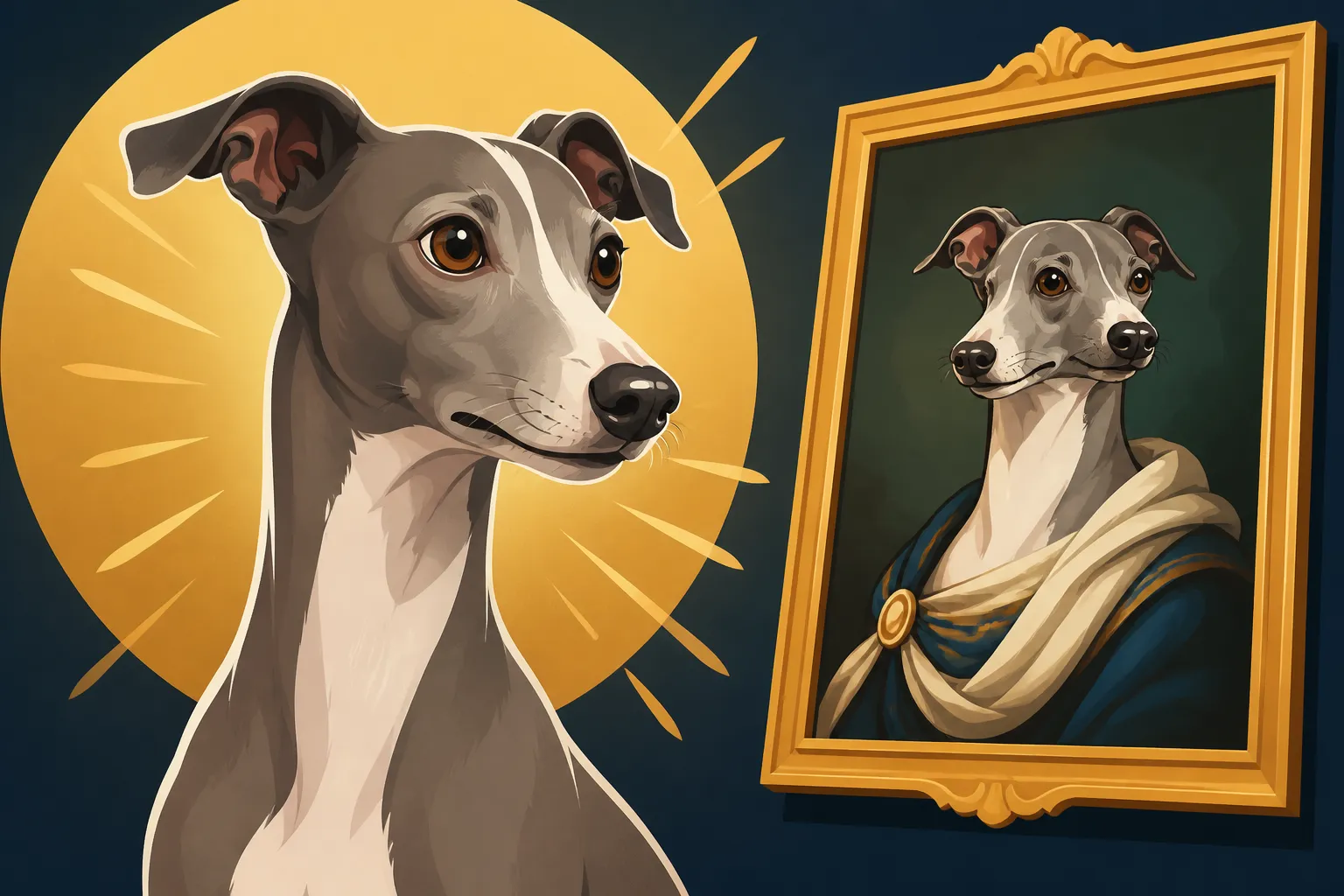
A portrait dog can make a powerful image of personal attachment. If the animal leans against its owner, looks toward them, or is held gently, the pose may invite viewers to see the sitter as affectionate and approachable. A formally dressed person can seem distant; a familiar dog introduces warmth and a glimpse of everyday life.
That emotional reading can be persuasive, but it should remain an interpretation rather than a certainty. Portraits were planned images, and a painter could arrange the dog to suggest tenderness even when the main purpose was to create a pleasing composition. The animal might be both a real companion and a deliberate element in the sitter’s public image.
Look at the interaction, not just the dog’s presence. Is the sitter touching the animal naturally, or does the pose seem carefully staged? Does the dog appear relaxed, alert, or directed toward the viewer? A close, easy connection can support a reading of affection; a distant or highly formal arrangement may emphasize status and display instead.
Loyalty, fidelity, and the limits of symbolism
Dogs are often associated with loyalty and fidelity in European art, so viewers may read a portrait dog as a sign of devotion. That association can be relevant, especially where the dog is placed near a sitter’s feet or shown as attentive to them. But it is not a universal code that automatically applies to every portrait.
Context changes the meaning. A dog beside a married couple might encourage a reading of companionship or household stability. Beside an individual sitter, it could suggest personal attachment, status, or simply the presence of a beloved pet. A dog painted near a child may strengthen the feeling of family intimacy, while a dog shown with costly furnishings and elaborate dress may contribute more strongly to a display of privilege.
A useful approach is to ask what the whole portrait is doing. Is it presenting a family, marking a marriage, showing a person’s rank, or preserving an intimate likeness? The dog can reinforce those themes, but rarely explains them on its own. The broader story of the breed’s relationship with people is also explored in The Italian Greyhound as a Bed Warmer.
How to read the dog within the portrait
Start with the sitter and setting
Before assigning meaning to the Italian Greyhound, identify the portrait’s basic visual cues. Consider the sitter’s clothing, pose, surroundings, and objects. A richly dressed person in a formal interior creates a different context from a casually posed figure in a garden. The dog’s meaning may shift with that setting, even if its appearance is similar.
Then notice where the animal is placed. A dog close to the sitter’s hand may emphasize intimacy. One positioned near the edge of the composition might balance the image or lead the viewer’s eye. An animal at the sitter’s feet can suggest a familiar household presence, but it may also serve a compositional purpose. The placement offers clues, not a guaranteed translation.
The following table can help organize those clues without reducing the portrait to a single interpretation:
| Portrait detail | Possible reading | What to check before deciding |
|---|---|---|
| The sitter touches or holds the dog | Affection, familiarity, or a cultivated image of tenderness | Whether the pose looks spontaneous or formally arranged |
| The dog wears a collar or ornament | Ownership, care, or a display of resources | Whether similar details appear elsewhere in the portrait |
| The dog appears beside rich clothing or furnishings | Status, fashion, and elite domestic life | Whether the whole scene emphasizes wealth and rank |
| The dog looks toward the sitter | Attentiveness or a sense of attachment | Whether the artist may have used the gaze to direct the viewer |
| The dog is small and slender | It may be a sighthound resembling an Italian Greyhound | Whether breed identification is supported beyond its silhouette |
Treat these possibilities as questions to investigate, not fixed meanings. A collar may indicate care as much as wealth; an elegant dog may have been included because the sitter loved it. The strongest interpretation usually comes from several details working together.
Separate visible evidence from modern assumptions
Modern viewers may associate Italian Greyhounds with indoor comfort, fashionable clothing, or a close bond with their people. Those associations can help us imagine the dog’s role, but they should not be projected uncritically onto an earlier period. Historical household practices, breed categories, and ideas about pets changed over time.
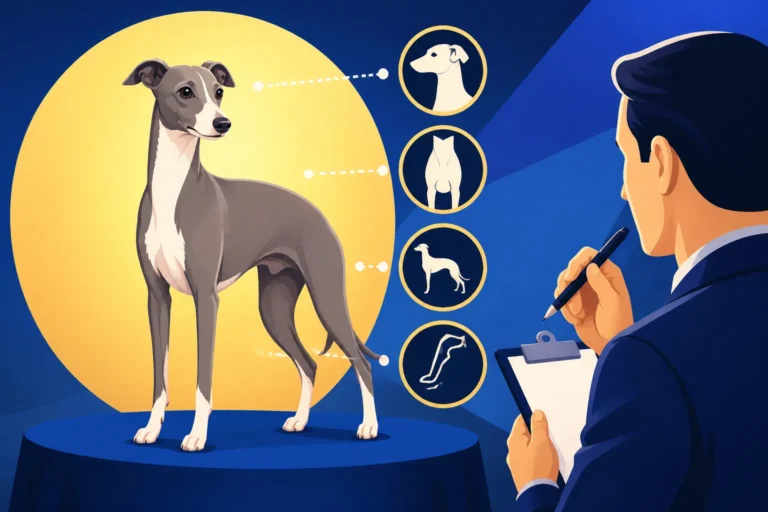
The dog’s anatomy can offer useful visual evidence. A narrow body, long limbs, and fine head may point toward a sighthound type. Yet painting is not a veterinary record: artists worked from their own styles and conventions, and proportions could be altered to suit the composition. Even an accurate likeness may not provide enough detail to identify a precise breed with confidence.
The same care applies to symbolism. A portrait does not usually come with a single hidden message waiting to be decoded. Instead, it brings together personal attachment, social presentation, artistic choices, and the values of its time. Learning about The Italian Greyhound Against the Whippet and the Greyhound can help clarify what distinguishes the breed, while Which Royals Kept Italian Greyhounds offers useful context for its association with prominent households.
What the portrait can—and cannot—tell us
Read the dog as part of a layered image
The most balanced interpretation is often that the dog served more than one purpose. It could be a much-loved companion, a fashionable presence, and a visual sign of the sitter’s social world all at once. These meanings do not cancel one another out. A person can genuinely cherish a pet while also choosing to include it in an image that communicates taste and status.
This layered reading is especially helpful when a portrait includes a small sighthound but little written information about the sitter or animal. Rather than deciding immediately that the dog “means loyalty” or “means wealth,” describe what the painting shows first. Note the dog’s position, expression, relationship to the sitter, and the details of its presentation. Then consider what those observations suggest within the portrait’s wider setting.
A careful reading also makes room for uncertainty. If the dog resembles an Italian Greyhound but cannot be identified conclusively, say so. The portrait may still reveal a great deal about the importance of small companion dogs, even when its exact breed remains unknown.
Why the image still feels personal
Part of the appeal of a portrait dog is that it seems to bring private life into a public image. Clothing and posture tell us how a sitter wished to be seen; the dog can make that presentation feel more intimate. A composed face beside a relaxed animal creates a contrast that viewers still respond to today.
That emotional immediacy can tempt us to imagine a complete story: the dog’s name, its habits, and the way it followed its owner through the house. Those details may be unknowable, but the impulse to imagine them is understandable. A portrait preserves a moment of visual closeness, even when it cannot preserve the everyday relationship behind it.
The most revealing question is not simply, “What did the Italian Greyhound symbolize?” It is, “What role does this particular dog play in this particular portrait?” That question respects the animal as a possible companion, the painting as a crafted image, and symbolism as something shaped by context. For related background on the breed’s place among companion dogs and royal households, see Why the Italian Greyhound Is a Toy and Not a Hound and Who Frederick the Great's Italian Greyhound Was.
Disclaimer
This article is for general informational purposes only and does not constitute professional advice. Laws, prices and regulations vary by location and change over time. Consult a qualified professional for guidance on your specific situation.