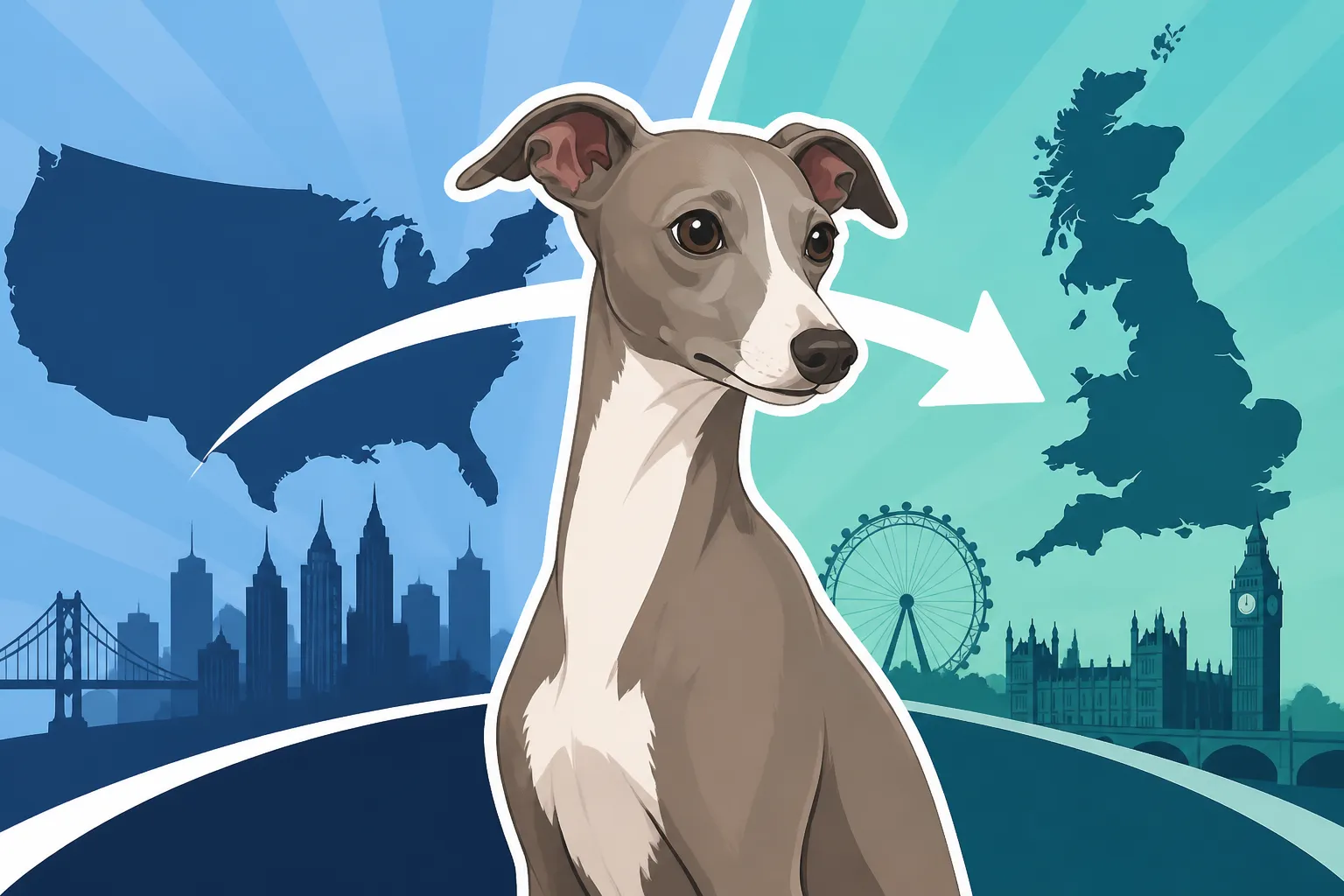
How American Italian Greyhounds Went Back to Britain
An Italian Greyhound seen in a British home today may have ancestors whose story crossed the Atlantic in both directions. The breed’s numbers and breeding stock were badly disrupted by war, while American breeders had maintained dogs descended from earlier European imports. This guide explains how dogs and bloodlines moved back to Britain, why that mattered, and what the story can—and cannot—tell us about the breed today.
Why Italian Greyhounds in Britain Needed Rebuilding
War disrupted breeding on both sides of the Atlantic
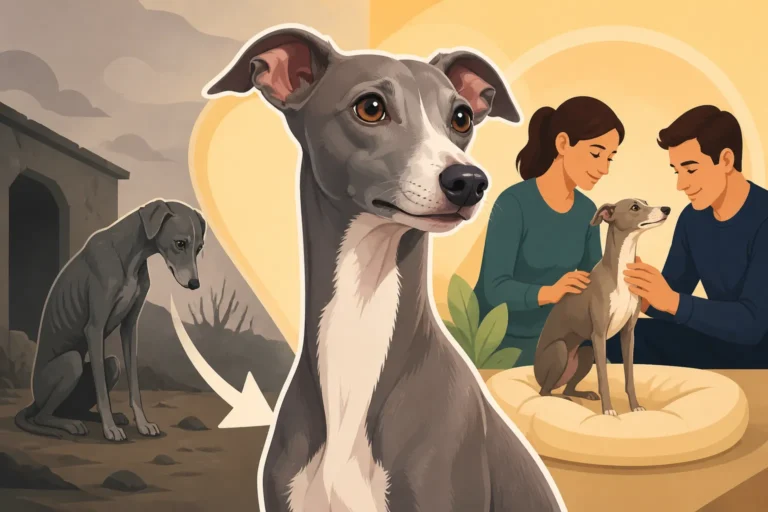
Italian Greyhounds were never a large, widely distributed breed. A small population can be especially vulnerable when ordinary life is interrupted: breeding plans stop, kennels close, families relocate, and dogs may be lost. The Second World War brought severe disruption across Europe, including Britain, where maintaining a healthy breeding population became difficult.
That did not mean every Italian Greyhound in Britain disappeared. Rather, the breed faced the practical problem of having fewer dogs available for responsible breeding and less opportunity to maintain a broad range of bloodlines. When numbers are low, breeders have fewer suitable matches to choose from, which can make it harder to preserve soundness and variety over generations.
The situation was not identical in the United States. American breeders had established Italian Greyhounds, many descended from dogs brought from Europe before the war. That population offered a potential source of breeding stock when British enthusiasts began looking for ways to strengthen the breed again. The route back was therefore not a simple return of the same dogs that had left Britain; it was a later movement of dogs from a population that had developed separately.
The American population carried European roots
The phrase “American Italian Greyhounds” can make the dogs sound like a distinct American type. In this historical context, it is more useful to think of them as Italian Greyhounds living and bred in the United States, with ancestry that included earlier European imports. Their connection to Britain was part of a much longer movement of dogs, people, and breeding ideas across national borders.
The breed itself has a long European history, and its development was shaped by changing tastes and breeding practices over many generations. For context on that earlier story, see Where the Italian Greyhound Comes From and How the Italian Greyhound Reached Britain. Those histories help explain why a later American-to-British journey was not an isolated event: Italian Greyhounds had already travelled between countries as the breed spread and gained admirers.
It is also worth separating ancestry from nationality. A dog bred in America could descend from European lines, while a British-bred dog could later trace part of its pedigree to American stock. Breeding populations are not neatly sealed by borders. Once dogs are exchanged, their descendants can carry several national strands in the same pedigree.
How the Dogs Made the Journey Back
Breeders looked across the Atlantic for suitable stock
As British breeders worked to restore and strengthen the Italian Greyhound population, American dogs became a useful resource. The appeal was not simply that the dogs were available abroad. Breeders needed animals that could contribute to a viable population and fit into considered breeding plans. Selection mattered: an imported dog was valuable because of its qualities and ancestry, not merely because it had crossed an ocean.
This kind of exchange requires more than arranging transport. Breeders must consider health, temperament, structure, pedigree, and how a dog may complement the dogs already available. One import can influence a line, but no single dog can repair every weakness in a small population. A careful rebuilding effort depends on continued planning and the choices made over multiple generations.
The movement also ran against a familiar assumption that breed influence flows only from Europe to America. In this case, the United States had preserved a population that could help British breeders. The Atlantic crossing became a return route for the breed’s history, even though the individual dogs making the journey were not necessarily returning to their own birthplace.
The return was a transfer of breeding opportunity
When people describe Italian Greyhounds “going back to Britain,” they are often talking about dogs and bloodlines returning to a country where the breed had once been established. The phrase captures the emotional shape of the story, but it can obscure an important detail: what returned was not a frozen version of the old British population. It was breeding stock from an American population shaped by its own history.
A transatlantic import could broaden the options available to British breeders. It could introduce ancestry that was not then well represented locally and allow breeders to plan matings with a wider set of choices. That is one reason international exchanges can matter even when the number of imported dogs is modest. Their influence may continue through descendants long after the original dogs have died.
The exchange was not a one-time magic fix. Healthy breed populations are maintained through sustained, thoughtful decisions, not by a single dramatic import. British breeders still had to evaluate the dogs, choose compatible matings, and raise the next generations. The story is best understood as one important part of postwar recovery, rather than the whole recovery by itself.
| Part of the story | What it means | What it does not mean |
|---|---|---|
| The British population was disrupted | Breeding and kennel life became harder to maintain during wartime upheaval | Every Italian Greyhound in Britain vanished |
| American breeders had dogs available | A population descended in part from earlier European imports could offer useful stock | The American dogs were a separate breed |
| Dogs and bloodlines crossed back to Britain | Imports expanded breeding possibilities and connected populations | One import alone restored the breed |
| Later pedigrees could include both populations | National borders became less meaningful in a dog’s ancestry | A dog’s birthplace tells the whole story of its lineage |
What the Exchange Changed for the Breed
International breeding helped reconnect populations
The most important result of importing dogs was the opportunity to connect breeding populations that had become separated by geography and circumstance. A broader pool of potential breeding partners can give breeders more options. That does not automatically guarantee better health or quality, but it can make careful selection more possible.
For a small breed, diversity and planning matter together. An import may add ancestry that is underrepresented in a local population, but breeders still need to consider the whole dog and its family history. Health screening, sound structure, and suitable temperament remain important. The same care applies when choosing a puppy today; What an Italian Greyhound Breeder Should Have Tested explains why responsible health checks matter beyond a dog’s country of origin.
The exchange also shaped how the breed is understood. American and British breeders could compare dogs, pedigrees, and preferences, while each country continued to develop its own community of enthusiasts. Their shared breed identity did not require every dog to look or be bred in precisely the same way. It rested on common ancestry and continuing communication across borders.
A pedigree is more informative than a national label
A dog’s national label can be a convenient shorthand, but it is not a full account of its ancestry. “American-bred” describes where a dog was bred; it does not, by itself, explain the dogs behind it, the choices made by its breeder, or the health considerations involved. Likewise, “British-bred” does not mean a dog’s ancestry is exclusively British.
If you are researching a particular Italian Greyhound, look at pedigree information and breeder records rather than relying on broad descriptions. Ask how the breeder evaluates health and temperament across generations, and how they decide which dogs to pair. A useful overview of the breed’s population history is How American Breeders Saved the Italian Greyhound, which provides context for the role American breeding communities played in maintaining the breed.
The story also helps explain why a breed’s history is rarely a straight line. Dogs may leave one country, establish descendants elsewhere, and later return through a new generation. Their descendants can then become part of the population that future breeders work with. That pattern is common in the history of carefully maintained breeds, especially those with relatively small populations.
What the Story Means to Italian Greyhound Owners Today
Breed history is not a guarantee about an individual dog
It is tempting to hear that American dogs helped British breeding and conclude that a dog from a particular country must be healthier, stronger, or more desirable. The history does not support that kind of shortcut. Good breeding decisions depend on the individual dog, its relatives, health information, and the breeder’s practices—not on a country name alone.
The same principle applies to appearance. Italian Greyhounds can vary in size, build, coat color, and expression while still belonging to the same breed. Historical exchange may have influenced particular lines, but it does not allow an owner to infer a dog’s exact background from its looks. For help understanding the breed’s physical characteristics, see What an Italian Greyhound Weighs and How Tall It Stands and Every Color an Italian Greyhound Is Allowed to Be.
For prospective owners, a practical question is not simply “Is this puppy American or British?” but “Can the breeder explain this puppy’s background and care clearly?” A thoughtful breeder should be able to discuss the parents, health considerations, socialization, and the reasons for a planned pairing. That conversation is more useful than treating a country of origin as a quality stamp.
The historical link is separate from everyday care
A breed’s history can deepen the experience of living with a dog, but it does not replace ordinary care. An Italian Greyhound still needs attentive veterinary care, safe handling, appropriate warmth, and a home arranged around its fine-boned build. If you are preparing for daily life with one, Keeping an Italian Greyhound Warm Is Daily Work, Not a Winter Job and Setting Up a House an Italian Greyhound Cannot Break a Leg In address practical needs that matter regardless of pedigree.
Today’s owners may also use retailers such as Chewy to find routine supplies, but a product listing cannot tell you whether a dog’s ancestry is responsibly documented. If you are comparing everyday items through Chewy, keep breed history and individual care decisions in their proper places: one is a question of records and breeding, the other is a question of what suits your dog at home. Chewy can be part of a household’s supply routine, while your veterinarian and breeder are better sources for individualized health and lineage questions.
The transatlantic story is ultimately one of continuity through change. Italian Greyhounds in Britain were not simply restored by turning back the clock. Breeders made connections with a population that had continued across the ocean, then used those connections as part of the work of rebuilding. Today’s dogs carry the results of many such decisions, often in pedigrees that cross national boundaries.
Disclaimer
This article is for general informational purposes only and does not constitute professional advice. Laws, prices and regulations vary by location and change over time. Consult a qualified professional for guidance on your specific situation.