How an Italian Greyhound Breaks a Leg in Its Own Yard
It's every Italian Greyhound owner's nightmare: the sudden yelp, the awkward fall, and the immediate, heartbreaking realization that your beloved companion has broken a leg. While we often obsess over keeping our Iggies safe indoors or on leashed walks, many owners mistakenly believe their own backyard is a completely safe haven. Unfortunately, the unique physiology and spirited nature of an Italian Greyhound mean that even the most familiar patch of grass can hide dangers. This guide will meticulously break down the common ways an Italian Greyhound can suffer a fracture right in their own yard, and what you can do to prevent such a devastating accident.
The Illusion of Safety: Why Yards Aren't Always Secure
It’s natural to feel a sense of relief when your Italian Greyhound is frolicking in the seemingly secure confines of your own fenced yard. We've taken all the precautions, right? The fence is high, there are no dangerous chemicals, and you’ve picked up after them. But for an Italian Greyhound, with their delicate bone structure and explosive energy, even a perfectly maintained yard can become an accident waiting to happen. The very characteristics that make them so enchanting – their speed, agility, and slender build – also contribute to their vulnerability.
Unseen Dangers in Familiar Spaces
What looks like a flat, harmless lawn to us can be a minefield for an Italian Greyhound at full tilt. Imagine your little Iggy, Bella, tearing across the yard, absorbed in the thrill of the chase. A barely perceptible dip in the lawn, a molehill, a loose piece of flagstone, or even an exposed tree root can be enough to catch a tiny foot mid-stride. Their long, slender legs and fine bones, particularly the radius and ulna, are notoriously fragile. A sudden twist or an awkward landing on uneven terrain can exert immense pressure on these delicate structures. We often focus on preventing high falls from furniture, but an unexpected jolt on seemingly flat ground can be just as, if not more, dangerous because it’s so unexpected. Many owners are shocked to learn that the vast majority of Italian Greyhound leg breaks occur on flat surfaces, often in their own homes or yards, not from dramatic falls. Understanding Why an Italian Greyhound's Radius Is the Bone That Breaks is crucial for any owner.
Furthermore, consider the invisible hazards. Is there a small, decorative rock hidden in the flower bed your Iggy might try to jump over? A low-hanging branch they could run under and get tangled in? A slight slope in the yard that, when combined with speed, creates an increased impact force on their joints? These aren't obvious dangers like a busy road or a tall staircase. These are subtle, everyday elements of a yard that become perilous for a breed as finely built as the Italian Greyhound. Their sheer speed means they cover ground quickly, and a small imperfection can become a significant obstacle.
The Italian Greyhound's Instinctual Behaviors
Italian Greyhounds are sighthounds, and that means they are hardwired for speed and pursuit. Their prey drive is incredibly strong, and a flash of movement – a squirrel, a bird, or even a blowing leaf – can trigger an immediate, explosive chase response. When your Iggy sees something to chase, they don't think about obstacles or uneven ground; they just run. This is where the danger truly lies in a yard. Even if you've done your best to eliminate hazards, their instinct to sprint and pivot at lightning speed can create its own risks. You might notice them doing "zoomies" – those sudden, frantic bursts of running, spinning, and leaping – seemingly out of nowhere. These bursts of energy are perfectly normal and healthy for the breed, but they are also moments of heightened risk.
During these high-energy activities, an Italian Greyhound can go from zero to full speed in a heartbeat, then make an abrupt turn, jump, or stop without warning. This intense, uncontrolled movement puts enormous stress on their joints and bones. A quick change of direction on damp grass or a slight patch of loose dirt can lead to a slip, a tumble, or a twisting injury that their fine bones simply cannot withstand. It’s not about malice or carelessness on their part; it's simply their natural instincts kicking in. Understanding What an Italian Greyhound Does When It Sees a Rabbit gives you a glimpse into their powerful drive. This is why even a dog-proofed yard requires constant vigilance, because the biggest "hazard" can sometimes be the dog themselves, simply acting on their innate nature.
Specific Yard Scenarios Leading to Fractures
It's one thing to understand the why behind Italian Greyhound fragility, and another to visualize the how. Let's get specific about the real-life situations in a typical backyard that can lead to a devastating leg break. These aren't necessarily freak accidents; often, they are predictable outcomes of an Iggy's natural behavior combined with common yard features.
High-Speed Chases and Sudden Stops
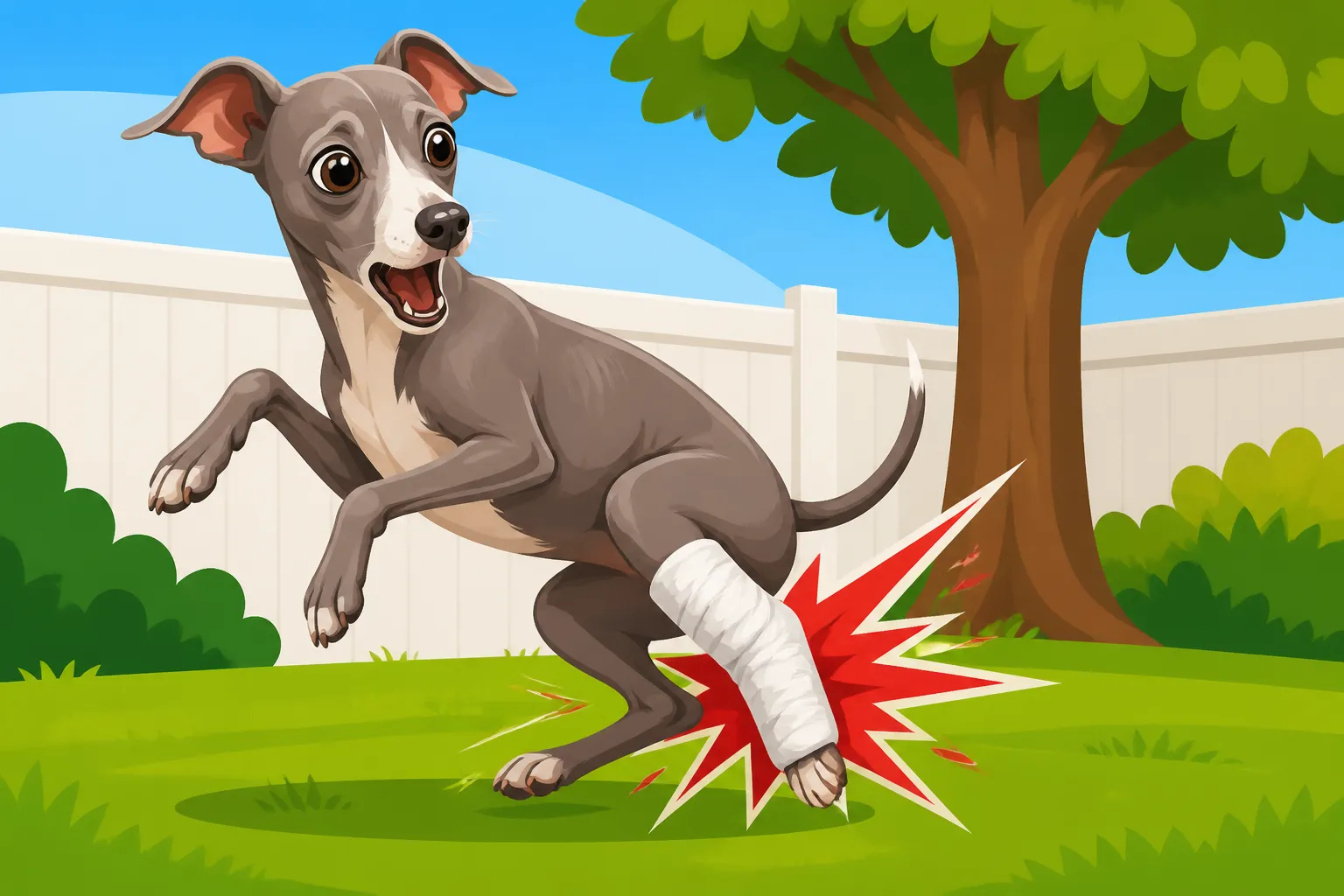
This is perhaps the most common way an Italian Greyhound sustains a fracture in their own yard. Imagine a sunny afternoon. Your Iggy, Luna, is enjoying a leisurely sniff around the flower bed. Suddenly, a plump robin lands innocently on the bird feeder. In a flash, Luna's sighthound instincts ignite. She bursts into a full sprint, accelerating across the lawn at incredible speed. The robin takes flight, and Luna, in her single-minded pursuit, pivots sharply to follow its trajectory. It’s this sudden, violent change in direction on a slick patch of dew-laden grass or a slight dip in the turf that causes the leg to buckle, twist, and snap.
Another scenario involves a playful chase with another Iggy or a similarly sized dog. Two Iggies, caught up in the joy of the game, are zipping around the yard. One might unexpectedly cut off the other, leading to a collision, or one might misjudge a jump over a low bush, landing awkwardly while still at speed. The sheer momentum and the rapid, uncontrolled movements are what make these situations so dangerous. Fractures sustained this way are often spiral fractures, where the bone twists and breaks, or oblique fractures, which occur at an angle. The force generated during these high-speed maneuvers, even on soft ground, can be immense, far exceeding the strength of an Italian Greyhound’s delicate leg bones. The quickness of these events means there's often no time for you to intervene, leaving you feeling helpless.
Jumping and Landing Mishaps
While Italian Greyhounds are not known for their vertical leap in the same way some terriers might be, they are surprisingly agile and prone to jumping, especially if there's something interesting on the other side of a low barrier or if they're trying to get to a higher vantage point. Even what seems like a low jump can be extremely dangerous. Consider a small decorative retaining wall around a garden bed, a single step leading down from a patio, or a low planter. For an Iggy, jumping down from these seemingly insignificant heights can be catastrophic if the landing is anything less than perfect. Many owners underestimate How High an Italian Greyhound Can Safely Land.
A bad landing could involve slipping on a stone, landing with all their weight on one leg, or twisting their body as they come down. The impact force, concentrated on a single fragile limb, can lead to a clean break. Puppies and young Iggies are particularly vulnerable, as their bones are still developing and haven't fully hardened. A simple jump off a low deck or a patio chair left out in the yard can result in a trip to the emergency vet. Sometimes, it’s not even a jump down, but a jump up onto an unstable surface or a playful leap that goes wrong, resulting in a fall. Always assess any elevated surface in your yard, no matter how low, as a potential hazard for your Italian Greyhound.
Interactions with Other Animals or Yard Furniture
Even without the high-speed chases, a yard can pose risks through interactions. If you have multiple dogs, especially larger breeds, allowing them unsupervised play in the yard with an Italian Greyhound is a recipe for disaster. A larger dog, even one that is incredibly gentle, can accidentally step on, run into, or roll over a tiny Iggy during play. Italian Greyhounds are incredibly slight, and the weight difference can be immense. This is why many experienced Iggy owners strongly advise against allowing young Italian Greyhounds to roughhouse with larger dogs, even in the safety of a fenced yard. The bone density of a larger dog versus the delicate limbs of an Italian Greyhound makes accidental injury a very real threat. If you have bigger dogs, remember Why an Italian Greyhound Puppy Should Not Wrestle Big Dogs.
Beyond other pets, your yard's inanimate objects can also be hazards. Picture your Iggy, dash, playing near a wrought-iron garden bench or a decorative bird bath. A sudden misstep, a playful bump, or a loss of footing could send them crashing into these hard, unforgiving surfaces. Low-lying solar lights, forgotten garden tools, even a sprinkler head can be enough to cause a nasty trip and fall at speed. Always do a quick "hazard sweep" of your yard before letting your Iggy out to play. Remember, their narrow build and quick movements mean they can squeeze into tight spots or misjudge distances, making contact with stationary objects a genuine concern. Even something as seemingly benign as falling into a shallow, overgrown drainage ditch or a small hole dug by another animal can result in a serious injury.
Mitigation and Prevention Strategies for Yard Safety
The goal isn't to make your Italian Greyhound live in a padded cell; it's to create an environment where their natural instincts and delicate build can coexist safely. Preventing a yard fracture requires a combination of thoughtful planning, constant vigilance, and sometimes, a little creative problem-solving. This isn't about eliminating fun, but about ensuring it doesn't come at a devastating cost.
Proactive Yard Assessment and Modification
The first step in preventing yard fractures is to see your yard through an Italian Greyhound's eyes. Get down on their level and scan for potential dangers. Look for uneven patches, holes, exposed roots, or loose pavers that could trip a fast-moving dog. Fill in any divots with soil, secure loose stones, and consider removing any decorative garden items that are low to the ground and easily run into. If you have areas where your Iggy frequently sprints or does zoomies, consider creating a softer landing zone with grass or even a thin layer of fine wood chips (ensure they are non-toxic and not prone to splintering). For areas around decks or raised patios, installing a small ramp can completely eliminate the jumping risk. Many owners find that investing in Ramps and Steps for an Italian Greyhound's Furniture is a lifesaver, and this extends to yard features too.
Regular maintenance is key. Trim back low-hanging branches, remove any fallen debris (like large sticks or stones), and check fence lines for any potential escape routes or areas where your Iggy might try to jump or climb. Consider the weather too; wet leaves, icy patches, or even extremely dry, compacted soil can increase the risk of slips and falls. By proactively identifying and addressing these hazards, you can significantly reduce the likelihood of an accident.
Here's a quick reference table for common yard hazards and potential solutions:
| Yard Hazard | Description | IG Risk | Prevention/Solution |
|---|---|---|---|
| Uneven Ground | Dips, bumps, molehills, exposed roots, loose pavers. | Tripping, twisting a leg, awkward landings at high speed. | Fill holes, level ground, secure pavers, remove roots, monitor for new divots. |
| Low Jumps | Patio steps, low retaining walls, garden beds, porch edges. | Bone fractures from incorrect landing, slipping, or impact. | Install dog ramps, block access, supervise closely. |
| Hard Surfaces | Concrete patios, stone paths, large rocks, decorative garden statues. | Injury from running into or falling onto hard, unyielding objects. | Create clear, soft running paths, remove or cushion hard decor. |
| Unstable Objects | Lightweight garden furniture, wobbly planters, unsecured lawn ornaments. | Collision, entanglement, objects falling on or trapping the dog. | Secure all outdoor furniture, remove unstable decor. |
| Other Animals (pets/wild) | Larger resident dogs, stray cats, squirrels, rabbits, birds. | Collisions, accidental trampling (from pets); high-speed chases (wildlife). | Supervise play with other dogs, use leashes, secure trash cans. |
| Weather Conditions | Ice, snow, heavy rain (slick surfaces), extreme heat (hot pavement). | Slips, falls, burns on paw pads. | Limit outdoor time, use dog booties, clear ice, provide shaded/cool areas. |
Supervised Play and Controlled Exercise
This might be the most critical piece of advice: never leave an Italian Greyhound unsupervised in the yard. Not even for a minute. These dogs are fast, and accidents happen in a blink of an eye. Even if you've meticulously proofed your yard, a sudden appearance of a squirrel or a surprising gust of wind can trigger an unpredictable burst of activity. When your Iggy is outside, your eyes should be on them constantly. This doesn't mean you can't multitask; it means being fully aware of their movements and being ready to intervene. For instance, if you see them gearing up for a high-speed chase, you might be able to redirect their attention before they hit top speed.
For puppies, whose bones are still developing and quite soft, it's even more crucial to limit uncontrolled play. Their growth plates are still open, making them particularly vulnerable to fractures. The Age an Italian Greyhound's Bones Finish Hardening is typically around 12-18 months. Until then, exercise should be controlled. You might consider using a long line (a lightweight, extra-long leash) for yard play, especially if your Iggy loves to run at full speed. This allows them some freedom to zoom but gives you the ability to gently slow them down or prevent them from making dangerously sharp turns. Remember, while Italian Greyhounds are generally a healthy breed with a good lifespan, issues like A Broken Leg Is the Emergency Every Italian Greyhound Owner Fears and Whether the Italian Greyhound Is a Healthy Breed still require proactive vigilance from owners.
Training and Management to Reduce Risk
Beyond yard modifications and supervision, specific training and management techniques can significantly reduce the risk of fractures. Teaching a reliable "leave it" command can be invaluable if your Iggy spots a tempting critter or object. A strong "come" or recall command can help you interrupt a dangerous chase before it escalates. While it's tough with their prey drive, consistent, positive reinforcement training can make a difference. The goal is to build a strong bond and a clear communication channel that helps manage their natural instincts in a safer way.
Consider their overall health and fitness. An Italian Greyhound who is well-muscled and at a healthy weight will have better agility and balance, potentially reducing the risk of awkward falls. Conversely, an Overweight Italian Greyhound Is at Fracture Risk because the extra weight puts more strain on their delicate joints and bones. Regular, moderate exercise that builds muscle without risking overexertion is ideal.
Finally, think about preparedness. Even with the best precautions, accidents can happen. Knowing Signs an Italian Greyhound Has Broken a Leg is vital for immediate action. Having a solid pet insurance plan, such as one from Healthy Paws, can provide immense peace of mind. A broken leg can lead to significant veterinary bills, often costing thousands of dollars for diagnostics, surgery, and aftercare. While we hope it never happens, being financially prepared for a potential emergency, like knowing What Fracture Repair Costs on an Italian Greyhound, allows you to focus solely on your pet's recovery, which can be a long road, and whether an Italian Greyhound Regains Full Use of the Leg is not always guaranteed. Having a plan in place, including pet insurance, ensures you can make the best medical decisions for your cherished companion without added financial stress.
Disclaimer
The information provided in this guide is for educational purposes only and is not a substitute for professional veterinary advice. Always consult with a qualified veterinarian for any health concerns or before making any decisions related to your Italian Greyhound's care.