Whether an Old Italian Greyhound Needs Steps Everywhere
Watching your beloved Italian Greyhound navigate the house with the same youthful bounce they once had can become a source of quiet anxiety as they age. Suddenly, those effortless leaps onto the sofa or bed turn into hesitant struggles, or worse, a misstep that sends a jolt of fear through your heart. It's a common worry for Iggy parents: when does "getting old" mean they really need a little help getting around? This guide is all about helping you understand the subtle shifts in your senior Italian Greyhound's mobility and deciding if, and where, steps and ramps can truly make a difference in their comfort and safety.
Understanding Mobility Changes in Senior Italian Greyhounds
It's a tough truth, but our elegant Iggies, just like us, aren't immune to the march of time. What starts as a slight stiffness after a nap can progress into a noticeable hesitation before jumping, and it’s heart-wrenching to witness. Recognizing these changes early is key to supporting them proactively.
The Natural Progression of Aging Joints
As Italian Greyhounds grow older, their joints experience wear and tear, much like any other senior dog, though their delicate build can sometimes make it more pronounced. The cartilage that cushions their bones gradually thins, leading to less smooth movement and increased friction. This process is often a slow, creeping one, starting long before you see overt signs of limping or pain. You might notice them sleeping in one spot for longer, or taking a few extra moments to stretch out before they get up. Their graceful, high-stepping gait might become a bit more subdued, less fluid. It's not just about the bones themselves, but also the surrounding soft tissues – the ligaments and tendons – that lose some of their elasticity over the years, contributing to a general decrease in flexibility and range of motion.
These changes are a natural part of Caring for an Italian Greyhound Past Eleven. Their bodies simply aren't as resilient as they once were, and what was a minor impact or awkward landing in their youth can become a significant strain in their later years. Gravity, unfortunately, doesn't get any less powerful, and the repeated impact of jumping off furniture can compound this natural degeneration, potentially leading to or exacerbating conditions like arthritis.
Common Ailments Affecting Senior Iggy Mobility
While age itself brings changes, several specific health conditions are particularly common in senior Italian Greyhounds that can severely impact their ability to move around comfortably. Arthritis is, without a doubt, one of the biggest culprits. It can develop in any joint, but often targets the hips, knees, and spine, making climbing, jumping, and even just standing up painful. You might see a dog that was once a blur of motion now struggling to get comfortable, constantly shifting position, or needing assistance to get off the sofa.
Beyond arthritis, muscle atrophy is another significant factor. As dogs age, they naturally lose muscle mass, especially if they become less active due to joint pain. This loss of muscle means less support for their already compromised joints, creating a vicious cycle where pain leads to inactivity, which leads to more muscle loss and more pain. Conditions like Patellar Luxation in an Italian Greyhound, which might have been subclinical or only mildly symptomatic in younger years, can become much more problematic as the surrounding muscles weaken and the joint stability decreases. Sometimes, neurological issues or even Hypothyroidism in an Italian Greyhound can contribute to weakness or unsteadiness, making any kind of climbing or jumping hazardous. It’s not always about a single issue; often, it’s a combination of these factors creating a complex picture of reduced mobility.
The Invisible Pain: How Iggies Hide Discomfort
One of the most frustrating and challenging aspects of owning an Italian Greyhound, especially an older one, is their incredible ability to mask pain. They are sighthounds, after all, and their ancestral instincts taught them to hide weakness from predators. This means your Iggy might be experiencing significant discomfort, but you won't see obvious yelps or limping until the pain is quite severe. Instead, you'll need to become a detective, looking for subtle cues.
Perhaps they used to greet you at the door with excited jumps, and now they just wag their tail from a sitting position. Maybe they used to sleep curled up tight, and now they stretch out more, avoiding pressure on certain joints. A reluctance to play as vigorously, a change in their typical sleeping spots (perhaps choosing the floor instead of the high bed), or even a slight hesitation before going up or down stairs could all be indicators. They might become a bit more withdrawn, less eager for walks, or even a little grumpy when touched in certain areas. It's crucial not to dismiss these subtle changes as "just old age" because often, they are silent cries for help. An Italian Greyhound's inclination to hide discomfort means that by the time a limp is obvious, they've likely been hurting for a while.
Assessing Your Senior Iggy's Specific Needs
Before you rush out to buy every ramp and step you can find, take a moment to truly assess your individual Italian Greyhound. Every dog ages differently, and what works for one might not be necessary for another. This personalized approach ensures you're providing the right support at the right time.
Observing Subtle Signs of Struggle
As discussed, Iggies are masters of disguise when it comes to pain. So, how do you really tell if they're struggling? Start by becoming a keen observer of their daily routines. Watch them when they first wake up. Do they stretch slowly, perhaps seeming stiff? Do they hesitate before putting weight on a particular leg? Pay attention to their interactions with furniture. Do they still jump up? If so, does it look harder? Do they take a running start where they once just sprang?
Consider how they manage stairs, if you have them. Do they slow down, take one step at a time, or even refuse them sometimes? Even a change in their preferred sleeping spot can be a clue. If they've always loved the high bed but now opt for a dog bed on the floor, it might not be a preference for the floor's coolness, but rather an inability to comfortably get onto the bed anymore. Signs an Italian Greyhound Has Hip Pain can be very subtle, like less enthusiasm for walks or a slight change in the way they sit. Sometimes, they might skip a step when running, which can be a sign of a slipping kneecap. Make a mental note of any of these observations and discuss them with your vet, even if they seem minor.
The Role of Your Vet in Determining Mobility Support
Your veterinarian is your most valuable partner in navigating your senior Iggy's health. Regular wellness exams become even more critical as they age. Don't wait until there's a crisis; schedule proactive visits. During these check-ups, your vet can perform a thorough orthopedic examination, assess their range of motion, and feel for any joint crepitus or pain. They might recommend blood work to rule out underlying conditions like Hypothyroidism in an Italian Greyhound, which can affect muscle strength and overall vitality.
X-rays can provide invaluable insight into the degree of arthritis, disc degeneration, or other skeletal issues that might be contributing to mobility problems. Your vet can help you understand the severity of any conditions and suggest appropriate interventions, which might include joint supplements, anti-inflammatory medications, pain management strategies, or even physical therapy exercises. They can also advise on the best timing for introducing steps or ramps, and which type might be most beneficial for your Iggy's specific condition. Sometimes, a vet will even suggest trying a ramp in the clinic to see how your dog responds.
Home Layout and Furniture Accessibility
Now, let's talk about your living space. Take a walk through your home from your Italian Greyhound's perspective. Where do they spend most of their time? What furniture do they routinely try to access? Is it the sofa where you watch TV, the bed where they snuggle, or perhaps a favorite sunny windowsill? These are the primary points where steps or ramps might be needed.
Consider the height of your furniture. A low sofa might be manageable for longer, but a tall bed could become an insurmountable obstacle. Think about slippery flooring. Why an Italian Greyhound Slips on Hardwood can exacerbate joint issues and make jumping even riskier. Adding rugs or runners in key areas can provide much-needed traction. Also, consider areas outside the home. Do they need help getting into the car? Do you have steps to a deck or patio that are getting harder for them to manage? A comprehensive assessment of their environment, identifying every "hot spot" where they might struggle, will guide your decisions on where to introduce assistive devices.
When and Where Steps/Ramps Become Essential
It's not just about making life easier; it's about making it safer and more comfortable. For an Italian Greyhound with their delicate bones and propensity for injury, proactive measures are always better than reactive ones.
Preventing Falls and Further Injury
The most compelling reason to consider steps or ramps for your senior Italian Greyhound is to prevent falls and subsequent injuries. Even a short fall from a sofa or bed can result in serious harm for an older Iggy. Their bones, while not as brittle as some might think, are still fine and can be prone to fracture, especially the radius and ulna in their front legs. Why an Italian Greyhound's Leg Bones Break So Easily applies even more so as they age and their balance or muscle strength may decline.
A slip or an awkward landing when jumping off furniture can lead to a sprain, a torn ligament, or even a devastating fracture. Imagine the fear and pain of a broken leg in an older dog, which can be much harder to heal than in a puppy. These types of injuries can lead to extensive vet bills and a long, challenging recovery period, sometimes even permanent mobility issues. By providing a safe, gradual ascent and descent, you drastically reduce the risk of these painful and costly accidents, safeguarding their fragile bodies.
Maintaining Quality of Life and Independence
Beyond preventing injury, steps and ramps play a crucial role in maintaining your senior Iggy's quality of life and sense of independence. Italian Greyhounds thrive on companionship and being close to their people. If they can no longer get onto the sofa or bed to cuddle, it can lead to feelings of isolation and even depression. Imagine being unable to reach your favorite comfortable spot, watching your family enjoy it from afar.
Providing steps or a ramp allows them to continue participating in family life, to snuggle up next to you, and to enjoy their favorite napping spots without needing human intervention every time. This autonomy is incredibly important for their mental well-being. It empowers them to move freely and safely within their environment, reducing frustration for both dog and owner. They can still enjoy those cozy moments, feeling secure and loved, which is ultimately what every Iggy desires. This small investment can truly prolong their happiness and sense of belonging.
Strategic Placement for Maximum Benefit
So, where exactly do you put these assistive devices? The key is strategic placement based on your Iggy's habits and your home's layout.
- Beds: This is often the first place owners think of. If your Italian Greyhound sleeps in your bed, a ramp or set of steps is almost non-negotiable as they age. Consider one with a gentle incline for easier use, especially if their joint pain is significant. Look for models available on Chewy or Amazon that are specifically designed for small breeds and have non-slip surfaces.
- Sofas/Chairs: For the living room or family room, steps are often a good option, especially if space is limited. Place them next to the furniture where your Iggy usually jumps up. If your Iggy prefers a certain spot on the sofa, put the steps there.
- Cars: Getting into and out of a car can be tough on any dog's joints, let alone a senior Iggy. A portable ramp can be a lifesaver for vet visits or trips to the park. Make sure it's lightweight enough for you to manage easily but sturdy enough for your dog.
- Other High Spots: Don't forget other elevated areas. If your Iggy loves to sit on a certain windowsill or a high dog bed, consider a smaller set of steps or even a sturdy ottoman that acts as an intermediate step.
The goal is to eliminate all risky jumps. Observe your Iggy for a few days to pinpoint every single location where they attempt to jump up or down. These are the places that need attention.
Choosing the Right Steps or Ramps for Your Italian Greyhound
With so many options on the market, it can feel a little overwhelming to pick the "right" solution. But armed with a little knowledge, you can make an informed decision that best suits your senior Iggy's unique needs.
Different Types of Ramps and Steps
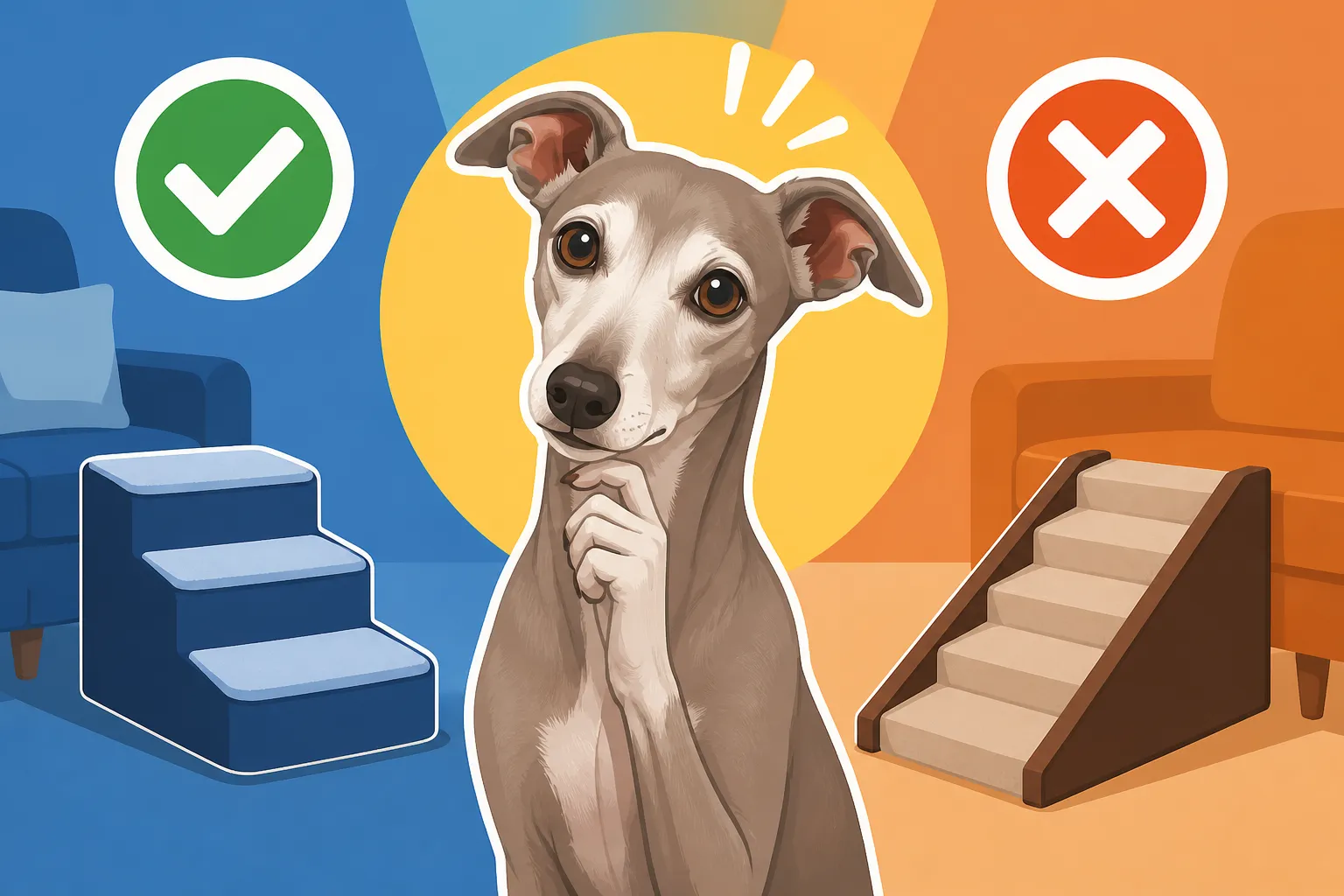
When it comes to assistive devices for senior dogs, you'll generally find two main categories: ramps and steps. Each has its pros and cons, and the best choice often depends on your dog's specific mobility, the height of the furniture, and the available space in your home.
-
Ramps: Ramps offer a gradual incline, which can be ideal for dogs with severe arthritis, back problems, or those who are very unsteady on their feet. There's no "step" to navigate, making the transition smoother. They come in various lengths and materials, from carpeted wood to foldable plastic. A longer ramp will have a gentler slope, which is always preferable for an Iggy, but it also requires more floor space. Portable ramps, often made of lightweight aluminum, are excellent for car access. When considering a ramp, think about the angle. A steep ramp can still be intimidating and potentially dangerous for an old Iggy. You want an angle that feels comfortable and natural for them to walk up and down without straining.
-
Steps/Stairs: Dog steps are essentially miniature staircases designed for pets. They typically have wider, shallower treads than human stairs and are often covered with carpet or a non-slip fabric. Steps are generally more compact than ramps, making them a good option for smaller living spaces where a long ramp might get in the way. They require a bit more coordination from your dog, as they need to lift their paws to navigate each step. For an Iggy with mild stiffness, steps can work well, but if they have significant joint pain or poor balance, a ramp might be a safer bet. They come in various heights and numbers of steps.
-
Ottomans/Benches: Sometimes, a simple, sturdy ottoman or a low bench can serve as a "halfway house" for your Iggy to bridge the gap to higher furniture. This can be a great, aesthetically pleasing solution that doesn't scream "dog accessory" and can fit seamlessly into your decor. Just ensure it's incredibly stable and won't tip or slide when your Iggy uses it.
Features to Look For
Regardless of whether you choose a ramp or steps, there are several key features to prioritize to ensure safety and usability for your Italian Greyhound.
- Non-Slip Surfaces: This is paramount. An Iggy on a slippery surface is an accident waiting to happen. Look for ramps with textured surfaces, carpet treads, or rubber grips. For steps, individual carpeted treads or a material that provides good traction are essential. Even if the product claims to be non-slip, a quick check of reviews can confirm its effectiveness, especially for delicate paws.
- Stability: The device must be sturdy and stable. It shouldn't wobble, slide, or tip over when your Iggy uses it. This is especially important for lightweight Italian Greyhounds who might push off with more force than you expect. Wide bases and anti-skid feet are beneficial features.
- Appropriate Height and Incline: Measure the height of the furniture your Iggy needs to access. Then, choose steps or a ramp that reach that height comfortably. For ramps, a longer length generally means a gentler and safer incline. For steps, make sure the individual step height isn't too great for your Iggy to manage. You want to make it as easy as possible.
- Weight Capacity: While Italian Greyhounds are small, it's still wise to ensure the steps or ramp can comfortably support their weight plus a little extra for safety. Most pet ramps are designed for a range of dog sizes, but a quick check ensures peace of mind.
- Portability (if needed): If you plan to use the ramp for car travel or move it between different pieces of furniture, look for lightweight, foldable, or easily dismantled options. Many travel ramps are made from plastic or aluminum, making them light but durable.
Brands like Amazon and Chewy offer a wide selection of different types and styles, so you can compare features and read reviews to find the best fit.
Encouraging Your Iggy to Use Them
Don't expect your Italian Greyhound to automatically understand or be enthusiastic about their new mobility aid. It takes patience and positive reinforcement to teach them.
- Introduce Gradually: Place the steps or ramp in position and let your Iggy investigate it on their own terms. Don't force them onto it immediately. Let them sniff and explore.
- Use High-Value Treats: Get their absolute favorite treats – maybe even some soft, yummy ones from a brand like Ollie. Place a trail of treats up the steps or ramp, starting with one at the very bottom, then one a little higher, and so on.
- Lure and Praise: Gently lure them up with a treat held to their nose. As they take each step or climb the ramp, offer enthusiastic verbal praise ("Good dog!") and a small treat.
- Repeat Consistently: Practice several short, positive sessions each day. Keep them brief and fun, ending before your Iggy gets bored or frustrated.
- Practice Going Down: Once they're comfortable going up, start practicing going down in the same way, with treats guiding them. Many dogs find going down more challenging.
- Avoid Punishment: Never scold or force your Iggy. This will only create a negative association with the steps/ramp and make them even more reluctant to use them. Patience is key.
- Consider a Harness: For the initial training, a comfortable, well-fitting harness (rather than a collar) can give you a bit more control and allow you to gently guide them if needed, without putting pressure on their neck.
With consistent, positive training, most Italian Greyhounds will quickly adapt to using their steps or ramps, appreciating the ease and safety they provide. Remember, they want to be with you, and these tools simply make that possible again.
Comparison of Common Mobility Aids
Here’s a quick overview to help you decide between common options for your senior Italian Greyhound:
| Feature | Pet Steps (Stairs) | Pet Ramp | Low Ottoman/Bench |
|---|---|---|---|
| Pros | Compact, good for smaller spaces. Can be easier for some dogs to 'grasp'. Variety of styles. | Gentle incline for less strain. Ideal for severe arthritis/back issues. Good for car access. | Blends into decor. Can be dual-purpose furniture. |
| Cons | Requires more coordination. Not ideal for very unsteady or severely arthritic dogs. | Requires more floor space due to length. Can be harder to store. | Only suitable for bridging short gaps. Must be very stable. |
| Best For | Iggies with mild to moderate mobility issues, smaller rooms. | Iggies with significant joint pain, back issues, very unsteady gait, car access. | Iggies needing a single intermediate step, or for lower furniture. |
| Key Features | Non-slip treads, multiple steps, sturdy construction. | Non-slip surface, gentle incline, sturdy construction, sometimes foldable. | Heavy, stable, low profile. |
| Placement Ideas | Beside bed, sofa, favorite armchair. | Beside bed, sofa, car door/trunk. | Beside sofa, low chairs. |
Disclaimer
This article is for general informational purposes only and does not constitute professional advice. Laws, prices and regulations vary by location and change over time. Consult a qualified professional for guidance on your specific situation.