Signs an Italian Greyhound’s Mouth Hurts
It's heartbreaking to realize your beloved Italian Greyhound might be in pain, especially when they're so good at hiding it. Our Iggies are notoriously stoic, and dental discomfort can simmer for a long time before obvious signs emerge. This guide is here to help you become a detective, spotting the subtle, and sometimes not-so-subtle, indicators that your Italian Greyhound's mouth is hurting, so you can get them the care they need sooner rather than later.
Subtle Behavioral Changes Indicating Oral Pain
Sometimes, the first hints that something is amiss with your Italian Greyhound's teeth or gums aren't found by looking in their mouth, but by noticing changes in their everyday behavior. These can be easy to dismiss as just "being a dog" or a temporary mood, but for an Iggy, they can be a quiet cry for help.
Changes in Demeanor and Play
Has your usually bouncy Italian Greyhound seemed a little… off lately? Perhaps they’re less enthusiastic about their morning walk, or they turn away from their favorite squeaky toy. A subtle decrease in energy or an unwillingness to engage in play could be a sign of discomfort. Think about how you feel when you have a toothache – you don't really want to run a marathon or even chat much, do you? Your Iggy might feel similarly. They might still wag their tail, still cuddle, but the spark for more vigorous activity might be dimmed.
For instance, if your Iggy used to love a good game of tug-of-war, but now they pick up the toy only to drop it quickly, or they avoid grabbing it with their front teeth, that's a red flag. Similarly, a dog that usually greets you with excited jumps but now offers a more subdued welcome, or seems a bit more withdrawn than usual, could be telling you something. They aren't going to hold up a sign saying "My tooth hurts!" so we have to learn to read their quieter signals. Pay close attention to these small shifts, as they're often the earliest warnings. How an Italian Greyhound Hides Pain is something many owners grapple with, and dental pain is a prime example of this stoicism.
Reluctance to Be Handled
Most Italian Greyhounds are absolute cuddle bugs, thriving on physical affection. If your Iggy suddenly becomes hesitant or even reactive when you try to pet their head, stroke their muzzle, or even just scratch behind their ears, it could be a sign of pain in their mouth or jaw. They might flinch, pull their head away, or even give a low growl – which is incredibly out of character for many Iggies unless they're truly uncomfortable.
Imagine trying to touch your own face when you have a raging toothache. It's a natural instinct to guard the painful area. Your Italian Greyhound is doing the same. It’s not that they don't love you; it's that the gentle touch they once adored now brings a sharp stab of discomfort. This can be especially noticeable during grooming, like trying to Brushing an Italian Greyhound's Teeth Every Day. If they used to tolerate it, but now resist vehemently, it’s not just stubbornness; it could be pain. Even a visit to the vet for a routine exam, where their mouth might be gently opened, could become a source of anxiety if they anticipate discomfort.
Obvious Physical Manifestations of Oral Discomfort
While Iggies are masters of disguise when it comes to pain, eventually, if the dental issue progresses, more noticeable physical signs will start to emerge. These are often easier to spot, but it’s still crucial to connect them back to oral health and not dismiss them.
Visible Oral Issues
This is where you might actually see something amiss when you bravely try to peek into your Iggy's mouth. Look for things that just don't seem right. Are the gums inflamed, swollen, or unusually red, especially around the base of the teeth? Do you see any bleeding when your Iggy chews on a toy, or even just when they yawn? Sometimes, you might spot pus, which looks like a thick, yellowish discharge around a tooth. These are clear indicators of infection and inflammation.
You might also notice obvious damage to the teeth themselves. Is a tooth broken, chipped, or discolored? Darker teeth can often signify a dead or infected pulp. Sometimes, teeth might even appear loose or wobbly. For Italian Greyhounds, who are prone to crowded mouths, you might see teeth growing at odd angles, which can trap food and accelerate issues. Why an Italian Greyhound's Teeth Crowd is a common problem that contributes to faster decay and pain. If you can visually identify any of these, it's a sure sign that your Iggy needs veterinary attention immediately.
Bad Breath and Drooling
Let's be real, dog breath is rarely minty fresh. But there's a difference between "dog breath" and truly foul, putrid breath that makes you recoil. Horrendous halitosis is one of the most common and often earliest signs of significant dental disease. It's caused by bacteria multiplying in the mouth, feeding on plaque and tartar, and creating volatile sulfur compounds – the same stuff that makes human bad breath so unpleasant. If your Iggy's breath has gone from merely doggy to truly offensive, it's time to investigate. This kind of breath is a strong indicator that you need to address What Bad Breath Means in an Italian Greyhound.
Excessive drooling, especially if it's new or persistent, can also point to oral pain. Dogs often drool more when they're nauseous or anxious, but they can also do it in response to mouth discomfort. If your Iggy is drooling more than usual, and you notice their chin or the fur around their mouth is damp, it could be their body's way of trying to soothe or flush out a painful area. Sometimes, the drool might even be tinged with blood, which is an immediate red flag that something serious is happening in their mouth and needs urgent veterinary attention.
Eating Habits and Oral Pain
Food is life for many dogs, and any significant change in how your Italian Greyhound approaches their meals is a huge indicator that something is wrong. They might not stop eating entirely, but the way they eat can be very telling about dental discomfort.
Picky Eating or Dropping Food
Is your Italian Greyhound suddenly turning up their nose at their favorite kibble, or only eating very slowly? This isn't just a sign of being a "finicky eater." If they usually gobble down their meals but now approach their bowl with hesitation, or only take a few bites before walking away, their mouth might be hurting. You might even notice them taking food into their mouth, only to drop it on the floor a moment later. This could be because picking up or chewing the food causes a sharp pain, making them reluctant to continue.
Sometimes, they might try to manage the pain by eating only softer foods, or even trying to swallow kibble whole without much chewing. If you usually feed dry kibble and they suddenly seem to prefer wet food or even Ollie style fresh food, it's worth considering that the hard crunch might be too much for their sore teeth. This subtle shift in preference, or simply leaving more food in the bowl than usual, should prompt a closer look at their dental health. Remember, How Early Tartar Appears on an Italian Greyhound can lead to discomfort surprisingly quickly, making meal times a struggle.
Chewing on One Side
One of the most classic signs of oral pain is a dog who starts to chew primarily on one side of their mouth. If you watch your Iggy eat, you might notice them deliberately tilting their head or using only one side of their jaw to crunch their kibble or gnaw on a treat. This is their way of avoiding the painful area. They're trying to spare themselves discomfort by putting all the work on the "good" side of their mouth.
This behavior can be particularly evident with chews or toys. If they previously loved to gnaw on a harder dental chew, but now they only nibble delicately on one corner, or quickly lose interest, it could mean that their usual chewing action is causing pain. Some dogs might even "pack" food into one cheek to avoid chewing, or you might see food bits fall out of their mouth more frequently as they struggle to manage the food without pain. A quick trip to a pet supply store like Chewy for softer dental chews might be a temporary solution, but it won't fix the underlying dental issue.
When to Seek Veterinary Care
Recognizing the signs is only half the battle; knowing when to act is just as important. Dental issues rarely resolve on their own, and delaying veterinary care can lead to more serious health problems for your Italian Greyhound.
Recognizing Emergency Signs
Some dental pain signs warrant an immediate trip to the vet, not a "wait and see" approach. If you notice any of these, don't hesitate:
- Sudden, severe pain: Your Iggy cries out when they try to eat, yawn, or when their mouth is accidentally touched.
- Swelling of the face or jaw: This could indicate a serious infection or abscess, which can be incredibly painful and spread quickly.
- Bleeding from the mouth that doesn't stop: Whether from a broken tooth or severe gum inflammation, this needs immediate attention.
- Inability to eat or drink: Dehydration and lack of nutrition are serious concerns.
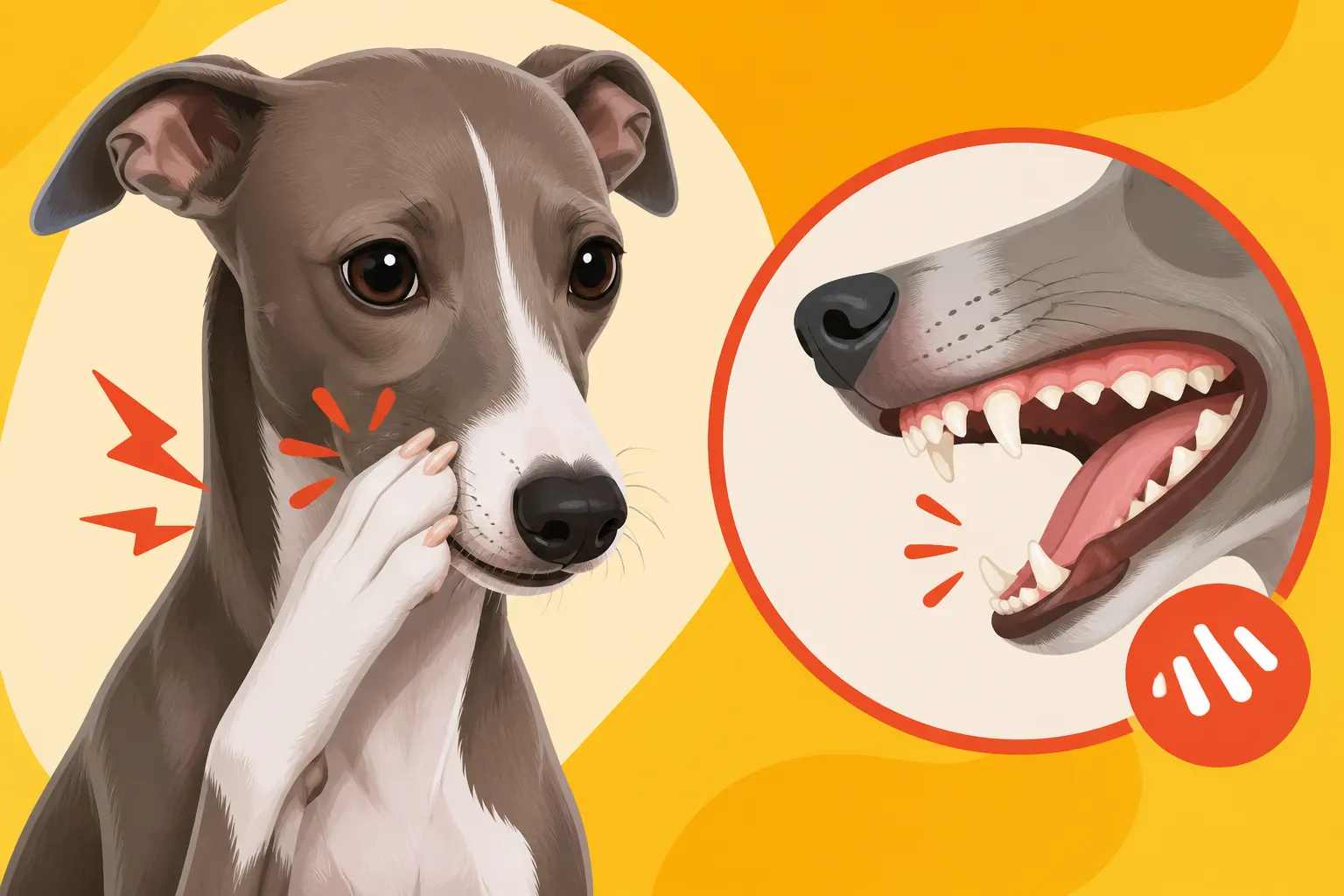
- Excessive pawing at the mouth: This often means they're trying to dislodge something painful or are experiencing intense discomfort.
These acute symptoms suggest a painful problem that could impact their overall health if left untreated. For instance, an untreated dental infection can spread to other organs, shortening your Iggy's otherwise long life. How Dental Disease Shortens an Italian Greyhound's Life is a very real and serious concern. It’s always better to err on the side of caution and get them checked out, even if it turns out to be nothing major.
Proactive Dental Checks
Beyond reacting to obvious pain, proactive dental care is truly the best defense for your Italian Greyhound. Regular at-home checks, even if it's just a quick peek while they're cuddling, can help you catch issues when they're small. Get into the habit of gently lifting their lips to look at their gums and teeth every week or so. You can find excellent tools and dental care products on Amazon to help with this, from finger brushes to enzymatic toothpaste.
However, home care can only do so much. Professional dental cleanings are absolutely vital. Your vet will be able to perform a thorough oral exam, often under anesthesia, to properly assess every tooth, check for hidden pockets of infection, and scale away tartar buildup that you can't reach at home. What Happens During an Italian Greyhound's Dental is a comprehensive process designed to ensure their entire mouth is healthy. For most Iggies, this isn't a "one and done" deal; they often need regular cleanings. Understanding How Often an Italian Greyhound Needs a Dental Cleaning and factoring that into your care routine is crucial for their long-term comfort and health.
It's tempting to think that since Italian Greyhounds are small, their dental issues might be small too, but the pain they experience is just as real as for any larger dog. By being vigilant and acting quickly when you notice these signs, you can spare your beloved companion a lot of unnecessary suffering and ensure they live a happier, healthier life.
| Sign of Oral Pain | Description & What to Look For | Urgency Level |
|---|---|---|
| Changes in Demeanor | Less play, lethargy, decreased enthusiasm for usual activities, withdrawn behavior. | Moderate |
| Reluctance to Be Handled | Fliching, pulling away from head/muzzle touches, guarding their face. | Moderate |
| Visible Gum Issues | Red, swollen, bleeding gums; pus around teeth. | High |
| Broken or Loose Teeth | Chipped, discolored, or visibly wobbly teeth. | High |
| Foul Breath (Halitosis) | Exceptionally strong, putrid odor from the mouth. | Moderate |
| Excessive Drooling | Persistent drooling, wet chin/fur, sometimes bloody saliva. | High |
| Picky Eating / Dropping Food | Hesitation at mealtime, taking food then spitting it out, preference for soft food. | Moderate |
| Chewing on One Side | Tilting head, using only one side of jaw, avoiding specific teeth. | Moderate |
| Facial Swelling | Swelling under an eye, on the jaw, or anywhere on the face. | Emergency |
| Pawling at Mouth / Rubbing Face | Repetitive attempts to dislodge something or alleviate pain. | High |
Disclaimer
This article is for general informational purposes only and does not constitute professional advice. Laws, prices and regulations vary by location and change over time. Consult a qualified professional for guidance on your specific situation.