How to Check an Italian Greyhound’s Gums
One of the most unsettling realities for Italian Greyhound owners is just how delicate their mouths are, prone to dental issues that can quickly spiral into serious health problems if not caught early. Many of us don't even know where to start when it comes to checking inside our dog's mouth, feeling overwhelmed or worried about causing discomfort. This comprehensive guide will walk you through exactly how to check your Italian Greyhound's gums, what to look for, and when it’s time to call the vet, helping you stay on top of this crucial aspect of their well-being.
Why Regular Gum Checks Are So Important for Italian Greyhounds
Let's be honest, dental care for dogs often takes a backseat until there's a problem. But for Italian Greyhounds, neglecting their oral health is like ignoring a ticking time bomb. Their unique physiology makes them especially vulnerable, and regular, proactive checks can make all the difference between a minor issue and a major, painful, and expensive crisis.
The Unique Vulnerabilities of an Italian Greyhound's Mouth
If you've ever looked closely at an Italian Greyhound's mouth, you'll notice a few things right away. First, their long, narrow muzzles are often not quite big enough for all 42 adult teeth to sit comfortably. This crowding creates tiny crevices where food particles and bacteria can easily get trapped, forming plaque and then hardening into tartar at an alarming rate. It’s a perfect storm for dental disease.
Beyond the crowding, IGs also tend to have surprisingly thin jawbones. This isn't just a fun fact; it's a significant health concern. As periodontal disease progresses, it doesn't just affect the gums and teeth; it starts to eat away at the bone structure supporting those teeth. In an Italian Greyhound, this can lead to severe bone loss, making the jaw incredibly fragile and prone to fracture, even from something as simple as a sneeze or a fall. It's a truly heartbreaking possibility that regular checks and care aim to prevent. Many owners are shocked to learn How Common Dental Disease Is in an Italian Greyhound and how quickly it can become severe. The structure of their mouth is a primary culprit, as Why an Italian Greyhound's Teeth Crowd highlights. You might notice How Early Tartar Appears on an Italian Greyhound, sometimes even before they're two years old.
Recognizing Early Warning Signs Before They Escalate
The good news is that dental disease doesn't usually happen overnight. It's a gradual process, and if you know what to look for, you can often catch issues when they're still manageable. Early detection isn't just about saving money on vet bills; it's about preventing pain and discomfort for your beloved Italian Greyhound. Imagine having a persistent toothache or inflamed gums and not being able to tell anyone. That's the reality for many dogs whose oral health goes unchecked.
By regularly examining their gums, you can spot the subtle changes that indicate something isn't right. Maybe it's a slight redness, a change in breath, or a tiny spot of bleeding. These are all signals that your dog's mouth needs attention. Waiting until your IG is clearly in pain, refusing food, or has noticeable swelling means the problem has likely advanced significantly, requiring more invasive and costly interventions. Regular checks empower you to be your Italian Greyhound's first line of defense against oral health issues.
Step-by-Step Guide to Checking Your Italian Greyhound's Gums
Checking your Italian Greyhound's gums might sound intimidating, especially if your dog isn't thrilled about having their mouth handled. But with patience, positive reinforcement, and a gentle approach, it can become a routine that benefits both of you.
Creating a Positive and Calm Environment
Italian Greyhounds are sensitive souls. They pick up on your stress, and they can be quite particular about being handled, especially around their delicate faces. The key to successful gum checks is to make it a positive experience, not a wrestling match.
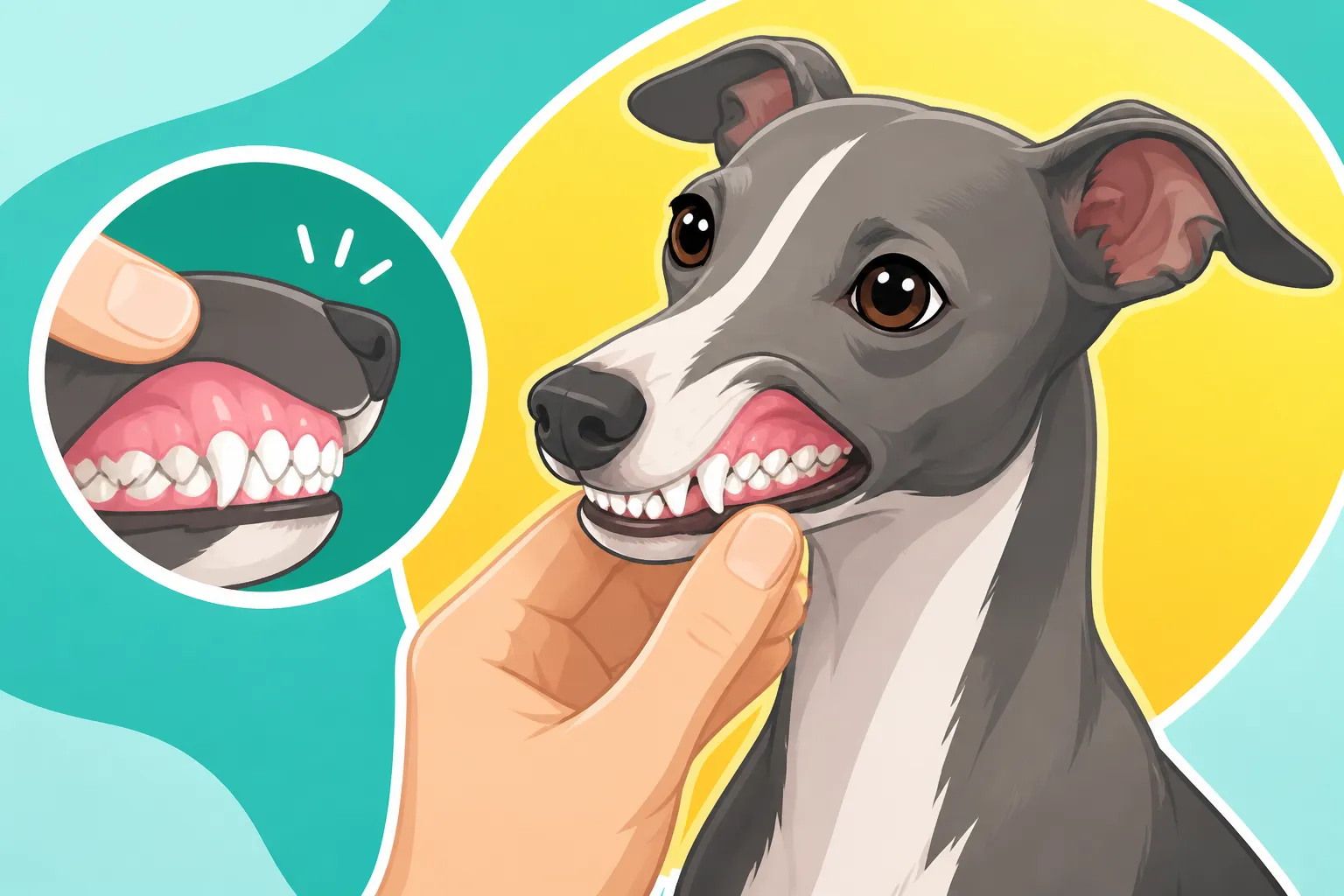
Start small and build up. Don't try to do a full mouth exam on day one. Begin by simply gently touching their muzzle for a second, then immediately rewarding them with a high-value treat and praise. Do this several times a day for a few days. Once they're comfortable with that, gradually move to lifting their lip slightly, again, just for a second, then treat and praise. The goal is to associate mouth handling with good things. Keep sessions short – literally 5 to 10 seconds at first. If your IG gets anxious, stop, reassure them, and try again later or the next day. Never scold or punish them for resistance; that will only make them more reluctant in the future. Brands like Chewy and Amazon offer a variety of soft, tasty training treats that can be a game-changer for these sessions. You can also try using a small dab of peanut butter or a bit of high-quality wet food like Ollie on your finger as a distraction and reward. The more relaxed and consistent you are, the more your Italian Greyhound will tolerate and eventually cooperate with these checks.
What to Look For: Color, Texture, and Odor
Once your Italian Greyhound is comfortable with you lifting their lips, you can start looking for the important indicators of oral health. Here’s a breakdown of what a healthy mouth looks like and what should raise a red flag.
Normal Gums:
- Color: Healthy gums should be a salmon pink color. Some dogs, especially those with darker coats, might have naturally pigmented black spots on their gums, which is completely normal. The key is that the pink areas are a healthy shade.
- Moisture: They should appear moist and slightly glossy, not dry or sticky.
- Texture: They should be smooth, firm to the touch, and resilient, with no swelling or lumpiness.
- Capillary Refill Time (CRT): This is a quick test to check circulation. Gently press your finger against a pink part of the gum until it blanches (turns white). Release the pressure. The color should return within 1 to 2 seconds. A slower return can indicate circulation issues, dehydration, or shock, and warrants immediate veterinary attention.
- Odor: Healthy dog breath isn't exactly minty, but it shouldn't be foul or offensive. A mild, neutral smell is what you're aiming for.
Abnormal Gums:
- Red or Swollen Gums: This is a classic sign of gingivitis, the early stage of gum disease. You might see a distinct red line along the gumline where the tooth meets the gum.
- Bleeding Gums: If your dog's gums bleed when you touch them or when they chew, it's a clear sign of inflammation and infection.
- Pale or White Gums: This can indicate anemia, shock, or severe blood loss. This is an emergency and requires immediate veterinary care.
- Blue or Purple Gums (Cyanosis): This suggests a lack of oxygen in the blood and is also a medical emergency.
- Yellow Gums (Icterus/Jaundice): Yellowish gums can point to liver disease or severe red blood cell breakdown. Another urgent vet visit.
- Dry or Tacky Gums: A sign of dehydration.
- Lumps, Bumps, or Growths: Any unusual masses, even small ones, should be examined by a vet.
- Foul Odor: Significantly bad breath, often described as rotten or metallic, is a strong indicator of advanced dental disease, infection, or other systemic health issues. This is often the first thing owners notice, and it's a sure sign that it’s time for a professional dental cleaning. If your Italian Greyhound has noticeably bad breath, you need to understand What Bad Breath Means in an Italian Greyhound.
Here's a quick comparison table to help you identify what's normal and what's not:
| Feature | Healthy Italian Greyhound Gums | Concerning Italian Greyhound Gums |
|---|---|---|
| Color | Salmon pink (or pigmented black/brown spots) | Red, swollen, pale, white, blue, yellow |
| Moisture | Moist and slightly glossy | Dry, tacky, sticky |
| Texture | Smooth, firm, resilient | Spongy, puffy, lumpy, bleeding easily |
| Odor | Mild, neutral "doggy" smell | Foul, rotten, metallic, or intensely sweet odor |
| CRT | Returns to pink within 1-2 seconds after gentle pressure | Slow (longer than 2 seconds) or doesn't return to color |
Common Gum and Oral Health Issues in Italian Greyhounds
Because of their particular mouth structure, Italian Greyhounds are predisposed to certain oral health challenges. Understanding these common issues will help you recognize them sooner and take appropriate action.
Gingivitis and Periodontal Disease
This is the big one, the most common diagnosis your Italian Greyhound is likely to face. Periodontal Disease Is the Italian Greyhound's Most Common Diagnosis, and it starts with gingivitis. Gingivitis is inflammation of the gums caused by plaque and tartar buildup. You'll see those red, swollen gums we talked about earlier, maybe a little bleeding. At this stage, it's reversible with a professional dental cleaning and diligent home care, like daily brushing (seriously, Brushing an Italian Greyhound's Teeth Every Day is non-negotiable for this breed).
If gingivitis isn't addressed, it progresses to periodontal disease. This means the infection has spread beyond the gums and is now attacking the supporting structures of the teeth – the ligaments and the bone. Pockets form around the teeth, trapping more bacteria, and the infection deepens. You might notice your dog is reluctant to chew hard food or toys, has persistent bad breath, or even loose teeth. At this point, the damage is often irreversible, and professional intervention involves deep cleaning, root planing, and often, extractions. The progression can be rapid, leading to significant discomfort and systemic health issues if bacteria from the mouth enter the bloodstream. Knowing The Age an Italian Greyhound Starts Losing Teeth can give you an idea of how quickly things can progress if not managed.
Other Concerns: Growths, Trauma, and Bone Loss
While periodontal disease is prevalent, other issues can arise. You might occasionally find small, benign growths on your Italian Greyhound's gums called epulides. While often harmless, they can sometimes grow large enough to interfere with chewing or become irritated, and a vet should always examine them to rule out anything more serious.
Trauma to the gums can also occur. Italian Greyhounds have delicate oral tissues, and enthusiastic chewing on hard toys or bones, or even accidental bumps, can lead to cuts or abrasions. Keep an eye out for any signs of discomfort or bleeding after a vigorous play session.
And then there's the truly serious complication of advanced periodontal disease: bone loss. As the infection eats away at the jawbone, especially the thin bone of the Italian Greyhound, it significantly weakens it. This is why a simple fall or a vigorous chew can cause a jaw fracture in a severely affected IG. This is not only incredibly painful but also difficult and costly to repair. This is also why Why an Italian Greyhound's Jaw Can Break During Extraction is a genuine concern, and why choosing an experienced veterinary dentist is paramount. Ultimately, if neglected, How Dental Disease Shortens an Italian Greyhound's Life by creating systemic health issues.
When to Seek Veterinary Attention
Knowing what to look for is only half the battle; knowing when to act is just as important. Your Italian Greyhound is a stoic breed and often hides pain well, so don't wait for obvious signs of agony before calling your veterinarian.
Red Flags That Require Immediate Vet Care
If you observe any of the following symptoms during your gum checks, don't hesitate – contact your vet immediately. These aren't "wait and see" situations; they indicate a potentially serious problem that needs professional assessment.
- Pale, White, Blue, or Yellow Gums: These color changes are indicative of critical systemic issues like anemia, shock, or organ dysfunction.
- Swelling or Lumps: Any new or growing lumps or swelling in the mouth or around the jaw area should be investigated. While some might be benign, others could be cancerous or an abscess.
- Excessive Bleeding: Gums that bleed profusely or frequently are a sign of severe inflammation or injury.
- Sudden, Foul Odor: A sudden onset of extremely offensive breath might indicate an acute infection or abscess.
- Difficulty Eating or Pain: If your Italian Greyhound is dropping food, pawing at their mouth, refusing to eat, or showing signs of pain when opening their mouth, they need prompt veterinary attention.
- Loose or Missing Teeth: This points to advanced periodontal disease and significant discomfort.
- Excessive Drooling: While some drooling is normal, a sudden increase, especially if it's thick or discolored, can signal oral pain or nausea.
Remember, Italian Greyhounds are experts at masking discomfort. A slight reluctance to play, a change in appetite, or being a little quieter than usual might be the only signs they show until a problem is advanced. Trust your gut if something feels off.
Partnering with Your Vet for Ongoing Oral Health
Regular home checks are invaluable, but they are only one part of the equation. Professional veterinary care is absolutely essential for maintaining your Italian Greyhound's oral health. This means regular dental cleanings under anesthesia.
When you take your Italian Greyhound in for their annual wellness exam, make sure their mouth is thoroughly inspected. Your vet can spot issues you might miss and assess the overall health of their teeth and gums. They will recommend professional dental cleanings as needed, which, for most IGs, will be a recurring event throughout their lives. You might be surprised to learn that Dental Work Repeats Every Year of an Italian Greyhound's Life for some.
A professional dental cleaning goes far beyond what you can do at home. Under anesthesia, the vet can thoroughly clean beneath the gumline, where most periodontal disease hides. They can probe for pockets, take dental X-rays to assess bone loss and hidden issues, and extract any diseased or problematic teeth. It's a comprehensive procedure crucial for preventing serious health problems. It's also important to understand Why an Italian Greyhound's Dental Requires Anesthesia, as it allows for a safe and thorough procedure without pain for your dog. Furthermore, it's wise to find a vet or veterinary dentist who has experience with sighthounds, as they have unique anesthetic considerations due to their low body fat and drug metabolism.
Don't be afraid to ask your vet questions about their dental protocols, including pre-anesthetic bloodwork, IV fluids, and monitoring during the procedure. Being proactive and partnering with a knowledgeable veterinary team is the best way to ensure your Italian Greyhound keeps their mouth healthy and comfortable for as long as possible.
Disclaimer
This article is for general informational purposes only and does not constitute professional advice. Laws, prices and regulations vary by location and change over time. Consult a qualified professional for guidance on your specific situation.