Dental Work Repeats Every Year of an Italian Greyhound’s Life
One of the most surprising and often financially overwhelming realities of owning an Italian Greyhound is the sheer, undeniable fact that dental care isn't a "once in a while" thing; it's an annual, sometimes even more frequent, commitment. Many new Italian Greyhound owners, myself included once upon a time, are completely blindsided by how quickly these tiny dogs develop serious dental problems, and how routinely they require professional intervention. This guide aims to shed light on why dental work is so critical and recurring for our beloved Iggies, what to expect, and how to manage the ongoing costs.
The Unique Dental Challenges of Italian Greyhounds
If you've spent any time looking into Italian Greyhounds, you've likely heard whispers about their "bad teeth." It's not just a rumor; it's a fundamental truth about the breed. Their delicate skeletal structure extends to their jaws, creating a perfect storm for dental disaster if not properly managed.
Why Their Mouths Are So Prone to Trouble
Italian Greyhounds possess a mouth designed for speed, not for accommodating a full set of 42 teeth in a tiny, refined muzzle. Imagine trying to fit all your adult teeth into the jaw of a small child – that's essentially what's happening in an Italian Greyhound's mouth. Their long, slender jaws, while elegant, are simply too narrow to properly space out their teeth. This overcrowding leads to several significant issues.
First, when teeth are crammed together, they create crevices and tight spots where food particles and plaque can easily accumulate. These areas are incredibly difficult to clean, even with diligent home brushing, leading to rapid buildup. Think of trying to floss between teeth that are practically fused together – it's an uphill battle. This overcrowding is one of the primary reasons why Italian Greyhounds are so susceptible to dental problems. Without proper spacing, their teeth can’t self-clean as effectively, and brushing becomes a precision operation.
Second, their jawbones themselves can be quite fragile. This isn't something you often think about with dental health, but it's a real concern for Italian Greyhounds, especially when extractions become necessary later in life. A crowded mouth, combined with potential bone loss from advanced periodontal disease, can make the jaw surprisingly vulnerable to fracture during a procedure. This fragility is another unique aspect of the breed's dental anatomy that owners need to be acutely aware of.
The Early Onset of Periodontal Disease
It’s not just about the structure; it’s also about how quickly issues escalate. Italian Greyhounds are unfortunately predisposed to developing periodontal disease at a shockingly young age. While many larger breeds might not show significant dental issues until they're middle-aged, it's not uncommon to see Italian Greyhounds with noticeable tartar and gum inflammation by the time they are just one or two years old. Some even start losing teeth by the age of eight.
This early onset means that dental care isn't something you can put off. If you wait until you see significant signs of trouble, you're likely already dealing with advanced disease. This condition, where bacteria proliferate below the gumline, slowly but relentlessly destroys the supporting structures of the teeth. It's not just a cosmetic issue; it's an infection that can lead to pain, tooth loss, and even systemic health problems as bacteria spread from the mouth to other organs. For more on this widespread issue, you might want to read our article on how Periodontal Disease Is the Italian Greyhound's Most Common Diagnosis. Understanding why their teeth crowd so much also helps explain the rapid progression of this disease, as explored in Why an Italian Greyhound's Teeth Crowd.
Understanding the Routine Dental Cleaning Process
When your vet recommends a professional dental cleaning, it's a lot more involved than just a quick brush and polish. For an Italian Greyhound, it's a thorough medical procedure that requires careful planning and execution.
What Happens During a Professional Cleaning
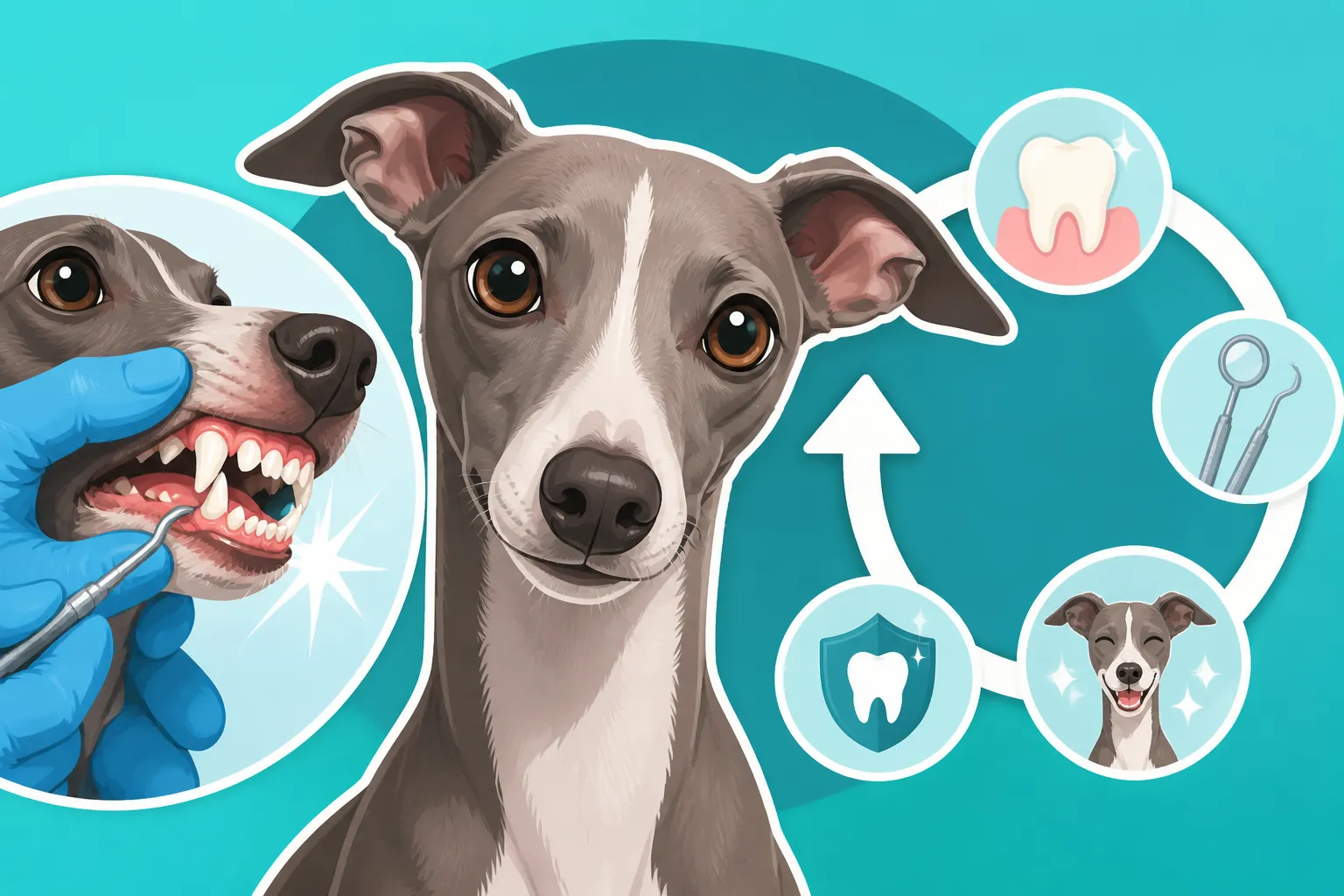
A professional dental cleaning for your Italian Greyhound is an extensive process that always requires general anesthesia. This isn't just for the vet's convenience; it's absolutely essential for your dog's safety and the effectiveness of the procedure.
Here’s a general overview of what happens:
-
Pre-anesthetic Bloodwork: Before your IG even goes under, comprehensive blood tests are usually performed. These checks ensure that their internal organs, especially the liver and kidneys, are functioning well enough to process the anesthetic drugs safely. Given that Italian Greyhounds can be more sensitive to anesthesia, this step is particularly crucial. Our article on Bloodwork Before an Italian Greyhound's Anesthesia delves deeper into this.
-
Anesthesia and Monitoring: Once safely under anesthesia, your dog will be intubated to protect their airway, and their vital signs (heart rate, respiration, blood pressure, oxygen saturation, temperature) will be constantly monitored by trained staff. This continuous oversight is key to managing the unique anesthetic considerations for this breed, as highlighted in Why Anesthesia Is Handled Differently in an Italian Greyhound.
-
Oral Examination and X-rays: With your IG unconscious, the vet can perform a thorough oral exam, probing beneath the gum line for pockets of infection and checking for loose teeth or other abnormalities. Dental X-rays are vital at this stage to assess the health of the tooth roots and jawbone, as much of the disease is hidden below the gum line. Without X-rays, you're only seeing the tip of the iceberg.
-
Scaling and Polishing: Specialized ultrasonic and hand instruments are used to meticulously remove plaque and tartar from above and below the gum line, similar to what a human dental hygienist does. After scaling, the teeth are polished to smooth out any microscopic etches left by the scaling, which helps prevent new plaque from adhering as quickly.
-
Extractions (if needed): If X-rays or the oral exam reveal severely diseased or damaged teeth, extractions will be performed. This is often the most complex and time-consuming part of the procedure, requiring careful surgical technique to minimize trauma to the delicate jawbone. This often adds significantly to the overall cost. For more details on the process, refer to What Happens During an Italian Greyhound's Dental.
-
Pain Management and Recovery: After the procedure, pain medication is administered, and your IG is carefully monitored during recovery from anesthesia. Warm blankets are often used to help maintain their body temperature, as Iggies are prone to getting cold under sedation.
The Role of Anesthesia in Italian Greyhound Dentals
Anesthesia for Italian Greyhounds is a topic that often makes owners nervous, and for good reason. Their unique physiology, including their low body fat and tendency to chill easily, means that anesthesia must be approached with extra caution. However, it's absolutely non-negotiable for a proper dental cleaning.
Imagine trying to thoroughly clean every tooth, probe beneath the gums, and take X-rays on a squirming, stressed, or even just mildly uncomfortable dog. It's impossible. Anesthesia allows the veterinary team to perform a comprehensive, pain-free, and safe procedure. Without it, the cleaning would be superficial at best, missing the critical areas below the gum line where periodontal disease truly thrives.
Modern veterinary anesthesia protocols are very safe, especially when appropriate pre-anesthetic testing is done and the patient is closely monitored throughout. Vets experienced with sighthounds understand the nuances of their metabolism and adjust drug protocols accordingly. While the cost of anesthesia is a significant portion of the dental bill, it's an investment in the safety and efficacy of the entire procedure. You can learn more about this crucial aspect in Why an Italian Greyhound's Dental Requires Anesthesia.
The Costs Involved in Regular Dental Care
Let's talk numbers, or at least the shape of them. The reality is, Italian Greyhound dental care is one of the most significant recurring expenses you'll face. It's not a one-time thing, and it's certainly not cheap.
Breaking Down the Typical Dental Bill
A routine professional dental cleaning for an Italian Greyhound, even without extractions, can be a substantial expense. The figures vary widely based on your geographic location, the veterinary clinic's pricing, and the specific services included. However, it's generally safe to budget for a cost that rivals or exceeds many other common veterinary procedures.
Here's a breakdown of the typical components that contribute to the overall bill:
- Pre-anesthetic Bloodwork: This is non-negotiable for safety and adds to the initial cost.
- Anesthesia Fees: This covers the anesthetic drugs, the time of the veterinary technician monitoring your dog, and the equipment used. As discussed, this is a significant portion.
- Dental X-rays: Most clinics now understand the importance of full-mouth X-rays for a thorough assessment, and these are charged separately.
- Scaling and Polishing: The actual cleaning of the teeth.
- Medications: This includes pain relief administered during and after the procedure, and sometimes antibiotics if there's significant infection.
- Hospitalization/Monitoring: The time your dog spends at the clinic for the procedure and recovery.
It's common for owners to be surprised by the total. You can expect a routine cleaning to be in a certain range, but always call your specific vet for an estimate tailored to your Italian Greyhound. For a deeper dive into the typical costs, check out What a Dental Cleaning Costs for an Italian Greyhound.
Additional Costs for Extractions or Advanced Procedures
Unfortunately, routine cleanings often reveal deeper problems, leading to additional costs, particularly for extractions. This is where the dental bill can really climb.
- Extraction Fees: Each tooth extraction incurs a separate fee, which can vary depending on the tooth's location, the complexity of the extraction, and the amount of time and effort required. Sometimes, a severely diseased tooth might be fragmented, requiring surgical extraction with sutures, which is more involved than a simple pull.
- Advanced Imaging: In some complex cases, a specialist might recommend CT scans or other advanced imaging, which are significantly more expensive than standard dental X-rays.
- Specialist Referrals: If your Italian Greyhound has very severe periodontal disease, jaw issues, or requires root canal therapy, your regular vet might recommend a referral to a board-certified veterinary dentist. While these specialists offer unparalleled expertise, their services come at a premium. Finding a specialist who has experience with the delicate nature of an Italian Greyhound's jaw is especially important, as discussed in Finding a Surgeon Who Has Plated an Italian Greyhound, which, although about leg fractures, highlights the need for specialized knowledge for this breed's unique anatomy.
- Post-Operative Care: This can include extended courses of antibiotics, more specialized pain medication, and follow-up visits.
These additional costs are often the reason why pet parents feel overwhelmed. It's not just the annual cleaning, but the potential for significant surgical intervention that really adds up over the years. The age an Italian Greyhound starts losing teeth is often much earlier than anticipated, meaning these extraction costs can begin piling up sooner than you'd think.
Here's a simplified table illustrating potential dental costs for an Italian Greyhound:
| Service Category | Typical Cost Factor (Relative) | Notes |
|---|---|---|
| Pre-Anesthetic Bloodwork | Medium | Essential for safety; part of preparation. |
| Anesthesia & Monitoring | High | Significant due to specialized care for Iggies; continuous monitoring. |
| Dental X-rays (Full Mouth) | Medium to High | Crucial for identifying hidden disease; can be extensive. |
| Scaling & Polishing | Medium | The "routine cleaning" part of the procedure. |
| Tooth Extractions (per tooth) | Medium to Very High | Varies greatly by complexity, location, and number of teeth. |
| Pain Medication | Low to Medium | For comfort during and after the procedure. |
| Antibiotics (if infection) | Low | Prescribed for active infections; can be an additional course. |
| Specialist Referral/Consultation | Very High | If complex issues require a board-certified veterinary dentist. |
The Necessity of Annual (or More Frequent) Dentals
Given the expense and the worry of anesthesia, it's tempting to try and stretch the time between dental cleanings. However, with Italian Greyhounds, this approach is almost always a detriment to their health and, ironically, often leads to higher costs in the long run.
Why Skipping a Year Is a Risky Gamble
Skipping a year of professional dental cleaning for an Italian Greyhound is akin to skipping a year of brushing your own teeth – the problems don't go away, they just get worse, faster. Their mouths are simply too prone to rapid plaque and tartar accumulation and subsequent progression of periodontal disease.
When you skip an annual dental, you allow plaque to harden into tartar, which then creates a rough surface for even more bacteria to cling to. This bacterial film extends below the gum line, causing inflammation, pain, and irreversible damage to the bone and ligaments supporting the teeth. What might have been a routine cleaning with no extractions one year could easily become a cleaning with multiple, complex extractions the next, driving up the cost significantly. The earlier tartar appears on an Italian Greyhound, the more critical it is to maintain a consistent cleaning schedule.
More importantly, severe dental disease is not just about bad breath or missing teeth. It’s a chronic infection. Bacteria from the mouth can enter the bloodstream and travel to vital organs like the heart, kidneys, and liver, contributing to serious systemic health issues. While an Italian Greyhound lives fourteen to fifteen years, untreated dental disease can shorten their lifespan and diminish their quality of life. Regular professional cleanings are a cornerstone of preventative care for the breed.
Recognizing the Signs Your IG Needs a Dental
It's important to be vigilant for signs that your Italian Greyhound might be experiencing dental discomfort or disease, even if their annual cleaning isn't due. Being proactive can prevent more severe issues.
Keep an eye out for these indicators:
- Bad Breath (Halitosis): This is often the first and most obvious sign. While "dog breath" is often accepted, truly foul breath is a red flag for bacterial overgrowth.
- Visible Tartar Buildup: Yellow or brown crusts on the teeth, especially along the gum line, indicate tartar.
- Red, Swollen, or Bleeding Gums: Healthy gums should be a pale pink and tightly hug the teeth. Redness, swelling, or bleeding during brushing or eating are signs of gingivitis or periodontitis.
- Difficulty Eating: Reluctance to chew on hard food or toys, dropping food, or showing pain when eating can indicate a sore mouth or loose teeth.
- Pawing at the Mouth or Face Rubbing: Your IG might try to relieve discomfort by rubbing their face on furniture or pawing at their mouth.
- Drooling or Dropping Food: Excessive drooling, sometimes with blood, or letting food fall from their mouth.
- Changes in Behavior: A dog in pain might become more withdrawn, irritable, or less playful.
- Receding Gums: The gum tissue may appear to be pulling away from the teeth, exposing more of the tooth root.
- Missing or Loose Teeth: In advanced stages, teeth may become visibly loose or fall out entirely. It's quite common for Italian Greyhounds to lose a significant number of teeth by the age of eight if dental care isn't a priority.
If you notice any of these signs, don't wait. Schedule an appointment with your veterinarian for an oral examination. It's far better to address issues early than to let them fester.
Proactive Home Care: Your First Line of Defense
While professional cleanings are non-negotiable for Italian Greyhounds, what you do at home between vet visits makes a tremendous difference. Home care isn't a replacement for professional dentals, but it can significantly slow down the progression of disease and potentially extend the time between comprehensive cleanings.
Daily Brushing: The Non-Negotiable Habit
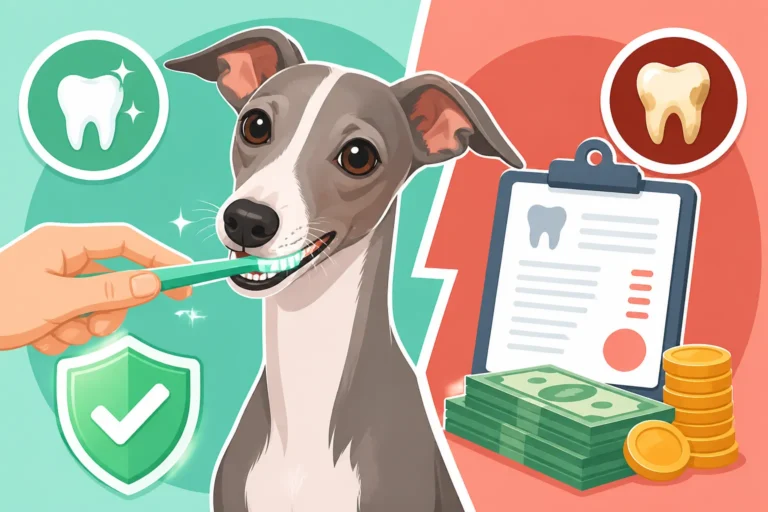
This is it, folks. The absolute best thing you can do for your Italian Greyhound's teeth is to brush them daily. Yes, daily. I know it sounds like a chore, but it's the gold standard for preventing plaque buildup. Think of it as investing just a few minutes each day to potentially save hundreds, if not thousands, of dollars in future extraction costs and prevent pain for your beloved companion. Brushing an Italian Greyhound's teeth every day is truly the care task that matters most for their long-term health.
- Start Early: Begin brushing your Italian Greyhound puppy's teeth as soon as you bring them home, even before all their adult teeth are in. This helps them get used to the sensation and makes it a normal part of their routine. Our guide on Teaching an Italian Greyhound Puppy to Have Its Teeth Brushed can offer some valuable tips.
- Use the Right Tools: You'll need a dog-specific toothbrush and toothpaste. Never use human toothpaste, as it contains ingredients toxic to dogs. A small brush designed for toy breeds, or even a finger brush, can work well for an Italian Greyhound's small mouth.
- Technique is Key: Focus on the outside surfaces of the teeth, especially along the gum line, as this is where plaque accumulates most rapidly. Angle the bristles towards the gum line at a 45-degree angle. Even a quick 30-second brush on each side can make a difference.
- Make it Positive: Always associate brushing with positive reinforcement. Follow it with a tiny treat, praise, or a favorite toy. The goal is to make it a pleasant experience, not a wrestling match.
Consistent daily brushing can dramatically reduce the amount of plaque and tartar buildup, which in turn can reduce the frequency of professional cleanings or at least minimize the extent of work needed during those cleanings. This is truly how home brushing cuts an Italian Greyhound's dental bill over their lifetime.
The Effectiveness of Dental Chews and Water Additives
While daily brushing is paramount, other products can be used as supplementary tools. However, it's crucial to understand their limitations.
- Dental Chews: Some dental chews are formulated to help reduce plaque and tartar, and certain brands have a veterinary oral health council (VOHC) seal, indicating they meet standards for efficacy. These can be helpful for mechanical abrasion, but they rarely reach all tooth surfaces, especially those crowded back teeth. They should never replace brushing. When choosing, consider your Italian Greyhound's delicate jaw – some hard chews or bones can actually lead to broken teeth or, worse, a jaw fracture, particularly if they already have compromised teeth. Opt for softer, more pliable options specifically designed for dental health. You can find a good selection of these on sites like Chewy.
- Water Additives: These products claim to reduce bacteria in the mouth. While some studies suggest a modest benefit, their effectiveness is generally considered minimal compared to brushing. They can be a small part of a comprehensive dental care plan but again, they are not a substitute for mechanical cleaning.
It’s important to be realistic about what these supplemental tools can achieve. They might slightly reduce surface plaque, but they won't address the critical subgingival bacteria or remove established tartar.
Diet and Its Impact on Dental Health
The role of diet in Italian Greyhound dental health is often debated, but it's generally agreed that diet alone cannot prevent periodontal disease, especially in a predisposed breed like the IG.
- Kibble Size: Some believe that larger kibble encourages more chewing and therefore provides a "brushing" action. While there's a kernel of truth that some kibble formulations are designed to mechanically scrub teeth, it's not a foolproof solution. The reality is, most Italian Greyhounds gulp their food or only chew minimally, and the kibble often doesn't adequately scrape the critical gum line area where plaque begins. Small breed kibble, while appropriate for their mouth size, doesn't necessarily offer superior dental benefits.
- Wet vs. Dry Food: Wet food offers no dental benefit whatsoever in terms of cleaning. In fact, its sticky nature can sometimes contribute to more food particles adhering to teeth. Dry kibble is generally preferred over wet food for dental health, but again, it's a very limited tool.
- Specialized Dental Diets: Some veterinary dental diets are specifically formulated with unique kibble shapes and coatings designed to help reduce plaque and tartar through mechanical action and specific ingredients. These can be a beneficial component of a comprehensive dental plan, especially when recommended by your vet. Brands like Ollie focus on fresh food, which while excellent for overall nutrition, generally won't offer the mechanical cleaning action that some specialized kibbles might.
Ultimately, while diet can play a small supportive role, relying solely on food to maintain your Italian Greyhound's dental health is a recipe for disaster. It's a multifaceted approach of daily brushing, regular professional cleanings, and careful consideration of other preventative measures.
Budgeting for a Lifetime of Italian Greyhound Dental Care
The recurring nature and potentially high costs of Italian Greyhound dental work mean that budgeting for it is not optional; it's essential. This isn't a one-and-done expense, but a lifelong financial commitment. Our article on What an Italian Greyhound's Lifetime Dental Costs really drives this point home.
How Pet Insurance Can Help (and Its Limitations)
Pet insurance can be a lifesaver for unexpected emergencies, but its coverage for routine or pre-existing dental conditions can be a bit nuanced.
- Accident & Illness Plans: Many standard accident and illness pet insurance policies will cover dental procedures that are medically necessary due to illness or injury. This often includes extractions due to periodontal disease, oral surgery for a fractured jaw (though less common directly from dental issues, more from trauma), or treatment for oral tumors. Providers like Healthy Paws often cover these types of unexpected dental issues. However, they usually require that the pet has had regular professional dental cleanings and that the disease wasn't already present (pre-existing) before enrollment or during the waiting period.
- Wellness Plans/Riders: Some insurance companies offer optional "wellness plans" or riders that can be added to a standard policy. These plans are designed to help with the costs of routine preventative care, which can include annual dental cleanings. These are usually reimbursement-based, meaning you pay upfront and submit for partial reimbursement up to a certain annual limit.
- Exclusions: It's important to read the fine print. Most policies will not cover routine dental cleanings unless you specifically have a wellness add-on. They also typically exclude "cosmetic" dental procedures. Crucially, if your Italian Greyhound already has signs of periodontal disease before you enroll, that might be considered a pre-existing condition and therefore excluded from coverage for related future treatments.
Before relying on pet insurance for dental care, thoroughly research different providers and their policies. Understand what's covered, what's excluded, waiting periods, deductibles, and reimbursement percentages. It's an important conversation to have with any potential insurer.
Setting Aside a Dedicated Dental Fund
Even with pet insurance, it's a wise move to create a dedicated savings fund specifically for your Italian Greyhound's dental care. This gives you a financial cushion regardless of insurance coverage.
- Anticipate Annual Costs: Knowing that professional cleanings are likely annual, start by saving the estimated cost of a routine cleaning each year. Divide that amount by 12 and set aside that small amount each month.
- Prepare for the Unexpected: On top of the routine cleaning cost, factor in a buffer for potential extractions or more complex procedures. While it's impossible to predict exactly, having an extra few hundred or even a thousand dollars set aside can alleviate stress when the vet calls with an estimate that includes extractions.
- Emergency Fund Integration: Some owners integrate this into a general pet emergency fund, which is also a fantastic idea for an Italian Greyhound, especially considering their propensity for broken legs. The goal is to avoid being caught off guard and having to make difficult decisions based on financial constraints. Budgeting for an Italian Greyhound's broken leg before it happens is often discussed, but dental emergencies are just as real.
By proactively saving, you ensure that you can provide the best possible dental care for your Italian Greyhound throughout their life, without facing undue financial strain. It truly becomes part of the "cost of ownership" that you need to factor in from day one.
When to Seek a Veterinary Dental Specialist
While your regular veterinarian is perfectly capable of handling most routine cleanings and straightforward extractions, there are times when specialized expertise is warranted, or even necessary.
Complex Cases and Specialized Care
Not all dental problems are created equal. Some conditions are simply too intricate or severe for a general practitioner to manage effectively. This is where a board-certified veterinary dental specialist comes in. These are veterinarians who have undergone extensive additional training and certification specifically in veterinary dentistry and oral surgery.
You might need to seek out a specialist for:
- Advanced Periodontal Disease: Cases with severe bone loss, deep periodontal pockets, or multiple abscesses.
- Complicated Extractions: Teeth that are difficult to access, ankylosed (fused to the bone), or require extensive bone removal to extract. This is especially true given the delicate jawbone of an Italian Greyhound.
- Jaw Fractures: While a broken leg is the emergency every Italian Greyhound owner fears, a jaw fracture, perhaps from severe bone loss or trauma, would definitely require a specialist.
- Oral Tumors: Diagnosis and surgical removal of growths within the mouth.
- Root Canal Therapy or Restorative Procedures: If saving a specific tooth is a priority, a specialist can perform advanced procedures like root canals or apply crowns.
- Congenital Abnormalities: Cases of severe malocclusion (improper bite) or other birth defects affecting the oral cavity.
- Failed Previous Treatments: If a previous dental procedure hasn't resolved the issue, a specialist might offer a new approach.
These specialists have advanced equipment, techniques, and surgical skills that go beyond what's available in a general practice. While their services are more expensive, the precision and expertise they offer can be invaluable for complex cases, often leading to better outcomes and less chance of complications.
The Benefits of Expert Intervention
Opting for a veterinary dental specialist, when appropriate, can offer several significant benefits for your Italian Greyhound:
- Advanced Diagnostic Capabilities: Specialists often have access to more sophisticated imaging, such as cone-beam CT scans, which provide a 3D view of the oral cavity, far superior to standard dental X-rays for complex problems.
- Minimally Invasive Techniques: Their advanced training often allows them to perform procedures with less trauma to the surrounding tissues and bone, which is particularly beneficial for a delicate breed like the Italian Greyhound.
- Pain Management Expertise: Specialists are highly skilled in advanced pain management protocols, ensuring your dog is as comfortable as possible before, during, and after a procedure.
- Better Long-Term Outcomes: Their focused expertise often leads to a more accurate diagnosis, a more effective treatment plan, and ultimately, a better long-term prognosis for your dog's oral health and overall well-being. This is especially true when considering whether an Italian Greyhound can keep its teeth for life, as early and expert intervention can make a huge difference.
It's a conversation to have with your primary veterinarian if they recommend a referral. They can help you understand why specialized care is needed and connect you with a qualified professional in your area. For some owners, the peace of mind that comes with knowing their beloved IG is receiving the highest level of dental care is priceless.
Disclaimer
This article is for general informational purposes only and does not constitute professional advice. Laws, prices and regulations vary by location and change over time. Consult a qualified professional for guidance on your specific situation.