Which Boots Stay On an Italian Greyhound
It’s a tale as old as time for Italian Greyhound owners: you bundle up your little noodle in their warmest coat, carefully slip on a set of adorable (and expensive!) dog boots, and head out the door for a quick winter walk, only to have two, three, or all four boots flung off within the first block. The frustration is real, and it often leads to giving up on boots entirely. But don't despair! This guide is all about understanding why most dog boots fail our Iggies and, more importantly, helping you identify and choose the boots that actually stand a chance of staying put, protecting those delicate paws from the elements.
The Unique Challenge of Italian Greyhound Paws and Boots
Let's be honest, Italian Greyhounds are built differently from your average Labrador or even many other small breeds. Their elegant, slender physique extends right down to their feet, creating a specific set of challenges when it comes to finding footwear that fits and, crucially, stays on. It’s not just a matter of size; it’s the entire architecture of their leg and paw.
Their Delicate, Hare-Like Paws
Italian Greyhounds have what are known as "hare feet" – elongated middle toes, a compact shape, and thin, sensitive pads. Unlike the rounder, more robust paws of some breeds, an IG's foot is designed for speed and agility, not for tromping through slush or over sharp gravel. Their pads are often less calloused than those of other dogs, making them more susceptible to injury, extreme temperatures, and irritation from salt and chemicals on sidewalks. This means protection isn isn't just a luxury; it's a necessity, especially when you consider how An Italian Greyhound in Summer and in Snow requires different considerations.
Imagine trying to put a thick, bulky winter glove on a ballerina's hand and expecting her to perform a delicate pirouette. It's a similar challenge for our Iggies. The fine bones and tendons in their feet mean that a poorly fitting boot can cause discomfort, alter their gait, or even lead to rubbing and sores. Owners often notice their Iggies pick up their feet or even lift them like a flamingo trying to shake off an ill-fitting shoe.
Slender Legs and Minimal Ankles
The most significant hurdle to keeping boots on an Italian Greyhound is their incredibly slender legs and lack of a pronounced "ankle" or stop. Most dog boots are designed with a wider upper portion and rely on a secure strap around a relatively thick part of the leg above the paw to stay on. On an IG, that "thick part" simply doesn't exist to the same degree. Their legs taper sharply, making it incredibly difficult for straps to cinch tight enough without cutting off circulation, or for the boot cuff to grip without slipping down.
You've probably tried boots with one, two, or even three Velcro straps, only to watch them slide right off as your IG takes a few steps. It's not a reflection on your strapping technique, but on the anatomical reality of your dog. This is especially true for young, active Iggies who are still perfecting their balance and running form. And let's not forget the sheer joy an Italian Greyhound expresses through sudden bursts of speed – those zoomies are often the ultimate boot-dislodging event!
What Makes a Dog Boot Actually Stay On an Italian Greyhound?
When you’re staring at a wall of dog boots at the pet store or scrolling through options online, it can feel like a guessing game. But for Italian Greyhounds, there are specific design elements that significantly increase the chances of a boot actually staying on. It's all about understanding how these features interact with their unique anatomy.
High-Top Design and Multiple Securement Points
Forget the ankle-height booties; for an Italian Greyhound, you're going to want boots that extend higher up the leg. Think of them more like little dog sneakers or even shin guards. A higher shaft provides more surface area for the boot to grip and less leverage for the paw to push it off. But simply being high isn't enough; it needs multiple points of securement.
Look for boots with at least two, preferably three, adjustable straps that are spaced out along the shaft of the boot. These straps should be sturdy, wide, and have strong fastening mechanisms, whether it's heavy-duty Velcro, buckles, or even a combination. Some of the most successful designs include a cinch cord at the very top of the boot to snug it around the leg, preventing snow or debris from getting in, followed by one or two robust mid-leg straps. The idea is to distribute the securement pressure and create a more custom, molded fit around their tapering leg.
Flexible Materials and a Snug, Anatomical Fit
While secure straps are crucial, the material of the boot itself plays a massive role in both comfort and retention. Rigid, unyielding materials might seem durable, but they won't conform to your IG's foot and leg, making them prone to slipping. Instead, seek out boots made from soft, flexible, and breathable materials that allow for natural paw movement. Think neoprene, softshell fabrics, or pliable rubber.
The fit around the paw itself should be snug but not tight. You want enough room for the toes to spread slightly when they walk, but not so much that the paw slides around inside the boot. Some brands offer different widths or shapes, which can be helpful. A good boot will have a somewhat elastic cuff at the top, which helps maintain contact with the leg without being restrictive. A dog with no teeth (How an Italian Greyhound Eats With No Teeth) might be an extreme example, but any discomfort in their mouth or on their feet can really throw off their natural stride.
Another factor often overlooked is the sole. While good grip is essential for preventing slips on ice or wet surfaces, an overly thick or stiff sole can make the boot awkward for your IG to wear, encouraging them to try and shake it off. A flexible, rubberized sole that allows for some natural paw flexion is ideal.
Grip and Protection for Their Delicate Pads
Let's not forget the primary purpose of boots: protecting those sensitive Italian Greyhound paw pads. Whether it's from the burning heat of summer pavement, the freezing bite of winter snow, or the corrosive sting of de-icing salts, boots are vital. Whether an Italian Greyhound Needs Boots is often a discussion point, but for many Iggies, it's a definite yes.
Look for soles with good traction patterns to prevent slipping, especially if you live somewhere with icy conditions. Consider how Whether Salted Sidewalks Hurt an Italian Greyhound's Feet is a common concern – boots are your best defense. The material of the sole should also be thick enough to provide insulation from extreme temperatures and protection from sharp objects, but as mentioned, still flexible. Brands often specify if their boots are designed for snow, ice, or rough terrain, which can guide your choice.
Here’s a quick comparison of features to look for when choosing boots for your Italian Greyhound:
| Feature | Why it Matters for Italian Greyhounds |
|---|---|
| High Shaft/Cuff | More surface area to grip the slender leg; less leverage for the paw to kick it off. |
| Multiple Straps | Distributes pressure, creates a more custom, secure fit along the tapering leg. |
| Flexible Materials | Conforms to leg/paw shape, allows natural movement, reduces chafing, and encourages acceptance. |
| Snug Paw Fit | Prevents internal slippage, allowing for natural toe splay without being too loose. |
| Grip/Traction Sole | Essential for safety on varied surfaces (ice, wet pavement), preventing falls. |
| Insulated/Protective Sole | Shields delicate pads from extreme temperatures (hot pavement, cold snow) and irritants like salt. |
| Easy On/Off | While not about staying on, it reduces frustration for both owner and dog, making consistent use more likely. |
Top Contenders: Boot Types and Features That Work for Iggies
Given the unique challenges, it's easy to feel overwhelmed by the sheer volume of dog boots on the market. However, certain types and brands have developed reputations among sighthound owners for their superior fit and ability to actually stay on those notoriously slender Italian Greyhound legs.
The "Sock-and-Strap" Hybrid Boots
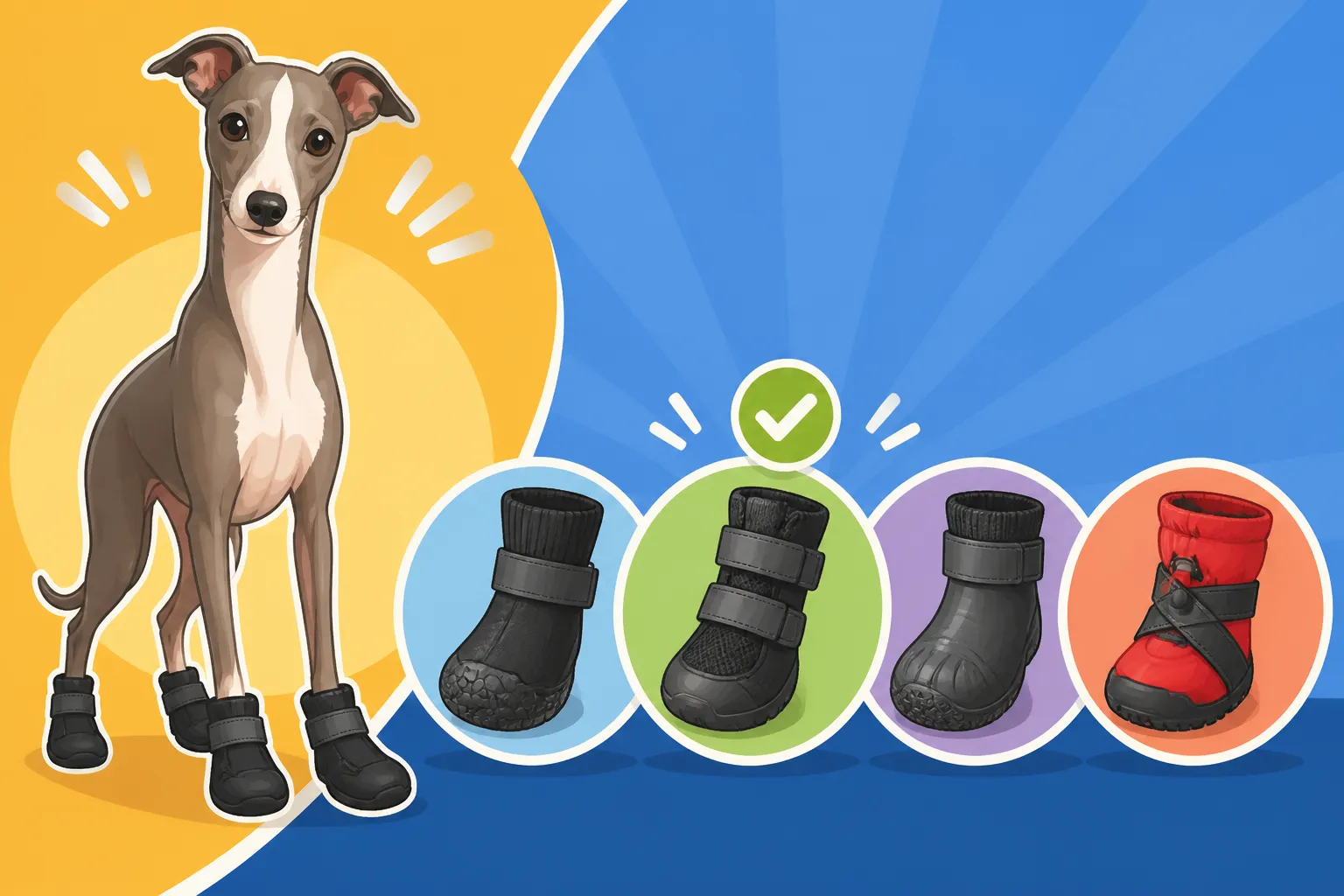
One of the most effective designs for Italian Greyhounds combines the flexibility and comfort of a sock with the securement of external straps. These boots often feature a soft, breathable fabric upper that extends high up the leg, almost like a cozy sock. Over this fabric, one or more robust Velcro straps (sometimes elasticized) are strategically placed to cinch the boot securely without causing discomfort.
Brands that focus on flexible materials and an anatomical fit tend to do best here. You might find a good selection of these types of boots on platforms like Chewy or Amazon, where you can read reviews from other owners, specifically looking for feedback from sighthound parents. The key is that the "sock" part hugs the leg, and the straps reinforce that hold without needing to be excessively tight. Some of these even have a rubberized coating on the paw section for better grip and water resistance, making them ideal for Walking an Italian Greyhound in Snow or wet conditions.
Boots with a Contoured or Shaped Cuff
Another successful approach involves boots with a more structured, contoured cuff that is designed to hug the natural taper of a dog's leg. These often don't rely solely on straight straps but might have an elasticated section or a more ergonomic shape around the "ankle" area (or where an ankle would be on other breeds!). The material for the cuff portion might be a bit stiffer to maintain its shape, but it should still be flexible enough not to rub.
You'll sometimes see brands advertising boots specifically for "athletic" dogs or those with "lean legs." These can be worth investigating. The goal is to avoid the dreaded "tube sock" effect, where the boot is just a straight cylinder, inevitably sliding down an IG's leg. Look for boots that visually appear to have a more defined shape, rather than just a simple tube with straps.
Custom-Fit Solutions (If You're Feeling Ambitious!)
For the truly dedicated, or for Iggies with particularly challenging proportions, custom-made boots can be an option. While this is certainly more of an investment, it ensures a perfect fit. Some small businesses or online artisans specialize in canine apparel, and some may offer custom boot services, where you provide precise measurements of your Italian Greyhound's paws and legs.
Before going this route, make sure you've exhausted commercial options and are confident in your measuring skills! This can be a game-changer for Iggies who struggle with chafing or consistently lose boots despite all efforts. Remember, a happy dog is a healthy dog, and sometimes making those extra efforts, like providing high-quality food from a brand like Ollie, or custom-fit accessories, really pays off in their overall well-being.
Beyond the Boot: Tips for Success and Acceptance
Even the perfect boot won't stay on if your Italian Greyhound vehemently opposes wearing it! Getting your Iggy to accept boots is a process, and it requires patience, positive reinforcement, and a realistic understanding of their sensitive nature. Why an Italian Greyhound Refuses to Go Out in Rain gives you a peek into their selective comfort zones, and boots are no different.
Introduce Boots Gradually and Positively
Don't just slap boots on your IG and expect them to prance happily out the door. Start slowly. Let them sniff the boots, offer treats when they show interest. Then, try putting just one boot on for a few seconds, immediately followed by praise and a high-value treat. Repeat this over several short sessions, gradually increasing the number of boots and the duration they wear them.
The key is to associate boots with positive experiences. Put them on just before mealtime, or right before a short play session with a favorite toy. Avoid putting boots on when your IG is already stressed or overstimulated. If they try to shake them off, distract them with a treat or a game rather than scolding them. The goal is for them to see boots as a precursor to something good, rather than an uncomfortable imposition.
Make Sure the Fit is Right and Comfortable
Even the most well-designed boot will fail if it doesn't fit correctly. Measure your Italian Greyhound's paws carefully, paying attention to both length and width. Many boot manufacturers provide sizing charts, but remember that Iggy legs are unique, so err on the side of caution. If a boot feels too tight, or too loose, it's not the right one. A boot that chafes or pinches will be instantly rejected. Pay close attention to how the straps sit on their leg – they should be snug enough to hold, but you should still be able to easily slip a finger underneath.
Think about the conditions you're using them in. Why an Italian Greyhound Cannot Hold Its Own Heat means winter boots should offer insulation, but summer boots need to be breathable to prevent overheating. If the boots are uncomfortable for any reason, your IG will work tirelessly to remove them, no matter how securely they're fastened.
Distraction is Your Best Friend
Once the boots are on and you're ready for your walk, keep your Italian Greyhound moving and distracted. The more they focus on the sensation of the boots, the more likely they are to try and remove them. Start with short walks in familiar, exciting environments where they are less likely to dwell on their footwear. A quick trip to a favorite sniff spot, or a short play in the yard, can help them get used to the feeling.
Carry treats and offer them frequently as a reward for walking cooperatively. Over time, as boots become a normal part of their routine, the novelty will wear off, and they'll be less inclined to try and shed them. Remember, consistency is key, and every successful boot-wearing outing builds positive associations for the future.
Disclaimer
This article is for general informational purposes only and does not constitute professional advice. Laws, prices and regulations vary by location and change over time. Consult a qualified professional for guidance on your specific situation.