Whether Kibble Size Matters for an Italian Greyhound’s Teeth
It's a common thought among Italian Greyhound owners, often a hope, that the type or size of kibble they feed might contribute to their beloved dog's dental health. We all want to do the best for our IGs, and the idea that simply choosing a different bag of food could fend off dental disease is certainly appealing. Unfortunately, for our delicate-mouthed Italian Greyhounds, the reality of kibble's impact on dental health is far more nuanced, and often, quite disappointing. This guide will delve into whether kibble size truly makes a difference for an Italian Greyhound's teeth, exploring the myths, the realities, and what actually works to keep those tiny pearly whites healthy.
The Myth and Reality of Kibble and Dental Health for Italian Greyhounds
For years, many dog owners have been told, or at least assumed, that crunchy kibble acts like a toothbrush, scraping tartar off their dog's teeth with every bite. It's a comforting thought, isn't it? Just pour the food, and their teeth get cleaner. But when we look closely at the unique oral anatomy and common dental issues of Italian Greyhounds, this comforting myth quickly begins to crumble.
Why Kibble is Often Believed to Clean Teeth
The basic premise behind "dental kibble" or the general belief that hard kibble cleans teeth is mechanical abrasion. The idea is that as a dog crunches down on a piece of kibble, the hard edges scrape against the tooth surface, dislodging plaque and preventing tartar buildup. Some specialized dental kibbles are even designed with larger, more fibrous, or uniquely shaped pieces to maximize this supposed scraping action. For many breeds, this might offer a very minimal benefit, especially on the larger, back molars. The concept hinges on the dog actually chewing the kibble extensively before swallowing.
However, Italian Greyhounds, like many small breeds, often don't chew their kibble in a way that provides any significant dental scrubbing. Their mouths are small, their jaws delicate, and their instinct is often to gulp down smaller pieces of food rather than meticulously grind them. Even if they do chew, the shape and structure of their teeth, particularly the front teeth and canines where much of the tartar accumulates, aren't well-suited for this kind of "self-cleaning." The kibble might glance off the cusps of a few teeth, but it rarely makes sufficient contact with the gumline or the inner surfaces where plaque loves to hide.
The Italian Greyhound's Unique Dental Challenges
Italian Greyhounds face a significant uphill battle when it comes to dental health, far more so than many other breeds. Their aristocratic, refined muzzles, while beautiful, are simply not designed to hold a full set of 42 adult teeth comfortably. This leads to severe overcrowding, where teeth are rotated, misaligned, or packed too closely together. This creates tiny crevices and overlapping surfaces that are impossible for kibble – regardless of its size – to reach. This overcrowding is a primary reason for the rapid accumulation of plaque and tartar, which can appear alarmingly early in their lives. How Early Tartar Appears on an Italian Greyhound is a constant source of frustration for IG owners.
Furthermore, Italian Greyhounds are prone to periodontal disease, a condition that can progress quickly from gingivitis to severe bone loss around the teeth. This is not just about dirty teeth; it's an inflammatory process that can be incredibly painful and lead to tooth loss. Kibble, even specialized dental kibble, does not address the underlying genetic predisposition to crowded mouths or the inflammation inherent in periodontal disease. While it might superficially seem to help, the truth is that it simply can't reach the problematic areas where plaque and tartar truly take hold and wreak havoc in an Italian Greyhound's mouth. It's a harsh reality that How Common Dental Disease Is in an Italian Greyhound is unfortunately very common.
Does Kibble Size Make a Difference for Italian Greyhounds?
Given the inherent dental challenges of the Italian Greyhound, it’s understandable that owners often wonder if simply choosing a larger or smaller kibble might offer some advantage. The answer, when it comes to dental cleaning, is generally a resounding "not really." However, kibble size can matter for other important reasons that affect your IG's comfort and safety.
Small Kibble vs. Large Kibble for IGs
When you consider a tiny Italian Greyhound, often weighing less than ten pounds, trying to eat a large piece of kibble, a few issues immediately spring to mind. First, large kibble can be a choking hazard for such small mouths and narrow throats. IGs, with their tendency to eat quickly, might try to swallow pieces that are simply too big, leading to gagging or even a frightening emergency.
On the flip side, very small kibble, while seemingly more appropriate for their mouth size, offers virtually no abrasive benefit. If an IG simply swallows tiny pieces whole or gives them a single, quick crunch, there's no opportunity for any "scraping" action against the tooth surface. It passes through the mouth too quickly to make a difference. Many owners gravitate towards small breed kibble, available at retailers like Chewy or Amazon, not because it cleans teeth, but because it's simply easier for their small dogs to manage. This is a practical consideration for feeding, not a dental one.
So, the notion that a larger kibble forces more chewing and therefore cleans better is largely unsubstantiated for IGs. Their chewing mechanics and the swiftness with which they consume food often bypass any potential for significant dental abrasion. Likewise, a tiny kibble offers ease of consumption but zero dental benefit. For an Italian Greyhound, the size of the kibble is mostly a comfort and safety factor, not a cleaning factor.
When Kibble Size Does Matter (and it's not for cleaning)
While kibble size isn't a dental cleaning solution for Italian Greyhounds, it absolutely matters for their overall eating experience and safety.
- Ease of Eating: For puppies, who are still developing their bite and coordination, or senior IGs with potentially missing or sensitive teeth, a smaller, more manageable kibble size is crucial. Trying to tackle large pieces can be frustrating, painful, or even impossible for them. Softer Food for an Old Italian Greyhound often becomes a necessity if they're struggling.
- Avoiding Choking: As mentioned, large kibble pieces can present a real choking hazard. We've all seen our IGs inhale their food; ensuring the kibble size is appropriate for their small throats can prevent a scary situation.
- Ensuring Adequate Nutrition: If the kibble is too large or too hard, your IG might simply refuse to eat it, or struggle so much that they don't consume enough calories. This is especially vital for a breed that already carries very little body fat. The goal is to ensure they eat their food comfortably and get all the nutrients they need.
- Post-Dental or Injury: If your IG has recently had dental surgery with extractions, or if they've suffered a jaw injury, their veterinarian will almost certainly recommend a soft, small diet for a period. In these cases, even standard small kibble might be too much, and wet food or specially moistened kibble will be necessary.
Therefore, when selecting kibble, prioritize your Italian Greyhound's ability to eat comfortably and safely over any perceived, but largely ineffective, dental cleaning benefits of size. Look for high-quality small breed formulas that are easy for them to pick up and swallow, readily available from pet supply retailers.
The True Pillars of Italian Greyhound Dental Care
Since kibble size is not the magic bullet for Italian Greyhound dental health, where should owners truly focus their efforts? The real answer lies in a consistent, multi-pronged approach that combines diligent home care with regular professional veterinary attention. There's no shortcut when it comes to keeping those precious Iggy teeth healthy.
Daily Brushing and Proactive Home Care
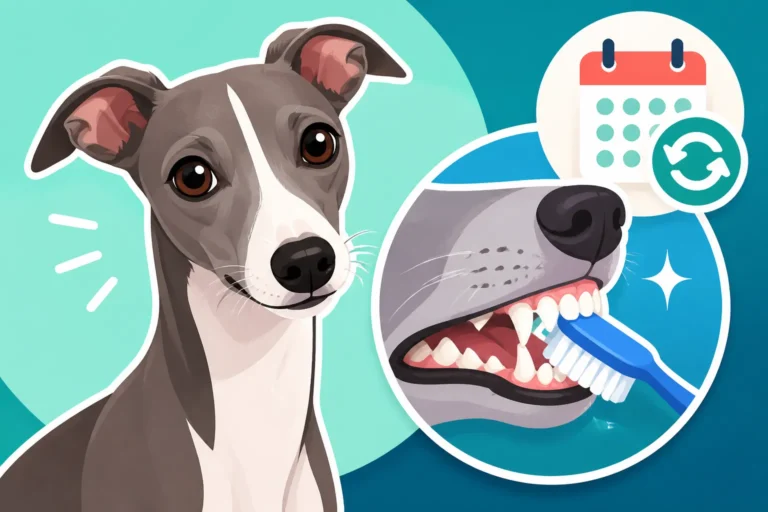
This is, without a doubt, the single most impactful thing you can do for your Italian Greyhound's teeth. Just like with humans, daily brushing is essential to physically remove the plaque before it hardens into tartar. It sounds daunting, but with patience and positive reinforcement, most IGs can learn to tolerate it, and many even come to enjoy the routine. Brushing an Italian Greyhound's Teeth Every Day is a vital commitment.
Start early with a puppy to normalize the sensation. Use a soft, finger brush or a very small, pet-specific toothbrush designed for tiny mouths. Which Toothbrush Fits an Italian Greyhound's Mouth is crucial; a human toothbrush is too large and abrasive. Always use enzymatic pet toothpaste, which is safe for ingestion and palatable (often chicken or beef flavored). Never use human toothpaste, as it contains ingredients toxic to dogs. Focus on the gumline and the outer surfaces of the teeth, where plaque accumulates most rapidly. Even a minute of gentle brushing can make a world of difference.
Beyond brushing, some owners explore other home care options. Water additives that claim to reduce plaque can offer a very marginal benefit, but they are not a substitute for brushing. Dental chews are another popular choice, but careful selection is vital. Many are too hard for an IG's delicate jaw and can cause fractures. Others are simply swallowed too quickly to provide any scrubbing action. If you use dental chews, choose flexible, veterinary-approved options, and always supervise your IG. Products from reputable brands found on platforms like Chewy or Amazon often list their VOHC (Veterinary Oral Health Council) approval, which is a good indicator of efficacy. Remember, these are supplementary, never primary.
Regular Professional Cleanings are Non-Negotiable
Despite the most diligent home care, Italian Greyhounds, due to their crowded mouths and genetic predisposition, will almost certainly need regular professional dental cleanings under anesthesia. This is not a failure of your home care; it's simply the reality of the breed. Professional cleanings allow a veterinarian to thoroughly examine every tooth, clean below the gumline (where periodontal disease truly takes hold), scale off hardened tartar, and polish the teeth. This cannot be done effectively on an awake dog, especially not an IG.
The thought of anesthesia can be scary, and we naturally worry about our delicate IGs. However, modern veterinary anesthesia protocols are very safe, especially when pre-anesthetic bloodwork is performed to assess organ function, and continuous monitoring is maintained throughout the procedure. Why an Italian Greyhound's Dental Requires Anesthesia is a critical safety measure. During the procedure, the vet will likely perform full mouth X-rays to check for problems below the gumline, such as bone loss or abscesses, which are invisible to the naked eye. What Happens During an Italian Greyhound's Dental involves much more than just scraping teeth.
How often does an Italian Greyhound need a professional dental? It varies, but for many IGs, it's an annual event, sometimes even more frequently depending on the individual dog and the severity of their dental disease. How Often an Italian Greyhound Needs a Dental Cleaning is a question every IG owner will ask their vet. This is a significant financial commitment, as What an Italian Greyhound's Annual Dental Costs can be substantial, but it is absolutely crucial for their long-term health and comfort. Untreated dental disease is not just bad breath; it's a source of chronic pain and can lead to serious systemic health issues affecting the heart, kidneys, and liver.
Nutritional Considerations Beyond Kibble Size
While kibble size won't save your Italian Greyhound's teeth, the overall quality of their diet plays a role in their general health, which in turn supports their ability to fight off disease, including periodontal issues. It's about looking at the bigger picture of their well-being.
Choosing the Right Food for Overall Health
When selecting food for your Italian Greyhound, focus on high-quality ingredients that provide balanced nutrition. Look for formulations designed for small breeds, not just for kibble size, but because they are often nutritionally dense and appropriate for their metabolism. Lean proteins, healthy fats, and digestible carbohydrates are key. Brands like Ollie, which offer fresh, human-grade food, can be an excellent option for some IGs, providing highly palatable and nutritious meals. While not a dental solution in themselves, these types of foods can be particularly beneficial for IGs who are picky eaters or those with advanced dental disease who struggle to chew even small kibble. Feeding an Italian Greyhound With No Teeth is a challenge that often requires a shift to very soft or wet foods.
Monitor your Italian Greyhound's weight carefully. A healthy weight supports overall joint health, cardiovascular function, and reduces strain on all body systems. An overweight Italian Greyhound is at a higher risk for a multitude of health problems, including potentially exacerbating existing health conditions or putting them at greater risk for other injuries. Why an Overweight Italian Greyhound Is at Fracture Risk is a serious consideration. Ensure you are feeding the appropriate amount for their activity level. How Much an Adult Italian Greyhound Eats is generally less than you might expect for dogs of their apparent energy levels.
Monitoring Weight and Overall Oral Health
Regular veterinary check-ups are essential not just for vaccinations, but for an ongoing assessment of your Italian Greyhound's overall health, including their oral cavity. Your vet can spot early signs of dental disease, recommend appropriate home care strategies, and advise on the timing of professional cleanings. These routine visits, sometimes called wellness exams, are vital. How Often an Italian Greyhound Needs a Wellness Exam should be discussed with your veterinarian to establish a schedule that works for your dog's age and health status.
During these visits, your vet will assess their body condition score, helping you ensure they are at an ideal weight. While an Italian Greyhound should be lean, showing a slight tuck-up and palpable ribs, they shouldn't be emaciated. Discuss any changes in appetite, chewing habits, or bad breath with your vet. These can all be indicators of underlying dental issues that need immediate attention. Being proactive about their general health supports their dental health and overall longevity.
It's clear that while kibble size might make eating more comfortable for your Italian Greyhound, it's far from a solution for their dental health challenges. True dental care requires your commitment to daily brushing and regular, professional veterinary dental cleanings.
| Dental Care Method | Primary Benefit for IGs | Efficacy for Plaque/Tartar Removal | Requires Anesthesia? | Cost Implications |
|---|---|---|---|---|
| Kibble Size (Small/Large) | Comfort, prevents choking (size-dependent) | Minimal to None | No | Included in food cost |
| Daily Tooth Brushing | Prevents plaque, reduces tartar buildup | High (when done consistently) | No | Low (toothbrush, toothpaste) |
| Dental Chews (VOHC-approved) | Some supplemental cleaning (mild) | Low to Moderate (supervise) | No | Moderate |
| Water Additives | Very minimal plaque reduction | Low | No | Low to Moderate |
| Professional Dental Cleaning | Thorough cleaning below gumline, X-rays | High (removes all plaque/tartar) | Yes | High (necessary for health) |
Disclaimer
This article is for general informational purposes only and does not constitute professional advice. Laws, prices and regulations vary by location and change over time. Consult a qualified professional for guidance on your specific situation.