Where an Italian Greyhound Gets Frostbite
As an Italian Greyhound owner, the anxiety of cold weather can be a constant companion. Their sleek, almost ethereal build, while beautiful, also means they lack the natural insulation of many other breeds. You constantly worry about those delicate little bodies shivering, and a deep chill setting in, but sometimes the danger goes beyond just being cold; those extreme drops in temperature can actually lead to frostbite, a truly serious concern. This guide is here to walk you through exactly which parts of your beloved Italian Greyhound are most susceptible to frostbite and, more importantly, how to keep them safe and warm when winter bites hard.
Why Italian Greyhounds Are So Vulnerable to Cold and Frostbite
It's not just an old wives' tale; Italian Greyhounds genuinely struggle in cold temperatures, far more than most dogs. Their elegant, thin frame, short coat, and minimal body fat are what make them so striking, but these very characteristics also leave them incredibly exposed to the elements. They don't have a thick undercoat to trap warmth, nor do they possess significant layers of insulating fat that larger or hairier breeds enjoy. Think of it like comparing a lean, finely muscled athlete to someone with more natural padding – the athlete will feel the cold much more intensely.
The Science Behind Their Chill Factor
When an Italian Greyhound gets cold, their body, like ours, tries to conserve heat by constricting blood vessels in their extremities. This diverts warm blood to vital organs like the heart and brain, which is a clever survival mechanism. However, prolonged constriction means less blood flow, and therefore less warmth, reaching areas farthest from the core. This is precisely why toes, ear tips, and tails are often the first places to succumb to frostbite. They simply aren't getting enough internal warmth. Add to that their paper-thin skin, which offers little barrier against icy winds or freezing surfaces, and you have a recipe for rapid heat loss. This is also why many owners ask whether an Italian Greyhound feels the cold more as it ages (Why an Old Italian Greyhound Feels the Cold More), because older Iggies often have even poorer circulation.
The Role of Their Fine Coat and Lack of Body Fat
Unlike a Labrador or a Husky, an Italian Greyhound's coat is single-layered and very fine, offering almost no insulation against bitter winds or snow. Imagine stepping outside in just a silk shirt on a freezing day – that's often how your IG feels without proper protection. Their extremely low body fat percentage means there's no natural cushion of warmth under their skin. When you can so easily feel their ribs and hip bones, it's a clear sign of just how little fat they carry, leaving them particularly susceptible to rapid drops in body temperature. This vulnerability means that Keeping an Italian Greyhound Warm Is Daily Work, Not a Winter Job, not just a seasonal concern.
Most Common Areas Where Italian Greyhounds Get Frostbite
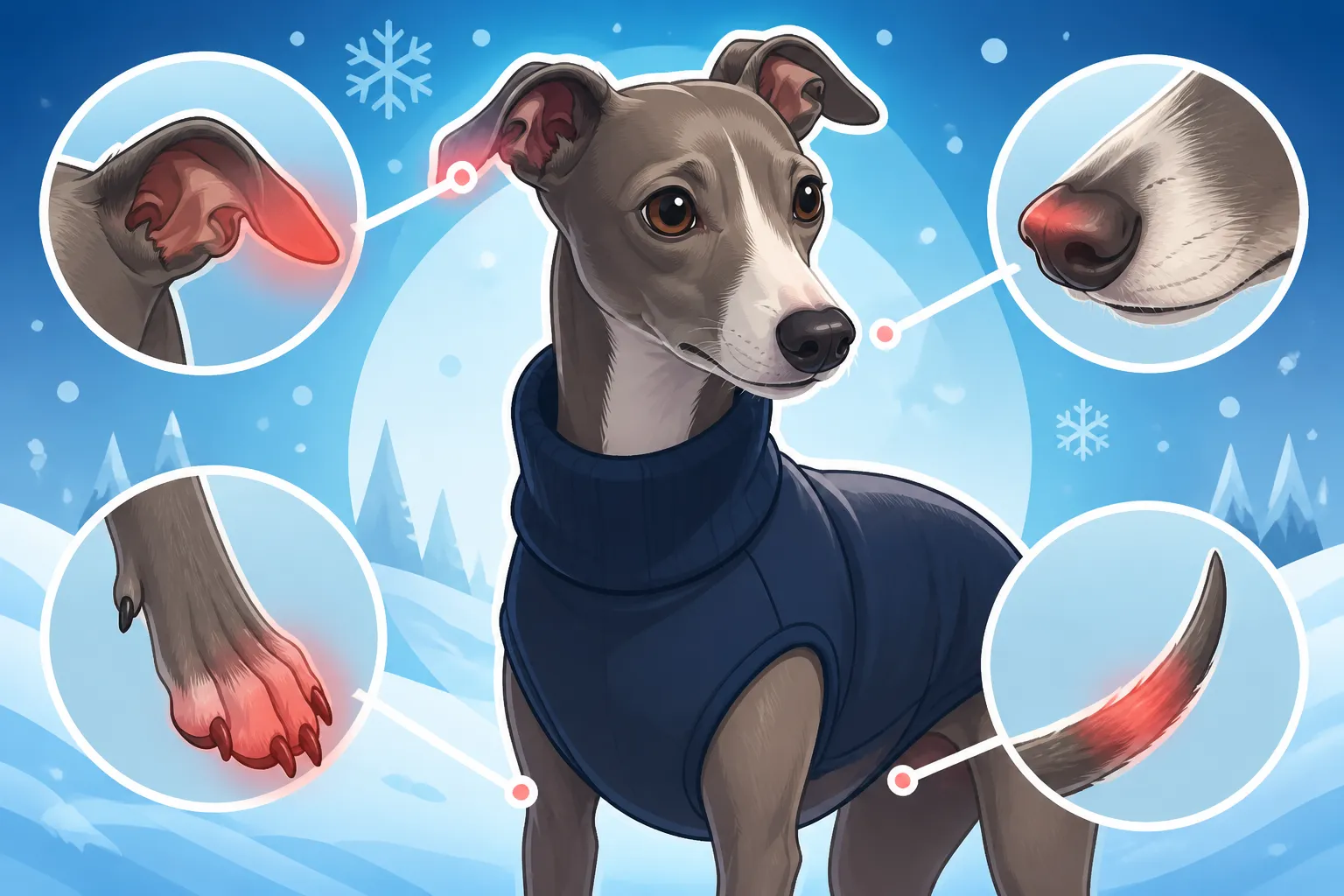
Due to their unique physiology, certain areas on an Italian Greyhound's body are alarmingly prone to frostbite. These are the "danger zones" that you, as a vigilant owner, need to pay special attention to when the temperatures plummet. It’s often the extremities, the parts farthest from the warm core, that are hit first and hardest.
Delicate Ear Tips
Those beautiful, rose-shaped ears that are so characteristic of the breed are also incredibly fragile in the cold. The ear leather is thin, with very little protective fur, and the blood vessels are quite superficial. This means they cool down very quickly. A biting wind can feel like needles on those exposed tips, and if the cold persists, the tissue can freeze. You might notice the tips becoming stiff, pale, or even bluish-white. In severe cases, the tissue can die and slough off, leaving permanently damaged or missing ear tips. Preventing this often means investing in snug snoods or hats that cover the ears completely when venturing outside.
Exposed Tail
An Italian Greyhound's tail is another prime target. It's long, thin, and often carried low, meaning it can come into contact with snow or icy surfaces. Like the ear tips, it has fine fur and limited fat, making it susceptible to cold damage. If your IG is out in very cold conditions, their tail might become stiff, cold to the touch, and lose its usual flexibility. The tip, being the furthest point, is particularly vulnerable. Some owners use tailored coats that offer extra tail coverage, especially for those Iggies who love to dash around even in the snow.
Paws and Toes
Imagine walking barefoot on ice – that's essentially what your Italian Greyhound's paws are doing on freezing sidewalks or snow-covered ground. Their paw pads, while tougher than other skin, are still delicate, and the skin between the toes is very thin. Poor circulation to the extremities, as discussed, makes the toes especially vulnerable. Frostbite on the paws can range from painful cracking and blistering to severe tissue damage that can impact their ability to walk comfortably. This is why many owners swear by dog boots for winter walks. Boots not only protect from frostbite but also from harsh road salts and chemicals. Remember, when considering if When an Italian Greyhound Needs Boots in Snow, it's almost always a "yes" if there's any ice or freezing temperatures.
Scrotum in Male Dogs
This is an area often overlooked but extremely sensitive in male Italian Greyhounds. The scrotum is typically hairless or very sparsely furred, making it highly exposed to cold, especially if the dog is squatting to relieve himself in snow or icy conditions. The delicate tissue can quickly become chilled, leading to discomfort and potentially frostbite. Specialized winter coats designed for male dogs often have a longer cut to offer some protection to this area, but it's something to be particularly mindful of during potty breaks in extreme cold.
Recognizing the Signs of Frostbite in Your Italian Greyhound
Catching frostbite early can make a significant difference in your Italian Greyhound's recovery. Unfortunately, the early signs can be subtle, and it's easy to mistake them for just being cold. As a discerning IG owner, learning to identify these indicators is crucial for their well-being. It's not always obvious, especially if your dog is stoic about discomfort.
Initial Stages: Frostnip and Superficial Frostbite
In the very early stages, sometimes called "frostnip," the affected area might look pale or grayish. It will feel unusually cold and firm to the touch. Your Italian Greyhound might lift a paw repeatedly, shake their head, or hold their tail stiffly. They might seem uncomfortable or restless. The skin might also appear waxy or even slightly bluish. This is your warning sign! At this point, the damage is usually superficial and often reversible with prompt warming. However, it's important not to rub the area, as this can cause further tissue damage. Instead, slow, gentle warming is key.
Advanced Stages: Deep Frostbite
If the cold exposure continues, the damage becomes more severe. The affected skin will appear even paler, possibly white, gray, or dark bluish-purple. It will be very cold and hard, almost frozen solid. There might be swelling, and blisters filled with clear or bloody fluid could form. These blisters often indicate significant tissue damage. As the area thaws, it can become incredibly painful for your dog. Over the next few days, the tissue may turn black and leathery, indicating necrosis (tissue death). This is a severe medical emergency, and immediate veterinary attention is required. The chart below can help you distinguish between the two.
| Symptom / Stage | Frostnip (Mild Frostbite) | Deep Frostbite (Severe) |
|---|---|---|
| Skin Appearance | Pale, grayish, waxy, slightly bluish | White, gray, dark blue-purple, black, leathery |
| Skin Texture | Cold, firm, numb | Very cold, hard, frozen solid |
| Pain Level | Mild discomfort, tingling, restless | Intense pain upon thawing, numb when frozen |
| Blistering | Rare or small, clear blisters | Common, large, clear or bloody blisters |
| Long-term | Full recovery usually | Tissue death, permanent damage, amputation possible |
| Urgency | Warm immediately, monitor | Immediate Veterinary Emergency |
Preventing Frostbite: Practical Tips and Essential Gear
The best way to deal with frostbite is to prevent it from happening in the first place. For Italian Greyhounds, this means being proactive and understanding their needs when the temperature drops. A little preparation goes a long way in ensuring your delicate companion stays safe and warm.
Limiting Outdoor Exposure in Extreme Cold
This is perhaps the most fundamental rule. When the wind chill is biting, or temperatures drop below freezing, outdoor time for an Italian Greyhound should be severely limited. Short, quick potty breaks are acceptable, but long walks or extended play sessions are not. Even a few minutes can be enough for sensitive areas to start chilling. Instead, embrace indoor exercise and play. Zoomies in the living room are a great way for an IG to burn off energy when it's too cold outside. On those truly frigid days, understand that How Long an Italian Greyhound Lasts Outdoors at Twenty Degrees is not long at all, perhaps only a few minutes.
Essential Winter Apparel: Coats, Sweaters, and Boots
Clothing isn't just a fashion statement for Italian Greyhounds; it's a necessity for survival in cold climates. A good quality, well-fitting winter coat is paramount. Look for insulated, waterproof options that cover their back, chest, and ideally, extend over their belly. Many brands found on sites like Chewy or Amazon offer excellent selections tailored for slender sighthound builds. Layering is also a smart strategy: a soft sweater underneath a heavy coat can provide extra warmth.
Dog boots are equally crucial for paw protection. They shield against icy surfaces, snow, road salt, and prevent direct contact that can lead to frostbite. It might take some training for your IG to get used to them, but it’s worth the effort. Make sure the boots fit securely so they don't slip off easily while walking. You'll find a wide array of options to fit even the daintiest Italian Greyhound paws on Amazon. Don't forget a snood or a hat for those precious ears! For more on layers, check out How Many Layers an Italian Greyhound Needs Below Freezing.
Indoor Warmth and Comfort
Your home environment is just as important as outdoor protection. Italian Greyhounds thrive in warmth, and a drafty house can quickly make them uncomfortable, even indoors. Provide plenty of soft, warm bedding. Orthopedic beds with raised sides for burrowing, or even heated beds, can be a godsend for these heat-seeking missiles. Make sure their favorite sleeping spots aren't near cold windows or exterior doors where drafts can sneak in. Blankets are also non-negotiable – Iggies love to burrow and make little blanket forts. Sometimes, even inside, you might find yourself wondering When an Italian Greyhound Needs a Sweater Indoors. The answer is often "most of the time" if your house isn't kept quite warm!
Paw Care and Monitoring
Even with boots, regular paw checks are vital. Before and after walks, inspect your Italian Greyhound's paw pads and between their toes for any signs of redness, cracking, or tenderness. A good quality paw balm can help protect and moisturize their pads, preventing them from drying out and cracking in cold, dry air. Products are readily available on sites like Chewy. Always wipe their paws after coming inside to remove any salt or chemicals that could cause irritation or further chill. Be especially diligent after Walking an Italian Greyhound in Snow or on salted sidewalks.
Disclaimer
This article is for general informational purposes only and does not constitute professional advice. Laws, prices and regulations vary by location and change over time. Consult a qualified professional for guidance on your specific situation.