How Much an Italian Greyhound Weighs
It’s a common moment for Italian Greyhound owners, isn’t it? You mention your beloved companion's weight, and someone inevitably gasps, "He's so tiny! Is he eating enough?" This guide is here to cut through the confusion and help you understand what a healthy weight truly looks like for our wonderfully delicate, yet surprisingly resilient, Italian Greyhounds. We'll dive into the breed standards, how to properly assess your dog's condition, and why maintaining that ideal weight is paramount for their long-term health and happiness.
Understanding the Official Italian Greyhound Weight Standard
The world of dog breeds can sometimes feel a bit… formal, especially when you start talking about "standards." For Italian Greyhounds, the breed standard is essentially the blueprint of what an ideal IG should look and act like, as defined by kennel clubs. This includes everything from their ear set to their tail carriage, and yes, even their weight. But here's the kicker: the weight recommendation isn't always a hard-and-fast number.
The Breed Standard's Guidance on Weight
When you look at the official Italian Greyhound breed standard, you'll often find a suggested weight range, or sometimes even just a general description of their build. For instance, the standard might state something like, "weight not to exceed 14 pounds." This isn't because a 15-pound Italian Greyhound is inherently unhealthy, but because the breed is meant to be delicate, fine-boned, and elegant. The emphasis is on maintaining that refined appearance and agile movement that defines the breed.
Think of it like this: an Italian Greyhound is a sighthound in miniature. They were bred for speed and grace, even if only in a contained courtyard for chasing small game or serving as a noble companion. Their structure supports this. A heavier dog, even if only by a few pounds, would lose that signature lightness and athletic ability. Their fine bone structure isn't designed to carry excess weight, which could put undue stress on their joints and overall frame. This delicate build is also why issues like A Broken Leg Is the Emergency Every Italian Greyhound Owner Fears are such a concern; maintaining a lean, healthy weight helps reduce some, though not all, of that risk.
Why Weight is Secondary to Overall Proportion
This is where many new Italian Greyhound owners get tripped up. They fixate on the number on the scale, when in reality, the overall proportion and condition of your dog are far more important. A taller Italian Greyhound might weigh more than a shorter one, yet both could be perfectly healthy and in excellent condition if their weight is proportionate to their height and bone structure.
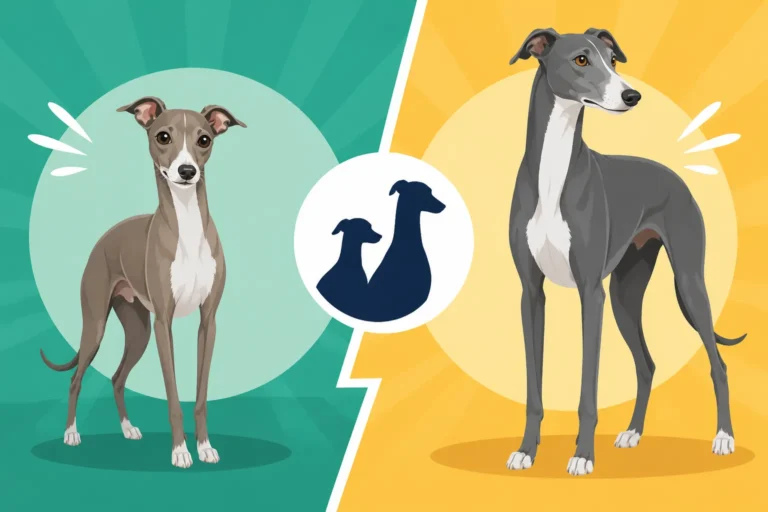
Imagine two Italian Greyhounds. One stands at 13 inches tall and weighs 10 pounds. The other stands at 15 inches tall and also weighs 10 pounds. The shorter dog might look robust and well-muscled, perhaps even a touch heavy, while the taller dog might appear almost skeletal, with ribs too prominent and a sunken abdomen. The scale reading is the same, but their body condition is vastly different. The breed standard emphasizes a balanced, elegant physique. This means they should appear refined and graceful, not bulky or excessively fragile. A good judge, and a good owner, will always assess the whole picture: height, length, bone substance, and then how the weight sits on that frame.
Typical Weight Ranges for Adult Italian Greyhounds
So, if the exact number isn't everything, what are we aiming for? Understanding the typical healthy weight range provides a great starting point, allowing for the individual variations that make each of our Italian Greyhounds unique.
The General Guideline for a Healthy Adult IG
Generally speaking, an adult Italian Greyhound in healthy condition typically falls somewhere in the range of 7 to 14 pounds. Now, that's quite a spectrum, isn't it? This range accounts for natural differences in height and bone structure. A smaller, finer-boned Italian Greyhound might be perfectly healthy and well-conditioned at 8 or 9 pounds, while a larger, more substantial one could carry 13 or 14 pounds with ease and still look lean and athletic.
It's about finding that "sweet spot" for your individual dog. Their metabolism plays a huge role here, too. Some IGs are naturally little furnaces, burning through calories with remarkable efficiency, while others might be a bit more prone to putting on weight if their diet isn't carefully managed. Muscle mass also contributes; a very active Italian Greyhound might weigh more due to well-developed musculature, even if they appear incredibly lean. When considering How Much an Italian Greyhound Eats in a Month, remember that their individual metabolism is a key factor.
Differences Between Male and Female Italian Greyhounds
Just like in many other breeds, you'll often notice some subtle, and sometimes not-so-subtle, differences between male and female Italian Greyhounds. These differences can certainly extend to their weight. Typically, male Italian Greyhounds tend to be slightly larger and heavier than females. They might have a bit more bone substance and muscle, leading them to fall on the higher end of that 7-14 pound spectrum.
Female Italian Greyhounds, on the other hand, often present a more delicate and refined appearance. They might be a bit smaller in height and often weigh a pound or two less than their male counterparts. However, these are general trends, not strict rules. You'll certainly find a petite male and a more robust female, and both can be perfectly within the healthy range for their build. It’s all about appreciating the individual while keeping the overall breed standard of elegance in mind.
Factors Influencing Individual Weight
Beyond sex and genetics, several other factors can significantly influence where an Italian Greyhound falls within that healthy weight range. It’s a dynamic balance, not a static number.
First, genetics from their lineage can play an enormous role. If both parents are on the smaller, finer-boned side, chances are their puppies will also mature into smaller adults. Conversely, if your Italian Greyhound comes from a line known for more substantial IGs, they might naturally carry a bit more weight while still being perfectly lean and fit. This is why looking at the parents and grandparents, if possible, can give you a good clue about your puppy's potential adult size.
Second, activity level is a huge factor. An Italian Greyhound who gets regular walks, has plenty of space for zoomies in a secure yard, or perhaps even participates in activities like lure coursing, will naturally have more lean muscle mass than one who spends most of their days lounging on the sofa. More muscle means a higher weight without necessarily meaning "fat." Conversely, a very sedentary IG might be prone to gaining weight if their food intake isn't adjusted accordingly. Finally, the quality and quantity of their diet are paramount. Feeding a high-quality food in appropriate portions is essential. Even with a good diet, too many treats or table scraps can quickly lead to unwanted pounds on such a small frame. Remember, even a small amount of extra food can make a big difference for a tiny Italian Greyhound.
How to Assess if Your Italian Greyhound is at a Healthy Weight
Since a number on a scale doesn't tell the whole story, learning how to properly assess your Italian Greyhound's body condition is a vital skill. It’s not just about looking at them; it’s about feeling their body, understanding their unique structure, and recognizing the subtle cues.
The Rib Test: Feeling for Condition
This is arguably the most important assessment you can do at home. The "rib test" helps you determine if your Italian Greyhound has the ideal amount of fat covering their ribs. For an Italian Greyhound, who naturally carries Seventeen Percent Body Fat, you should be able to easily feel their ribs with slight pressure, almost like feeling the knuckles on the back of your hand when your palm is flat. You shouldn't see every single rib visibly protruding like washboard abs, but you also shouldn't have to press hard to locate them.
Here's how to do it: gently run your hands along your Italian Greyhound's sides, just behind their shoulders. You should be able to count the individual ribs without much effort, but they should feel like they have a thin, smooth layer of skin and muscle over them, not bare bone. If you can see every rib clearly and they feel sharp, your dog might be too thin. If you have to press firmly to even locate the ribs, and they feel cushioned, your dog is likely carrying too much weight. This regular check is a cornerstone of How to Feel an Italian Greyhound's Ribs.
Visual Cues: Tuck-Up and Waistline
Beyond the ribs, visual cues are incredibly helpful in assessing an Italian Greyhound's condition. These dogs are sighthounds, and their body shape is a hallmark of the breed. From above, your Italian Greyhound should have a distinct, hourglass shape, with a clear waistline narrowing significantly behind the rib cage. This is often referred to as a "tuck-up" or "waist."
When you view your Italian Greyhound from the side, their abdomen should rise sharply from the bottom of the rib cage to the groin, creating that signature deep tuck-up. This isn't just for aesthetics; it's part of their athletic build, allowing for freedom of movement when running. If your Italian Greyhound's waistline is straight or bulges out from above, or if their tuck-up is shallow or non-existent from the side, these are strong indicators they might be overweight. Conversely, an exaggerated tuck-up that looks almost hollow, combined with very prominent hip bones and backbone, can signal they are underweight.
Consulting Your Veterinarian
While your at-home assessments are valuable, there's no substitute for regular veterinary check-ups. Your vet has a trained eye and the experience to accurately assess your Italian Greyhound's body condition, especially since Italian Greyhounds can look surprisingly thin even when they are perfectly healthy. Vets use a Body Condition Score (BCS) system, which is a standardized method to evaluate an animal's fat reserves. They'll also consider your Italian Greyhound's age, activity level, and any underlying health conditions.
It's particularly helpful if your veterinarian has experience with sighthounds. These breeds have unique physiologies, including less body fat and different anesthetic requirements, and a vet familiar with them will have a better understanding of what a healthy Italian Greyhound truly looks like. Don't be shy about asking your vet if they have specific experience with sighthounds; it can make a big difference in the quality of care your Italian Greyhound receives. Why an Italian Greyhound's Vet Should Know Sighthounds also covers why this expertise is so important.
The Dangers of Being Underweight or Overweight
It's easy to dismiss a few extra pounds or a slightly thin appearance, especially when our Italian Greyhounds are so good at melting our hearts. However, for a breed as specifically built as the Italian Greyhound, deviations from their ideal healthy weight can pose significant health risks.
Risks of Being Underweight
While many Italian Greyhounds look slender, there's a fine line between healthy lean and genuinely underweight. An underweight Italian Greyhound is at a higher risk for several serious issues. Firstly, their already delicate bones become even more vulnerable to fractures. With less muscle and fat padding, any impact or fall could have more severe consequences. Why an Italian Greyhound's Leg Bones Break So Easily highlights how prone they are to these injuries, and being underweight only exacerbates the risk.
Beyond fractures, an underweight Italian Greyhound may have a compromised immune system, making them more susceptible to illness and less able to recover quickly. Their lack of insulating body fat also means they struggle significantly more with temperature regulation, getting cold much faster and potentially being at risk for hypothermia in cooler environments. This is a crucial point, as Why an Italian Greyhound Cannot Hold Its Own Heat explains. They may also exhibit low energy, poor coat quality, and a general lack of vitality. It's important to differentiate between a naturally very slender, healthy Italian Greyhound and one who is genuinely struggling to maintain condition. If you have concerns, a vet visit is always the best course of action.
Risks of Being Overweight
Just as being too thin can be dangerous, being even slightly overweight can wreak havoc on an Italian Greyhound's health. For a breed designed for lightness and agility, every extra pound puts disproportionate stress on their delicate skeletal structure and joints. This can lead to or worsen conditions like arthritis, even in relatively young dogs. Imagine having to carry a backpack filled with bricks all day – that's what a few extra pounds feel like to a small dog like an Italian Greyhound.
Furthermore, excess weight significantly impacts their cardiovascular system, leading to heart strain and increasing the risk of heart disease. It can also predispose them to metabolic disorders like diabetes. Another often overlooked risk is related to anesthesia. Italian Greyhounds have unique physiological responses to sedatives and anesthetics due to their low body fat. An overweight Italian Greyhound can have further complications during procedures, as discussed in Why Anesthesia Is Handled Differently in an Italian Greyhound. Even seemingly minor weight gain can drastically reduce their quality of life, making them less enthusiastic about play and exercise. Addressing weight issues early, as detailed in Getting Weight Off an Overweight Italian Greyhound, is crucial for their well-being.
Understanding the "Fragile" Perception vs. Healthy Lean
It’s true that Italian Greyhounds have a reputation for being fragile, and let's be honest, those broken leg stories don't help. However, there's a crucial distinction between being "fragile" and being "lean and delicate." A healthy Italian Greyhound, one at their ideal weight and condition, is not inherently fragile. They are built for speed and agility, possessing surprisingly strong muscles relative to their fine bones. Their lean build is part of their natural athleticism.
The problem arises when their weight deviates significantly from this ideal. An underweight Italian Greyhound loses that protective muscle mass and fat, making them more susceptible to injury. An overweight Italian Greyhound puts undue stress on a skeletal system not designed to carry extra bulk. So, while they might look dainty, a well-conditioned Italian Greyhound is actually quite robust within the context of their breed. They're not glass ornaments, but they do require a keen eye from their owners to ensure they stay in peak physical condition. It's about respecting their unique structure and not mistaking natural slenderness for inherent weakness.
Managing Your Italian Greyhound's Weight for Optimal Health
Once you understand what a healthy weight looks like for your Italian Greyhound, the next step is actively managing it. This involves a consistent approach to diet, exercise, and regular monitoring.
Tailoring Nutrition to Their Needs
Italian Greyhounds, despite their small size, have surprisingly specific nutritional needs. They are active little dogs, even if their bursts of energy are short-lived, and require high-quality food to fuel their lean muscle mass. When choosing a kibble, look for formulas designed for small breeds or active dogs, with quality protein as the first ingredient. Many owners find that reputable brands available on platforms like Chewy offer excellent options that meet these requirements.
Portion control is absolutely key. Unlike larger, more robust breeds that might tolerate a bit of free-feeding, Italian Greyhounds can easily gain weight with even a small caloric excess. Follow the feeding guidelines on your dog food bag, but always adjust based on your dog's individual activity level and body condition. If you notice them getting a bit heavier, slightly reduce their portions or cut back on treats. If they're too thin, a small increase might be necessary. Some owners opt for wet food or even a carefully balanced raw diet, but always consult your vet before making significant dietary changes, especially for a sensitive breed like the Italian Greyhound. Whether an Italian Greyhound Needs Small Breed Kibble goes deeper into kibble choices.
The Role of Exercise in Weight Management
Exercise is, of course, a critical component of weight management for any dog, and Italian Greyhounds are no exception. While they aren't marathon runners, they thrive on short bursts of intense activity and regular, moderate walks. Daily walks, even just 20-30 minutes, help maintain muscle tone and burn calories. More importantly, it keeps their minds stimulated and prevents boredom-related behaviors.
The "zoomies" – those sudden, explosive bursts of running around the house or yard – are a classic Italian Greyhound trait and excellent exercise! Just make sure the environment is safe and free of hazards to prevent injuries. Remember, due to their delicate bone structure, it's wise to caution against excessive or high-impact activities, especially when they are young. Their growth plates are still hardening, and over-exertion can lead to long-term problems. You might be interested in How Much Exercise an Italian Greyhound Needs for more insights on balancing their activity levels. Also, be mindful of The Age an Italian Greyhound's Bones Finish Hardening to avoid strenuous activity too early.
Regular Monitoring and Adjustments
Consistent monitoring is the secret weapon in maintaining your Italian Greyhound's ideal weight. I recommend weighing your dog weekly or bi-weekly at home using a reliable pet scale. You can find scales that accommodate small dogs on sites like Chewy, making it easy to track changes. Keep a simple log of their weight to spot any trends early.
Beyond the scale, continue to perform your "rib test" and visual body condition assessments regularly. Changes in body condition can sometimes be more telling than the scale alone. If you notice any significant weight gain or loss that can't be explained by a change in diet or exercise, or if you're concerned about their overall health, it's always time for a chat with your veterinarian. They can rule out any underlying medical conditions and help you fine-tune your Italian Greyhound's feeding and exercise plan to ensure they stay happy, healthy, and at their perfect weight for many years to come.
Healthy Weight Checklist
To help you keep track of your Italian Greyhound's condition, here's a quick reference table. Remember, these are general guidelines, and your vet is always your best resource for personalized advice.
| Characteristic | Healthy Italian Greyhound | Underweight Italian Greyhound | Overweight Italian Greyhound |
|---|---|---|---|
| Ribs | Easily felt with slight pressure, thin muscle/skin cover | Very prominent, easily seen and felt, sharp to touch | Hard to feel, covered by significant fat, feels cushioned |
| Waistline | Clearly defined hourglass shape from above | Exaggerated tuck-up, pinched waist, almost hollow | Little to no waist definition, appears more cylindrical |
| Tuck-Up | Deep, significant upward curve from chest to hindquarters | Extremely high, almost gaunt | Flat or minimal tuck-up, saggy or bulging abdomen |
| Muscle Tone | Firm and visible, especially in hindquarters | Lacking, musculature appears undeveloped | Soft, jiggly, little definition |
| Energy Level | Active, playful, agile, bursts of zoomies | Lethargic, weak, easily tired | Slower, easily winded, less eager to play |
| Coat/Skin | Smooth, sleek, healthy sheen | Dull, sometimes flaky or dry due to poor nutrition | Can be dull, sometimes with areas of fat accumulation |
Disclaimer
This article is for general informational purposes only and does not constitute professional advice. Laws, prices and regulations vary by location and change over time. Consult a qualified professional for guidance on your specific situation.