Whether the Italian Greyhound Is the Oldest Toy Breed
A graceful little dog in a Renaissance portrait can look like proof that the Italian Greyhound is the oldest toy breed, but appearance and age are not quite the same thing. The answer depends on what “oldest” means: ancient small dogs, a recognizable type, or a formally established modern breed. This guide separates those ideas and explains what the evidence can—and cannot—show.
What “oldest toy breed” actually means
Toy breed is a modern category, not an ancient label
“Toy breed” is a way of grouping small companion dogs, not a precise historical designation that has been used consistently for thousands of years. Different kennel organizations developed their own breed groups and standards much later than the dogs themselves. An ancient text or image may show a small dog, but it will not necessarily call that dog a toy breed—or identify it as a modern breed by today’s standards.
That distinction matters because a dog can have a long history as a small companion without being the oldest member of a modern toy group. The Italian Greyhound’s elegant proportions, fine coat, and long association with human households make it an appealing candidate. But those features alone do not establish a definitive first-place ranking.
It also helps to separate three questions: How long have small dogs existed? How long has a recognizable Italian Greyhound-like type existed? And when did people begin breeding and recording the modern Italian Greyhound as a distinct breed? Those questions can have different answers. For more background on the breed’s classification, see Why the Italian Greyhound Is in the Toy Group.
“Oldest” can refer to different kinds of evidence
Breed histories draw on different evidence, and each kind has limits. Archaeological remains can show that dogs of a certain size and shape lived in a particular place and period. Artwork can show how people represented dogs, while written accounts may describe their roles or appearance. Pedigrees and kennel records are more useful for tracing modern breed development, but they generally cover a much shorter period than the history of dogs in art or archaeology.
Those forms of evidence do not always connect neatly. A small, slender dog in an ancient image may resemble an Italian Greyhound, but resemblance is not proof that it belonged to the same breed. A skeleton may reveal size and some physical traits, but it cannot establish the dog’s name, purpose, or exact ancestry. And a written reference to a “greyhound” may describe a type of fast, graceful dog rather than the modern Italian Greyhound specifically.
So “oldest” is a difficult title to award. It is safer to ask what the evidence supports in each period than to treat a breed’s origin as one fixed date. The broader timeline is explored in How Old the Italian Greyhound Breed Is.
How far back the Italian Greyhound’s story reaches
Ancient small dogs are not automatically Italian Greyhounds
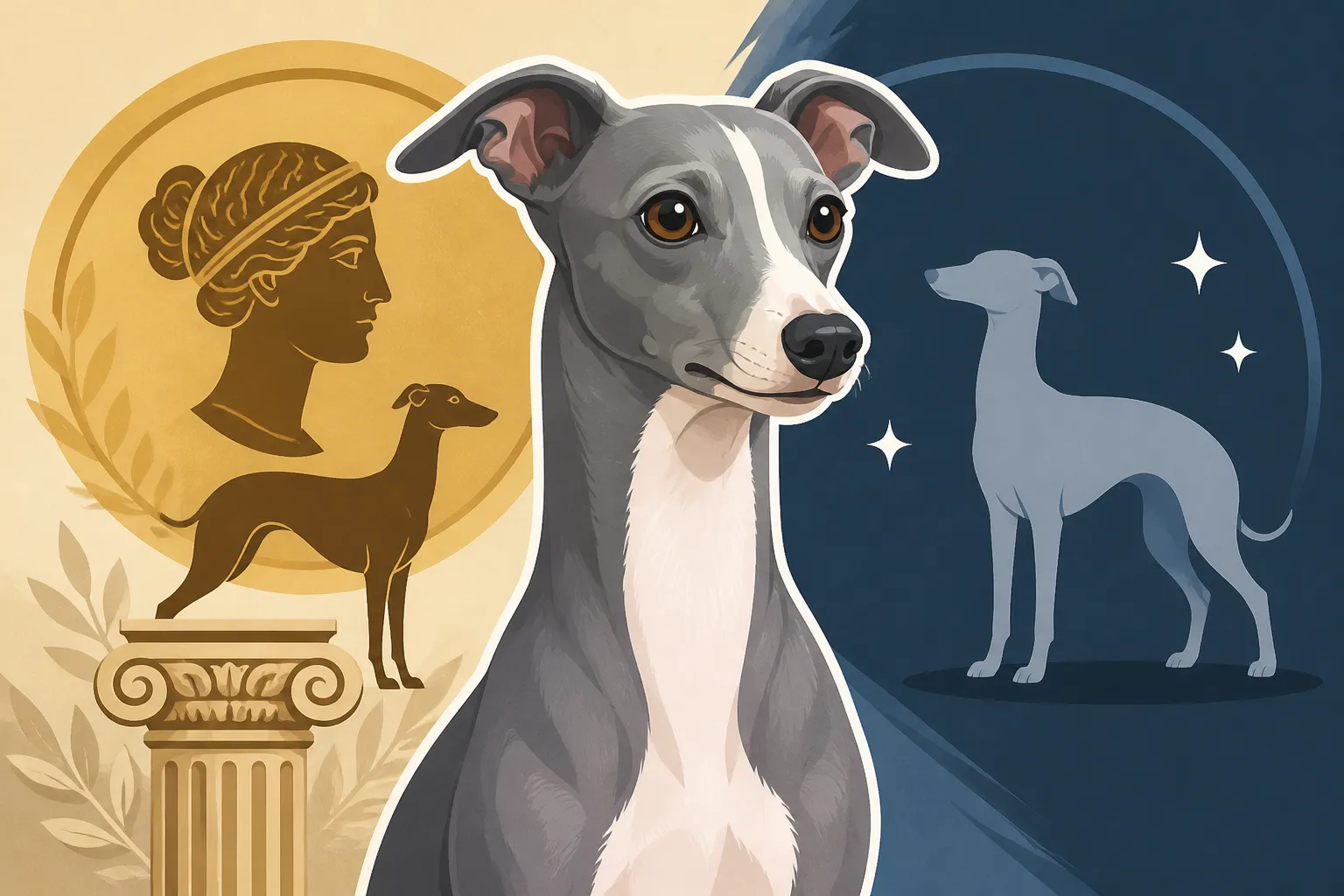
Small, delicate-looking dogs appear in ancient art and have been found in archaeological contexts across different regions. Some are often compared with modern Italian Greyhounds because they have a slim build, long legs, or a narrow head. That comparison can be useful as a visual clue, but it cannot establish an unbroken line from an ancient dog to the present-day breed.
The challenge is that artists sometimes stylized animals, and the same general body type can develop in different populations over time. A small dog with a fine frame might have been bred for companionship, hunting small game, or another role. Without a clear chain of records or strong genetic evidence linking that dog to today’s Italian Greyhound, the resemblance remains suggestive rather than conclusive.
Claims that the breed goes back to ancient Egypt are especially tempting because Egypt is associated with images of slender dogs. Yet a dog that looks similar in a tomb image is not necessarily an Italian Greyhound in the modern sense. The topic is examined more closely in Whether the Italian Greyhound Really Dates to Ancient Egypt and Whether Italian Greyhounds Appear in Egyptian Tombs.
Art and artifacts show a long association, not a precise birth date
The Italian Greyhound is strongly associated with European art and the households of the wealthy, particularly in later historical periods. Paintings and sculptures can show that small, elegant dogs were valued companions and that a dog of this general type became familiar to artists and owners. That is meaningful evidence of cultural presence, but it does not tell us exactly when the breed first emerged.
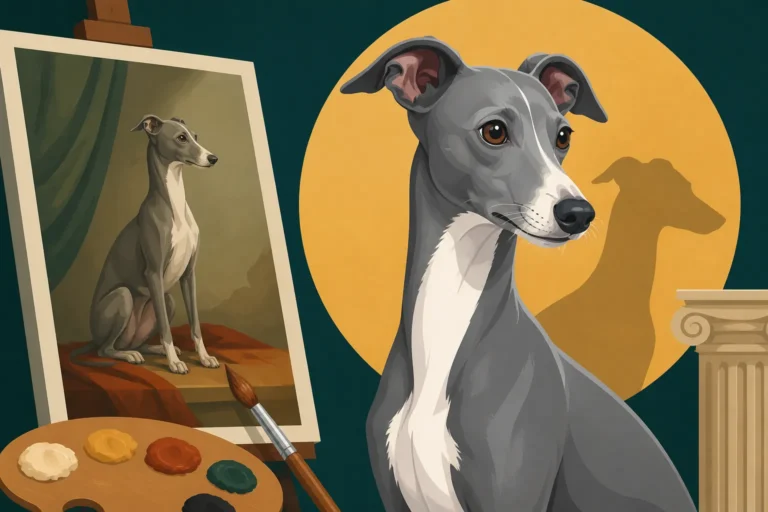
A portrait can also reflect the taste of its time. Artists may emphasize a dog’s refinement or status, and owners may have favored certain sizes or shapes. Over generations, those preferences can influence breeding. This means that the dog depicted in an old painting might be an ancestor or relative of the modern breed without being identical to it.
Physical remains offer a different kind of clue. Researchers can compare the size and shape of excavated dog bones with those of living breeds, but bones do not provide a full breed identity. To understand what remains can—and cannot—tell us, see What Excavated Skeletons Say About the Italian Greyhound. The broader history is also covered in Where the Italian Greyhound Comes From.
How the Italian Greyhound compares with other toy breeds
Several breeds have credible claims to a very old history
The Italian Greyhound is not the only small companion breed with a long and complicated past. Breeds such as the Maltese, Pekingese, and Chihuahua are also linked to historical records, art, or regional traditions. The evidence differs from breed to breed: some have long associations with particular cultures or social roles, while others have histories that are difficult to trace cleanly through older descriptions and images.
Comparing them is tricky because historians may be comparing unlike things. One breed’s claim may rest on written records, another’s on archaeological remains, and another’s on a strong resemblance to dogs in ancient artwork. A breed may have an old type but a more recent standardized form. That makes a simple ranking—first, second, third—less reliable than a careful account of what is known.
There is also a difference between a breed’s ancestors and the breed as we recognize it today. Many modern breeds took shape through selective breeding, changing fashions, and organized breed standards. A small dog may have been present for centuries before breeders began maintaining records under a consistent name and appearance.
Breed standards make modern identities easier to define
A modern breed standard gives breeders and judges a shared description of the dog’s expected size, proportions, coat, and movement. This helps define a breed as it is recognized today, but it does not prove that the same standardized dog existed in ancient times. In other words, a breed’s modern definition can be relatively recent even when its general type has a much longer history.
The Italian Greyhound’s slim, athletic body can invite assumptions that it is simply a miniature version of a larger sighthound. Its history and classification are more specific than that. Modern breed identity is shaped by consistent selection and recognition, not just by whether an old image looks familiar. For a related comparison, see Which Came First, the Italian Greyhound or the Whippet.
Genetics can help researchers study relationships among dogs, but it does not usually turn a complex breed history into a neat “oldest” verdict. Genetic similarity can indicate shared ancestry or related populations; it does not by itself establish the first appearance of a named breed. Which Breeds Are Genetically Closest to the Italian Greyhound offers more context on that distinction.
| Question | What it can tell us | What it cannot prove by itself |
|---|---|---|
| Do ancient images show small, slender dogs? | Small companion dogs were represented in art | That every similar-looking dog was an Italian Greyhound |
| Have small dog remains been excavated? | Dogs of a certain size and build lived in a place and period | A modern breed name or uninterrupted pedigree |
| Do written records mention similar dogs? | People described or valued a type of dog | That the description matches today’s breed standard |
| Do modern standards define the breed? | The expected appearance of the recognized breed | That the same standardized form existed in antiquity |
| Can genetic comparisons show relationships? | Some patterns of relatedness among dog populations | A definitive oldest-to-youngest ranking |
So, is the Italian Greyhound the oldest toy breed?
The fairest answer is that the title is not proven
The Italian Greyhound has a long and fascinating history as a small companion dog, and its ancestors or close relatives may reach far back into the past. But the evidence does not establish it as the single oldest toy breed beyond reasonable doubt. That conclusion would require a clear definition of “toy breed,” plus evidence that connects ancient dogs to the modern breed more reliably than the evidence available for competing breeds.
That does not make the breed’s history less remarkable. It simply means the strongest claim is a measured one: Italian Greyhound-like dogs have been valued for companionship over a long period, while the exact timeline and continuity of the modern breed remain difficult to pin down. “One of the oldest” is more defensible than declaring it the oldest.
If you encounter a confident claim that the Italian Greyhound is the oldest toy breed, check what the claim counts as proof. Does it mean an ancient image of a similar-looking dog, a documented companion type, or an established breed with a recorded lineage? Those are not interchangeable standards. Why the Italian Greyhound Was Bred Purely for Company adds useful context about the breed’s role as a companion.
The history does not change what the dog needs today
An ancient-looking silhouette can make the Italian Greyhound seem almost delicate in a purely historical sense, but living with one is practical, everyday work. These dogs are affectionate, athletic, and often happiest close to their people. Their fine coat and lean build also mean owners commonly pay attention to warmth, comfortable bedding, and safe movement around furniture. The historical debate does not determine any individual dog’s health or temperament.
For someone preparing to welcome an Italian Greyhound, it is more useful to focus on a thoughtful home setup than on a disputed ranking. Check that the dog has a warm place to rest, plan how it will get on and off furniture safely, and ask a veterinarian about routine care. Chewy can be one option for browsing everyday supplies such as beds or coats; the right choice still depends on your dog’s measurements, preferences, and home.
A retailer is not a substitute for breed-specific advice, especially when a question concerns health, injury prevention, or nutrition. If you are comparing supplies through Chewy, use product details as a starting point, then confirm fit and suitability with your veterinarian or breeder. For a historical overview with more emphasis on the dog’s place in people’s homes, The Italian Greyhound as a Bed Warmer is a related read.
It is also worth keeping the breed’s long history in perspective: a dog can have deep cultural roots without being unchanged across every century. Breeding choices, local populations, and formal standards all shape what a modern Italian Greyhound looks like. Chewy may help with the practical shopping side of dog ownership, but the breed’s origins are best understood through careful comparison of the historical evidence rather than a single catchy label.
Disclaimer
This article is for general informational purposes only and does not constitute professional advice. Laws, prices and regulations vary by location and change over time. Consult a qualified professional for guidance on your specific situation.