Where Frederick the Great Buried His Italian Greyhound
Frederick the Great wanted to rest at Sanssouci, beside the Italian Greyhounds he loved. But his own burial took a very different route: political upheaval kept his remains away from Potsdam for generations. Here’s where his dogs were laid to rest, where Frederick was first buried, and how the two stories eventually came together.
The short answer: Frederick’s dogs were buried at Sanssouci
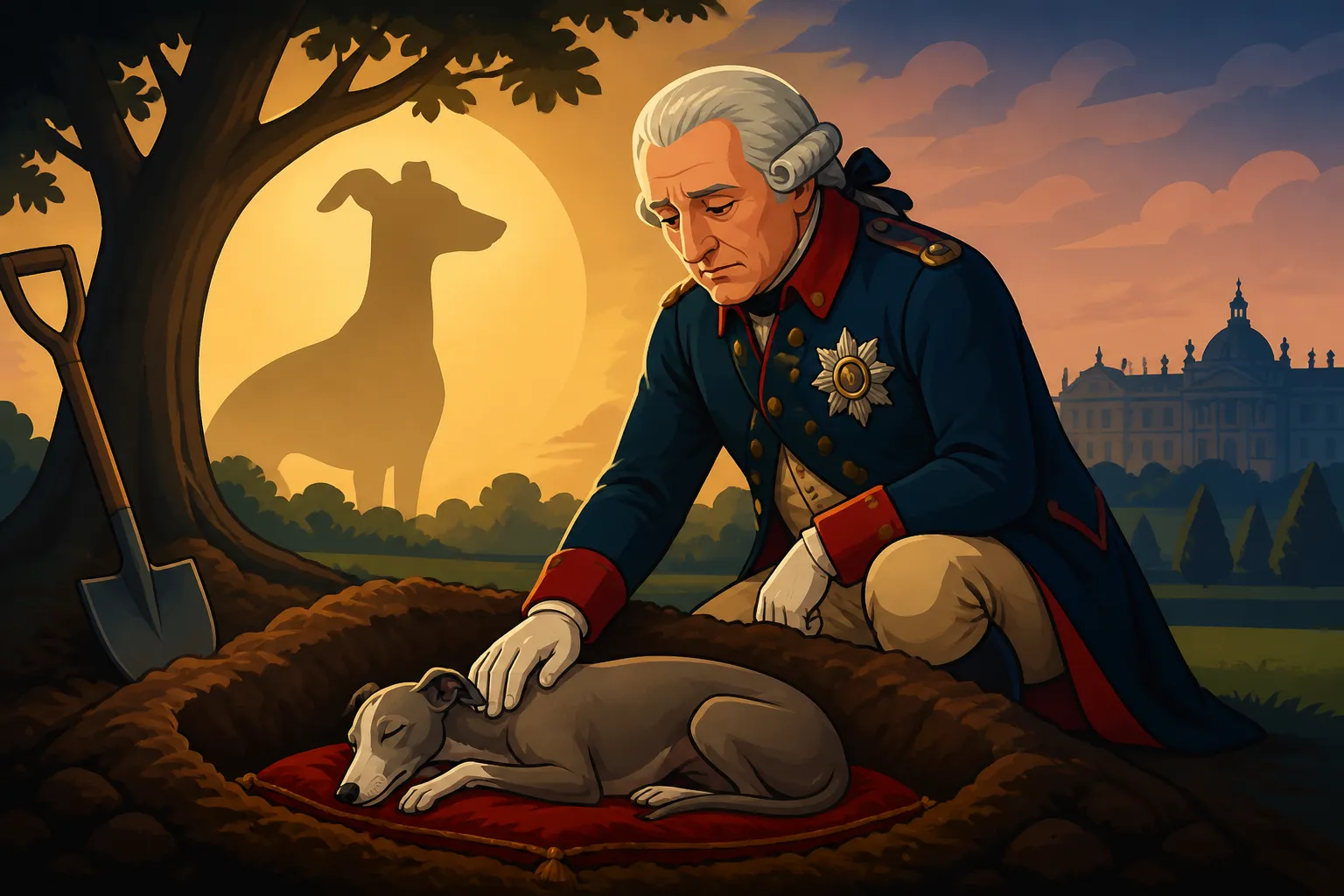
Frederick the Great’s Italian Greyhounds were buried on the grounds of Sanssouci Palace in Potsdam, in what is now Germany. The dogs’ graves are near the palace and the terraces of its vineyard. Frederick had wanted his own grave to be beside them, reflecting how much these small companions mattered to him.
That wish was not carried out when he died in 1786. Instead, Frederick was buried at the Garrison Church in Potsdam. His coffin was moved more than once during the upheavals of the following centuries, and he was not finally laid to rest at Sanssouci until 1991. His tomb there is beside the graves of his dogs.
Why Sanssouci mattered to him
Sanssouci was more than a palace. Frederick used the estate as a retreat from court life, and its terraces, gardens, and paths were part of the private world he built around himself. The name is often translated as “without a care,” a fitting idea for a place where he could step away from the pressures of rule.
His dogs belonged to that personal world. Italian Greyhounds were companions in the palace and on the estate, not just decorative accessories. Accounts of Frederick’s life often describe his attachment to them, and the dog graves at Sanssouci give that affection a physical place in the landscape.
The burial site is therefore not best understood as a grand public monument to a breed. It is a small, personal detail within a royal estate: a ruler’s desire to be close to the animals he had loved. Readers interested in the broader history of the breed can also explore Which Royals Kept Italian Greyhounds and Frederick the Great Asked to Be Buried Beside His Italian Greyhound.
Where to look on the estate
The graves are associated with the vineyard terrace near Sanssouci Palace, where Frederick’s own tomb now lies. The setting is significant: it connects the dogs’ resting place with the palace and gardens that formed the backdrop to his life.
Visitors should keep in mind that the site is a historic landscape, not a modern pet cemetery with a single, clearly marked burial plot for every dog. Frederick kept several Italian Greyhounds over the years, and accounts do not always present their names or individual grave locations consistently. It is safer to speak of the dogs’ graves at Sanssouci as a group than to assume every story identifies a particular grave with certainty.
| Question | What the historical record supports |
|---|---|
| Where were Frederick’s Italian Greyhounds buried? | On the grounds of Sanssouci in Potsdam, near the palace and vineyard terraces |
| Where was Frederick first buried? | At the Garrison Church in Potsdam after his death in 1786 |
| When was he moved to Sanssouci? | His remains were reinterred there in 1991 |
| Is every dog’s grave clearly identified? | No; accounts can differ about names and individual details |
| What did Frederick want? | To be buried beside his beloved dogs |
The dogs behind the story
Frederick’s affection for Italian Greyhounds is part of the reason this burial story has endured. These were not anonymous dogs in his household. They were companions associated with his private life, and their closeness to the king helped make them memorable in accounts of his reign.
Biche and the problem of identifying one “favorite”
Biche is the name most often attached to stories about Frederick and his Italian Greyhounds. The name appears in popular retellings as that of a beloved dog, sometimes described as his favorite. But there is a difference between a widely repeated anecdote and a complete, firmly documented record of every dog’s life and burial.
Frederick had more than one Italian Greyhound, and references to his dogs span different periods. That makes it easy for later accounts to blur individual stories together. A confident claim that one named dog was buried in one exact spot should be treated carefully unless the account explains how it establishes that detail.
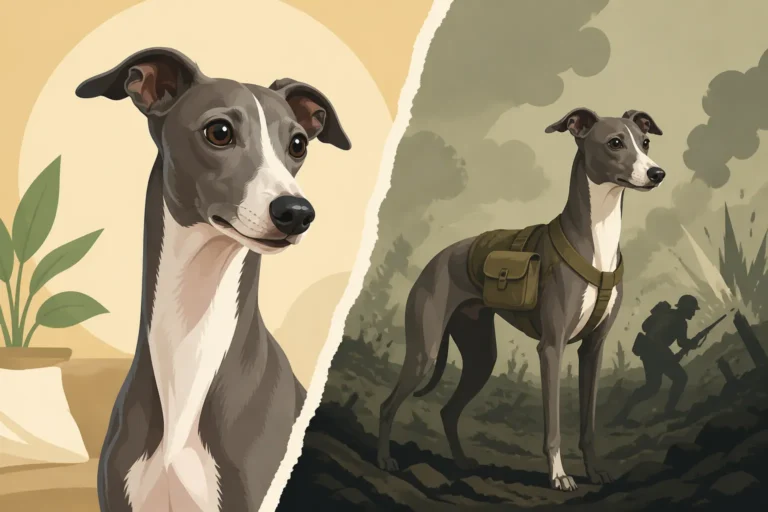
The central point is clearer than every individual name: Frederick loved his Italian Greyhounds and wanted his final resting place to be near them. For a closer look at the stories attached to his companion, see Who Frederick the Great's Italian Greyhound Was. The broader royal connection is covered in The Italian Greyhound Frederick the Great Took to War.
Why Italian Greyhounds suited palace life
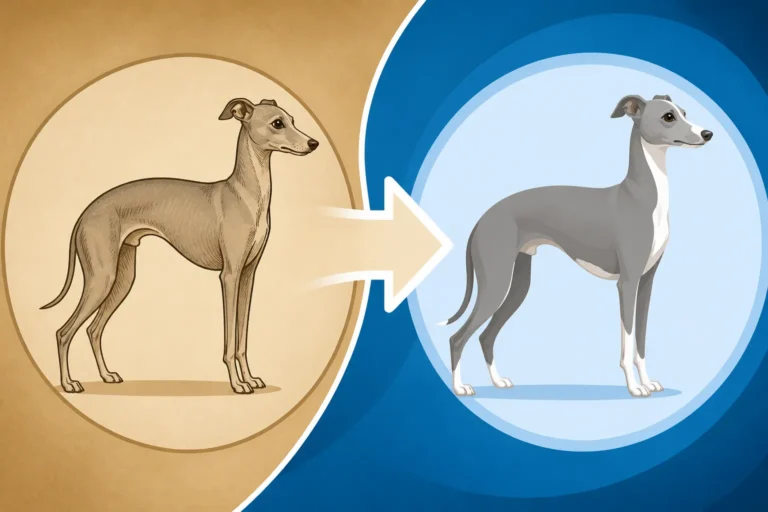
Italian Greyhounds are small, graceful sighthounds. Their long-limbed build and sensitive nature can make them seem delicate, but the breed’s history is not simply a story of ornamental lapdogs. They have long been valued as close companions, and their compact size made them well suited to life in a household where a dog might spend much of its time indoors and close to its people.
For Frederick, companionship seems to have mattered more than any practical working role. His dogs were part of his everyday life, and their presence at Sanssouci helps explain why he wanted to be buried among them. This relationship also connects with the breed’s older reputation as a companion dog, explored in Why the Italian Greyhound Was Bred Purely for Company and The Italian Greyhound as a Bed Warmer.
Modern Italian Greyhound owners may recognize a familiar pattern in the historical image: an affectionate dog that wants to stay close, seeks warmth, and becomes deeply attached to its household. The details of life at an eighteenth-century court were very different from life in a modern home, of course, but the appeal of a devoted companion is easy to understand.
Why Frederick was not buried beside them at first
Frederick’s burial did not happen according to his personal wish. His remains were first placed elsewhere, and the political history of Germany repeatedly interrupted plans to move them. That distinction matters: his dogs were buried at Sanssouci, but Frederick himself did not join them immediately.
His first burial at the Garrison Church
Frederick died in 1786. Rather than being buried at Sanssouci beside his dogs, he was interred at the Garrison Church in Potsdam. This was his original burial place, despite the wish associated with Sanssouci.
It is tempting to tell the story as if the king had simply chosen a grave beside his dogs and was laid there at once. The actual sequence is more complicated. The location of his body was shaped by royal decisions and later by events that made moving it difficult or unsafe. His intended final resting place and his first burial place were not the same.
That difference also explains why accounts of the story can sound contradictory. One may say Frederick was buried at Sanssouci, while another says he was buried at the Garrison Church. Both can refer to different points in the long history of his remains.
A coffin displaced by war and political change
During the Second World War, Frederick’s coffin was moved away from Potsdam for safekeeping. It was later kept at Hohenzollern Castle in Baden-Württemberg. The move meant that the king’s remains were far from Sanssouci for decades, even though his connection to Potsdam remained central to his story.
The end of the war did not immediately settle the matter. Germany’s division and the political realities of the postwar period made a return to Sanssouci a question of timing and circumstance. For generations, visitors could see the palace and the dogs’ graves without Frederick lying beside them.
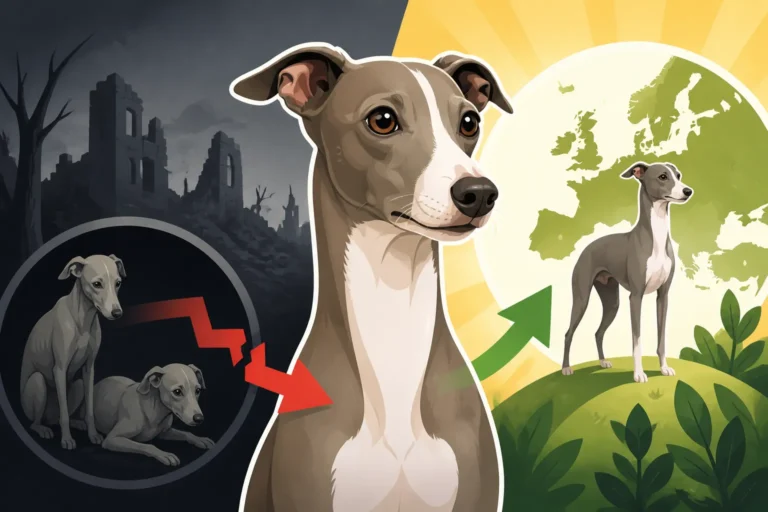
In 1991, after German reunification, Frederick’s remains were returned to Sanssouci and buried on the vineyard terrace. That reinterment finally brought his grave near the resting places of his dogs, in keeping with the wish long associated with him. The story is also part of a broader history of the breed’s changing fortunes in Europe, discussed in The Italian Greyhound Nearly Died Out Twice in Europe and How American Breeders Saved the Italian Greyhound.
What the burial story means today
The story is memorable because it joins royal history to something intimate and widely understood: the bond between a person and a much-loved dog. Yet it is worth separating the emotional meaning of the story from details that cannot always be pinned down with equal certainty.
A personal wish, not just a royal anecdote
Frederick’s wish to be buried beside his dogs suggests that he saw them as genuine companions. Their graves were part of the place where he felt at home, rather than merely a footnote to his public life as king. The image of a ruler wanting to lie beside his dogs has lasted because it makes a distant historical figure feel more recognizable.
It also offers a glimpse of how people have valued companion animals across very different eras. The setting was royal and the circumstances were unusual, but the underlying feeling is familiar: a beloved pet can become part of a person’s idea of home, memory, and family.
For Italian Greyhound enthusiasts, the story adds a human detail to the breed’s long association with households and courts. It should not be taken as proof that every royal dog had the same role or treatment, but it does show how strongly the breed could attach itself to an individual person’s life.
What visitors should remember
If you visit Sanssouci, the most accurate way to describe the site is that Frederick’s Italian Greyhounds were buried on the estate near the palace, and Frederick’s remains were eventually laid beside them. Avoid assuming that every grave can be matched to a named dog, or that every retelling agrees on the same details about Biche and the other dogs.
The history also shows why it helps to distinguish three things: where the dogs were buried, where Frederick was first buried, and where he was finally reinterred. The dogs’ resting place was at Sanssouci; Frederick’s first grave was at the Garrison Church; and his final resting place became Sanssouci after his remains were returned in 1991.
That sequence gives the story its shape. Frederick did not join his dogs at once, but his final burial brought his wish and the landscape he loved together. The result is a rare historical site where the story of a king and the story of his Italian Greyhounds remain closely linked.
Disclaimer
This article is for general informational purposes only and does not constitute professional advice. Laws, prices and regulations vary by location and change over time. Consult a qualified professional for guidance on your specific situation.