What the Italian Greyhound’s Tuck Up Should Be
An Italian Greyhound’s abdomen should rise gracefully from the deeper chest toward a slim waist, but that elegant outline can make it surprisingly hard to tell whether a dog is simply well-built or too thin. This guide explains what a healthy tuck up looks like, how to assess it alongside the rest of the body, and when a change deserves a veterinary check.
What a tuck up looks like on an Italian Greyhound
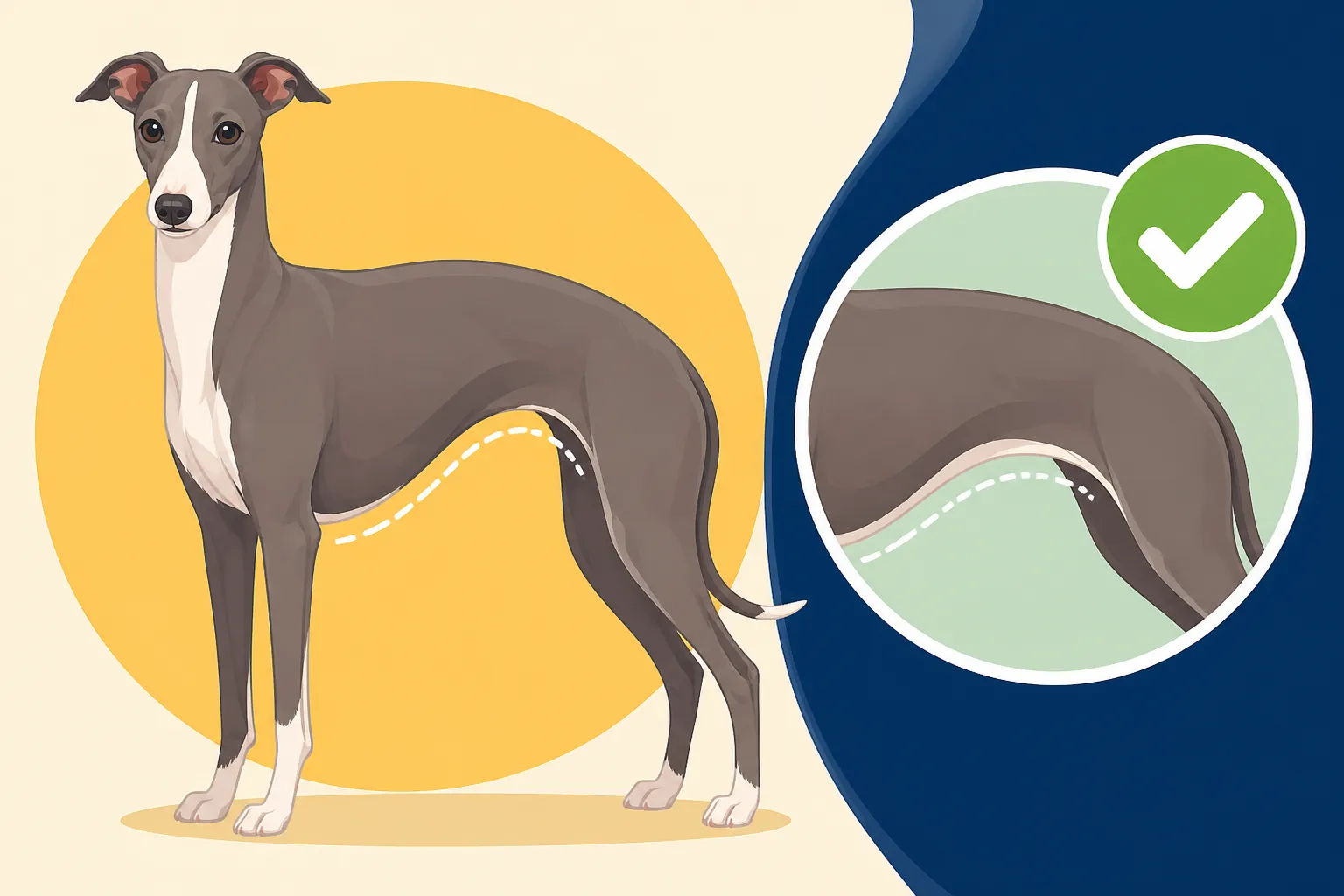
The side profile should rise from chest to waist
The tuck up is the upward sweep of the underside of the body behind the rib cage. Viewed from the side, an Italian Greyhound generally has a deep chest and a noticeably narrower abdomen that rises toward the flank. The transition should look smooth and balanced, not sharply pinched or abruptly hollow.
This outline is part of the breed’s characteristic, fine-boned silhouette. It is not a sign that every Italian Greyhound should look gaunt. A healthy dog can have a distinct waist and a visible abdominal tuck while still having good muscle over the shoulders, back, and hindquarters. The breed’s build is easier to understand when you consider the whole outline, including What an Italian Greyhound's Topline Looks Like and the way the chest and waist relate to each other.
Try looking at your dog standing naturally on a level surface. The abdomen should slope upward behind the last ribs, while the back and hips remain supported by muscle. A dog stretching, twisting, or standing with its hind legs tucked far underneath may look more sharply waisted than usual. Take a few calm observations rather than relying on one posed snapshot.
A tucked abdomen is not the same as a hollow belly
A healthy tuck up is a shape, not a deep indentation. If the abdomen appears dramatically sunken, the spine or hip bones are becoming prominent, or the dog has lost muscle, the outline may reflect poor body condition or an underlying health issue rather than breed type. A sudden change matters more than a naturally pronounced waist that has looked the same throughout the dog’s adult life.
The coat and skin can make the body outline harder to judge. Italian Greyhounds have a short, close coat, so changes in contour may be easy to see; at the same time, their lean build can make a normal dog look alarmingly thin to someone used to a stockier breed. Compare your dog’s shape with its own previous condition and behavior rather than with a larger dog or an idealized photograph.
A correct outline also does not mean that ribs, spine, and pelvic bones should all stand out sharply. You may see the last ribs in some lighting or when the dog stretches, but the whole body needs to be assessed by both sight and touch. Whether a Correct Italian Greyhound Looks Fragile is a useful distinction to keep in mind: a fine, elegant frame can be normal without looking bony or depleted.
How to tell whether the tuck up is healthy
Assess the waist, ribs, and muscle together
Look at your Italian Greyhound from above as well as from the side. From above, the body should narrow behind the ribs and then widen gently around the hips. From the side, the abdomen should rise behind the chest. Together, those views help distinguish a defined waist from an overall lack of body mass.
Then gently feel the ribs with flat fingers. They should be easy to locate under a light covering, but they should not feel as though they are covered by no tissue at all. Check the muscles along the back and thighs too. A dog can have a prominent tuck up and still have a healthy body condition; a dog with a similar outline but sharply exposed ribs and thinning hindquarter muscles may need attention.
| What you notice | What it may indicate | What to do |
|---|---|---|
| Smooth rise behind the ribs, defined waist, and good muscle | A typical lean outline | Keep monitoring weight and condition |
| Ribs easy to feel, with a light covering and no muscle loss | Often consistent with a lean body condition | Ask your veterinarian to confirm at a routine visit |
| Ribs, spine, or hip bones sharply visible, or muscle looks reduced | Possible underweight condition or illness | Arrange a veterinary assessment |
| Abdomen looks round or hangs lower than usual | Weight gain, posture, pregnancy, or another cause may be involved | Consider the whole-body changes and seek veterinary advice if persistent |
| Tuck up changes quickly or comes with vomiting, diarrhea, low energy, or appetite changes | A possible health concern | Contact a veterinarian promptly |
The table is a guide, not a diagnosis. Body condition is assessed from several features, and the right interpretation can depend on age, muscle mass, health, and individual build. For more detail on assessing the body as a whole, see How Much of an Italian Greyhound's Ribs Should Show and What an Italian Greyhound Weighs and How to Tell If It Is Right.
Use weight as context, not as the whole answer
A scale can help you notice a trend, but a number alone does not explain what the tuck up means. Two dogs of similar weight may have different frames and muscle, and a dog can lose muscle while its weight changes only modestly. Weigh your dog consistently, such as on the same scale and at a similar time of day, and note the result alongside appetite, activity, and appearance.
If your dog’s food is delivered through Chewy or another retailer, use the feeding guide on the package only as a starting point; individual needs can differ. Measure the portion rather than estimating it by eye, and avoid making a large food change just because the abdomen looks narrow. If you are unsure, bring the food label and your weight notes to your veterinarian, who can help assess calorie needs and body condition.
It can be helpful to take occasional side and overhead photos while your dog is standing naturally. Use a similar floor, angle, and posture each time. Photos do not replace a physical exam, but they can make gradual changes easier to spot, especially when a dog’s appearance shifts with age, activity, or seasonal changes.
Why the outline can look different over time
Puppies and adults do not always have the same proportions
A puppy’s body changes as it grows, and a lanky stage can make the waist appear especially pronounced. During growth, proportions may look temporarily uneven: legs may seem long for the body, the chest may deepen, and muscle may develop at a different pace from bone. A growing puppy should be assessed over time rather than judged from one striking silhouette.
Make a habit of tracking growth with regular weights and routine veterinary visits. If a puppy’s appetite drops, growth stalls, energy changes, or the bones become increasingly prominent, contact the veterinarian instead of assuming the appearance is simply a growth phase. What Weight Range an Italian Greyhound Should Fall In can provide useful context, but a healthy range is not a substitute for examining the individual dog.
As an adult becomes older, activity and muscle condition may change. Some dogs lose muscle, while others gain weight as their exercise routine shifts. The tuck up may look softer or more pronounced depending on those changes. Changes in body shape are most useful when read alongside mobility, appetite, coat, and general energy.
Posture, coat, meals, and health can affect what you see
A full meal can make the abdomen look less tucked for a while. So can a relaxed posture, a curved back, or an unusual stance. Conversely, stretching, turning, or bracing the hind legs can make the waist look narrower. If the shape seems different, let the dog stand comfortably and observe from more than one angle before drawing conclusions.
A change in the tuck up can also be one clue among many when a dog is unwell. Weight loss, reduced appetite, diarrhea, vomiting, increased thirst, or unusual tiredness deserve attention whether or not the waist looks dramatic. Do not wait for a dog to look visibly thin before asking for help; some medical problems are easier to address when they are noticed early.
For owners concerned about excess weight, focus on the dog’s full body condition rather than trying to create a more pronounced tuck. Avoid restricting food without guidance, particularly for a puppy, senior, or dog with a medical condition. If you order food through Chewy, keep the product and portion details available when discussing a diet adjustment with your veterinarian. Signs an Italian Greyhound Is Underweight and Signs an Italian Greyhound Is Overweight can help you think through the broader picture without treating one body feature as the answer.
When to ask a veterinarian about the tuck up
A stable shape is different from a new change
If your Italian Greyhound has always had a clear waist, eats normally, maintains a steady weight, and has good energy, that shape may simply be part of the dog’s build. At a wellness visit, ask your veterinarian to assess body condition and show you how to feel the ribs and check muscle. Having a professional baseline can make future changes less stressful to interpret.
A sudden or ongoing change deserves more attention. Arrange a veterinary appointment if the waist becomes noticeably more sunken, ribs or hips become more prominent, the dog loses weight, or muscle appears to shrink. The same applies if the abdomen becomes enlarged or rounded, especially when paired with discomfort, weakness, retching, or difficulty breathing. Severe or rapidly worsening symptoms call for prompt veterinary care.
Before the appointment, write down when you first noticed the change, any weight measurements, appetite or stool changes, and recent food or activity adjustments. If you use Chewy for regular food orders, note the exact food and how much you serve; that simple information can help make a nutrition discussion more specific. Don’t change several things at once unless your veterinarian recommends it, because doing so can make it harder to identify what is affecting your dog.
The tuck up is best understood as one part of an Italian Greyhound’s overall shape: a smooth abdominal rise behind the chest, considered alongside ribs, muscle, weight, and health. A pronounced waist can be normal, but it should not be used alone to judge whether a dog is underweight or healthy. If your dog’s outline changes or you are unsure what you are feeling, a veterinarian can assess body condition and help you set a useful baseline.
Disclaimer
This article is for general informational purposes only and does not constitute professional advice. Laws, prices and regulations vary by location and change over time. Consult a qualified professional for guidance on your specific situation.