How Fine an Italian Greyhound’s Skin Should Be
An Italian Greyhound’s skin should feel fine, smooth, and supple—not rough or unusually thick. That delicate texture is part of the breed’s elegant look, but it can make small scrapes more noticeable and routine handling feel worrying. This guide explains what normal skin looks like, how to tell ordinary fineness from a problem, and how to protect your dog without overdoing it.
What fine skin means in an Italian Greyhound
Fine, supple skin is a breed characteristic
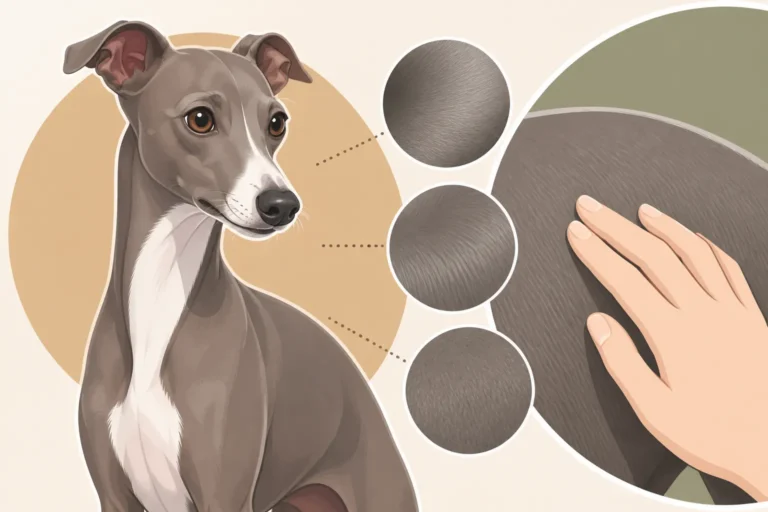
Italian Greyhound skin is expected to be fine and supple, with a short, smooth coat that lies close to the body. “Fine” describes its delicate texture; it does not mean the skin should be sore, inflamed, or constantly damaged. Nor does it mean every vein, rib, or small change in color should be treated as a health problem.
The breed’s lean build and sparse coat can make the skin easier to see and feel than it is on a heavily coated dog. When you stroke your Italian Greyhound, you may notice a close, sleek covering rather than a thick cushion of fur. That can feel surprisingly delicate if you are used to dogs with dense coats, but it is not, by itself, a sign that something is wrong.
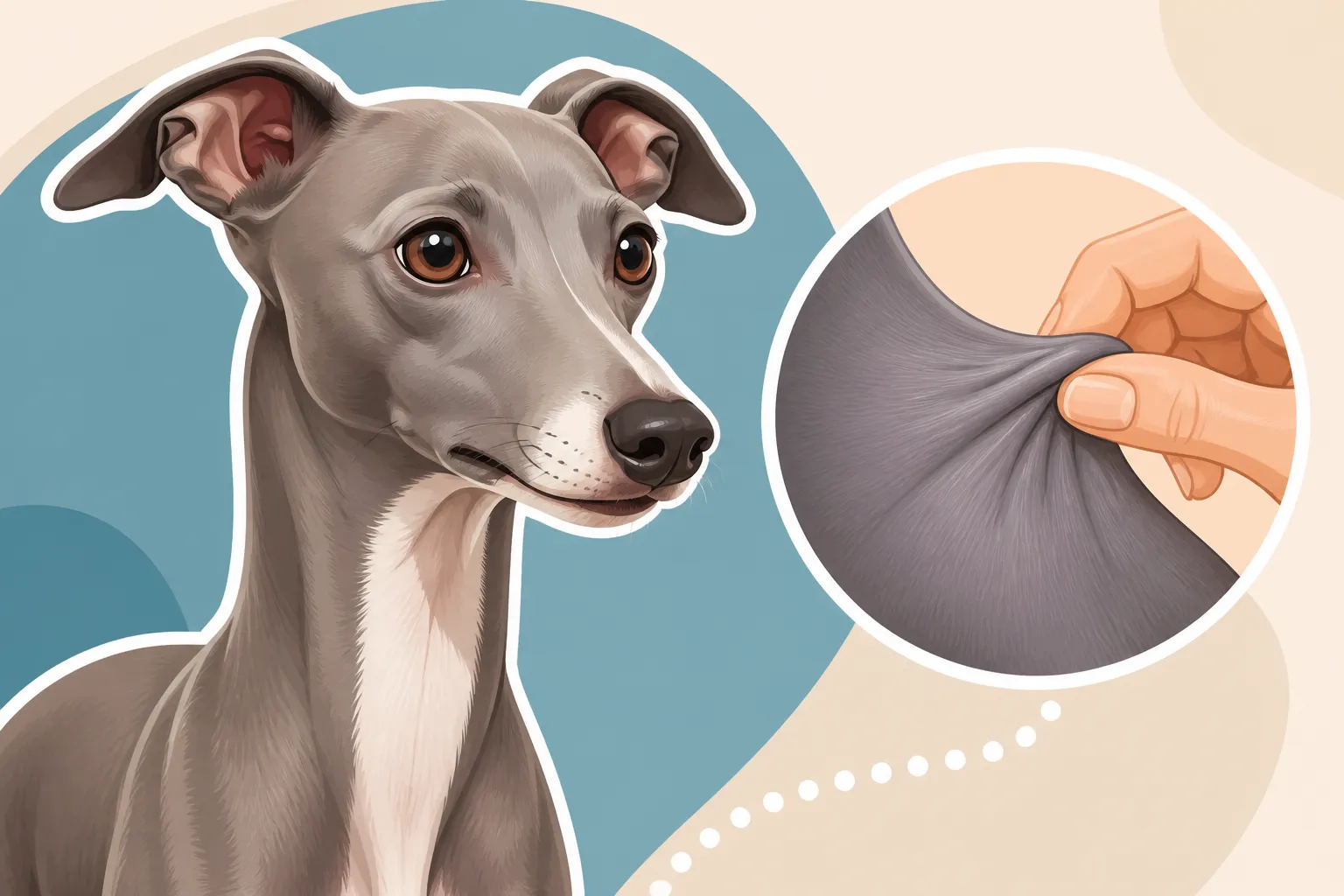
The ideal is not dry, brittle, or stretched skin. Healthy skin should move comfortably over the body and should not seem painful when gently touched. If you are unsure what is normal for your individual dog, ask your veterinarian to show you during a routine exam. A comparison with your own dog is more useful than trying to judge skin by a photograph or by another Italian Greyhound.
Fine skin does not mean every dog is fragile in the same way
Italian Greyhounds can be prone to cuts and scrapes, particularly during rough play or when they catch their skin on a sharp edge. Their short coat offers less protection from abrasion than a dense coat might. Still, skin varies from one dog to another, and a fine texture does not guarantee that a dog will be injured easily.
A playful puppy racing through shrubs, for instance, may come home with a small scratch. An adult who spends most of the day on soft bedding may rarely get one. The surroundings, activity, grooming habits, and the dog’s own health all matter. The practical takeaway is to use sensible care, not to keep your dog wrapped up or prevent all normal movement.
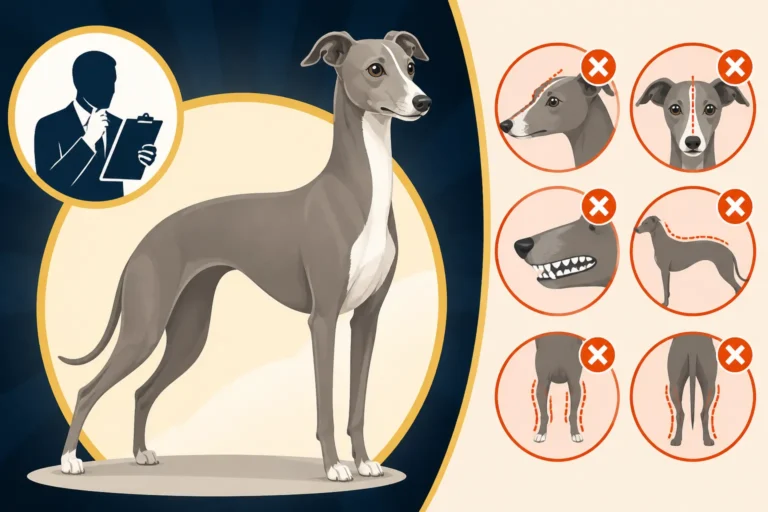
The appearance of a breed-standard coat and skin can help put those observations in context. How Fine an Italian Greyhound's Skin Should Be is one aspect of the breed’s characteristic look, alongside coat texture and body shape. A correct-looking dog can still develop skin disease or an injury, so appearance should never replace attention to new symptoms.
How to tell normal skin from a skin problem
What to check during ordinary handling
A gentle hands-on check is usually enough. While petting your dog, notice whether the skin feels smooth and comfortable, and look for changes such as a new scab, a patch of redness, swelling, a sore, or an area your dog keeps licking. You do not need to pinch, stretch, or repeatedly rub the skin to assess it.
Part the short coat in good light if you notice a change. Check common contact points such as the belly, legs, elbows, and areas where a harness or clothing rests. After a walk, look over the paws and lower legs for debris or small scrapes. If your dog wears a coat, make sure it sits comfortably and does not rub under the arms or around the neck.
A healthy dog may have small variations in skin pigment or coat density. What matters is whether a change is new, spreading, uncomfortable, or accompanied by other signs. A dog who suddenly resists being touched in one spot, scratches persistently, or develops repeated sores needs more than a visual check at home.
| What you notice | What it may mean | Sensible next step |
|---|---|---|
| Smooth skin with no discomfort or sores | Often normal for an Italian Greyhound | Continue ordinary gentle checks |
| A small, shallow scrape | Minor surface injury is possible | Keep it clean and prevent licking; contact your vet if it worsens |
| Persistent itching, redness, or a spreading rash | Irritation, allergy, parasites, or another skin condition may be involved | Arrange veterinary advice, especially if it continues |
| Hair loss with darkened, scaly, or irritated skin | A coat or skin disorder may need assessment | Ask your veterinarian to examine it |
| Deep wound, heavy bleeding, marked swelling, or significant pain | Potentially urgent injury | Seek veterinary care promptly |
When a cut or change deserves veterinary attention
A shallow scrape is different from a tear that opens, bleeds heavily, or exposes deeper tissue. If a wound is deep, gaping, painful, or difficult to keep clean, call a veterinarian rather than trying to manage it with household products. Do not use human creams or pain medication unless your veterinarian specifically directs you to do so; some ingredients are unsafe for dogs, and licking can lead to ingestion.
Also contact your vet if a spot does not heal, keeps reopening, produces discharge, smells unpleasant, or becomes increasingly red or swollen. Persistent itchiness and hair loss deserve attention too. They can have different causes, and guessing at home with multiple shampoos or supplements can make it harder to identify what is happening.
If your dog has a significant wound, limit activity and prevent licking while you arrange care. A clean, loose covering may help protect a minor injury during transport if your dog tolerates it, but avoid wrapping a limb tightly. For more on recognizing and managing this concern, see How an Italian Greyhound's Skin Tears and When an Italian Greyhound's Cut Needs Stitches.
Caring for delicate skin without overprotecting your dog
Keep grooming simple and gentle
A short coat usually calls for uncomplicated grooming. Use a soft brush or cloth if your dog enjoys it, and check the skin as you go. Frequent vigorous brushing is unnecessary and may irritate skin that is already dry or sensitive. Bathing also does not need to be frequent unless your dog gets dirty or your veterinarian recommends a specific routine.
Choose a dog-formulated shampoo suited to your dog’s needs, and rinse it thoroughly. Strong fragrance, harsh products, and repeated product changes can be irritating for some dogs. If itching or redness starts after a new shampoo, detergent, or fabric, stop using the suspected item and ask your veterinarian what to do. Avoid applying essential oils, human lotions, or medicated products without veterinary guidance.
If you are gathering basic grooming and first-aid supplies, retailers such as Chewy may carry dog shampoos and simple care items. The important part is not the store; it is checking that a product is intended for dogs and asking your veterinarian before using medicated treatments. Chewy can also be one place to look for a soft brush or a dog-safe cleanser, but a product label does not replace a vet’s advice when skin is inflamed or broken.
Reduce avoidable rubbing and rough contact
A well-fitting harness or sweater should allow comfortable movement and should not chafe. Check under the straps after walks, especially if your dog has worn a new harness or clothing for the first time. If you find redness where fabric or a strap rests, adjust the fit, take a break from the item, and see whether the skin settles. Persistent irritation is a reason to contact your veterinarian.
At home, keep sharp or rough hazards out of common play areas. Watch how dogs interact: an Italian Greyhound playing with a much larger, exuberant dog may be vulnerable to accidental scratches or collisions, even if neither dog is being aggressive. Supervise active play and give your dog a chance to rest. These precautions reduce risk without making ordinary movement seem dangerous.
In dry or cold weather, indoor heating and low humidity can leave some dogs’ skin feeling dry. Avoid trying several conditioners or oils at once. If you notice flaking, itchiness, or discomfort, ask your veterinarian whether the cause could be environmental, dietary, or medical. Advice on coat and skin care is also covered in Why an Italian Greyhound's Coat Takes Five Minutes a Week and Cuts, Scrapes and an Italian Greyhound's Paper Thin Skin.
Skin, coat color, and when to ask your veterinarian
Hair loss is not simply a consequence of fine skin
Fine skin and thin hair are not interchangeable descriptions. An Italian Greyhound has a short coat, but a new bald patch, thinning area, or change in skin surface should not automatically be dismissed as normal for the breed. Notice whether the area is itchy, scaly, darkened, inflamed, or spreading, and whether your dog is licking or rubbing it.
Some coat conditions are associated with particular color patterns, while hair loss can also have other explanations. The right response is an examination rather than a diagnosis based on color alone. Your veterinarian may ask when the change began, whether it is progressing, and whether you have changed food, bedding, laundry detergent, or grooming products.
For additional background on a color-associated condition, see Color Dilution Alopecia in a Blue Italian Greyhound and What Color Dilution Alopecia Does to an Italian Greyhound. Those topics can help you recognize why color and coat changes may be relevant, but they cannot confirm the cause of an individual dog’s hair loss.
Make a practical plan for routine checks
You do not need to inspect your Italian Greyhound’s skin obsessively. A quick look during petting, grooming, or after outdoor play is usually more helpful than repeated searching for tiny imperfections. Keep track of changes that persist or worsen: where they are, when they appeared, and whether your dog seems bothered. A clear photo taken in similar lighting can help you explain a change to your veterinarian.
If you shop for dog-care items through Chewy or another retailer, avoid treating a collection of products as a substitute for diagnosis. A gentle cleanser may be useful for routine mess, but a persistent rash, sore, or patch of hair loss needs professional assessment. Chewy may be convenient for replenishing basic supplies; the product should still fit your dog’s needs and any advice from your vet.
Most importantly, fine skin is part of the Italian Greyhound’s delicate, sleek appearance—not a reason to assume your dog is unwell. Gentle handling, sensible protection from rough surfaces and play, and prompt attention to meaningful changes strike a better balance than either ignoring injuries or worrying over every visible detail.
Disclaimer
This article is for general informational purposes only and does not constitute professional advice. Laws, prices and regulations vary by location and change over time. Consult a qualified professional for guidance on your specific situation.