How Coat Texture Is Judged on an Italian Greyhound
An Italian Greyhound’s coat can look almost effortless: short, sleek, and glossy. But in the show ring, “smooth” is more than a quick glance. Judges assess the coat’s texture, length, finish, and condition as part of the dog’s overall presentation. This guide explains what the breed standard calls for, how judges evaluate it, and what everyday care can—and cannot—change.
What the Italian Greyhound coat should feel and look like
Short, fine, smooth, and glossy
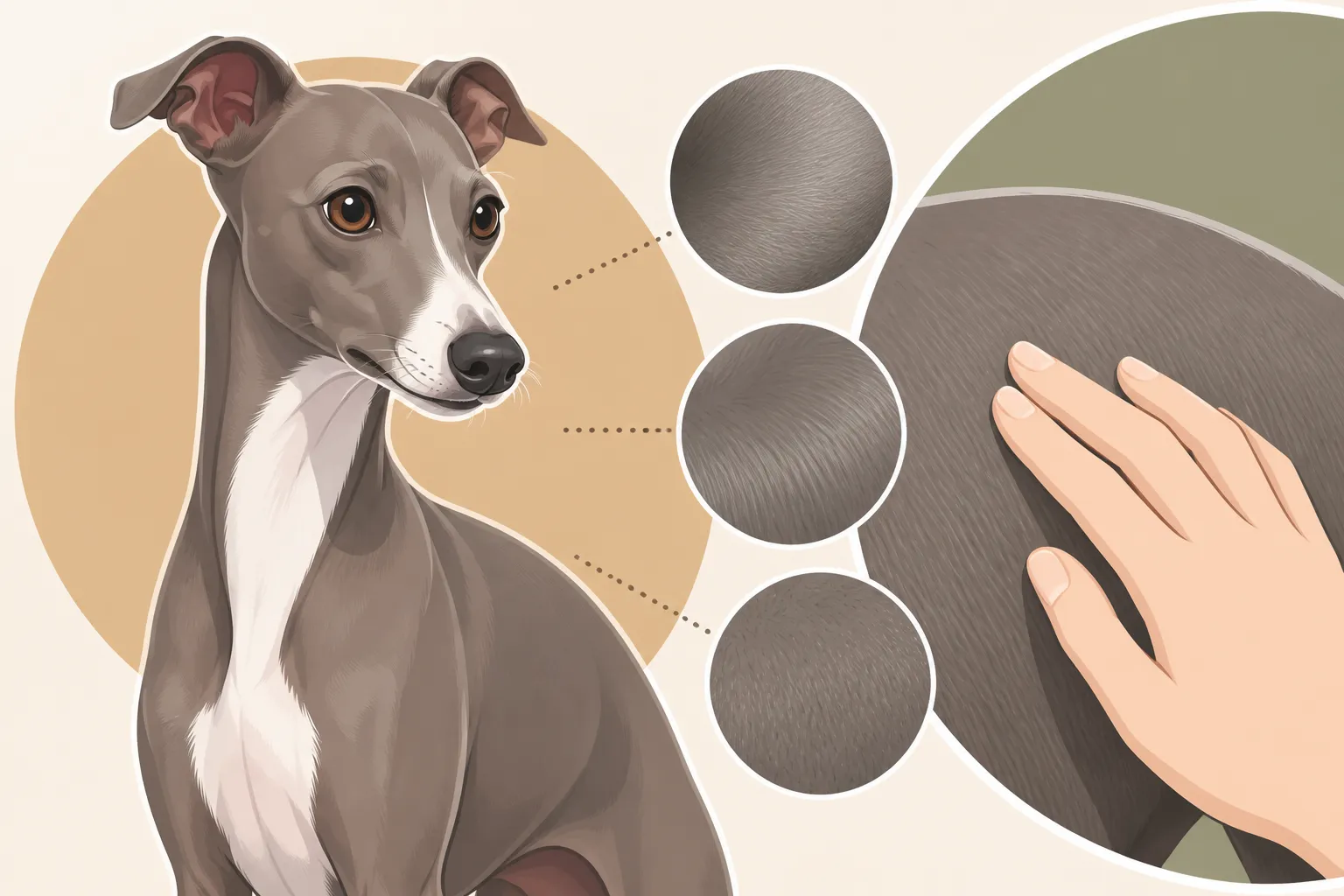
The Italian Greyhound’s coat is meant to be short, fine, smooth, and glossy, with a soft, satiny feel. Those descriptions work together. “Short” refers to the coat’s length; “fine” describes the delicate quality of the individual hairs; “smooth” means the coat lies close to the body rather than standing up or forming a rough, uneven surface. Gloss is the healthy-looking sheen that catches the light.
A correct coat should look neat without seeming artificially sculpted. When you see an Italian Greyhound move around a ring, the coat should follow the body’s outline rather than hide it. The breed’s refined shape—including its neck, chest, tuck-up, and topline—remains visible because the hair is close and unobtrusive. A coat that looks fluffy, coarse, or long enough to soften the outline is not the intended texture.
The standard’s words describe the ideal, not a promise that every individual dog will have identical hair. Texture and shine can vary slightly between dogs, and coat condition can change with age, health, season, and care. A judge considers the overall picture, rather than treating one stray hair or a temporary lack of shine as the whole evaluation.
If you are learning to assess the breed, compare coat texture with the other features that give an Italian Greyhound its characteristic appearance. What Judges Look For First in an Italian Greyhound offers useful context for seeing the dog as a whole instead of focusing on one detail in isolation.
Fine coat does not mean poor coat
People sometimes mistake a fine coat for a thin or unhealthy one. The Italian Greyhound is naturally a sleek, lightly coated dog, so its hair will not feel plush like that of a double-coated breed. Its skin is also delicate in appearance. The goal is not to create more coat or make the dog feel heavier; it is to maintain the clean, soft, close-lying coat the breed is supposed to have.
That distinction matters when you are comparing dogs. A naturally fine coat can still be healthy and glossy. By contrast, patchy hair loss, persistent irritation, scabs, or a coat that has become noticeably dull may deserve attention for reasons beyond the show standard. Those signs should not be “fixed” with cosmetic products before their cause is understood.
The skin and coat are closely connected in the judge’s overall impression. A dog with a beautifully smooth coat but obvious skin irritation is not presenting in the same condition as a comfortable, healthy-looking dog. For more on the breed’s delicate skin, see How Fine an Italian Greyhound's Skin Should Be.
How judges evaluate coat texture
What a judge can assess in the ring
Judges generally evaluate coat texture as part of examining the dog’s overall structure and condition. They may look at the coat from a distance to see whether it lies smoothly and has a healthy finish, then use their hands during the physical examination to assess its feel. The dog is not being judged as a piece of fabric: coat texture is one characteristic among many, considered alongside type, movement, proportions, and condition.
A coat that is short and close to the body helps the judge see the dog’s outline. If hair is rough, unusually long, or standing away from the body, it can affect the impression of smoothness. A lack of shine may also make the coat appear less healthy or well-conditioned. Still, lighting, recent bathing, weather, and the dog’s individual coat can influence how glossy it looks on a particular day.
A realistic example: two dogs might both have short coats, but one feels soft and satiny while the other feels dry or harsh. The first more closely matches the desired texture. Another dog may have a naturally fine coat that looks less reflective under indoor lighting, yet feel correct to the touch. Judges use their experience to consider the full presentation rather than relying on shine alone.
The coat is only one part of a breed evaluation. A judge’s decision reflects the dog’s overall quality and how well it fits the standard, not a single grooming detail. The Italian Greyhound’s distinctive movement and outline are also important; The High Stepping Gait That Marks a Correct Italian Greyhound explains another feature that contributes to the breed’s characteristic presence.
Coat texture is not coat color
Texture and color are separate features. A coat can have the correct smooth, fine feel in many different colors, and a color by itself does not tell you whether the texture is correct. Breed standards may specify which colors or markings are permitted, but that is a different question from whether the coat is short, glossy, and satiny.
This distinction is useful for owners who see a particular color and assume it must come with a certain coat quality. Color does not automatically make a coat better or worse in the ring. Likewise, a sleek coat does not determine whether a marking is acceptable under the standard being used. Which Colors an Italian Greyhound Comes In covers the color question separately.
Nor should coat color be treated as a shortcut for judging health. A dog’s appearance can raise questions, but color alone does not establish a diagnosis or predict an individual dog’s wellbeing. If you notice thinning, bald patches, or irritated skin, focus on the dog’s actual symptoms and seek veterinary guidance when needed. Whether Coat Color Predicts an Italian Greyhound's Health explores that distinction.
Coat texture, grooming, and everyday care
What grooming can improve
Basic grooming can help the coat look clean and feel comfortable. A gentle wipe-down, occasional bath when needed, and a soft towel dry can remove dirt and leave the hair lying neatly. Because the coat is short, routine care is usually simple, but “simple” does not mean using whatever shampoo happens to be nearby. A harsh or drying product can leave delicate skin uncomfortable and make the coat look dull.
If you are choosing a shampoo, look for one made for dogs and suited to sensitive skin, and ask your veterinarian if your Italian Greyhound has recurring irritation or a known skin concern. When comparing options on Chewy, read the product details carefully rather than choosing by a “shine” claim alone. A coat product should support comfort and cleanliness, not try to disguise a problem.
A soft cloth or gentle grooming mitt may be enough for routine touch-ups. Some owners browse Chewy for basic grooming supplies, but the important part is selecting something that does not scrape or irritate the skin. If your dog dislikes being handled, keep grooming brief and calm. A few comfortable minutes are more useful than turning a simple coat check into a stressful wrestling match.
Good home care can improve cleanliness and presentation, but it cannot change a dog’s natural hair type. A coarse coat does not become genetically fine because it has been conditioned, and a naturally fine coat does not need heavy oils or elaborate styling. For the breed’s low-maintenance routine, see Why an Italian Greyhound's Coat Takes Five Minutes a Week.
What grooming cannot change
Grooming cannot turn an incorrect natural texture into the ideal one. Trimming, shaving, or applying shine products may change the coat’s appearance temporarily, but those steps do not alter the underlying hair. Heavy products can even make a short coat look greasy or uneven, which is quite different from the healthy gloss the standard describes.
There is also no need to over-bathe a dog to chase a show-ring finish. Too-frequent bathing or unsuitable products may dry out the skin. A bath should be based on the dog’s needs, not a rigid schedule or the assumption that more washing always means more shine. If the coat suddenly changes, look for a cause rather than adding more grooming steps.
Before a show, sensible preparation is usually better than last-minute experimentation. Keep the dog clean, check for irritation, and avoid introducing a new product right before an event. A coat that feels comfortable and lies naturally is preferable to one weighed down by residue. If you are unsure which cleanser is gentle enough, Which Shampoo Suits an Italian Greyhound's Skin is a helpful related topic.
Common questions about judging an Italian Greyhound’s coat
Does a shiny coat always mean correct texture?
No. Shine is one part of the desired appearance, but it does not prove that the coat is fine, smooth, or satiny to the touch. A dog may have a reflective coat that feels coarse, or a correct fine coat that appears less glossy under certain lighting. Judges consider appearance and feel together.
A naturally healthy coat often has a soft sheen, but the aim is not a mirror-like finish. Too much oil or product can create a slick look that feels greasy rather than soft. If a dog’s coat seems dull all the time, check basic care and consider whether there could be an underlying health issue instead of reaching immediately for a cosmetic fix.
Is shedding a sign that the coat is wrong?
Not by itself. Italian Greyhounds have short hair, and short hairs can still shed. Shedding may be more noticeable on dark clothing or light furniture because the hairs are fine and easy to overlook until they collect. A small amount of normal shedding does not mean the coat is too coarse or that the dog is failing to meet the standard.
Pay attention to changes in pattern and skin condition. Sudden or extensive hair loss, bald areas, redness, or persistent scratching are different from ordinary shedding and should be discussed with a veterinarian. For a closer look at routine shedding, see How Much an Italian Greyhound Sheds.
How can owners describe coat condition accurately?
It helps to use the standard’s words precisely. Instead of saying only “nice coat,” notice whether it is short, fine, smooth, close-lying, glossy, and soft to the touch. If a coat feels dry, coarse, or uneven, describe that clearly too. Concrete observations make conversations with breeders, groomers, and veterinarians more useful.
| Coat feature | What to look for | What it does not mean |
|---|---|---|
| Short | Hair lies close and does not form a long fringe | The dog should be shaved |
| Fine | Individual hairs feel delicate rather than coarse | The coat must be sparse or unhealthy |
| Smooth | Coat lies evenly against the body | The dog needs styling products |
| Glossy | A natural, healthy-looking sheen | A wet or oily finish is better |
| Soft and satiny | Gentle feel when touched | Conditioner can change the dog’s natural texture |
If you are shopping for basic grooming items, Chewy can be one place to compare dog-safe options, but read labels and avoid products that promise to transform the coat. Ask a veterinarian about persistent skin or hair changes. A good routine supports the dog’s comfort; it does not need to turn coat care into a complicated project.
Disclaimer
This article is for general informational purposes only and does not constitute professional advice. Laws, prices and regulations vary by location and change over time. Consult a qualified professional for guidance on your specific situation.