Which Colors the Italian Greyhound Standard Accepts
An Italian Greyhound’s coat color can spark plenty of questions: Is blue allowed? Can a dog have white markings? Does brindle make a puppy ineligible for the show ring? The answer depends partly on which kennel club’s standard applies. This guide explains the accepted colors, the important exceptions, and why coat color alone says little about a dog’s quality or health.
Which Italian Greyhound colors are accepted
In the United States, the American Kennel Club standard gives a broad color rule: any color or combination of colors is acceptable except brindle and black-and-tan markings of the kind seen in black-and-tan breeds. That means many familiar coat colors and patterns can be accepted, rather than a short list of permitted shades.
For owners outside the United States, or anyone considering conformation shows, the relevant national or international standard matters. Some standards describe accepted colors and white markings more narrowly. It’s worth checking the rules used by the organization hosting the show instead of assuming that a color accepted in one country is accepted in another.
Commonly seen coat colors
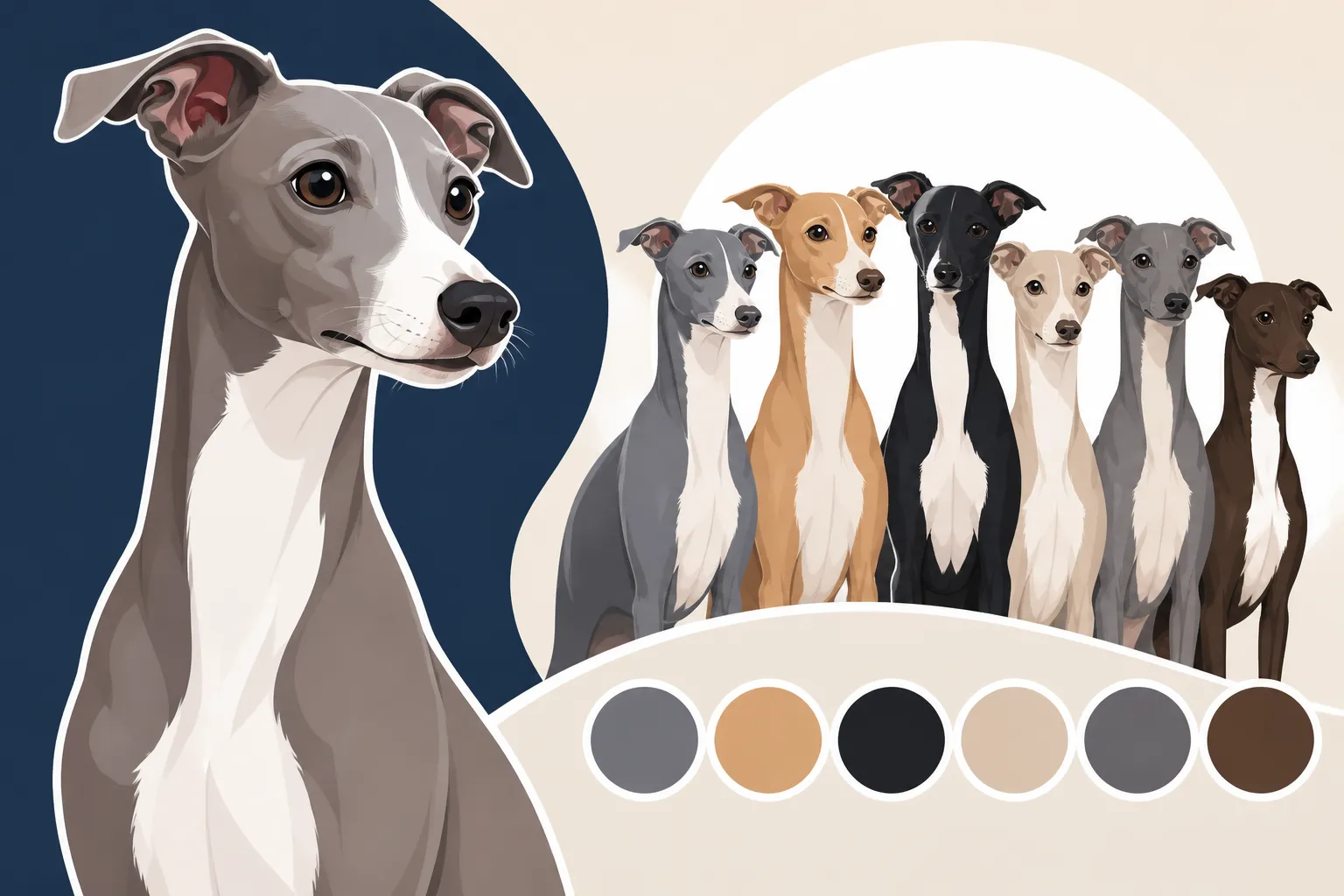
Italian Greyhounds may have coats described as black, blue, gray, red, fawn, cream, or white, along with combinations of these colors. People may also use terms such as sable, seal, or blue fawn to describe a dog’s appearance. Those everyday color labels do not always correspond neatly to official show terminology, so a breeder’s description may not tell you exactly how a judge will classify a coat.
Blue is a familiar Italian Greyhound color, not an automatically disqualifying one under the broad AKC color rule. The same is true of many pale or reddish shades. If you’re comparing the range of colors seen in the breed, Which Colors an Italian Greyhound Comes In offers a useful starting point, while Every Color an Italian Greyhound Is Allowed to Be explores the question from a standards perspective.
A puppy’s coat can also look different as it matures. The color you see when you first bring a puppy home may become lighter, darker, or more visibly patterned as the adult coat comes in. If a particular shade matters to you, ask the breeder how the puppy’s parents and close relatives changed with age. Photographs taken at different ages can be more informative than a single newborn or puppy photo.
White markings and color combinations
White markings are another source of confusion because people often hear a simple rule such as “white on the feet is fine” and apply it to every show organization. In the AKC standard, white is not listed among the excluded colors, but the exact wording and its interpretation should be checked against the applicable standard and show rules.
Some other standards set clearer limits on where white may appear. For example, FCI guidance describes white as tolerated only on the chest and feet, alongside its own description of acceptable base colors. That difference matters if a dog is being shown under a particular country’s rules. A white chest may be acceptable under one standard, while a larger white area could be assessed differently under another.
A dog’s registration paperwork, pedigree, or breeder’s preferred terminology does not replace a judge’s evaluation in the ring. If show eligibility is important, ask the breeder which registry they are referring to and confirm with the national kennel club or show organization. For a closer look at this specific issue, see Whether White Markings Are Allowed on an Italian Greyhound.
| Color or pattern | How it is generally treated under the AKC rule | What to keep in mind |
|---|---|---|
| Blue or gray | Not excluded by color alone | These are accepted color descriptions, but color does not guarantee show quality |
| Black | Not excluded by color alone | Solid black is different from a black-and-tan pattern |
| Red, fawn, or cream | Not excluded by color alone | Shades and labels can vary between breeders |
| White or a combination with white | Not named as an excluded color | Other registries may limit where white markings can appear |
| Brindle | Excluded | A striped brindle pattern is different from ordinary shading or uneven color |
| Black and tan | Excluded when it is the defined black-and-tan pattern | The restriction is about the pattern, not simply the presence of black and tan-colored hairs |
The two important color exceptions
The exceptions in the AKC standard are easy to misread if you rely on color names alone. “Brindle” describes a pattern, while “black and tan” refers to a recognizable pattern of dark color with distinct tan points. Neither phrase means that every coat with mixed shades or a small patch of another color falls into an excluded category.
If a puppy’s markings seem unusual, a clear photograph may help a breeder explain what you’re seeing, but it cannot settle show eligibility in every case. A judge assesses the dog under the relevant standard. When conformation eligibility is the concern, get an interpretation from the registry or a knowledgeable breed representative rather than relying solely on online color descriptions.
Why brindle is excluded
Brindle usually appears as darker stripes or streaks over a lighter background. The pattern may be more obvious on the body or legs, and it can be subtle enough that someone unfamiliar with coat patterns mistakes it for shading. The AKC standard specifically excludes brindle, so a dog with a true brindle pattern would not meet that color requirement for AKC conformation showing.
This restriction is about the written breed standard, not a judgment that a brindle dog is less affectionate, less athletic, or less suitable as a companion. A dog can be a much-loved family member even if its coat does not meet a particular show requirement. If you’re trying to identify a striped coat, Why Brindle Disqualifies an Italian Greyhound explains the distinction in more detail.
Also, not every darker stripe-like effect is necessarily brindle. Coat lighting, shadows in a photograph, and a puppy’s changing coat can make markings look more dramatic than they are. If the distinction matters for a show entry, ask someone familiar with the breed to assess the dog under good lighting.
What black and tan means in the standard
Black-and-tan markings generally involve a dark base coat with distinct tan points in familiar locations, such as above the eyes, on the muzzle, or on the lower legs. The standard’s wording refers to the pattern found in black-and-tan breeds. It does not mean that any Italian Greyhound with black and brown tones, or any dog with a bit of tan shading, automatically has the prohibited pattern.
That distinction can be hard to judge from a quick glance. A black coat with lighter areas may look like a black-and-tan pattern in one photograph and appear quite different in person. The placement, definition, and overall appearance of the markings matter more than a casual label.
For a focused explanation of the pattern and how it affects show eligibility, see Whether a Black and Tan Italian Greyhound Can Be Shown. When in doubt, ask for guidance from the registry or an experienced conformation judge rather than making a decision from a color name alone.
Does the standard accept a blue Italian Greyhound
Yes, blue is not among the colors excluded by the AKC standard. It is a commonly recognized coat color in the breed. But “accepted color” and “show-quality dog” are not interchangeable terms: conformation judges assess the whole dog, including structure, movement, condition, and how closely the dog fits the breed standard.
It is also useful to separate a color’s acceptability from possible health considerations. Some coat-color genes are associated with skin or coat concerns in certain dogs. That does not mean every blue Italian Greyhound will develop a problem, or that coat color alone can diagnose one. A dog’s skin condition, family history, and veterinary examination matter much more than the color label by itself.
Accepted color does not mean a health guarantee
A blue coat can be linked with color dilution alopecia, a condition that may cause hair thinning or loss in some dilute-colored dogs. Risk is not the same as certainty: many dogs with dilute coats do not have the condition, and a blue dog’s color alone is not enough to identify it. For a deeper explanation, read Color Dilution Alopecia in a Blue Italian Greyhound and Which Italian Greyhound Colors Carry the Alopecia Risk.
If you’re choosing a puppy, ask the breeder about skin and coat history in the puppy’s close relatives, not only about the puppy’s color. Look for healthy skin and a coat that appears appropriate for the dog’s age, and ask what veterinary care the litter has received. A responsible breeder should be willing to discuss health openly rather than presenting a fashionable shade as proof of quality.
If you already have a blue Italian Greyhound and notice persistent hair loss, irritated skin, scabs, or recurring discomfort, arrange a veterinary assessment. Avoid assuming that every bare patch is caused by color dilution; parasites, allergies, infection, and other skin conditions can cause similar signs and may need different care.
Keep routine coat care gentle
Italian Greyhounds have short coats, but their skin still deserves attention. Check for irritation, dryness, or new areas of thinning during ordinary handling, especially after a bath or outdoor walk. Use products labeled for dogs and follow veterinary advice if your dog has a diagnosed skin condition.
If you’re browsing for a gentle dog shampoo or basic coat-care supplies, Chewy is one retailer where owners may compare product labels and ingredients. Choose based on your dog’s needs rather than the color of its coat, and ask your veterinarian before trying a medicated product. A retailer listing can help you locate options, but it cannot determine why a dog’s skin is irritated.
Color should also not be used as a shortcut for judging the dog’s general health. Whether Coat Color Predicts an Italian Greyhound's Health explains why appearance and health are separate questions. If you’re comparing a particular color with a possible condition, a veterinary assessment is more useful than assumptions based on a photo or a breeder’s marketing language.
Choosing a puppy without getting distracted by color
It’s understandable to have a favorite color. People may have pictured a blue Italian Greyhound for years or may be drawn to a red or cream puppy in a litter photo. But coat shade is only one small part of choosing a dog you’ll live with for many years. Temperament, health history, responsible breeding, and a good match for your household deserve more attention.
The phrase “standard color” can also be used loosely in advertisements. A seller may describe a puppy as rare, unusual, or especially valuable because of its coat. Those labels do not establish that the dog is healthier, better bred, or more suitable for showing. Ask what standard and registry the seller means, and be cautious if a color claim is used to distract from unanswered questions about health or care.
Questions to ask a breeder
If you plan to show the dog, ask the breeder which registry’s rules apply and whether they believe the puppy’s color and markings meet that organization’s requirements. A thoughtful breeder can explain the color description without promising that a puppy will earn a particular show result. Conformation is evaluated as the dog matures, and color is only one part of the standard.
Ask about the parents’ health, temperament, and any known coat or skin issues in the family. You can also ask how the breeder supports puppy owners after the dog goes home. These conversations should feel clear and straightforward; you should not need to accept pressure to put down a deposit simply because a seller says a particular color is scarce.
If you’re still learning the breed, Which Health Tests an Italian Greyhound Breeder Should Run and What Coat Color Predicts an Italian Greyhound's Health can help put color claims into perspective. A careful decision starts with the dog’s overall wellbeing and the breeder’s practices, not with a single shade.
Companion suitability and show eligibility are different
A dog may be a wonderful companion even if its coat does not qualify under a specific show standard. Conversely, a permitted coat color does not automatically make a dog a strong conformation prospect. These are separate questions, and separating them can take some pressure off the choice.
For a household choosing a pet, focus on the individual puppy’s health, early socialization, temperament, and fit with your routines. If you’re planning to show, confirm the relevant standard and discuss the puppy’s prospects with a knowledgeable breeder or breed mentor. And if you’re simply admiring the range of coats in the breed, there is no need to treat a color exception as a measure of a dog’s worth.
Chewy may be useful when you’re comparing everyday supplies such as brushes or dog-safe shampoos, but coat-care shopping should stay separate from decisions about breed-standard eligibility. If a dog has a skin or coat concern, consult your veterinarian before relying on a product recommendation or changing its care routine.
Disclaimer
This article is for general informational purposes only and does not constitute professional advice. Laws, prices and regulations vary by location and change over time. Consult a qualified professional for guidance on your specific situation.