Why an Italian Greyhound’s Radius Is the Bone That Breaks
The constant worry of a broken leg is a silent, gnawing fear for every Italian Greyhound owner. It's a devastating reality that these graceful, fine-boned companions are exceptionally prone to orthopedic injuries, and among the most vulnerable spots is their lower foreleg. This comprehensive guide will explore the specific reasons why an Italian Greyhound's radius is so frequently the bone that breaks, detailing the unique anatomical factors, the common scenarios that lead to these heart-wrenching accidents, and, most importantly, how you can proactively protect your beloved companion.
Understanding the Italian Greyhound's Delicate Anatomy
Italian Greyhounds possess a unique blend of elegance and fragility that often surprises new owners. While their slender build contributes to their signature swiftness and aesthetic appeal, it also means their skeletal structure isn't as robust as many other breeds. Understanding this inherent delicacy is the first step in appreciating why their legs, particularly the radius, are so susceptible to injury.
The Inherently Fragile Foreleg Structure
Imagine the graceful, delicate limbs of an Italian Greyhound, designed for effortless speed and agile turns. This exquisite build, while beautiful to behold, comes with a trade-off in bone density and thickness. Unlike breeds selectively bred for strength or impact resistance, Italian Greyhounds have exceptionally fine, slender bones with thinner cortical walls – the hard outer layer that provides the majority of a bone's strength. This isn't a flaw in their breeding; it's a characteristic of sighthounds, whose evolutionary path prioritizes lightweight efficiency over brute force.
Because of this reduced bone mass, an Italian Greyhound's leg bones break so easily. Even compared to their sighthound cousins, like Whippets or Greyhounds, the Italian Greyhound's toy size means their bones are scaled down, making them proportionately more fragile. Their limbs are long, straight, and relatively unprotected by heavy musculature, leaving them exposed to external forces. This delicate composition means that forces that would cause a minor bruise in a sturdier dog can result in a devastating fracture for an Italian Greyhound.
The Radius and Ulna: A Design Vulnerability
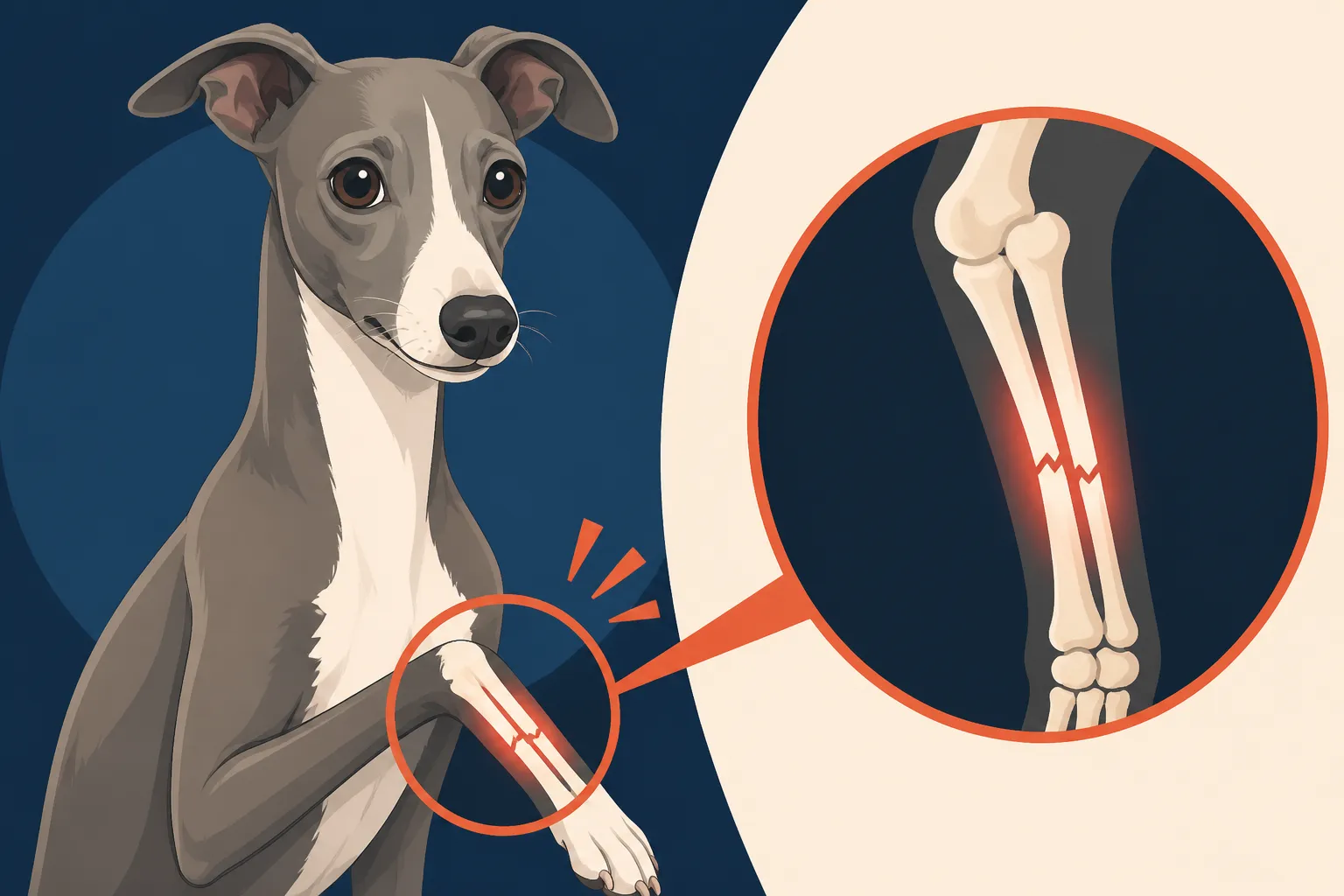
The lower foreleg of an Italian Greyhound consists of two main bones, the radius and the ulna, which run parallel from the elbow to the wrist. In many animals, these two bones provide significant mutual support, distributing load and resisting torsional forces. However, in Italian Greyhounds, the radius is the primary weight-bearing bone in this section of the leg, and it's notoriously slender. The ulna, while present, is often much finer and less substantial, offering less reinforcing structure to the radius.
This anatomical configuration creates a significant vulnerability. When an Italian Greyhound lands awkwardly from a jump, twists its leg during play, or suffers a direct impact, the slender radius often bears the brunt of the force. Because it's a long, relatively straight column of bone with thin cortical walls and sometimes less rigid support from the ulna, it is prone to snapping. Fractures of the radius and ulna, often occurring together (a "radioulna fracture"), are therefore incredibly common and present a unique challenge for veterinary orthopedic surgeons due to the small size and delicate nature of the bones. This specific bone structure is a primary reason why an Italian Greyhound's radius is the bone that breaks most often, particularly during the critical developmental period when their bones are still hardening.
The Most Common Ways Radius Fractures Occur
It's a common misconception that Italian Greyhounds are constantly breaking their legs from everyday activities. While their bones are delicate, breaks usually stem from specific types of incidents that Italian Greyhound owners must actively work to prevent. Understanding these common scenarios is crucial for safeguarding your pet.
Gravity's Cruelty: Jumps, Falls, and Being Dropped
The single most common cause of radius fractures in Italian Greyhounds is undoubtedly falls and jumps from heights. Your Italian Greyhound’s incredible athleticism means they love to leap, whether it's off the sofa to greet you, down from the bed in the morning, or even out of your arms. However, these seemingly innocuous actions can have catastrophic consequences for their delicate forelegs. The sudden impact of landing, especially on hard surfaces like tile, concrete, or hardwood, can easily overwhelm the slender radius and ulna, leading to a clean break.
Many owners have heartbreaking stories of a beloved pet suffering a devastating injury from a simple leap. The jump off the sofa that breaks an Italian Greyhound's leg isn't an urban myth; it's a tragic reality witnessed by countless veterinary professionals. These incidents are particularly prevalent in younger Italian Greyhounds, as the age an Italian Greyhound is most likely to break a leg falls within their first two years, before their growth plates fully close and their bones achieve maximum density. This vulnerability extends to being held; why dropping an Italian Greyhound means surgery is often a grim reality, as the height of even a few feet can be enough to cause severe damage.
This is precisely why proactive measures are not just recommended, but essential. Implementing Ramps and Steps for an Italian Greyhound's Furniture from day one can drastically reduce the risk of these common household accidents. Teaching your Italian Greyhound to use these aids consistently, and even gently lowering them yourself from elevated surfaces, can prevent a world of pain and expense.
High-Energy Play and Unseen Hazards
While jumps are a major concern, high-energy play and environmental hazards also contribute significantly to radius fractures. Italian Greyhounds are sighthounds, meaning they possess an incredible prey drive and bursts of speed. During their infamous "zoomies," they can reach astonishing velocities indoors and out. If they collide with furniture, a wall, or another dog while running at full tilt, the force of impact can easily fracture a foreleg bone.
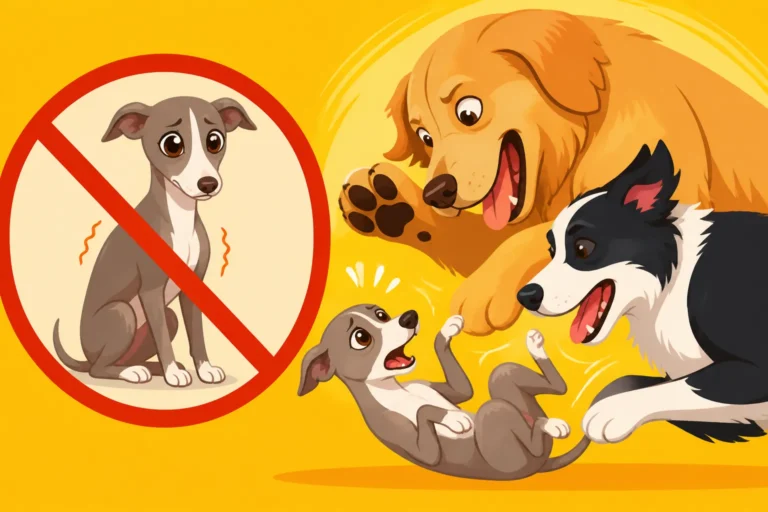
Interactions with other dogs, especially larger breeds, pose a particular risk. What might be perceived as playful roughhousing by a large dog can easily result in a severe injury for an Italian Greyhound. A playful paw swat, an accidental bump, or being stepped on can apply enough force to cause a radius fracture. This is why an Italian Greyhound puppy should not wrestle big dogs is a golden rule for responsible ownership. Their fine bones simply cannot withstand the impact from a heavier, less coordinated playmate.
Even in what seems like a safe environment, hidden dangers can exist. A misstep in a yard with uneven terrain, catching a paw in a gap, or running into an unseen obstacle can lead to a fracture. I've known cases where an Italian Greyhound broke a leg in its own yard simply by tripping over a garden hose or misjudging a small ditch. Close supervision during all forms of play, both indoors and out, and diligently inspecting their environment for potential hazards are vital steps in mitigating these risks.
Early Detection and Essential Prevention
The fear of a broken leg is a heavy burden for Italian Greyhound owners, but proactive prevention and knowing what to do if an injury occurs can make a world of difference. Being prepared, both in terms of knowledge and environment, is truly the best defense.
Recognizing the Subtle and Obvious Signs
Immediately recognizing signs an Italian Greyhound has broken a leg is critical for ensuring the best possible outcome. While some breaks are undeniably obvious – a leg dangling uselessly, extreme swelling, or your dog crying out in agonizing pain – not all fractures present so dramatically. Italian Greyhounds, like many sighthounds, can be remarkably stoic, sometimes attempting to "walk it off" or favor a limb subtly, especially if it's a hairline or incomplete fracture. This deceptive behavior can lead owners to underestimate the severity of the injury.
Look for these crucial indicators:
- Sudden, unexplained lameness: This is often the first and most common sign. Even if they try to put some weight on it, a pronounced limp or a refusal to use the leg at all warrants immediate attention.
- Holding the leg up: If your Italian Greyhound is consistently holding a foreleg up and not bearing weight, it's a serious red flag.
- Swelling or bruising: Any visible swelling, even without obvious displacement, indicates underlying trauma.
- Pain response: Yelping, nipping, or pulling away when the limb is gently touched, or even a sudden shift in temperament (e.g., lethargy, aggression due to pain).
- Reluctance to move: Hesitation to jump, run, or engage in usual activities.
Remember, even if an Italian Greyhound still runs on a broken leg, it doesn't mean the injury is minor. Their high pain tolerance and drive can mask severe damage. If you suspect any kind of bone injury, do not delay. Seek immediate veterinary care to get X-rays and a proper diagnosis. Delaying treatment can lead to worse outcomes, including improper healing or increased pain.
Creating a Fracture-Proof Home and Lifestyle
Prevention truly is paramount for Italian Greyhounds. Given their delicate structure, the goal is to proactively eliminate as many fracture risks as possible, particularly during their vulnerable puppy and adolescent stages. Restricting an Italian Greyhound under two years old is not just a suggestion; it's a fundamental commitment to their safety. This means constant supervision and careful management of their environment.
Consider these essential preventative measures:
- Ramps and Steps: This cannot be stressed enough. Install ramps or steps to all furniture your Italian Greyhound is allowed on – sofas, beds, and even chairs. Consistently teach them to use these aids, making jumping off limits.
- Non-Slip Surfaces: Hardwood, tile, and laminate floors are beautiful but extremely dangerous for Italian Greyhounds. Their long, slender legs and small paw pads offer minimal traction, increasing the risk of slips and falls that can lead to twisting injuries and fractures. Cover these areas with rugs, carpet runners, or use traction socks for your dog.
- Supervised Play: Avoid uncontrolled environments like dog parks where a larger, boisterous dog could accidentally injure your Italian Greyhound. Supervise all play sessions, even with other Italian Greyhounds, and ensure children understand why children should not carry an Italian Greyhound and how to interact gently and safely.
- Outdoor Safety: Regularly inspect your yard for hazards like holes, uneven terrain, or low-lying obstacles. Ensure your fencing is secure, as their speed and prey drive mean an escaped Italian Greyhound can quickly get into dangerous situations.
- Safe Handling: Always pick up and put down your Italian Greyhound with two hands, supporting their chest/abdomen and hindquarters. Avoid grabbing them by the chest or just under their armpits.
- Exercise Management: While they need exercise, avoid overly strenuous or high-impact activities, especially when young. Focus on controlled leash walks and safe, supervised runs in enclosed spaces.
The commitment to creating a safe environment and carefully managing their activities is the most loving and effective way to protect your Italian Greyhound from the common, devastating radius fracture.
Navigating a Radius Fracture: Diagnosis to Recovery
Despite the most diligent prevention efforts, accidents can still happen. If your Italian Greyhound unfortunately suffers a radius fracture, the journey from diagnosis to recovery can be challenging, both emotionally and financially. Knowing what to expect and how to prepare can help navigate this difficult period.
Emergency Response and Specialist Care
If you suspect your Italian Greyhound has broken its radius, your immediate priority is to get them to an emergency veterinarian. During transport, minimize movement of the injured limb. If you have a carrier, gently place them in it. Avoid attempting to set the bone or apply a splint yourself unless specifically instructed by a vet, as improper handling can cause more damage or pain. Once at the clinic, the vet will conduct a thorough examination and take X-rays to confirm the fracture, identify its type (simple, comminuted, spiral, open, closed), and assess the degree of displacement.
Because an Italian Greyhound's radius is the bone that breaks with such frequency and fragility, these fractures often require specialized orthopedic intervention. Unlike some larger breeds where a cast might be sufficient, a cast rarely holds on an Italian Greyhound for several reasons: their delicate skin is prone to sores, their unique leg shape makes it difficult to achieve a stable fit, and the high re-fracture rate. Therefore, surgery performed by an experienced veterinary orthopedic surgeon is often the most successful treatment. Finding a surgeon who has plated an Italian Greyhound before is incredibly important, as their expertise with these tiny, delicate bones can make a significant difference in the outcome. These specialists are accustomed to the intricate techniques required for small bone repair, often involving tiny plates and screws.
Financial Realities and the Road to Healing
The financial implications of an Italian Greyhound radius fracture can be substantial. What fracture repair costs on an Italian Greyhound can range from $3,000 to $8,000 or more, depending on the complexity of the fracture, the need for specialist care, the geographical location, and post-operative medications and rehabilitation. This is a single, unexpected expense that can cripple a family's budget. Many owners are simply not prepared for such a significant bill, which is why a robust pet insurance plan can be invaluable.
A comprehensive pet insurance policy, such as those offered by Healthy Paws, can significantly alleviate the financial stress of emergency care. Understanding what pet insurance actually covers on an Italian Greyhound, including accidental injuries like fractures, is a critical part of responsible ownership. Some plans cover a high percentage of veterinary bills after a deductible, making advanced surgical options much more accessible. Without insurance, owners may have to consider payment plans, veterinary credit lines, or emergency funds.
The recovery process itself is a long and arduous journey. After surgery, strict confinement and restricted activity are paramount. How long an Italian Greyhound stays crated after surgery can be anywhere from 6 to 12 weeks, sometimes longer, to allow the bone to heal properly. This period requires immense patience and dedication from owners to prevent complications, re-injury, or the loosening of pins in an Italian Greyhound's bone. Following this, a gradual return to activity, often guided by physical therapy, is necessary to rebuild strength and range of motion. While many Italian Greyhounds regain excellent use of their leg, it's a testament to their spirit and their owners' unwavering commitment.
| Fracture Scenario | Common Causes | Typical Prevention Strategies |
|---|---|---|
| Radius/Ulna | Jumping from furniture/arms, falls, high-impact play | Ramps/steps, supervised play, non-slip flooring, careful handling |
| Tibia/Fibula | Twisting injuries, impact during zoomies, awkward landings | Secure play areas, avoiding rough surfaces, leash training, outdoor checks |
| Femur/Humerus | Extreme trauma, being stepped on, severe collisions | Avoidance of large dog play, close supervision, secure environment |
Disclaimer
Please remember that the information provided in this guide is for educational purposes only and should not be considered a substitute for professional veterinary advice. Always consult with a qualified veterinarian for any health concerns or before making any decisions about your Italian Greyhound's care.