Progressive Retinal Atrophy in an Italian Greyhound
Finding out your beloved Italian Greyhound might be losing their sight is a truly heartbreaking and often confusing experience for any owner. The thought of your vibrant, zoomy companion navigating the world with limited or no vision can feel overwhelming, bringing with it a flood of questions about their future quality of life and what you can do to help. This comprehensive guide is here to shed light on Progressive Retinal Atrophy (PRA) in Italian Greyhounds, walking you through what it is, how it’s inherited, the signs to watch for, and how you can support your dog through this challenge, as well as the crucial steps breeders take to prevent it.
Understanding Progressive Retinal Atrophy
Progressive Retinal Atrophy, often simply called PRA, isn't a single disease but rather a blanket term for a group of inherited degenerative diseases affecting the retina. It's a condition that slowly, inexorably, diminishes your dog's vision over time, eventually leading to complete blindness. For Italian Greyhound owners, understanding this diagnosis is the first step toward preparing for and managing its impact. It’s a reality that, while tough to face, is made easier with knowledge and proactive care.
Understanding the Retina's Role
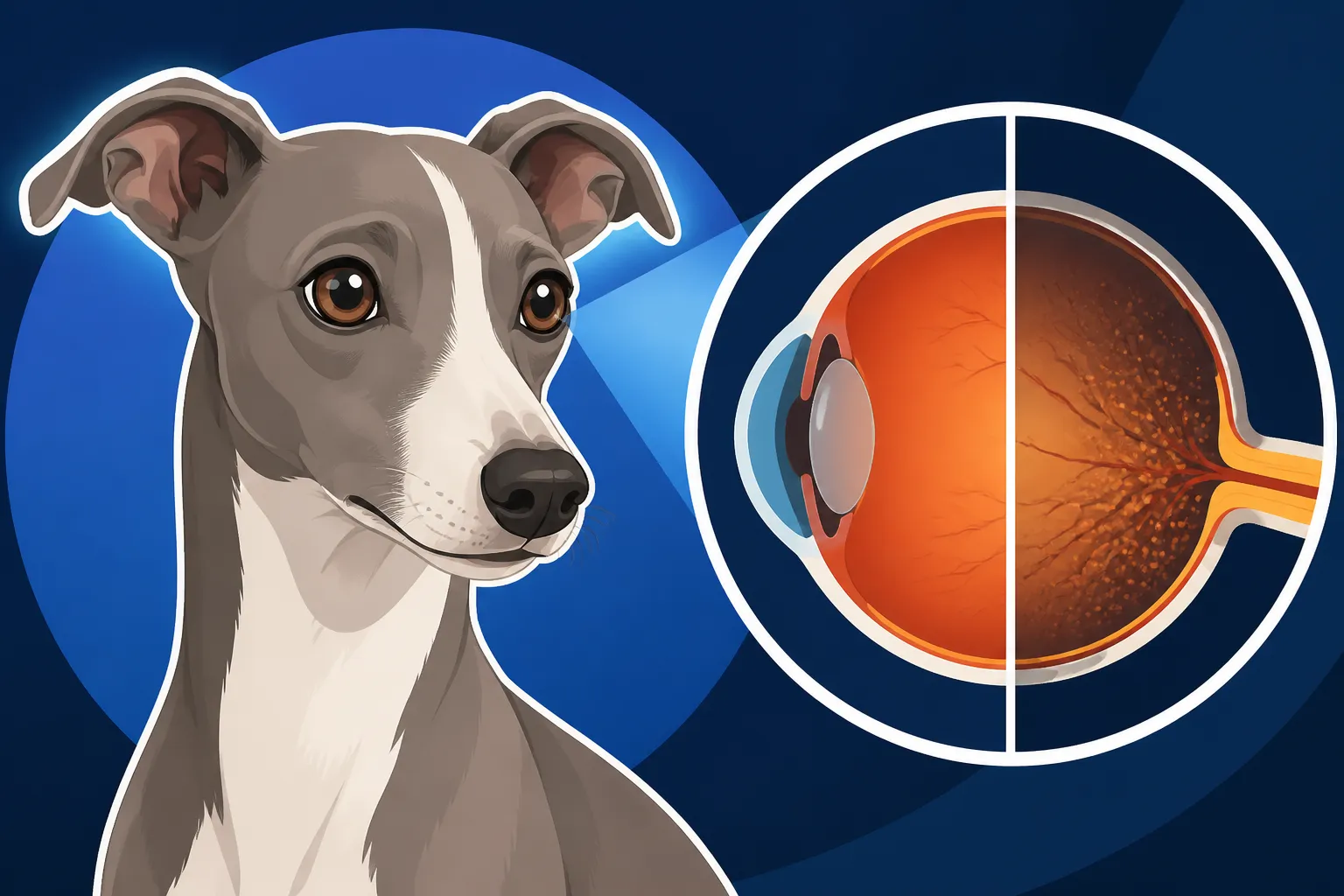
To truly grasp what PRA does, we need to talk about the retina. Think of the retina as the "film" inside a camera, located at the very back of your Italian Greyhound's eye. This delicate layer of tissue contains millions of specialized light-sensing cells called photoreceptors. There are two main types: rods and cones. Rods are responsible for vision in dim light and detecting motion, which is why your Iggy is so good at darting after a squirrel in the twilight hours. Cones, on the other hand, handle bright light vision and color perception.
When light enters the eye, it hits these photoreceptor cells, which then convert the light into electrical signals. These signals are sent along the optic nerve to the brain, where they are interpreted as images. It's a complex and miraculous process that allows your Italian Greyhound to see the world, recognize your face, and track that toy you just threw. In short, the retina is absolutely vital for vision, and any damage to it, especially progressive damage, has profound implications.
How PRA Progresses Over Time
The "progressive" part of Progressive Retinal Atrophy is key. This isn't a sudden injury; it's a gradual deterioration. In most forms of PRA, the rod cells are affected first, meaning your Italian Greyhound will initially experience difficulty seeing in low light conditions – this is often referred to as "night blindness." Imagine trying to navigate your own home in the dark after the sun has set; that's what your Iggy might be experiencing.
As the disease advances, the cone cells also begin to degenerate. This leads to a loss of daytime vision and eventually, complete blindness. The rate of progression can vary widely depending on the specific genetic mutation causing the PRA. For some dogs, the decline might be slow, taking years, while for others, it can be relatively rapid. This variability is one of the reasons it can be so hard for owners to pinpoint when the changes started. It’s a slow erosion of sight, often mistaken for just "getting old" until it's quite advanced.
The Genetic Link and Italian Greyhounds
One of the most crucial aspects of Progressive Retinal Atrophy is its inherited nature. This isn't something your Italian Greyhound "catches"; it's something they are born with the genetic predisposition for. For responsible breeders and owners alike, understanding this genetic component is paramount, especially in a breed like the Italian Greyhound where specific genetic markers have been identified.
The Specific Gene Mutation in Italian Greyhounds
Research has identified specific genetic mutations responsible for PRA in many breeds, and the Italian Greyhound is no exception. For our beloved Iggys, the most common form of PRA is linked to a mutation in the PRCD gene (Progressive Rod-Cone Degeneration). This specific mutation is widely understood and testable, which is incredibly helpful for prevention. Unlike some complex genetic conditions, the PRCD form of PRA in Italian Greyhounds follows a predictable inheritance pattern.
Knowing the exact gene involved allows for targeted DNA testing, which has revolutionized the ability to manage and eventually reduce the incidence of PRA in the breed. Before such tests were available, breeders were often unaware they were producing affected puppies until clinical signs appeared, which was often too late for prevention within that breeding line. Now, genetic testing offers a clear path forward, empowering breeders to make informed decisions and prevent unnecessary heartache for future owners. If you're looking into getting an Italian Greyhound puppy, asking about "The DNA Test for Italian Greyhound Retinal Atrophy" is a must.
Inheritance Patterns: Autosomal Recessive Traits
The PRCD form of PRA in Italian Greyhounds is inherited in an autosomal recessive manner. What does this mean in plain language?
- Affected (PRA-positive): A dog with two copies of the mutated gene (one from each parent) will develop PRA.
- Carrier: A dog with one copy of the mutated gene and one normal copy will not develop PRA, but can pass the mutated gene on to its offspring. They are perfectly healthy themselves and see just fine.
- Clear: A dog with two copies of the normal gene will not develop PRA and cannot pass the mutated gene on.
This inheritance pattern means that two "clear" dogs will only produce clear puppies. If you breed a "clear" dog to a "carrier," you'll get a mix of clear and carrier puppies, but none will be affected. The real concern arises when two "carriers" are bred together, as there's a 25% chance with each puppy that it will inherit two copies of the mutated gene and thus be affected by PRA. There's also a 50% chance of producing carriers and a 25% chance of producing clear puppies in such a pairing. This is precisely why discussions about "Why Two Carrier Italian Greyhounds Should Not Be Bred" are so critical in responsible breeding circles. Understanding this genetic lottery helps us appreciate the careful planning that goes into preventing this debilitating disease.
Recognizing the Signs of PRA in Your Italian Greyhound
Identifying the early signs of Progressive Retinal Atrophy can be challenging because the disease progresses slowly, and dogs are incredibly adept at compensating for vision loss. Often, owners attribute subtle changes to normal aging or quirks in behavior. However, being vigilant and knowing what to look for can help you seek veterinary attention sooner and begin adapting your home environment to support your Italian Greyhound.
Early Indicators: Night Blindness
The first and most common symptom of PRA in Italian Greyhounds is typically night blindness, or nyctalopia. This occurs because the rod photoreceptor cells, which are crucial for low-light vision, degenerate first. You might notice your Iggy becoming more hesitant or clumsy in dimly lit rooms, at dusk, or when navigating familiar spaces after dark. They might bump into furniture they usually avoid, stumble on steps, or be reluctant to go outside for their evening potty break when it’s dark.
Imagine your Italian Greyhound, who once zipped around the house with boundless energy even in low light, now moving cautiously, sniffing the ground more, or looking to you for guidance more often in twilight hours. These subtle shifts can be easy to dismiss at first, especially if you're not actively looking for them. They might seem to startle more easily at unexpected noises in the dark because their visual cues are diminished. Pay close attention to these behaviors, as they are early "Signs an Italian Greyhound Is Losing Night Vision" and often the first real red flag that something is amiss with their sight.
Progression to Daytime Vision Loss
As PRA advances, the cone photoreceptor cells also begin to deteriorate, leading to a noticeable loss of daytime vision. This stage is usually more apparent to owners because it impacts activities during broad daylight. Your Italian Greyhound might start having trouble finding dropped toys, misjudging distances when jumping on or off furniture, or bumping into objects even in well-lit areas. Their once keen ability to spot a treat across the room might diminish, and they might become slower to react to visual cues.
You might also observe changes in their eyes themselves. Their pupils might appear more dilated than usual, even in bright light, as their eyes try to gather as much light as possible to compensate for the failing retina. In some cases, a cloudy or reflective sheen might be visible deep within the eye, caused by changes to the tapetum lucidum (the reflective layer behind the retina), which becomes more visible as the retina thins. This progression can feel rapid once it starts affecting daytime vision, and it's a stark reminder of "How Fast an Italian Greyhound Loses Its Sight."
Behavioral Changes and Adaptations
Beyond the physical signs, PRA can lead to significant behavioral changes as your Italian Greyhound adapts to their diminishing world. They might become more clingy or anxious, especially in new environments, relying more heavily on your presence and scent for reassurance. Some Iggys might become more vocal, barking more to locate you or to express confusion. Others might become more withdrawn or sleep more, avoiding situations where they feel insecure due to poor vision.
You might notice they rely more on their other senses – their hearing becomes sharper, and their incredible sense of smell guides them more explicitly around the house and on walks. They might bump into novel objects or refuse to navigate unfamiliar steps or layouts. These adaptations are remarkable, but they also highlight the internal struggle your dog is facing. It's a testament to their resilience, but it also means we, as owners, need to be hyper-aware and responsive to their changing needs. Maintaining a consistent environment and routine becomes even more critical during this time.
Diagnosing PRA: What to Expect at the Vet
If you suspect your Italian Greyhound might be experiencing vision loss, the best course of action is to schedule an appointment with your veterinarian as soon as possible. While the thought of a diagnosis can be daunting, early detection is crucial for managing the condition and allowing you and your dog to adapt. Your vet will conduct a thorough examination and may recommend specialized tests to confirm PRA and rule out other potential causes of vision impairment.
Initial Ophthalmic Examination
When you visit your vet, they will start with a comprehensive physical exam, including a detailed ophthalmic (eye) examination. This will typically involve checking your Italian Greyhound's reflexes, such as the pupillary light reflex (how their pupils respond to light) and the menace response (how they blink when an object rapidly approaches their eye). They will also look for any obvious abnormalities in the eye's structure, such as cataracts, glaucoma, or inflammation, which can mimic or accompany vision loss.
Using an ophthalmoscope, your vet will examine the interior structures of the eye, particularly the retina. In the early stages of PRA, the retina might appear relatively normal. However, as the disease progresses, your vet may observe changes like thinning of the retinal blood vessels, hyper-reflectivity of the tapetum lucidum (the reflective layer at the back of the eye), and a pale appearance of the optic nerve head, indicating atrophy. These subtle signs require a skilled eye, and your regular vet might recommend a referral to a veterinary ophthalmologist for a more in-depth assessment. This initial exam is a vital step in "Whether an Italian Greyhound Needs a Yearly Eye Exam" as part of general wellness.
Specialized Diagnostic Tests: ERG and DNA Testing
To confirm a diagnosis of PRA definitively and to differentiate it from other eye conditions, specialized tests are usually required. The gold standard for diagnosing active retinal degeneration is an Electroretinogram (ERG). This test measures the electrical responses of the photoreceptor cells in the retina to flashes of light. It's a bit like an electrocardiogram (ECG) for the heart, but for the eye. The dog is typically sedated for this procedure, and electrodes are placed near the eye to record the retinal activity. In a dog with PRA, the ERG will show a diminished or absent electrical response, indicating that the photoreceptor cells are not functioning correctly.
In addition to ERG, DNA testing is a powerful diagnostic tool for Italian Greyhounds. Since the specific PRCD gene mutation responsible for PRA in Italian Greyhounds is known, a simple cheek swab or blood sample can be sent to a specialized laboratory for genetic analysis. This test can definitively identify if your dog is clear, a carrier, or affected by PRA. It's important to note that a positive DNA test indicates the genetic predisposition, but an ERG confirms the actual functional degeneration of the retina. This DNA test is particularly valuable for breeders for screening purposes and is often part of "What an Italian Greyhound Breeder Should Have Tested." Knowing the genetic status through a DNA test can offer peace of mind or prepare you for the future if your dog is a carrier or affected. The costs associated with these tests can be a concern, making conversations about "What an Italian Greyhound's Emergency Vet Visit Costs" and pet insurance options like Healthy Paws particularly relevant for owners.
Living with an Italian Greyhound with PRA
Receiving a diagnosis of Progressive Retinal Atrophy can feel devastating, but it's important to remember that blindness is not a death sentence. Italian Greyhounds are incredibly resilient, and with a few thoughtful adjustments, they can continue to live full, happy lives. Their other senses will heighten, and their bond with you will deepen. Your role shifts from preventing the condition to helping them adapt and thrive in their new visual reality.
Creating a Safe and Consistent Environment
The most critical step in helping a visually impaired Italian Greyhound is to create a safe and predictable home environment. Dogs thrive on routine and familiarity, and for a blind dog, consistency is everything.
- Don't rearrange furniture: Once your Iggy has mapped out the layout of your home, try to avoid moving furniture, food bowls, water dishes, or beds. Even small changes can disorient them and cause anxiety.
- Block off hazards: Use baby gates to block access to stairs, swimming pools, or any areas that could pose a danger. This is especially true for an Iggy, whose delicate bones mean that "A Broken Leg Is the Emergency Every Italian Greyhound Owner Fears."
- Ramps and steps: If your Italian Greyhound is accustomed to getting on and off furniture, consider installing ramps or steps to prevent falls. This will help them maintain their independence and prevent injuries.
- Sensory markers: Use different textures of rugs or scent markers (like essential oils on furniture legs, used sparingly and safely) to help them identify different areas of the house.
- Outdoor safety: Ensure your yard is securely fenced and free of obstacles they might trip over. Always keep your Italian Greyhound on a leash when outside your secure yard, as their prey drive combined with lack of vision means they cannot be trusted off leash.
Establishing these routines and safe zones will significantly reduce their stress and build their confidence, allowing them to navigate their familiar world with ease. Think about "How a Blind Italian Greyhound Man Greyhound Manages Stairs" – it's about making small, consistent changes.
Training and Enrichment for Visually Impaired Iggys
Just because your Italian Greyhound can't see doesn't mean they can't learn or enjoy life. In fact, engaging their other senses and continuing mental stimulation is vital for their well-being.
- Verbal cues: Shift your training to focus heavily on verbal cues. Use distinct words for "step up," "step down," "wait," "danger," "right," and "left" to guide them. Reward them enthusiastically when they respond correctly.
- Scent work and puzzles: Harness their incredible sense of smell! Scent games, where you hide treats around the house, are fantastic for mental enrichment. Snuffle mats and puzzle toys that dispense treats are also excellent for keeping their minds active.
- Auditory toys: Introduce toys that make noise, like squeaky balls or crinkly toys, to encourage play. Roll them across the floor so your Iggy can follow the sound.
- Consistent walks: Continue to take them on walks, even if they are slower. Use a consistent route initially so they can memorize the smells and sounds. Let them sniff and explore at their own pace. Always provide gentle verbal guidance before approaching curbs, steps, or uneven terrain.
- Maintain physical contact: Regular petting, grooming, and massages will provide comfort and reassurance. Your touch becomes even more important for communication.
Remember, a visually impaired Italian Greyhound isn't broken; they just experience the world differently. Continuing to engage with them through play and training reinforces your bond and keeps their spirits high.
Emotional Support for You and Your Dog
Living with a blind dog is a journey, and it's okay for you to experience a range of emotions, from sadness and frustration to immense pride in your dog's resilience. It's important to allow yourself to feel these emotions, but also to focus on the positive steps you can take. Your emotional state is often mirrored by your Italian Greyhound, so staying calm and positive will help them adapt.
Seek support from online communities or local groups for owners of blind dogs. Sharing experiences and tips with others who understand can be incredibly helpful. Be patient with your Iggy as they learn to navigate their new reality; there will be bumps and challenges, but with your love and guidance, they will adjust. Celebrate every small victory, like when they confidently find their way to their bed or navigate a tricky corner without hesitation. Remember that your Italian Greyhound still feels your love, enjoys your company, and appreciates every effort you make to keep them happy and safe. This commitment to care is a true reflection of the bond you share, mirroring the comprehensive approach to "Caring for an Italian Greyhound Past Eleven" when other age-related challenges might arise.
Preventing PRA: Responsible Breeding Practices
For a condition like Progressive Retinal Atrophy, which is purely genetic, prevention through responsible breeding is the most effective way to reduce its incidence in future generations of Italian Greyhounds. Ethical breeders play a crucial role in safeguarding the health of the breed, and this involves a deep understanding of genetics and a commitment to rigorous screening.
The Importance of Genetic Screening
Genetic screening for PRA is not just an optional step for Italian Greyhound breeders; it is a fundamental responsibility. Thanks to advancements in veterinary genetics, reputable breeders can now test their breeding stock for the PRCD gene mutation with a high degree of accuracy. This simple DNA test allows them to identify whether a dog is clear, a carrier, or affected before any breeding decisions are made.
By testing all potential breeding dogs, breeders can strategically plan pairings to ensure that no affected puppies are ever produced. For example, a carrier dog can safely be bred to a clear dog, as all resulting puppies will either be clear or carriers, but none will ever develop PRA. The key is to avoid breeding two carriers together. This proactive approach ensures that while the carrier gene might still exist in the gene pool, its expression as an actual disease is prevented. This commitment to health screening is a cornerstone of responsible breeding and something you should always ask about when "Finding an Italian Greyhound Breeder Worth the Waitlist."
| Genetic Status of Parents | Offspring Probability (Approx.) | PRA Development | Breeding Recommendation |
|---|---|---|---|
| Clear x Clear | 100% Clear | No PRA | Ideal |
| Clear x Carrier | 50% Clear, 50% Carrier | No PRA | Acceptable |
| Clear x Affected | 100% Carrier | No PRA in offspring | Avoid if possible to reduce carriers, but offspring won't be affected |
| Carrier x Carrier | 25% Affected, 50% Carrier, 25% Clear | High Risk | Should Not Be Done |
| Carrier x Affected | 50% Affected, 50% Carrier | Very High Risk | Should Not Be Done |
| Affected x Affected | 100% Affected | Guaranteed | Should Not Be Done |
This table clearly illustrates why genetic testing and careful pairing are paramount. It's about making choices that prioritize the health and well-being of every puppy.
Choosing a Reputable Italian Greyhound Breeder
When you are looking for an Italian Greyhound puppy, your choice of breeder is perhaps the single most important decision you will make regarding your future dog's health. A truly reputable breeder is not just focused on producing beautiful puppies but on producing healthy, well-tempered dogs that will enrich your life for years to come.
- Health Testing Transparency: A responsible breeder will be completely transparent about the health testing they conduct on their breeding dogs, including DNA tests for PRA. They should be able to provide documentation or show you results from veterinary ophthalmologists or genetic testing labs. Don't be shy about asking to see proof of these tests. This is part of the broader discussion of "What an Italian Greyhound Breeder Should Have Tested."
- Eye Certifications: Beyond genetic testing for PRA, responsible breeders participate in annual eye examinations by a board-certified veterinary ophthalmologist to screen for other inherited eye diseases.
- Knowledge and Openness: A good breeder will be highly knowledgeable about PRA and other health concerns in Italian Greyhounds. They will be open to answering all your questions, no matter how many you have, and will educate you on the breed's specific needs and potential challenges.
- Breeding Ethics: They will never breed two known carriers together, even if those dogs have desirable conformation or temperaments. The health of the puppies should always take precedence over show ring aspirations.
- Support System: Reputable breeders offer ongoing support and advice throughout your dog's life. They are invested in the well-being of their puppies long after they leave for their new homes.
By choosing a breeder who actively screens for PRA and other genetic conditions, you are not only increasing your chances of getting a healthy Italian Greyhound but also supporting ethical breeding practices that benefit the entire breed. It might feel like a lot of research and questioning, but it's an investment in your future companion's health and happiness. When considering "What an Italian Greyhound Costs to Buy in 2026," remember that the price often reflects the extensive health testing and care provided by a conscientious breeder.
Disclaimer
The information provided in this guide is for general informational purposes only and does not constitute veterinary medical advice. Always consult with a qualified veterinarian or veterinary ophthalmologist for any health concerns or before making any decisions about your Italian Greyhound's care or treatment.