Whether Color Dilution Alopecia Hurts an Italian Greyhound
It's incredibly distressing to watch your beloved Italian Greyhound's coat thin and develop patchy skin, and a natural, immediate concern is whether they are in pain or discomfort. Many owners worry intensely about their dog's well-being when facing conditions like Color Dilution Alopecia (CDA), wondering if their delicate companion is suffering. This comprehensive guide will delve deep into Color Dilution Alopecia, exploring exactly what it means for your Italian Greyhound, separating fact from fear, and providing clear insights into how it affects them.
Understanding Color Dilution Alopecia in Italian Greyhounds
Color Dilution Alopecia, or CDA, is a hereditary skin condition that primarily affects dogs with diluted coat colors, such as blue (diluted black) and fawn (diluted red). It's not exclusive to Italian Greyhounds, but because blue and fawn are accepted colors within the breed, and Italian Greyhounds often have fine, delicate coats, it can be quite noticeable and a source of concern for owners. The term "alopecia" simply refers to hair loss. In the case of CDA, it's linked to a specific gene responsible for diluting coat color.
The Genetic Basis of Coat Dilution
At the heart of Color Dilution Alopecia lies a specific gene, often referred to as the "D locus." This gene affects the distribution of pigment granules within the hair shaft. When a dog inherits two copies of the recessive 'd' gene (dd), it results in a diluted coat color. For instance, a black dog becomes blue, and a red dog becomes fawn or Isabella. This dilution is typically purely cosmetic and gives these beautiful, unique shades that many Italian Greyhound enthusiasts adore.
However, in some dogs with this genetic makeup, the pigment granules clump abnormally within the hair follicles. This irregular clumping can weaken the hair shaft, making it prone to breakage and eventual loss. It's important to understand that not all dogs with diluted colors will develop CDA, but they are genetically predisposed. It's a complex interaction, and some individuals carry the gene without showing significant symptoms. Breeders who are aware of the risk will often screen their dogs and make breeding choices to avoid producing affected offspring, though it can still appear even in well-planned litters. You can learn more about which Italian Greyhound colors carry the alopecia risk by exploring dedicated resources.
How Color Dilution Alopecia Manifests Visually
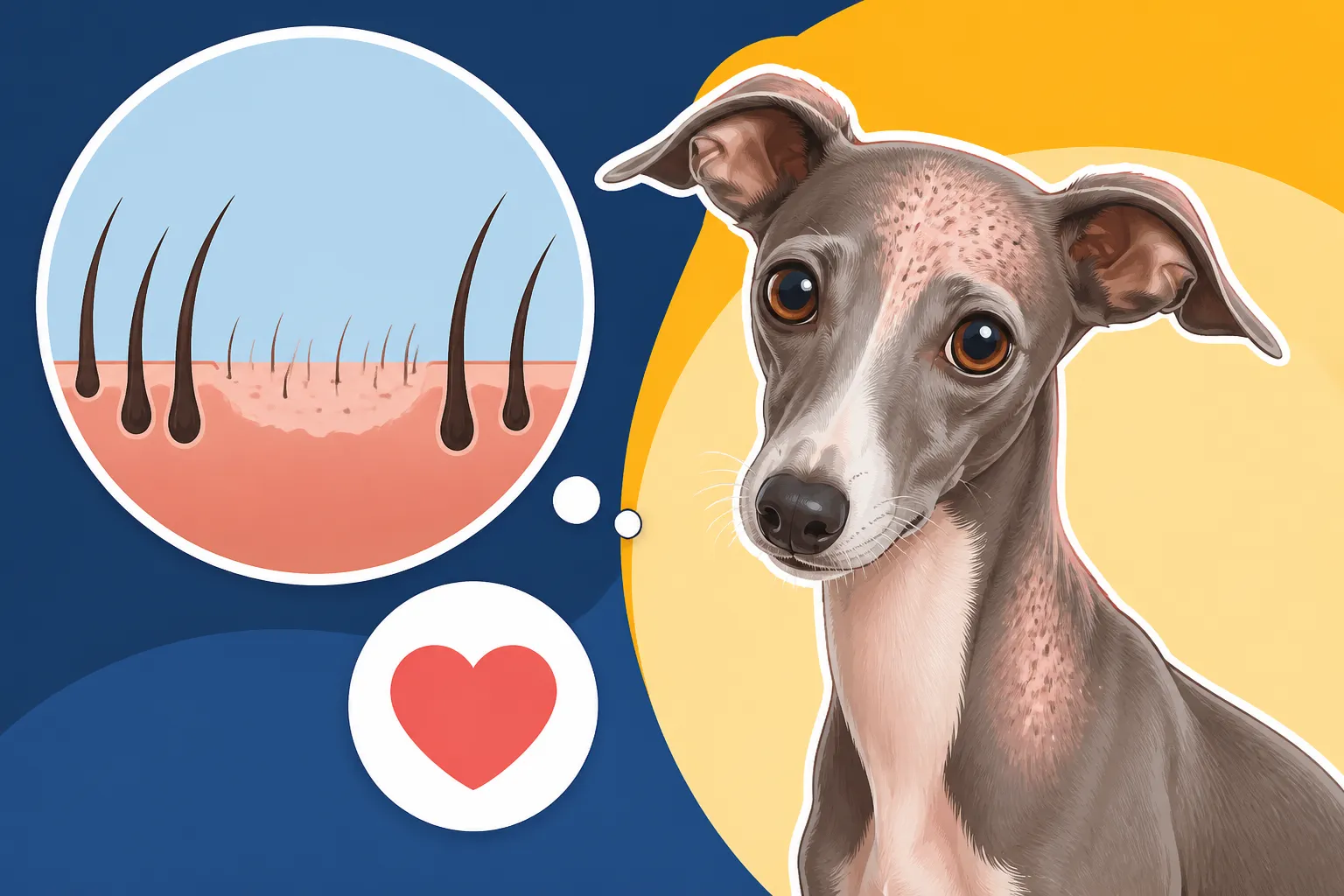
When CDA does manifest, it typically starts with a thinning of the coat, most often seen on the back, flanks, neck, and sometimes the ears and tail. The hair doesn't just fall out; it often appears brittle, dull, and sparse. Owners might first notice a lack of sheen, followed by increasingly bare patches. The skin in affected areas can sometimes appear dry, flaky, or scaly, and in more severe cases, it might become hyperpigmented, taking on a darker, grayish hue. The good news is that this condition generally isn't present from birth; it usually becomes apparent as the Italian Greyhound matures, often starting anywhere from six months to three years of age. For a deeper dive into the typical progression, consider reading about the age Color Dilution Alopecia starts in an Italian Greyhound.
The pattern of hair loss tends to be symmetrical, meaning if it thins on one side, it will typically thin in a similar fashion on the other. It's a slow, progressive process, not a sudden baldness. Sometimes, the initial appearance can be mistaken for seasonal shedding or a mild skin allergy, which is why a proper veterinary diagnosis is crucial to rule out other, potentially more serious, underlying conditions. The primary characteristic of CDA is that the hair follicles themselves are compromised, leading to an inability to produce healthy, lasting hair.
Does Color Dilution Alopecia Cause Pain or Discomfort?
This is the burning question for many Italian Greyhound owners, and it's a completely valid one. Seeing your dog lose hair can be alarming, and our immediate instinct is to associate physical changes with pain. However, it's crucial to differentiate between the primary condition and potential secondary complications.
The Primary Nature of CDA: Not Inherently Painful
The most important takeaway for Italian Greyhound owners worried about CDA is this: Color Dilution Alopecia itself does not cause physical pain. The hair loss, thinning coat, and changes in skin texture are not inherently painful sensations for your dog. Your Italian Greyhound is not experiencing discomfort from the genetic condition that causes the hair follicles to be defective. It's a cosmetic condition in its purest form, affecting the appearance of the coat rather than causing internal distress or physical agony.
Think of it much like human male pattern baldness; while it might be a cosmetic concern, it doesn't cause the individual any physical pain. Your Italian Greyhound isn't feeling sharp pains, throbbing aches, or internal discomfort solely due to having CDA. This understanding can bring immense relief to worried owners, allowing them to focus on management rather than pain mitigation.
Secondary Complications That Can Lead to Discomfort
While CDA itself is not painful, the compromised skin and hair follicles it creates can pave the way for secondary issues that do cause discomfort. This is where vigilance and proactive care become essential.
Here are the main secondary complications that can lead to discomfort:
- Dry, Flaky, and Itchy Skin: With fewer healthy hair shafts to protect the skin and the pigment irregularities, the skin in affected areas can become very dry. This dryness can lead to flakiness, irritation, and significant itching. An Italian Greyhound scratching constantly due to dry skin is certainly experiencing discomfort, even if it's not "pain" from the CDA itself. Regular moisturizing becomes paramount in preventing this.
- Bacterial Folliculitis: The abnormal hair follicles are more susceptible to bacterial infections. When bacteria invade these weakened follicles, it can lead to a condition called folliculitis. This typically presents as small red bumps, pustules (like tiny pimples), or crusting on the skin. Folliculitis is itchy, and if severe, can be tender or sore to the touch, causing real discomfort for your Italian Greyhound. These infections often require veterinary attention, including antibiotics (oral or topical) and medicated shampoos.
- Sunburn Risk: With a thin or absent coat, the delicate skin of an Italian Greyhound is much more exposed to the sun's harmful UV rays. Just like humans, dogs can get sunburned, which can be painful, red, and increase the risk of skin damage over time. This is especially true for Italian Greyhounds who love to bask in sunbeams or enjoy outdoor activities. Protecting their exposed skin is crucial, similar to how we protect our own. You can find more information about protecting your dog by researching sunburn on a bald Italian Greyhound.
- Environmental Irritation: Without a dense coat for protection, the skin can be more vulnerable to irritants from the environment, such as rough surfaces, certain fabrics, or even some cleaning products. This can lead to localized irritation and itchiness.
It's these secondary issues, rather than the genetic hair loss itself, that truly impact an Italian Greyhound's comfort levels. By managing these potential complications, you can ensure your dog lives a happy, pain-free life.
Managing Color Dilution Alopecia for Your Italian Greyhound's Well-being
Since CDA itself isn't painful, the focus of management shifts to preventing and treating the secondary issues that can cause discomfort. With a proactive approach, Italian Greyhounds with CDA can lead full, comfortable lives.
Working with Your Veterinarian for Diagnosis and Care
The first and most critical step is to get a definitive diagnosis from your veterinarian. While you might suspect CDA based on your dog's breed and coat color, other conditions like hypothyroidism, allergies, skin mites (demodex), or even fungal infections can present with similar hair loss or skin changes. A vet can perform skin scrapes, biopsies, or blood tests to rule out these possibilities. Once CDA is confirmed, your vet can help you create a tailored management plan.
They might recommend specific medicated shampoos, topical treatments, or oral supplements. If a secondary bacterial infection like folliculitis is present, antibiotics will likely be prescribed to clear it up. Regularly scheduled check-ups are important to monitor skin health and adjust treatments as needed. Don't hesitate to ask your vet for a referral to a veterinary dermatologist if the condition proves particularly challenging to manage. Remember, prevention is often easier than treatment, so an early and accurate diagnosis sets the stage for optimal care. Many pet insurance plans, such as those offered by Healthy Paws, can help with the costs of veterinary consultations, diagnostic tests, and medications for these types of conditions.
Essential Skin and Coat Care Routines
Keeping your Italian Greyhound's skin healthy is paramount to preventing discomfort. Here are some key care routines:
- Regular Moisturizing: Because dry skin is a common issue, regular moisturizing is vital. Your vet might recommend a leave-in conditioner, a hydrating spray, or a specially formulated canine moisturizer. Apply these gently to affected areas, ensuring the product is safe for dogs and won't be harmful if licked.
- Gentle Bathing: While Italian Greyhounds generally don't need frequent baths (and too many can dry out the skin), when you do bathe them, use a gentle, hypoallergenic shampoo specifically designed for dogs with sensitive skin. Avoid harsh chemicals or human products. Lukewarm water is best.
- Omega Fatty Acid Supplements: Many vets recommend adding omega-3 and omega-6 fatty acid supplements to your dog's diet. These can significantly improve skin barrier function, reduce inflammation, and promote healthier skin and coat. Fish oil or flaxseed oil are common options, but always discuss dosage with your vet.
- Dietary Considerations: A high-quality diet rich in essential nutrients is fundamental for overall skin health. Ensure your Italian Greyhound is eating a balanced dog food appropriate for their life stage. Some owners find that diets focused on novel proteins or limited ingredients can also help reduce general skin sensitivities, though this is less directly related to CDA itself.
Protecting Delicate Skin from Environmental Factors
Your Italian Greyhound's thin coat and delicate skin, characteristic of the breed and exacerbated by CDA, mean extra care for protection.
- Sun Protection: This cannot be stressed enough. On sunny days, especially during peak UV hours, keep your Italian Greyhound indoors or provide ample shade. If they are outdoors, apply a dog-specific sunscreen to exposed areas like the bridge of the nose, ear tips, and any significant bald patches. Lightweight, UV-protective clothing (like a thin shirt or suit) can also be an excellent barrier against the sun.
- Appropriate Clothing: Beyond sun protection, clothing serves another critical role for IGs with CDA – warmth and physical protection. Italian Greyhounds are notoriously sensitive to cold due to their low body fat and thin coats. For more on this, you can check out why an Italian Greyhound carries almost no body fat. A sweater or coat not only keeps them warm but also provides a layer against minor scrapes or abrasions, which can be more problematic on compromised skin. Ensure the clothing is soft, breathable, and doesn't rub or irritate the skin.
- Soft Bedding: Provide soft, comfortable bedding to prevent pressure sores, especially on bony prominences like elbows and hocks, where hair may be particularly sparse. Orthopedic beds and plenty of blankets are ideal for Italian Greyhounds.
Table of Common Skin Conditions and Associated Discomfort
To help you distinguish CDA from other issues, here's a quick comparison:
| Condition | Primary Symptom | Associated Discomfort | Is it inherently painful? | Common Locations |
|---|---|---|---|---|
| Color Dilution Alopecia | Progressive hair thinning/loss | Itching (from dryness/infection), sunburn, secondary infection (folliculitis) | NO (Primary condition) | Back, flanks, neck, ears |
| Allergies | Intense itching, redness | Severe itching, inflammation, hot spots, self-trauma | YES (Often very itchy) | Paws, ears, belly, groin |
| Fungal Infection (Ringworm) | Circular patches of hair loss | Itching, scaly skin, crusting | YES (Can be itchy/irritating) | Anywhere, often patchy |
| Demodectic Mange | Patchy hair loss, redness | Mild to moderate itching, skin thickening, pustules | YES (Can be itchy/irritating) | Face, elbows, hocks |
| Hypothyroidism | Symmetrical hair loss (non-itchy) | Lethargy, weight gain, dull coat, cold intolerance | NO (Systemic issue) | Flanks, tail, bridge of nose |
This table clearly illustrates that while CDA's primary symptom is hair loss, the discomfort often stems from the secondary issues it can trigger, rather than the alopecia itself.
Long-term Outlook and Quality of Life with CDA
The good news is that an Italian Greyhound with Color Dilution Alopecia can live a very long, happy, and fulfilling life, just like any other IG. The condition, while visually noticeable and requiring diligent care, is not life-threatening.
No Impact on Lifespan
Color Dilution Alopecia does not shorten an Italian Greyhound's lifespan. The internal organs, physiological functions, and overall health are not compromised by the genetic predisposition to diluted coat colors and subsequent hair thinning. You can expect your Italian Greyhound with CDA to live out their full potential, which, for the breed, often means a healthy 14 to 15 years. This is excellent news for owners, knowing that this cosmetic condition won't take their cherished companion from them prematurely. For insights into the general longevity of the breed, consider reading why an Italian Greyhound lives fourteen to fifteen years.
Ensuring a High Quality of Life
The key to ensuring a high quality of life for an Italian Greyhound with CDA lies in consistent, thoughtful management of their skin and coat. By preventing secondary infections, addressing dryness and itching, and providing adequate sun and environmental protection, you remove the sources of discomfort.
Your Italian Greyhound will continue to be the playful, affectionate, and energetic companion you know and love. They will still enjoy their zoomies, snuggling under blankets, and being your shadow. The physical appearance might be different, but their spirit and health remain robust with proper care. It's truly a testament to the resilience of these dogs and the dedication of their owners.
Responsible breeding practices play a role here too, as breeders committed to the health of the Italian Greyhound often screen their breeding dogs for genetic conditions and strive to produce healthy puppies, even if CDA sometimes appears. If you are ever faced with an unexpected vet bill for treating a secondary infection or managing chronic skin dryness, having pet insurance like Healthy Paws can truly alleviate financial stress, allowing you to prioritize your Italian Greyhound's comfort without hesitation.
In conclusion, while the visual changes of Color Dilution Alopecia can be worrying, remember that the condition itself does not hurt your Italian Greyhound. Your focus, and your vet's, should be on preventing and treating the secondary complications that can cause discomfort. With attentive care, your Italian Greyhound with CDA will thrive and enjoy many wonderful, comfortable years by your side.
Disclaimer
This article is for general informational purposes only and does not constitute professional advice. Laws, prices and regulations vary by location and change over time. Consult a qualified professional for guidance on your specific situation.