Why the Italian Greyhound Is in the Toy Group
It’s a common moment for new Italian Greyhound owners, or even just those admiring them from afar: you see these sleek, athletic dogs, clearly built like tiny Greyhounds, and then you hear they’re classified in the AKC’s Toy Group. It can feel really confusing, even contradictory. How can a dog so undeniably sighthound in appearance and instinct be lumped in with Chihuahuas and Poodles? This guide will dive deep into why the Italian Greyhound, despite its noble, speedy lineage, finds its home among the Toys, exploring the history, purpose, and characteristics that led to this sometimes surprising designation.
Understanding Breed Groups in the Dog World
Before we can fully appreciate why the Italian Greyhound (often affectionately called an "IG" by those who love them) is categorized the way it is, we need to understand the broader concept of breed groups. These aren't arbitrary divisions; they're historical and functional classifications that help us grasp the intended purpose and typical traits of different dog breeds.
More Than Just Size: The Purpose Behind Groups
When you first look at dog breed groups, it might seem like size is the primary factor. After all, the Toy Group is full of small dogs, and the Working Group has many large, powerful breeds. However, the true intent behind these classifications goes far beyond mere stature. Breed groups were established to categorize dogs based on the original function they were bred to perform. Think about it: a Border Collie is in the Herding Group because it was bred to herd livestock, regardless of its medium size. A Siberian Husky is in the Working Group because it was developed to pull sleds, enduring harsh conditions. These groups give us a snapshot of a breed's historical job, which in turn informs much of its temperament, physical build, and innate behaviors. It’s a way to quickly understand what a dog was "made for" and, consequently, what kind of life it's best suited for today.
The groups help prospective owners understand what kind of commitment and lifestyle changes a particular breed might require. For instance, knowing a dog is in the Terrier Group immediately tells you to expect a tenacious, often feisty personality with a strong digging instinct, traits honed over generations of hunting vermin. This historical context is vital for making informed decisions about whether a breed is the right fit for your home and family. It’s not just about what they look like, but what they were engineered to do for humans, centuries ago or even more recently.
The American Kennel Club's Grouping Philosophy
The American Kennel Club (AKC), one of the most prominent dog registries in the world, organizes recognized breeds into seven distinct groups: Sporting, Hound, Working, Terrier, Toy, Non-Sporting, and Herding. Each group reflects a shared heritage of purpose and function, even if the individual breeds within them have diverse appearances. The AKC's philosophy for grouping has always been rooted in a breed's historical utility. This means that when a new breed is recognized, or an existing one is re-evaluated, its original purpose — whether it was hunting birds, guarding property, tracking game, or simply providing companionship — is the key determinant for its placement. This system provides a consistent framework for understanding the core characteristics and needs of each breed.
While appearance plays a role in breed standards, it's the why behind those looks that often dictates group placement. For example, Greyhounds and Whippets are classic sighthounds, bred for speed and chasing prey, and thus reside in the Hound Group. The Italian Greyhound, despite its sighthound form, was developed with a different primary purpose, which ultimately guided its AKC classification. This careful consideration of a breed's deep historical roots ensures that the groupings remain relevant and informative for breeders, exhibitors, and pet owners alike, offering insights into traits that might not be immediately obvious.
Why the "Toy Group" Isn't Just for Tiny Lapdogs
When people hear "Toy Group," they often picture fluffy lapdogs, tiny yappers, or breeds primarily bred for cuteness and portability. And while many breeds in the Toy Group certainly fit that description, like the Maltese or the Pomeranian, the category's definition is actually more nuanced. The Toy Group is fundamentally for dogs whose primary purpose throughout history has been companionship and as household pets. It's about their role in human society, not just their diminutive size. While it's true that most Toy Group dogs are small, their size often facilitated their role as companions, making them easier to house, travel with, and keep close.
The Italian Greyhound is a perfect example of this. Yes, they are small, but they also embody the core essence of a companion animal. Historically, they were bred to be decorative, elegant pets for nobility and royalty, valued for their grace and devoted nature rather than their ability to hunt or perform strenuous tasks. So, while an IG might still exhibit a strong prey drive (a nod to their distant sighthound ancestry), their overall development and primary function for centuries has been as a companion. This distinction is crucial to understanding why they're in the Toy Group, rather than being placed alongside their larger, hunting-focused sighthound relatives in the Hound Group. It speaks to the human bond and the niche they filled in homes long ago.
The Italian Greyhound's Ancestry: A History of Companionship
To truly understand the Italian Greyhound's place in the Toy Group, we have to journey back in time and look at how this exquisite breed developed. Their history is long and fascinating, marked by a clear shift in purpose from their larger sighthound ancestors.
From Ancient Times to Renaissance Salons
The roots of the Italian Greyhound stretch back thousands of years, with evidence suggesting small sighthound-type dogs existed in ancient Egypt and Greece. It's believed that these early ancestors were brought to what is now Italy, eventually developing into the distinct breed we recognize today. However, unlike their larger cousins who were prized for hunting swift game across open plains, the Italian Greyhound's journey took a different turn. By the Renaissance, these elegant dogs had become a favorite among European nobility and royalty. They were not bred to course deer or chase rabbits in the wild; instead, they became symbols of status, wealth, and sophisticated taste.
Imagine strolling through a grand European palace in the 16th century. You wouldn't see Italian Greyhounds being prepped for a hunt. Instead, you'd find them draped on velvet cushions, nestled in the laps of queens and dukes, or gracing the canvases of famous painters. They were cherished for their delicate beauty, their affectionate nature, and their ability to bring warmth to cold castles. This shift from field to fireside is critical. Their purpose evolved from a working animal to a dedicated companion, a "fancier's dog," whose primary job was to charm and be loved. The Renaissance Painters Who Put Italian Greyhounds in the Frame often depicted them exactly in this role, emphasizing their grace and proximity to their human companions.
Bred for Elegance, Not Hunting Prowess
While the Italian Greyhound undeniably shares the streamlined silhouette and deep chest of its sighthound relatives, their breeding trajectory diverged significantly. Where breeds like the Greyhound were meticulously selected for incredible speed, powerful musculature, and keen eyesight to pursue prey, Italian Greyhounds were selectively bred for qualities more suited to aristocratic living. Breeders focused on refining their delicate features, maintaining their compact size, and enhancing their elegant gait. The goal was to create a miniature version of a sighthound that was beautiful to behold and a joy to keep indoors.
This isn't to say Italian Greyhounds completely lost their hunting instincts—they are sighthounds, after all, and many have a strong prey drive. But these instincts were secondary to their role as companions. A dog's value in a noble household wasn't measured by how many rabbits it caught, but by its gentle demeanor, its quiet presence, and its exquisite appearance as it accompanied its owner. This intentional breeding for aesthetic appeal and companionability, over sheer hunting prowess, cemented their place in the lineage of dogs valued for their presence alone. Its claim to be the oldest toy breed (Whether the Italian Greyhound Is the Oldest Toy Breed) is a testament to this long history of dedicated companionship.
The Evolution of the Italian Greyhound's Role
Over centuries, the Italian Greyhound's role in human society solidified its identity as a companion animal. They were the original "lap warmer" and "bed dog," sought after for their slender, warm bodies that would snuggle close. This isn't just a modern phenomenon; it's a historical trait. They adapted perfectly to living indoors, thriving on close human interaction and providing comfort. Their small size meant they required less space, less food, and were much easier to manage in a domestic setting compared to a full-sized Greyhound.
This sustained emphasis on companionship deeply influenced their temperament. Italian Greyhounds developed a reputation for being incredibly devoted, affectionate, and sensitive. They are true "Velcro dogs" who thrive on being near their people, a characteristic that was actively encouraged through generations of selective breeding. The evolution of their role from ancient sighthound descendant to cherished house pet is what truly defines them and distinguishes them from their more functionally oriented cousins, making their placement in the Toy Group entirely appropriate when viewed through the lens of historical purpose.
Distinguishing the Italian Greyhound from its Larger Sighthound Cousins
One of the main reasons for the confusion surrounding the Italian Greyhound's grouping is its striking resemblance to larger sighthound breeds like the Whippet and the Greyhound. However, a closer look reveals significant differences that justify its distinct classification.
Size and Substance: A Clear Divide
While an Italian Greyhound looks like a miniature Greyhound, the difference in size and substance is far more than just a matter of scale. A typical Greyhound can weigh anywhere from 60 to 90 pounds and stand over 25 inches tall, built for incredible bursts of speed over long distances. A Whippet, a medium-sized sighthound, usually weighs between 20 and 40 pounds. The Italian Greyhound, however, is a true miniature, typically weighing a mere 7 to 14 pounds and standing only 13 to 15 inches at the shoulder. This isn't just a smaller version; it's a dog with a much finer bone structure and a more delicate overall build.
This difference in substance profoundly impacts their physical resilience and what activities they are naturally suited for. A Greyhound can withstand the rigors of racing or coursing large game, while an Italian Greyhound's slender bones make them famously prone to fractures, particularly in their younger years. Why an Italian Greyhound's Leg Bones Break So Easily is a constant concern for owners, a stark reminder of their delicate construction. They are built for elegant movement and companionship, not for the robust physical challenges their larger relatives routinely undertake. Their fragility is part of their breed identity and a key aspect of their care.
Temperament and Lifestyle Adaptations
While all sighthounds share certain traits like a strong prey drive and a tendency to "lounge" for extended periods, the Italian Greyhound's temperament and lifestyle adaptations diverge from their larger cousins in significant ways. Greyhounds and Whippets, even as retired racers or adopted pets, often retain a keen desire for regular, vigorous outdoor exercise—long sprints, free runs in secure areas. They might be quiet indoors, but they truly thrive with the opportunity to stretch their legs.
Italian Greyhounds, while capable of astonishing bursts of speed and enjoying a good zoomie session, are generally much more content with a less strenuous exercise routine. Their ideal lifestyle centers around indoor comfort and close human contact. They are notoriously sensitive to cold and inclement weather, often refusing to go outside if it's too chilly or wet. This preference for warmth and indoor living is a direct result of centuries of selective breeding as household companions. They are the quintessential "Velcro dogs," rarely out of arm's reach of their favorite person, a trait less pronounced in the more independent larger sighthounds. This profound attachment and need for constant presence further align them with the companion-focused Toy Group.
Movement and Structure: Built for Different Purposes
Even in their movement and physical structure, there are subtle but important distinctions between the Italian Greyhound and its larger sighthound relatives. While both possess the characteristic "double suspension gallop" of sighthounds, the Italian Greyhound's gait often features a higher, more animated lift, particularly at the trot. This "high-stepping" action, though beautiful to behold, is less about maximizing ground cover for speed and more about conveying an air of elegance and refinement. It's part of their show ring standard, emphasizing grace over pure efficiency for hunting. The High Stepping Gait That Marks a Correct Italian Greyhound highlights this unique characteristic.
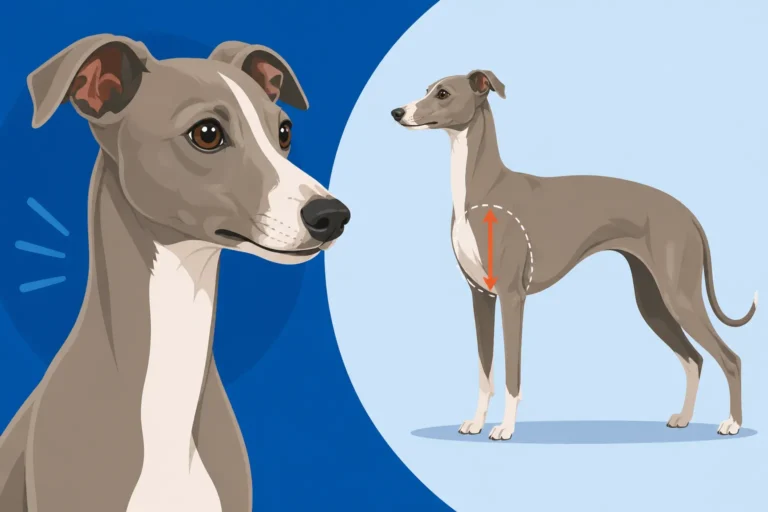
Furthermore, their bone structure, while proportionally similar to a Greyhound's, is significantly lighter and more delicate. Their smaller muscle mass and finer frame mean they simply aren't equipped for the same level of impact or sustained physical exertion. Their deep chest and tucked-up abdomen are hallmark sighthound traits, but on the Italian Greyhound, they serve to create a streamlined, aesthetically pleasing form rather than solely an engine for speed and endurance. These structural nuances, developed over generations, underscore their specialized role as a companion animal, distinct from their athletic, hunting-bred ancestors.
| Feature | Italian Greyhound | Whippet | Greyhound |
|---|---|---|---|
| AKC Group | Toy Group | Hound Group | Hound Group |
| Typical Weight | 7-14 lbs | 20-40 lbs | 60-90 lbs |
| Typical Height | 13-15 inches | 18-22 inches | 25-30 inches |
| Original Purpose | Companion, Lapdog, Status Symbol | Hunting small game (rabbits), Racing | Hunting large game (deer), Racing |
| Build | Delicate, fine-boned, elegant | Muscular, lean, athletic | Powerful, robust, extremely fast |
| Cold Tolerance | Very low, shivers easily, seeks warmth | Moderate, needs coats in cold | Moderate, needs coats in cold |
| Affection Level | Very high, "Velcro dog," seeks constant contact | High, affectionate with family, more independent | High, gentle, can be independent or snuggly |
The Italian Greyhound's Ideal Role: A Companion First and Foremost
When you live with an Italian Greyhound, it becomes abundantly clear why they are placed in the Toy Group. Their entire being, from their physical needs to their emotional wiring, points to their dedicated role as a human companion.
The "Velcro Dog" Phenomenon
If you've ever spent time with an Italian Greyhound, you'll instantly recognize the "Velcro dog" label. These dogs are truly attached to their people, often to the point of being underfoot or draped across a lap whenever possible. They thrive on proximity and physical contact, finding immense comfort and security in being near their chosen humans. This isn't just a charming quirk; it's a deeply ingrained behavioral trait that has been fostered through centuries of being bred specifically for companionship. They were developed to live with people, sharing their living spaces and their lives intimately. The Velcro Dog: What Constant Company Means With an Italian Greyhound is not an exaggeration, but a core aspect of their personality.
This constant need for company means they often struggle with being left alone for long periods. Separation anxiety is not uncommon in the breed, manifesting in behaviors like incessant barking, destructive chewing, or inappropriate elimination when their people are absent. Their happiness and well-being are intrinsically tied to their human family. This intense bond, a hallmark of many Toy Group breeds, defines much of their behavior and makes them profoundly rewarding companions for those who can offer them the attention and closeness they crave. They truly consider themselves part of your every moment.
Delicate Build, Delicate Nature
The Italian Greyhound's delicate physical build is well-known, with slender legs and fine bones that make them susceptible to injuries. This physical delicacy often mirrors a certain sensitivity in their temperament. They are not typically a robust, boisterous breed that shrugs off rough play or harsh words. Instead, they respond best to gentle handling, positive reinforcement, and a calm, consistent environment. A raised voice or a sudden startling movement can cause an Italian Greyhound to become timid, retreat, or even be set back in their training progress. Why Raising Your Voice Sets an Italian Greyhound Back a Month is a common experience for owners.
Their delicate nature extends to their need for warmth and comfort. With their almost non-existent body fat and thin skin, they get cold very easily, even indoors. This means they are often found burrowed under blankets, snuggled into soft beds, or sporting fashionable sweaters and coats. They require careful management of their environment to ensure their physical comfort, something that aligns perfectly with a breed whose primary existence is within the protective confines of a home, rather than braving the elements. This combination of physical and emotional sensitivity makes them uniquely suited to a pampered, companion-centric lifestyle. You’ll often find high-quality beds and cozy apparel for them on sites like Chewy, catering to their need for comfort.
Adapting to Indoor Life and Human Rhythms
For centuries, the Italian Greyhound has been selectively bred to excel at one thing: being a cherished indoor companion. This means they are incredibly well-adapted to living within the rhythms and confines of a human home. Unlike many sporting or working breeds that require vast outdoor spaces and hours of daily activity, Italian Greyhounds are content with shorter walks, indoor play, and plenty of cuddle time. They are often described as "45-mph couch potatoes," capable of incredible bursts of speed but perfectly happy to spend the majority of their day napping or lounging.
Their small bladder, which can be a challenge for housetraining, is another adaptation to indoor life, though perhaps a less convenient one! It means frequent potty breaks are necessary, and many owners successfully train them to use indoor potty solutions, especially in cold or wet weather. This adaptability to indoor living, from their preference for warmth to their lower exercise requirements compared to their larger sighthound kin, underscores their fitness for the companion role. They truly integrate into the family's daily life, becoming an ever-present, affectionate shadow.
Common Misconceptions About the Italian Greyhound's Placement
Despite their clear historical and temperamental fit within the Toy Group, some common misconceptions persist, largely due to their sighthound appearance and name. Addressing these helps clarify why their classification is, in fact, quite accurate.
The "Hound" in its Name: A Lingering Confusion
The most significant source of confusion for many is undoubtedly the "Greyhound" in "Italian Greyhound." The word "hound" immediately brings to mind breeds like Beagles, Basset Hounds, or even their larger cousins like Greyhounds and Borzoi—all dogs known for their hunting prowess, whether by scent or sight. It implies a working dog, a hunter, and traditionally, these are placed in the Hound Group. This linguistic connection can be misleading because, as we've explored, the Italian Greyhound's primary purpose diverged from hunting long ago.
It's a historical carryover, a nod to their ancestral lineage rather than an accurate reflection of their modern (and indeed, centuries-old) function. They look like sighthounds because they descended from them, retaining that elegant, aerodynamic form. However, their size was purposefully reduced, and their role shifted. Think of it less as a "hound" and more as a "miniature sighthound-type companion dog." The name is a heritage marker, not a job description, and understanding this distinction is key to reconciling their appearance with their Toy Group status.
Their Hunting Instincts and Prey Drive
Another common point of contention is the Italian Greyhound's undeniable prey drive. Yes, IGs do have strong hunting instincts. They will chase squirrels, rabbits, blowing leaves, or anything that moves quickly. They can be incredibly fast and focused when a target catches their eye, making them notorious for bolting and often unable to be reliably called back when off-leash in an unsecured area. This powerful instinct might seem to contradict their Toy Group placement, suggesting they belong with the working hounds. Why an Italian Greyhound Cannot Be Trusted Off Leash, Ever is a rule almost all IG owners live by.
However, having an instinct doesn't mean it's their primary bred purpose. Many breeds retain vestiges of their ancestral roles. A Dachshund (Hound Group) was bred to hunt badgers, but few today are actively doing so; they are often cherished companions. Similarly, while an Italian Greyhound's impulse to chase is strong, it's not the defining characteristic that drove their breeding over generations. Their development focused on minimizing this for indoor living, or at least managing it, while maximizing their companionable traits. The drive is there, a vestige of their ancestors, but it's secondary to their role as a delicate, devoted pet. Many pet supply stores like Chewy offer special harnesses designed for sighthounds, which can help prevent escapes if they do decide to give chase.
The Perception of Fragility vs. Robustness
The Italian Greyhound's fragile build often leads to a perception that they are "weak" or "unfit" for any real activity, further cementing their image as a dainty lapdog. While their bone structure is indeed delicate, leading to a higher risk of fractures, especially during their growth phases, they are far from inactive or weak. Italian Greyhounds are incredibly athletic and agile within their appropriate contexts. They love to run, jump, and play, engaging in energetic "zoomies" around the house. They can be surprisingly robust in supervised play with other small, gentle dogs.
The perception of extreme fragility sometimes overshadows their inherent athleticism. They are miniature athletes, capable of great speed and nimble movements, but their physical limits are simply different from a larger, heavier-boned sighthound. This isn't a flaw in their design; it's an intentional result of breeding for small size and elegance. Their robustness is relative to their size, and understanding this nuance—that they are delicate but not necessarily frail in spirit or athleticism within their limits—helps to resolve some of the confusion about their group placement. They embody a unique blend of sighthound grace and companion dog dependency.
Living with a Toy Group Sighthound: What to Expect
Embracing an Italian Greyhound means understanding and accommodating their unique needs, which are distinctly influenced by their Toy Group classification. It's a wonderful journey, but one that comes with specific considerations.
Unique Care Considerations for a Delicate Breed
Owning an Italian Greyhound means embracing a level of care often associated with toy breeds. Their slender build and minimal body fat require constant vigilance regarding temperature. They shiver easily in even slightly cool environments and absolutely require sweaters, coats, and warm bedding, even indoors, particularly in colder climates. Keeping an Italian Greyhound Warm Is Daily Work, Not a Winter Job is a mantra for many IG owners, as their comfort often dictates indoor thermostat settings! Providing them with snuggle sacks and heated beds is not a luxury but often a necessity for their well-being.
Beyond warmth, their delicate bones necessitate a "puppy-proofing" mentality that often extends well beyond puppyhood. Preventing falls from furniture, managing interactions with larger, more boisterous pets, and careful handling are paramount to avoiding injuries. Many owners invest in ramps or steps for sofas and beds to reduce jumping impact. Dental care is also a major commitment; Italian Greyhounds are notoriously prone to dental disease due to their crowded small mouths. Daily brushing is highly recommended, and regular professional dental cleanings are often a yearly expense, highlighting another common trait among toy breeds with tiny jaws. You can find all sorts of specialized toothbrushes and dental chews for small breeds on platforms like Chewy to help with this.
Training and Socialization for a Sensitive Soul
Training an Italian Greyhound requires a gentle touch and an abundance of patience, reflecting their sensitive nature. Harsh corrections or loud voices can cause them to shut down, become fearful, or even regress in their training. Positive reinforcement, using high-value treats and praise, is the most effective approach. They are intelligent and eager to please, but they are also easily distracted and can be incredibly stubborn, particularly if they feel coerced. Consistency and short, fun training sessions work best.
Socialization, especially when they are puppies, is crucial to building a confident and well-adjusted adult IG. Exposing them to a variety of sights, sounds, people, and well-behaved small dogs in a positive, controlled manner can help them overcome their natural shyness and sensitivity. However, caution is always advised, particularly with larger, rougher dogs who could accidentally injure a delicate Italian Greyhound. Their "Toy Group" status often means they thrive in environments with other small, gentle companions or respectful, calm children.
The Joys of Owning a Dedicated Companion
Despite the unique care challenges, the joys of owning an Italian Greyhound are immense and deeply tied to their classification as a dedicated companion. They offer unparalleled affection, devotion, and a constant source of quiet companionship. They are dogs that want to be part of your life, sitting beside you, snuggled on your lap, or curled up in your bed. Their quiet nature and adaptability to apartment living make them excellent urban companions. For those seeking a truly intimate bond with their dog, the Italian Greyhound delivers in spades.
Their elegant appearance, playful antics, and the sheer delight of their soft snuggles make them incredibly endearing. They are truly living works of art, bringing grace and warmth into any home. The fact that they are in the Toy Group isn't just a classification; it's a testament to their inherent purpose: to enrich human lives through devoted companionship. For the right owner, someone prepared to protect their delicate form and nurture their sensitive spirit, an Italian Greyhound will offer a lifetime of love and joy, validating their place as the ultimate "Velcro" toy sighthound.
Disclaimer
This article is for general informational purposes only and does not constitute professional advice. Laws, prices and regulations vary by location and change over time. Consult a qualified professional for guidance on your specific situation.