Why Erect Ears Are Penalized in an Italian Greyhound
An Italian Greyhound’s ears can look dramatically different when it is relaxed and when it is alert, which can make the breed standard seem confusing. The key distinction is between the permitted alert position and ears that remain pricked upright. This guide explains what judges are looking for, why ear carriage affects breed type, and what owners should know before interpreting a puppy’s ears.
What the Italian Greyhound ear standard means
Folded ears at rest and an alert position
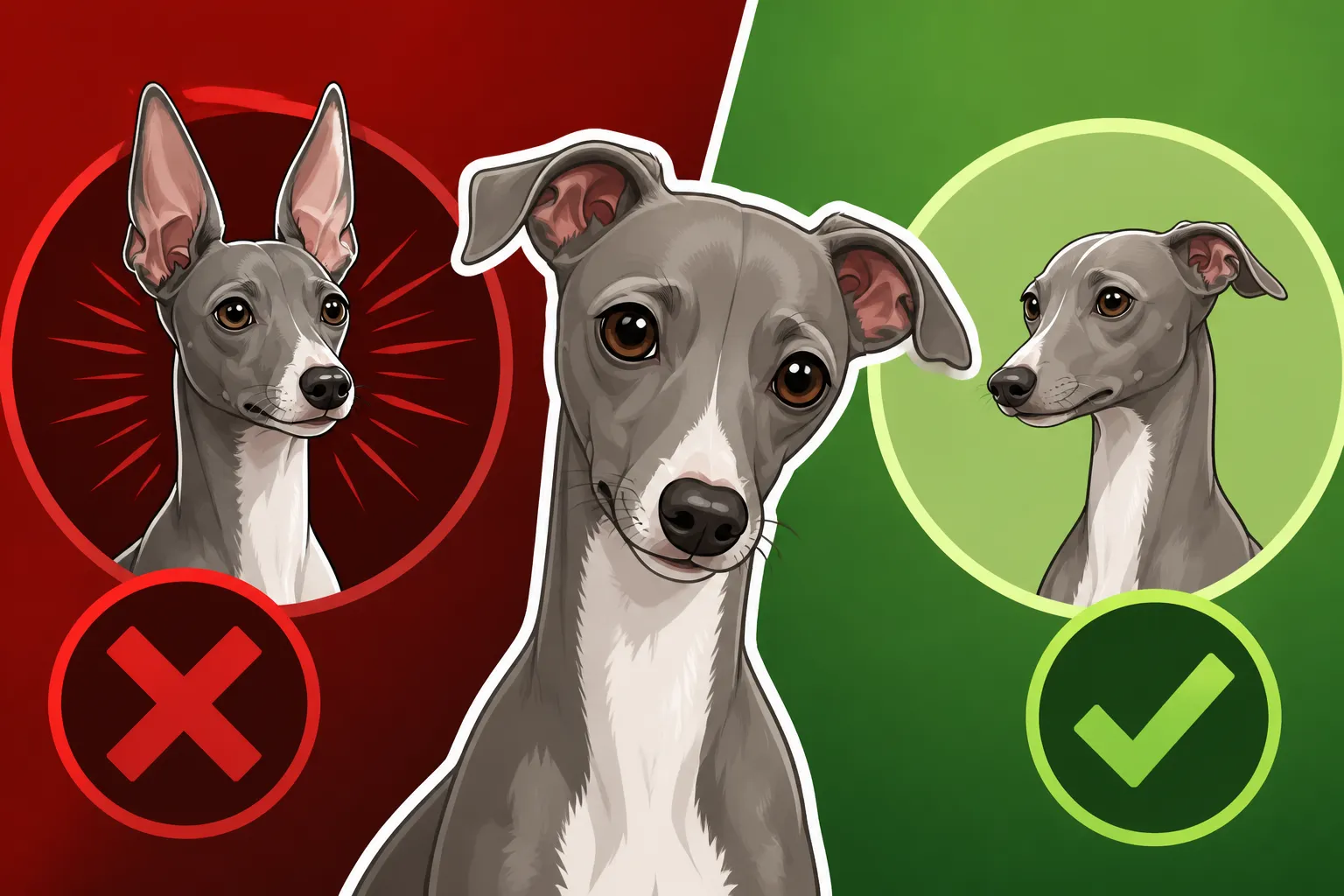
The Italian Greyhound’s ears are meant to be small and fine, folded back when the dog is relaxed. When the dog becomes attentive, the standard allows the ears to lift and be carried out from the head. That alert posture is part of the breed’s expected expression, not automatically a fault.
This distinction is easy to miss in photographs. A dog may be watching a bird, listening to a sound, or focusing on a handler, and its ears can look much more upright than they do while it rests at home. A single picture cannot always tell you whether the ears are naturally erect or simply being held in an alert position.
A useful way to understand the expected look is to read about How an Italian Greyhound's Ears Should Be Carried. The standard is describing both the ear’s form and how it may be carried in different situations. It is not asking every Italian Greyhound to hold its ears in precisely the same position every moment of the day.
What “erect” usually means in the show ring
When people say an Italian Greyhound has erect ears, they may mean different things. They could be describing ears that lift briefly when the dog is interested, which can be normal. Or they might mean ears that stand upright or forward consistently, including when the dog is relaxed. Those are not the same observation.
Judges assess the whole dog, including ear shape, placement, carriage, expression, and overall resemblance to the breed. Ears that remain sharply pricked may depart from the folded, fine-eared look associated with the Italian Greyhound. In a conformation class, that difference can count against the dog because the judge is comparing it with the written standard and the breed’s overall type.
It helps to avoid treating the word “penalized” as meaning every momentary ear lift leads to a fixed deduction. Conformation judging is an overall evaluation. A judge considers how significant a feature is alongside the dog’s other qualities, and the exact effect depends on the rules and judging context. For a broader look at how faults fit into that assessment, see Which Faults Judges Penalize in an Italian Greyhound.
Why ear carriage matters to breed type
The ears contribute to expression
An Italian Greyhound’s expression is created by more than its eyes or muzzle. The fine head, delicate skin, ear placement, and way the ears fold or lift all contribute to the characteristic look. Permanently upright ears can give the head a different expression from the one the standard describes.
That does not make an erect-eared dog less affectionate, less athletic, or less deserving of care. It means that in a conformation setting, the dog’s appearance differs from a particular breed ideal. Show standards describe a desired type; they are not a measure of a companion dog’s worth.
Breed type is considered across the entire dog, not one feature at a time in isolation. A judge may also consider proportions, topline, movement, feet, and temperament. If you are learning how those pieces fit together, What Judges Look For First in an Italian Greyhound offers useful context, while The High Stepping Gait That Marks a Correct Italian Greyhound focuses on a visible part of movement and presentation.
Ear shape and ear carriage are related but not identical
The shape of an ear and the way a dog carries it are connected, but they are not interchangeable. A fine ear may fold back at rest and rise when the dog is alert. Another ear may have a firmer or differently shaped cartilage that encourages it to stand more persistently. A dog’s mood, attention, and surroundings can also change what you see.
For that reason, it is better to observe the dog over time than to judge from one snapshot. Notice the ears when the dog is sleeping, greeting someone, walking outdoors, and listening closely. If they change with the dog’s attention, that may simply reflect normal alert carriage. If they stay pricked in nearly every situation, that is a more meaningful observation for someone considering conformation.
| What you observe | What it may mean | What to keep in mind |
|---|---|---|
| Ears folded back while the dog is relaxed | Typical relaxed carriage | Look at the whole head and overall type |
| Ears lifted when the dog notices something | Alert carriage can be permitted | A momentary raised position is not the same as permanently erect ears |
| Ears held upright in many situations | A possible departure from the described ear carriage | A breeder or knowledgeable judge can assess the dog in person |
| Sudden change in ear position, discomfort, or sensitivity | A possible health concern rather than a conformation question | Ask a veterinarian, especially if the dog seems uncomfortable |
Puppies, genetics, and what owners should do
A puppy’s ears may look different from one moment to the next
Puppies are busy noticing everything, so their ears may appear to change constantly. A puppy who is focused on a person across the room may lift its ears; one who is drowsy may let them fold back. That variation is one reason not to make a confident judgment from a single photo or a brief visit.
Ear cartilage and carriage are influenced by inherited features, but appearance alone does not tell you exactly how a puppy will look as it matures. If show prospects matter to you, ask the breeder how the puppy’s ears look in relaxed and attentive situations, and ask how they evaluate the puppy’s overall structure. A responsible discussion should cover more than one feature.
You may also want to review What Height the Italian Greyhound Standard Asks For and What a Correct Italian Greyhound's Topline Looks Like to see how standards describe other parts of the dog. This makes it easier to understand that conformation is about a combination of characteristics, rather than a checklist where one detail determines everything.
Don’t try to “correct” the ears at home
Avoid taping, gluing, weighting, or otherwise manipulating a dog’s ears to change how they look. These methods can irritate or injure delicate skin and may cause discomfort. They also do not replace sound breeding decisions or a fair evaluation of the dog as it is.
If you are preparing for a show, ask an experienced breeder or a qualified conformation mentor how the relevant standard is interpreted. A conversation with someone who can observe the dog in person is much more useful than trying to assess ear carriage from a still image. For everyday ownership, there is usually no reason to alter healthy ears simply because they do not match a show ideal.
Ear appearance is separate from ear health. If an ear becomes red, swollen, painful, unusually dirty, or sensitive to touch, check with your veterinarian rather than treating it as a cosmetic issue. Some owners keep basic pet-care supplies on hand, and Chewy is one familiar retailer where people may look for routine items such as cotton pads; follow your veterinarian’s guidance on what is safe to use in the ear. Chewy may also be a convenient place to find general grooming supplies, but avoid putting products into the ear canal unless your veterinarian recommends them. If you are unsure what to buy, ask the clinic first; Chewy listings are not a substitute for an ear exam or veterinary advice.
How to evaluate the ears without overreading them
Look at the dog in more than one setting
If you are assessing an Italian Greyhound for a show home, observe its ears when it is relaxed and when it is alert. Ask to see the dog moving naturally and interacting with its surroundings, rather than relying only on a posed portrait. The aim is to understand the dog’s normal carriage, not to catch it in a single flattering or unflattering instant.
For a prospective puppy, ask the breeder what they expect and what they cannot predict. A thoughtful breeder can explain how the puppy’s ears fit into the rest of its structure and whether the puppy is being considered as a companion, show prospect, or both. Their answer should be measured; no one can guarantee a show career from a puppy’s ears alone.
If you already own an Italian Greyhound with upright ears, it is still the same affectionate companion you brought home. A conformation judge may view persistent erect carriage as a departure from the standard, but that does not change your dog’s health, personality, or value as a family member. For a wider understanding of the breed’s appearance and purpose, see Why the Italian Greyhound Is a Toy and Not a Hound.
Keep the standard separate from everyday care
A breed standard is a guide for judging conformation. It is not a care manual, a health diagnosis, or a ranking of individual dogs. The practical question for most owners is whether the ears are comfortable and healthy, not whether they rest at the exact angle preferred in the show ring.
If you are considering breeding or showing, seek advice from experienced people who know the breed and the applicable standard. If your concern is pain, discharge, persistent scratching, or a sudden change, contact a veterinarian. And if you simply wondered why an Italian Greyhound’s ears look different from one photo to the next, remember the basic distinction: folded when relaxed, lifted when alert, and persistently erect carriage may be viewed as a conformation fault.
Disclaimer
This article is for general informational purposes only and does not constitute professional advice. Laws, prices and regulations vary by location and change over time. Consult a qualified professional for guidance on your specific situation.