Why an Italian Greyhound Cannot Be Trusted Off Leash, Ever
The dream of a carefree walk in nature, your beloved Italian Greyhound trotting happily beside you, off-leash and utterly devoted, is a beautiful one. But for anyone who has lived with this unique and enchanting breed, the harsh reality often sets in quickly: an Italian Greyhound cannot, under almost any typical circumstance, be trusted off leash, ever. This guide is here to deeply explore why this isn't a failing on your part or your dog's, but rather a fundamental aspect of their breed, and what you can do to ensure their safety and your peace of mind.
The Sighthound Instinct: Hardwired to Chase and Run
It's tempting to think of an Italian Greyhound as just a smaller version of a typical dog, but they are first and foremost sighthounds. This means they were selectively bred for millennia to spot movement, lock onto it, and chase it down with incredible speed and single-minded focus. This isn't a learned behavior you can train out of them; it's an intrinsic part of their being, etched deep into their DNA.
The Power of Prey Drive
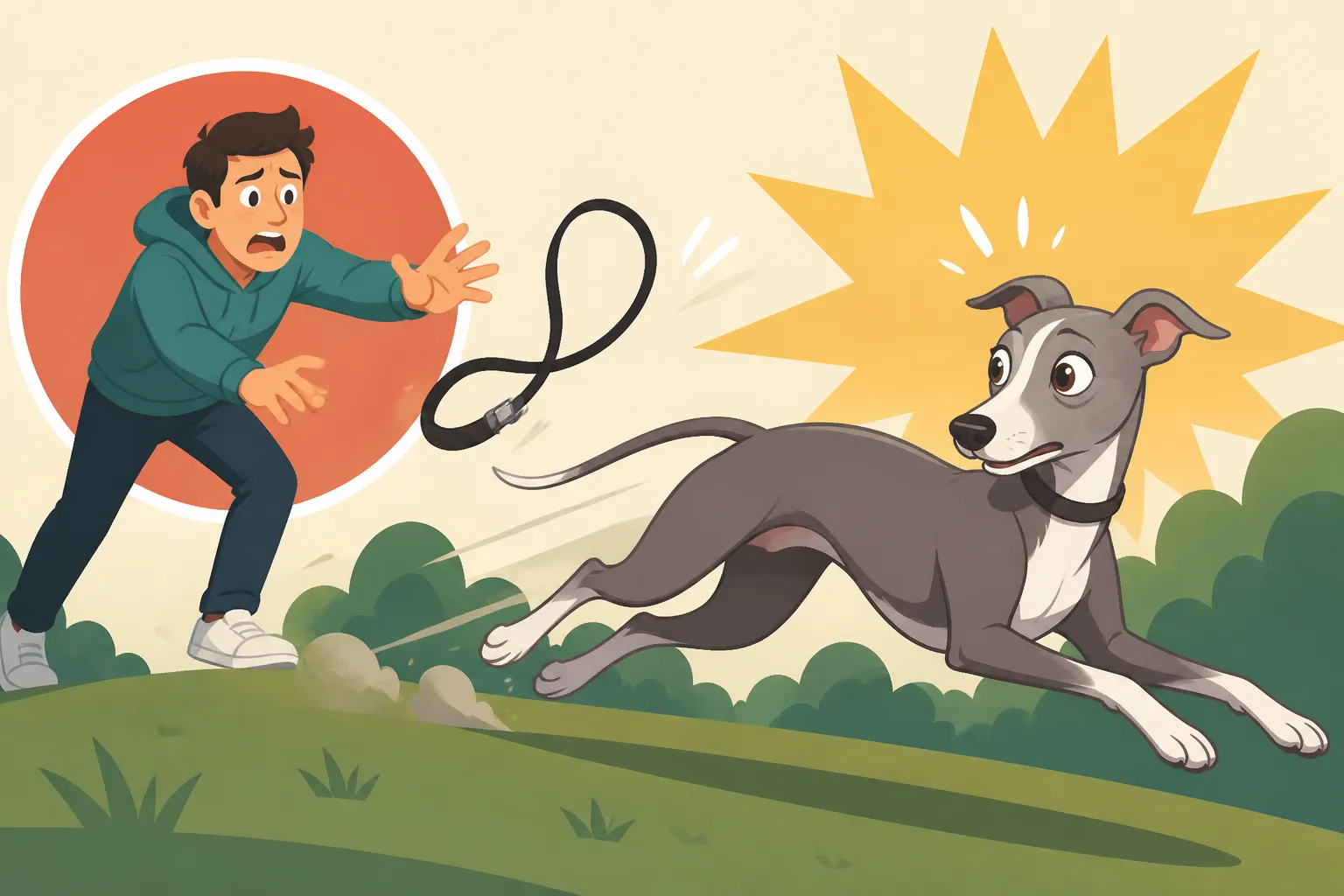
Imagine standing at the edge of a field with your Italian Greyhound. You've been working on recall, and they've been doing so well in the backyard. Suddenly, a squirrel darts across the grass, or a bird flutters from a bush. In that instant, every ounce of your dog's ancestral programming kicks in. Their eyes, designed for scanning horizons, catch the movement. Their mind switches from "loyal companion" to "apex predator." Your voice, your commands, the treats in your pocket – they all vanish from their awareness as the chase instinct takes over. It's not disobedience; it's a biological imperative. How Strong an Italian Greyhound's Prey Drive Is delves deeper into this powerful force.
This prey drive is so strong that it overrides almost everything else. It doesn't matter how many hours you've spent on positive reinforcement or how many high-value treats you offer. When a rabbit bursts from cover, or a leaf tumbles just right in the wind, your Italian Greyhound sees only the chase. They are bred to pursue, and their pursuit is fueled by a rush of adrenaline and instinct that makes them temporarily deaf and blind to their surroundings, and especially to you. You might call their name a dozen times, but it will be as if you never spoke.
Think of it like this: if you were in a deep, peaceful sleep, and suddenly the fire alarm blared, your immediate, unthinking reaction would be to get up and react to the alarm. You wouldn't stop to consider if you had brushed your teeth that morning or if you had a chore to do. Your IG's prey drive is that primal alarm, overriding all conscious thought and learned behavior in the face of a perceived chase opportunity. It's simply who they are.
Sighthound Vision and Speed
Italian Greyhounds possess exceptional vision, particularly for detecting movement at a distance. They don't track scents like many other breeds; they see their quarry. Once they spot something, their body is built for one purpose: to accelerate rapidly and cover ground. They have long, lean muscles, an arched back, and a deep chest, all designed for speed and agility. They can go from a standstill to top speed in a blink, often before you've even registered what they're chasing.
This combination of keen eyesight and explosive speed means that by the time you've identified the "thing" they're chasing – be it a cat, a deer, or even a dust bunny caught in the wind – your Italian Greyhound is already halfway across the park, gaining speed. Their top speed is surprisingly fast for their size, and they cover ground with an effortless, graceful stride that can quickly put them out of your reach and sight. How Fast an Italian Greyhound Runs explores just how speedy these little rockets can be.
Their speed isn't just about how quickly they can go, but also how little warning you get. There's no build-up, no hesitations; it's an immediate, full-throttle sprint. This leaves you with precious few seconds to react, and by then, it’s usually too late. Trying to catch them is almost always futile, as they are faster, more agile, and completely focused on their objective, which is rarely returning to you in that moment.
The Independent Mind: "Selective Hearing" and Distraction
While they are incredibly affectionate and bond deeply with their families, Italian Greyhounds also possess an independent streak. This isn't stubbornness in the way a bulldog might be, but rather a capacity for single-minded focus on a task (like chasing) that makes them seem utterly oblivious to human commands.
The Myth of Reliable Recall
Many owners embark on recall training with the best intentions, imagining their Italian Greyhound will eventually come bounding back on command, tail wagging. And indoors, or in a completely sterile, distraction-free environment, they might even achieve a near-perfect recall. The issue arises when you introduce the real world. A bird flying overhead, a leaf skittering across the pavement, or even the scent of another dog can instantly break their focus, making your recall command utterly irrelevant.
It's not that they don't know the command; it's that in that crucial moment, the reward of chasing is exponentially greater than any treat or praise you could offer. Their short-term memory of "come" is overwritten by their ancient, powerful instinct. This is why even a dog with seemingly excellent recall in a controlled setting can bolt without a second thought in an open field, leaving you calling their name in vain as they disappear over the horizon. How Reliably an Italian Greyhound Comes When Called explains the nuances of this challenge.
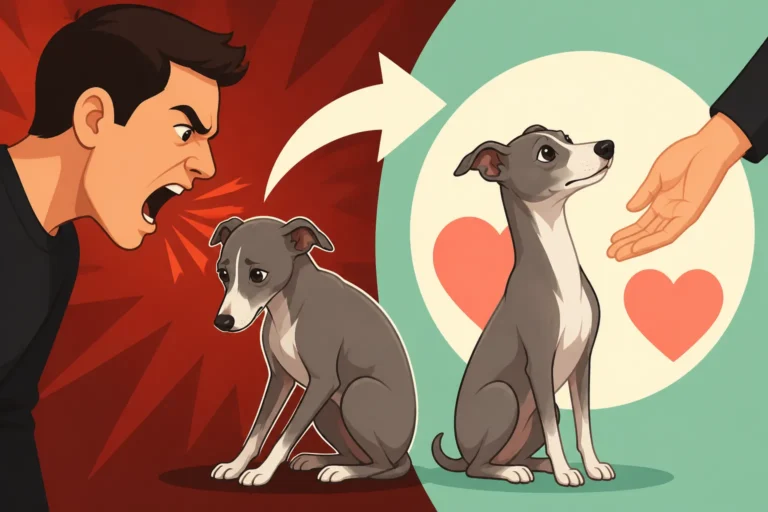
Trying to enforce recall with frustration or punishment in these moments is not only ineffective but can be detrimental. It teaches your IG to associate you with negativity when they are enjoying themselves, making them less likely to return to you in the future. Instead, the focus must shift from training out instinct to managing their environment and preventing the opportunity for them to bolt in the first place.
High Distraction Levels Outdoors
The world is a vibrant, stimulating place, and for an Italian Greyhound, every movement is a potential chase. This means even if there isn't a direct "prey" animal present, the sheer number of visual stimuli can be overwhelming and captivating. A distant person walking, a car turning the corner, a child playing with a ball – any of these can trigger their sighthound sensibilities and pull their attention away from you.
This high level of environmental distraction makes it nearly impossible to hold their attention consistently enough for safe off-leash excursions. What might seem like a calm, quiet park to you is a bustling arena of potential targets for your Italian Greyhound. Their focus is outward, constantly scanning, and their ears are often tuned out to anything but the whisper of the wind or the rustle of leaves. This is precisely why managing their environment is crucial, as you simply cannot compete with the natural world's allure.
Even in what seems like a safe, empty space, the risk remains. A fence that appears secure might have a small gap your slender IG can slip through, or a gate could be left ajar. Their ability to cover ground quickly means that a momentary lapse in your attention or a slight misjudgment of the environment can lead to them being out of reach and in danger in seconds.
Environmental Dangers: Why the World Isn't Safe for a Loose Italian Greyhound
Beyond their inherent instincts, the modern world presents a myriad of dangers that make off-leash freedom a perilous gamble for an Italian Greyhound. Their delicate build and diminutive size, combined with their speed and lack of road sense, put them at extreme risk.
Traffic Hazards and Busy Streets
This is, by far, the most terrifying and common danger for a loose Italian Greyhound. These dogs have absolutely no concept of cars, traffic, or the speed at which vehicles travel. When they bolt, they do so with a singular focus on their chase, often running directly into roads without hesitation. Their small size makes them incredibly difficult for drivers to spot, especially at dusk or in heavy traffic. The outcome of such an encounter is almost always tragic.
Even quiet residential streets pose a risk. A delivery truck, a child riding a bicycle, or even a neighbor pulling out of their driveway can be enough to cause a fatal accident. Unlike many breeds, Italian Greyhounds often don't stop and look; they simply run. Their instincts tell them to outpace their prey or escape a perceived threat, not to assess a dangerous intersection. This means that a lost or loose Italian Greyhound is immediately in mortal danger from passing vehicles, a heartbreaking reality that makes off-leash wandering unacceptable.
It’s crucial to understand that their speed, which is an advantage in a field, becomes a deadly liability on a street. You cannot outrun them, and a car cannot stop in time. This is why a secure harness and a strong leash are non-negotiable every single time you step outside your door.
Encounters with Other Animals
A loose Italian Greyhound, especially one caught up in a chase, is highly vulnerable to other animals. This includes larger dogs, wildlife, and even cats. While an IG might bravely chase a squirrel, they are physically outmatched by most other dogs. A large dog, even a friendly one, playing too roughly can easily cause severe injury to an Italian Greyhound's delicate bones. Why an Italian Greyhound Should Not Play With Large Dogs is an important read on this topic.
Furthermore, a loose Italian Greyhound may inadvertently provoke a confrontation with a territorial cat or a defensive wild animal. Their chase instinct often means they don't know when to back down, and their small size makes them easy prey for coyotes, larger birds of prey, or even aggressive domestic animals. It's a cruel twist of fate that the very instinct that drives them to run can lead them directly into harm's way.
Consider the ripple effect of a loose IG. They could run onto someone else's property, get into a fight with a resident dog, or even cause an accident by running into the street in front of a car. The responsibility for these incidents falls squarely on the owner, making the decision to keep them leashed a vital one for everyone's safety, not just your dog's.
The Risk of Getting Lost
Italian Greyhounds are often so focused on the chase that they can quickly become disoriented. They are not known for their exceptional homing instincts like some breeds. A minute of off-leash freedom can turn into hours of frantic searching, and in an unfamiliar area, they can wander far from home. Their speed means they cover significant distances in a short amount of time, making it incredibly difficult to track them once they've bolted.
Their sleek, short coats offer little protection from the elements, and their low body fat means they get cold very quickly, even on mild days. Why an Italian Greyhound Carries Almost No Body Fat explains why they struggle with temperature regulation. A lost Italian Greyhound can quickly become hypothermic, hungry, and terrified. Even with microchips and ID tags, the chances of a safe return diminish rapidly with every passing hour they are exposed and alone.
The emotional toll of a lost Italian Greyhound on their human family is immense, and the risks of injury or worse while they are loose are too high to ignore. It’s a terrifying scenario no one wants to face, reinforcing the absolute necessity of keeping them securely leashed at all times when outside of a truly secure, supervised area.
Preventative Measures: Keeping Your Italian Greyhound Secure
Since off-leash freedom is generally off the table, focusing on secure containment and management is paramount for Italian Greyhound owners. This involves careful consideration of equipment, home safety, and public outings.
The Right Gear: Harnesses and Leashes
A standard flat collar is simply not safe for an Italian Greyhound. Their slender necks, small heads, and deep chests mean they can slip out of a regular collar with alarming ease, especially when startled or backing away from something. A martingale collar offers more security for walking on a leash as it tightens gently when pulled, preventing escape, but it's still not ideal for every IG. For absolute security, a well-fitting harness is your best friend.
Look for a harness specifically designed for sighthounds or those with a "double-strap" or "Y-front" design that secures around both the neck and chest, preventing them from backing out. Brands that cater to sighthounds often have specific designs that account for their unique body shape. Ensure the harness fits snugly but allows for full range of motion, and regularly check for wear and tear. A sturdy, non-retractable leash, preferably 4-6 feet long, provides ample control without being cumbersome. Which Harness Suits an Italian Greyhound's Neck provides more detail on choosing the best harness.
When purchasing new gear, it’s always a good idea to measure your Italian Greyhound carefully and compare it to size charts. Reading reviews, particularly on sites like Amazon, from other Italian Greyhound owners can offer valuable insights into which harnesses truly prevent escapes. Remember, an ill-fitting harness is almost as dangerous as no harness at all.
Door Safety and Home Security
The "door dash" is a common Italian Greyhound trait. Their speed and eagerness to explore (or chase) mean they can burst through an open door in a flash. This makes strict door protocols essential in any household with an Italian Greyhound. Teach everyone in the family to be vigilant about closing doors securely, and consider using baby gates to create a "double barrier" at entry points to the outside.
Training your Italian Greyhound to "wait" at the door before being allowed through can also be a lifesaver, though this requires consistent practice and cannot be fully relied upon if an exciting stimulus is present outside. Placing leashes and harnesses right by the door, ready for immediate use, can help. Always ensure your yard is fully fenced and that there are no gaps under gates or in the fencing that your slender IG could squeeze through. Teaching an Italian Greyhound to Wait at a Door offers tips for this training.
Even if you have a securely fenced yard, never leave your Italian Greyhound unattended outside. Their ability to climb or find unexpected escape routes is surprising, and they are vulnerable to birds of prey or other dangers if left alone. Indoor safety is just as important as outdoor safety, as a moment of forgetfulness can have serious consequences.
Training for Reliability (Within Limits): What Is Possible
While the goal of truly reliable off-leash recall in an open environment might be unrealistic for an Italian Greyhound, responsible training does play a vital role in their safety and your peace of mind. It's about setting realistic expectations and focusing on management rather than overcoming inherent instinct.
Foundation Training and Management
Focus on building a strong foundation of basic obedience commands in a distraction-free environment. Commands like "sit," "stay," and a reliable "come" (even if only effective indoors or in a very controlled space) are incredibly valuable for managing day-to-day interactions. Use positive reinforcement, high-value treats, and short, fun training sessions to keep your intelligent but sensitive Italian Greyhound engaged.
Management is key. This means proactively preventing situations where your Italian Greyhound might be tempted to bolt. Always using a leash and harness outdoors, securing doors, and supervising them closely even in fenced areas are all forms of effective management. Understanding their triggers – what excites them and makes them want to chase – allows you to anticipate and avoid risky situations. This is where a resource like BAXTER & Bella, with its focus on positive, foundational training, can be incredibly helpful for new puppy owners or those looking to refresh their skills.
It's also important to manage your own expectations. Accept that your Italian Greyhound may never be the dog that can hike off-leash with you. Embrace their unique sighthound qualities and adapt your lifestyle to ensure their safety. This acceptance is not a failure; it's a responsible and loving choice that prioritizes their well-being.
Emergency Recall: A Last Resort
While true off-leash reliability is rare, an "emergency recall" can be practiced as a last-ditch effort for critical situations. This is a special, extremely high-value command (e.g., a distinct whistle or a unique word) that is only ever used in genuine emergencies and is associated with the absolute best treats or rewards your Italian Greyhound can imagine. The idea is that it's so rare and so highly rewarding that it might just cut through their chase instinct for a second.
This command should never be diluted by casual use. Practice it rarely, in controlled, low-distraction environments, always rewarding with something truly spectacular. The goal isn't perfection, but rather to have a single, powerful tool in your arsenal that might give you a fighting chance if your Italian Greyhound somehow gets loose in a dangerous situation. It's a layer of preparedness, not a license for off-leash freedom. What to Do When an Italian Greyhound Gets Loose offers further advice on crisis management.
Remember that even the best emergency recall is not foolproof, especially with a sighthound. The best defense is always prevention: a secure leash, a well-fitting harness, and a diligent owner. Think of the emergency recall as a life raft – you hope you never need it, but it's good to have.
Alternative Outlets for Off-Leash Fun: Safe Ways to Zoom
Just because they can't be off-leash in open public spaces doesn't mean Italian Greyhounds can't enjoy safe, exhilarating runs and play. There are several ways to satisfy their need to sprint and chase without putting them in harm's way.
Securely Fenced Dog Parks and Fields
The absolute safest place for an Italian Greyhound to experience off-leash freedom is in a securely fenced dog park or private dog run. Look for parks with double-gated entries and fences that are high enough to prevent jumping and secure enough to prevent squeezing underneath. Even in these spaces, vigilance is key. Always scan the area for potential escape routes, monitor your dog's interactions with other dogs, and be aware of any small prey animals (like squirrels) that might be inside the fence.
Not all dog parks are created equal, and some may not be suitable. Large, boisterous breeds can unintentionally injure a delicate Italian Greyhound during play. Choose times when the park is less crowded, or consider seeking out breed-specific meetups if available in your area. Even in a fenced area, never assume absolute safety; your presence and supervision are always required. This allows them to indulge in their fantastic The Indoor Zoomies an Italian Greyhound Gets and outdoor sprints.
Many Italian Greyhounds thrive in the company of other sighthounds, understanding their play style and speed. If you have access to a sighthound-specific playgroup or private rentals of secure fields, these can be ideal for allowing your IG to stretch their legs and truly fly without the constant worry of them disappearing.
Long Lines and Lure Coursing
For those who want to give their Italian Greyhound more freedom of movement in an open space, a long line (a 20-50 foot leash) can be a good compromise. This allows them to run and explore a wider area while still being physically attached to you. Ensure the long line is attached to a secure harness, not a collar, to prevent injury if they hit the end of the line at speed. Always be aware of your surroundings when using a long line to avoid tangles with other dogs, people, or obstacles.
Lure coursing is perhaps the ultimate safe outlet for an Italian Greyhound's chase instinct. This organized sport involves dogs chasing an artificial lure (usually plastic bags) across an open field, mimicking the pursuit of live prey. It's a fantastic way for them to express their natural abilities in a controlled, safe, and exhilarating environment. Many kennel clubs and sighthound associations offer lure coursing events, and it's a joy to watch an Italian Greyhound truly shine in their element. Lure Coursing and Racing With an Italian Greyhound describes this exciting activity.
Lure coursing provides not only physical exercise but also immense mental stimulation, fulfilling their deeply ingrained prey drive. It's a fantastic bonding activity and a testament to their incredible athleticism. Exploring these types of activities ensures that your Italian Greyhound gets to be a dog, experiencing the thrill of the chase, even if it's not the traditional off-leash romp you might have initially envisioned.
The Emotional Toll: Accepting the Reality
Coming to terms with the fact that your Italian Greyhound can't be trusted off-leash can be an emotional journey for many owners. It often means adjusting expectations, modifying routines, and sometimes feeling a pang of sadness for the freedom you wish you could offer.
Adjusting Expectations and Routines
It’s completely normal to feel a bit disappointed when you realize the limitations that come with owning an Italian Greyhound. We see other dogs romping freely in parks, and the idyllic image of a dog running unfettered is deeply ingrained in our perception of pet ownership. However, for Italian Greyhounds, safety is freedom. Freedom from injury, freedom from getting lost, and freedom from traffic accidents. This shift in perspective is crucial for both your well-being and your dog's.
Your routines will adapt. Walks will always involve a leash. Trips to open spaces will require either secure fencing or a long line. You might spend more time seeking out dog-friendly venues with secure outdoor areas. This isn't a burden; it's simply part of the unique partnership you have with an Italian Greyhound. Many owners find that these adjustments lead to a deeper understanding and appreciation of their dog's special needs and instincts.
Instead of focusing on what you can't do, celebrate what you can do. Enjoy those leashed walks, explore new neighborhoods, and find joy in watching your IG perform zoomies in your safely fenced yard. Their affectionate nature and constant companionship indoors make up for any perceived limitations outdoors. What an Italian Greyhound Does All Day provides a glimpse into their typical activities.
Celebrating Their Unique Qualities
Embrace the unique qualities that make the Italian Greyhound such a special breed, even if they come with specific safety considerations. Their incredible speed, keen eyesight, and intense focus on movement are part of their charm and history. These traits contribute to their elegance and the joy they bring into our lives. By understanding and respecting their sighthound nature, you are being the best advocate for your dog.
Italians are often described as "Velcro dogs" due to their desire for constant closeness and affection. This deep bond you share means they truly thrive on your companionship, even if it's primarily experienced on a leash or within the safe confines of your home. Their need to be near you, to cuddle under blankets, and to be a constant presence is a powerful counterpoint to their independent outdoor drive. The Velcro Dog: What Constant Company Means With an Italian Greyhound delves into this endearing trait.
Ultimately, accepting that an Italian Greyhound cannot be trusted off-leash, ever, is a testament to responsible ownership. It’s a decision born of love and a clear understanding of their breed-specific needs and vulnerabilities. While the image of a frolicking, off-leash dog is enchanting, the reality for an Italian Greyhound is that safety and security are the greatest gifts you can give them.
| Scenario for Off-Leash Freedom | Risk Level for Italian Greyhound | Reason | Safe Alternatives |
|---|---|---|---|
| Open Field/Park (unfenced) | Very High | Strong prey drive, exceptional speed, poor recall outdoors, traffic/wildlife risk. | Long line, securely fenced private dog run. |
| Hiking Trail | Very High | Wildlife, steep drops, getting lost, slippery terrain, other dogs. | Leashed hiking, specific dog-friendly trails that are known to be safe/quiet. |
| Backyard (unsupervised) | High | Escape through small gaps, jumping fences, vulnerability to predators, getting cold easily. | Constant supervision in securely fenced yard, never left alone. |
| Dog Beach | Very High | Strong currents, unpredictable waves, other dogs, risk of running off, consuming sand/saltwater. | Leashed beach walks at low tide, private beach access if truly secure and calm. |
| Indoor Dog Park | Moderate | Risk of injury from larger, boisterous dogs; still require supervision. | Smaller, breed-specific playdates, dedicated sighthound meetups. |
Disclaimer
This article is for general informational purposes only and does not constitute professional advice. Laws, prices and regulations vary by location and change over time. Consult a qualified professional for guidance on your specific situation.