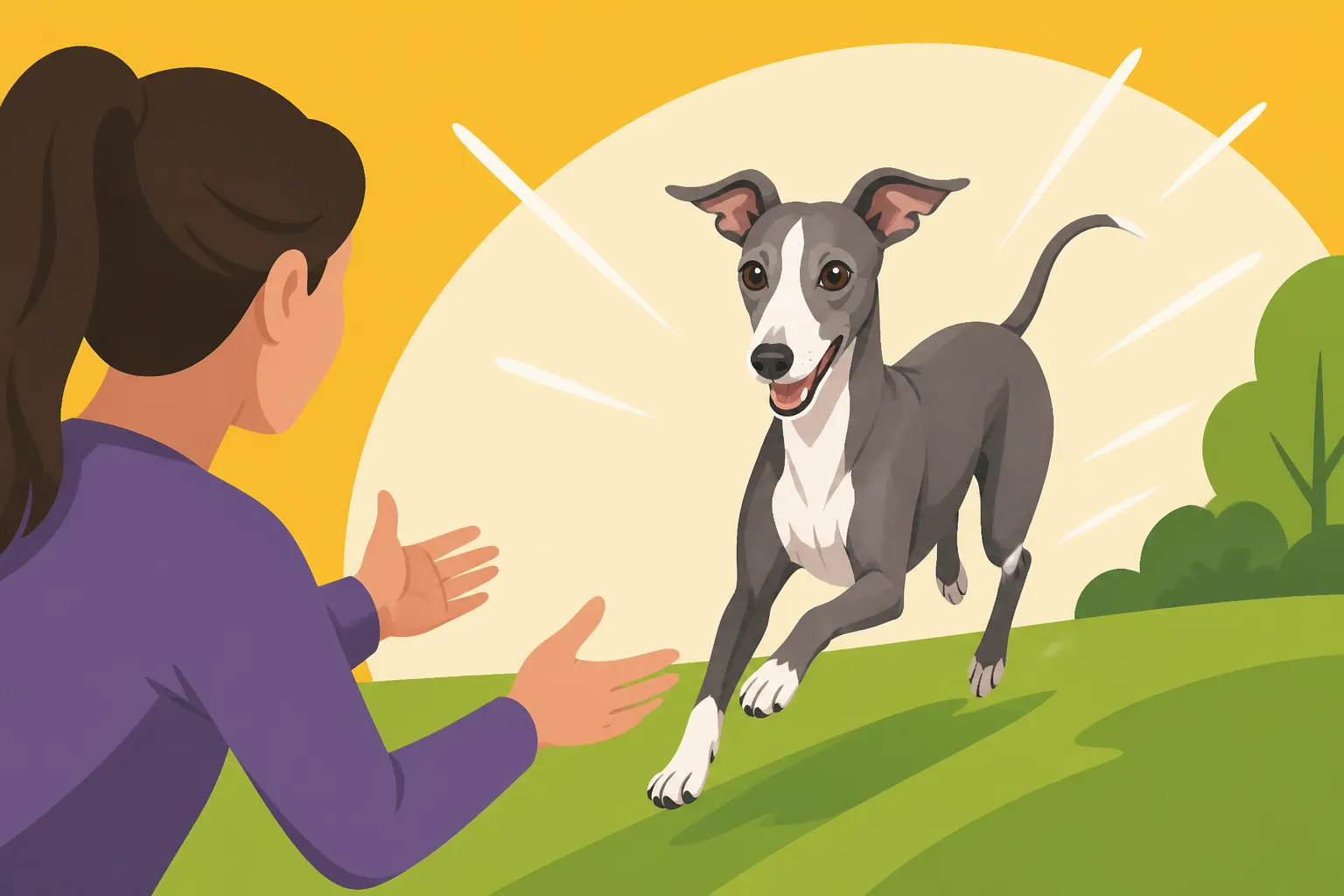
How Reliably an Italian Greyhound Comes When Called
One of the most common hopes (and often, frustrations) for Italian Greyhound owners is the dream of a perfectly reliable recall – that magical moment when your beloved Iggy, caught up in the thrill of a zoomie, turns on a dime and races back to you at your call. Let's be honest, for many, this remains a distant fantasy rather than a consistent reality. This guide dives deep into why Italian Greyhounds are notoriously challenging when it comes to coming when called, what you can realistically expect, and the dedicated strategies that can help improve their responsiveness.
Understanding the Italian Greyhound's Nature and Its Impact on Recall
Before we even talk about training, it's crucial to understand the very essence of an Italian Greyhound. They are sighthounds through and through, bred for speed and to chase anything that moves. This inherent nature is the primary reason why achieving a consistently reliable recall can feel like an uphill battle. It's not about them being stubborn; it's about millions of years of selective breeding telling them to do the exact opposite of what you're asking in a high-distraction environment.
The Power of Prey Drive in an Italian Greyhound
Your Italian Greyhound's eyes are finely tuned instruments designed to spot movement from a distance. The moment a squirrel darts across the park, or a leaf tumbles in a specific way, their ancient instincts kick in. That little flicker of movement is more compelling, more exhilarating, and frankly, more natural to them than any command you might utter. They're not being disobedient; they're simply being an Italian Greyhound. This intense focus on perceived prey means that once they're locked onto something, your voice often becomes background noise, if they hear it at all. It's a primal urge, not a choice to ignore you. You'll witness this firsthand when they're off lead (even for a moment) and spot a rabbit – they're gone in a flash, completely deaf to your frantic shouts. What an Italian Greyhound Does When It Sees a Rabbit
Consider a hypothetical scenario: you're at a friend's securely fenced yard, feeling brave, and you decide to let your Iggy, Luna, off leash. Suddenly, a cat saunters across the back of the property. In less than a second, Luna's body language shifts – head up, ears forward, tail stiff. Before you can even get "Luna, come!" out, she's launched, a blur of motion streaking toward the fence line. Her pursuit is not a conscious defiance of your command; it's an automatic, hardwired response. Her brain is screaming "CHASE!" and every other thought, including your recall cue, is simply overridden by that powerful impulse. Understanding this isn't an excuse to give up, but rather a vital perspective that informs realistic expectations and effective training methods.
The Independent Sighthound Spirit
Unlike many other breeds developed for close work with humans, like herding dogs or retrievers, sighthounds were bred to operate independently. Their job was to spot prey, give chase, and catch it without constant direction from a handler. This independent spirit is part of their charm – they're not needy or constantly seeking approval – but it's also a significant factor in their recall challenges. They don't have the inherent "need to please" that you might find in a Labrador, which can make recall training less intuitive for them.
When your Italian Greyhound is exploring a new environment, or even just enjoying a leisurely sniff in the grass, their mind is often on their own agenda. They're processing scents, scanning for movement, and enjoying their own sensory experience. Interrupting this with a recall command requires them to disengage from their current focus and choose to return to you, which can be a big ask. It requires a level of self-control and a strong motivation to come back that needs to be carefully cultivated. This isn't a failure of your bond, but a reflection of their breed's design. They're thinkers, observers, and often, independent decision-makers, especially when a chase is on their mind. Why an Italian Greyhound Cannot Be Trusted Off Leash, Ever
Challenges Specific to Italian Greyhound Recall Training
Training any dog for a reliable recall takes time and dedication, but Italian Greyhounds present their own unique set of hurdles. Their physical characteristics and their sensitive personalities mean that traditional, one-size-fits-all training approaches often fall flat. What works for a Golden Retriever might just frustrate an Iggy owner.
The Speed Factor: When an Italian Greyhound Zips Away
Let's talk about speed. Italian Greyhounds are incredibly fast. We're talking about dogs that can hit impressive speeds in a blink of an eye. This isn't just a fun fact; it's a critical safety concern and a major challenge for recall. If your Iggy bolts, the distance they can cover in mere seconds is astonishing. This means you have a very narrow window to intervene or get their attention before they're out of sight or in a dangerous situation. How Fast an Italian Greyhound Runs
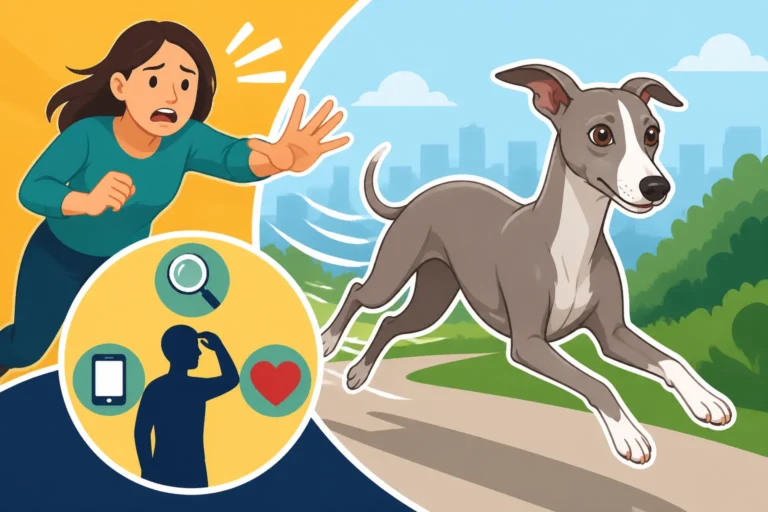
Imagine you're at a friend's house with a gate that's usually latched. You glance away for a moment, and your Iggy, Pip, being the curious explorer he is, nudges it open just enough to slip through. The moment he's out, a scent or a movement catches his attention, and he's off, rocketing down the street. Even if you yell "Pip, come!" with all your might, his speed puts him meters away before the sound even fully registers. By the time you're even halfway to the gate, he could be across the street, possibly toward traffic. Their acceleration is so rapid that the normal "buffer" time you might have with a slower dog simply doesn't exist. This high-stakes reality means recall training isn't just about obedience; it's about life-saving speed.
Sensitive Souls: The Impact of Harsh Correction
Italian Greyhounds are notoriously sensitive. They respond poorly to harsh corrections, loud voices, or anything that might be perceived as frightening or overly assertive. A sharp "NO!" or a frustrated shout from you won't make them come running; it's far more likely to make them cower, shut down, or even run further away. Their trust is easily shaken, and once a negative association is formed, it can be incredibly difficult to overcome. This means your training approach must be gentle, positive, and built on encouragement, not intimidation. Why Raising Your Voice Sets an Italian Greyhound Back a Month
Picture trying to teach your Iggy, Daisy, to come in a new park. She's a bit overwhelmed by the new smells and sounds, sniffing a particularly interesting patch of grass. You call her, and she hesitates. You get impatient and yell her name, a bit too loudly. Daisy's ears flatten, her tail tucks, and she quickly scurries away behind a tree, refusing to make eye contact. You've inadvertently taught her that "come" means something unpleasant is about to happen, rather than a joyful reunion. For these delicate dogs, every interaction, especially during training, must reinforce a positive connection, making them want to come back to you, not fear doing so.
Strategies for Building a Stronger Recall
Given their unique traits, recall training for Italian Greyhounds requires a different approach – one that prioritizes motivation, consistency, and a deep understanding of their sighthound instincts. It's less about force and more about making yourself the most exciting thing in their world.
High-Value Rewards and Positive Reinforcement
Forget dry kibble. For an Italian Greyhound, especially when competing with the allure of a chase, your rewards need to be irresistible. This means tiny pieces of cooked chicken, cheese, hot dogs, or whatever your Iggy absolutely goes wild for. The goal is to make coming to you the most rewarding activity they could possibly engage in. Every time they respond to your recall, even if it's just taking a step in your direction, they should be showered with praise and that amazing treat.
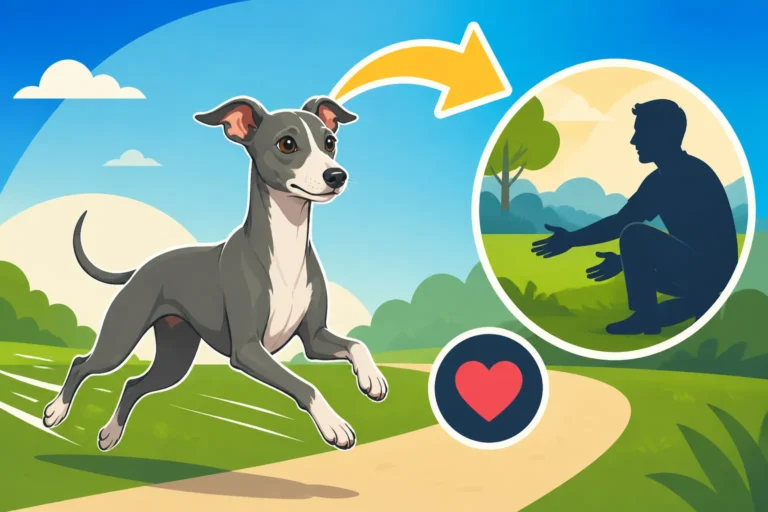
Start training in a very low-distraction environment, like your living room or a quiet, securely fenced yard. Call their name, say your recall cue (e.g., "Come!" or "Here!"), and the moment they turn or move toward you, mark the behavior with a verbal "Yes!" or a clicker, and then immediately reward them. Practice this dozens of times a day, keeping sessions short and fun. The key is to build a positive association so strong that "come" equals "jackpot!" every single time. As they get more consistent, gradually introduce very mild distractions, always setting them up for success. This foundation ensures that when you call them, they truly believe something fantastic awaits them. Which Rewards an Italian Greyhound Works For
Controlled Environments and Long Line Training
Until your Iggy has a rock-solid recall in highly distracting environments, they should never be off-leash in an unfenced area. This is not being overly cautious; it's being responsible. The risk of them bolting into traffic or getting lost is simply too high. Instead, utilize long lines to give them freedom while maintaining safety and control. A long line, typically 15 to 30 feet in length, allows them to explore and run a bit while you still have a physical connection.
When using a long line, attach it to a well-fitting harness, not their collar, to prevent neck injury if they hit the end of the line quickly. Practice your recall cue while they are on the long line. Let them wander, then call them. If they don't respond, gently reel them in while continuing to use your recall cue, and reward them the moment they reach you. It teaches them that the cue means they must come, but in a gentle, guiding way. You can find durable long lines of various lengths and materials easily on online retailers like Amazon. This controlled freedom allows for safe practice in more stimulating environments, helping bridge the gap between indoor training and real-world reliability. Whether a Long Line Is Enough for an Italian Greyhound
Tools and Techniques to Support Recall
Beyond treats and positive reinforcement, there are specific tools and techniques that can make recall training more effective for Italian Greyhounds. These aids can help manage their environment and provide consistent communication.
Appropriate Harnesses and Secure Leashes
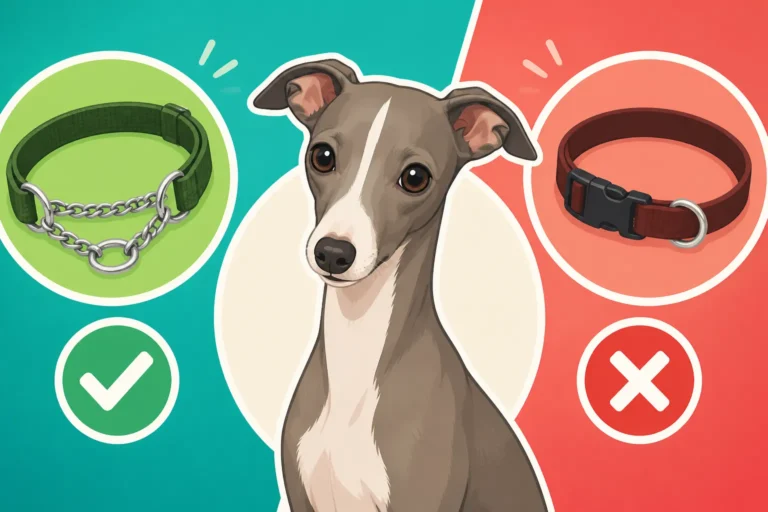
A well-fitting harness is non-negotiable for an Italian Greyhound, especially during recall training or when using a long line. Their slender necks and deep chests mean they can easily slip out of traditional collars, even martingales, if they panic or pull backward. A harness that fastens securely around the chest and behind the front legs provides a much safer point of attachment. Look for harnesses specifically designed for sighthounds or those with a double strap design that prevents escape.
When choosing a leash, opt for one that is comfortable to hold and a standard length (4-6 feet) for everyday walks. For recall practice, as mentioned, a long line is invaluable. Always double-check that your leash and harness are in good condition before heading out, as any equipment failure could have serious consequences. A secure connection to your Iggy gives you peace of mind and gives them the confidence to explore, knowing you're there to keep them safe. Which Harness Suits an Italian Greyhound's Neck
Whistle Training and Emergency Recall
Sometimes, in a high-distraction scenario, your voice simply won't cut through the noise. A whistle can be a highly effective recall tool because it provides a distinct, consistent sound that cuts through distractions better than a human voice. The key is to pair the whistle sound with something incredibly positive.
Start in a quiet environment, just like with verbal recall. Blow the whistle (a short, consistent burst), and immediately give your Iggy a high-value treat. Repeat this many, many times over several days, until the whistle sound instantly makes them look to you with anticipation. Then, start incorporating movement – blow the whistle, then take a step back and reward them when they come. This creates a powerful, conditioned response. The whistle should only be used for recall and should always be followed by a jackpot reward, so it retains its special meaning. This can be your "emergency recall" – a sound so strongly associated with amazing rewards that it can override even the most compelling distractions.
Managing Expectations and Safety First
Despite your best efforts, it's important to have realistic expectations about recall reliability with an Italian Greyhound. Their instincts are powerful, and while training can significantly improve their response, it may never be foolproof in every situation. This means prioritizing safety above all else.
When Off-Leash Isn't an Option
Let's be blunt: for many Italian Greyhounds, being reliably off-leash in an unfenced, public space is simply not a safe option. Even with rigorous training, that powerful prey drive and their incredible speed mean that one unexpected squirrel or distant rabbit could send them flying, potentially into danger. This isn't a reflection of your training ability or your dog's intelligence; it's a testament to their breed characteristics.
Instead of aiming for the unrealistic ideal of a totally free-roaming Iggy, focus on providing safe outlets for their energy. This might mean secure dog parks with tall fencing, private rented fields, or carefully selected friends' yards. Long lines are your best friend here, allowing them a sense of freedom without the inherent risks. It's about accepting who they are and adapting your activities to ensure their safety and well-being. Prioritizing secure environments over hoping for a perfect recall is the most loving and responsible choice an Iggy owner can make. Why a Dog Park Is Dangerous for an Italian Greyhound
Consistency, Patience, and Continuous Practice
Recall training is not a one-and-done event; it's a lifelong commitment. You need to be incredibly consistent with your cues, your rewards, and your expectations. Every time you call your Iggy, you need to be prepared to reward them handsomely, especially in the early stages. If you call them, they come, and you just pat them on the head and walk away, you're devaluing the command.
Think of it as continually investing in a trust fund. Every positive recall experience adds to the fund, making them more likely to respond next time. If you have setbacks (and you will!), don't get discouraged. Just go back to basics in a less distracting environment, reinforce heavily, and build back up. Consider using an online training platform like BAXTER & Bella for structured, consistent guidance if you find yourself struggling. Training an Italian Greyhound is a marathon, not a sprint, and your patience and dedication will ultimately yield the best results. How Short an Italian Greyhound's Training Session Should Be
Understanding Recall Success Rates in Italian Greyhounds
It's natural to wonder how your Iggy compares to others. While every dog is an individual, certain trends exist within the breed regarding recall reliability. It helps to benchmark your expectations against the experiences of other Italian Greyhound owners.
The Spectrum of Reliability
Not all Italian Greyhounds are created equal when it comes to recall. You might hear stories of an Iggy who can safely be off-leash on trails, but these are often the exception rather than the rule. Most owners find their Iggies fall somewhere on a spectrum:
| Recall Reliability Level | Characteristics | Ideal Environments | Training Focus |
|---|---|---|---|
| Exceptional (Rare) | Responds to recall reliably in most low to moderate distraction environments, even with slight prey drive. | Securely fenced areas, quiet private land, possibly controlled trails with minimal wildlife. | Advanced positive reinforcement, strong bond, consistent high-value rewards, early socialization. |
| Good (Achievable) | Responds well in low-distraction environments (home, familiar yard) but may hesitate or ignore with high distractions. | Securely fenced yards, long line walks in open areas, indoor off-leash play. | Consistent positive reinforcement, gradual introduction of distractions, emergency recall. |
| Fair (Common) | Responds intermittently, often only when highly motivated or with no competing distractions. | Strictly fenced areas only, short leash walks, indoor play with controlled recalls. | Focus on building foundation, managing environment, high-value rewards, short sessions. |
| Poor (Also Common) | Rarely responds once focused on a distraction, often bolts. High risk off-leash. | Always on-leash, double-leashed in new areas, indoor play only. | Environmental management, basic recall in no-distraction zones, professional help. |
It's perfectly okay if your Iggy falls into the "Fair" or even "Poor" category for off-leash recall in public. The most important thing is to acknowledge their natural tendencies and adjust your management strategies to keep them safe. For many Italian Greyhounds, the risk is simply too great to trust them completely off-leash, and that's a realistic truth of owning this wonderful breed. How Reliably an Italian Greyhound Comes When Called
Long-Term Commitment to Reinforcement
Maintaining any trained behavior requires ongoing reinforcement, and recall is no different. You can't train it perfectly once and then assume it will last forever. Every walk, every outing, every interaction is an opportunity to reinforce your recall. This doesn't mean you need to be calling them back constantly, but make sure to periodically call them to you (even when they're not doing anything wrong), reward them generously, and then release them to continue what they were doing. This keeps the recall "muscle" strong and the positive association fresh.
If you notice a slip in their responsiveness, it’s a cue to go back to basics. Reduce distractions, increase your treat value, and practice more frequently. Life changes, new environments, and even their age can impact recall. An older Iggy might be less inclined to chase a squirrel, but an adolescent one might be a wild child. Be adaptable, be consistent, and always remember that your relationship with your Italian Greyhound is the most powerful training tool you have. How Often a Loose Italian Greyhound Comes Back
Disclaimer
This article is for general informational purposes only and does not constitute professional advice. Laws, prices and regulations vary by location and change over time. Consult a qualified professional for guidance on your specific situation.