Whether an Italian Greyhound Can Be Recall Trained
It's a question that keeps many an Italian Greyhound owner up at night, or at least makes them clutch their leash tighter: can your delicate, lightning-fast Iggy actually be recall trained to come back when you call, especially when something shiny and fast catches their eye? The frustration is real, and the fear of a bolted dog is a constant shadow. This comprehensive guide will dive deep into the unique challenges and surprising successes of recall training an Italian Greyhound, offering realistic expectations and actionable strategies to keep your beloved sighthound safe.
Understanding the Italian Greyhound's Instincts and Why Recall is a Challenge
Let's be brutally honest from the start: Italian Greyhounds are not your typical "golden retriever" style recall dogs. Their entire genetic makeup, honed over thousands of years, is designed for seeing something move and chasing it down, not for politely trotting back to your side when you holler. Understanding these fundamental instincts is the first crucial step in setting realistic goals and effective training strategies.
The Deep-Seated Prey Drive of a Sighthound
Imagine for a moment you're a tiny, aerodynamic missile. That's essentially your Italian Greyhound. Their eyes are built for distance, designed to spot the slightest flicker of movement across a field. When they lock onto something – a squirrel, a leaf blowing just right, a distant plastic bag – an ancient instinct kicks in. This isn't naughtiness; it's hardwired predatory behavior. Their brains tell them, "See chase, chase now!" and your voice becomes a mere whisper against the roar of their instincts. It's why trying to train them with traditional, low-reward methods often feels like banging your head against a wall. Their internal reward system for the chase is far stronger than a bland "good boy" or a piece of kibble. This inherent drive is a major reason How Strong an Italian Greyhound's Prey Drive Is is so crucial to understand.
The "Flight" Part of "Fight or Flight"
When faced with a perceived threat or an enticing lure, an Italian Greyhound's primary response is usually "flight." This isn't fear in the traditional sense when they bolt after a rabbit; it's an overwhelming urge to go. They are built for speed and evasion. If they get startled, or if they decide that exciting thing over there is more important than you, they will run, and they will run fast. Their slender bodies are incredibly agile, capable of quick turns and bursts of speed that can leave even an Olympic sprinter in the dust. This natural athleticism, coupled with their often sensitive nature, means that harsh corrections or fear-based training will likely backfire, making them even less likely to return to you when startled or unsure. They associate coming back with punishment, not safety or reward.
Italian Greyhounds and Selective Hearing
"My Iggy has selective hearing!" This is a common lament among Italian Greyhound owners, and it's not entirely wrong. While they are intelligent and capable of learning commands, their focus is easily hijacked by their environment. In a quiet, controlled setting, they might perform flawlessly. But introduce a gust of wind, a barking dog a block away, or a scurrying mouse, and suddenly, you're invisible. It's not that they can't hear you; it's that the world outside has suddenly become a million times more interesting, and their instincts are screaming louder than your pleas. This makes achieving reliable recall in uncontrolled environments incredibly difficult, as their attention span for "come" becomes almost non-existent when their prey drive is activated. It's a fundamental aspect of their breed that you must acknowledge and work with, not against.
The Myth of "Untrainable" and the Reality of Consistent Effort
Despite their challenging instincts, it's a huge disservice to Italian Greyhounds to label them as "untrainable" for recall. While absolute, fail-safe recall in all situations might be an unrealistic ideal, effective recall training that significantly increases their safety and responsiveness is absolutely achievable. It just requires a different approach, a ton of patience, and unwavering consistency.
Why Traditional Methods Often Fail Iggies
Many traditional dog training methods rely on a dog's inherent desire to please, or on a level of biddability that is simply not present in most sighthounds. Using a standard flat collar, a quick tug, or a firm "no" often does little to deter an Italian Greyhound mid-chase. In fact, it can have the opposite effect. A yank on the neck from a flat collar is ineffective and can even be dangerous for their delicate throats. And shouting, for a sensitive breed like an Iggy, can create anxiety and actually make them less likely to come to you, as they may associate your frustrated tone with something negative. They aren't trying to defy you; they're simply being an Italian Greyhound, driven by impulses that are stronger than conventional training cues. You need to understand Why an Italian Greyhound Stops Hearing You at a Sprint and adjust your methods accordingly.
Building a Rock-Solid Foundation with Positive Reinforcement
The key to successful recall with an Italian Greyhound is positive reinforcement, and lots of it. This means rewarding desired behavior, not punishing unwanted behavior. Every single time your Iggy so much as looks in your direction when you call, or takes a step towards you, it should be a party! Start by calling them when they are already close and looking at you. Use a happy, inviting tone. When they come, immediately give them an amazing treat and praise. The goal is to build an overwhelmingly positive association with the word "come" and the act of returning to you. Think of it as building up a bank account of positive experiences – the more deposits you make, the richer that association becomes.
This isn't just about treats; it's about making yourself the most exciting thing in their world. Use toys, play, silly voices, and anything that genuinely excites your individual dog. The more they associate your call with something wonderful happening, the more likely they are to choose you over a distraction.
The Importance of High-Value Rewards
When we talk about high-value rewards for an Italian Greyhound, we're not talking about their regular kibble. We're talking about the good stuff: tiny pieces of cooked chicken, cheese, hot dogs, freeze-dried liver, or whatever makes your Iggy's eyes light up and tail wag uncontrollably. These aren't everyday snacks; they are special currency reserved only for recall training.
Consider the "value exchange" happening in your dog's mind. If a squirrel is a 10/10 exciting event, and your recall reward is a 3/10 piece of dry kibble, the squirrel wins every time. You need your reward to be at least an 8 or 9 out of 10 to even compete with the thrill of the chase. Always have these high-value treats readily available in a treat pouch during training sessions, and even on walks, so you're ready to reward instantly and enthusiastically the moment they make the right choice.
Step-by-Step Approach to Recall Training Your Italian Greyhound
Breaking down recall training into manageable steps is crucial for success with an Italian Greyhound. You wouldn't expect them to run a marathon without first learning to walk, right? The same applies here. Each step builds on the last, gradually introducing more challenges.
Starting in a Low-Distraction Environment
Begin your recall journey indoors, in a quiet room with no other pets or people to distract your Iggy. This is their safe space to learn the basics without overwhelming stimuli.
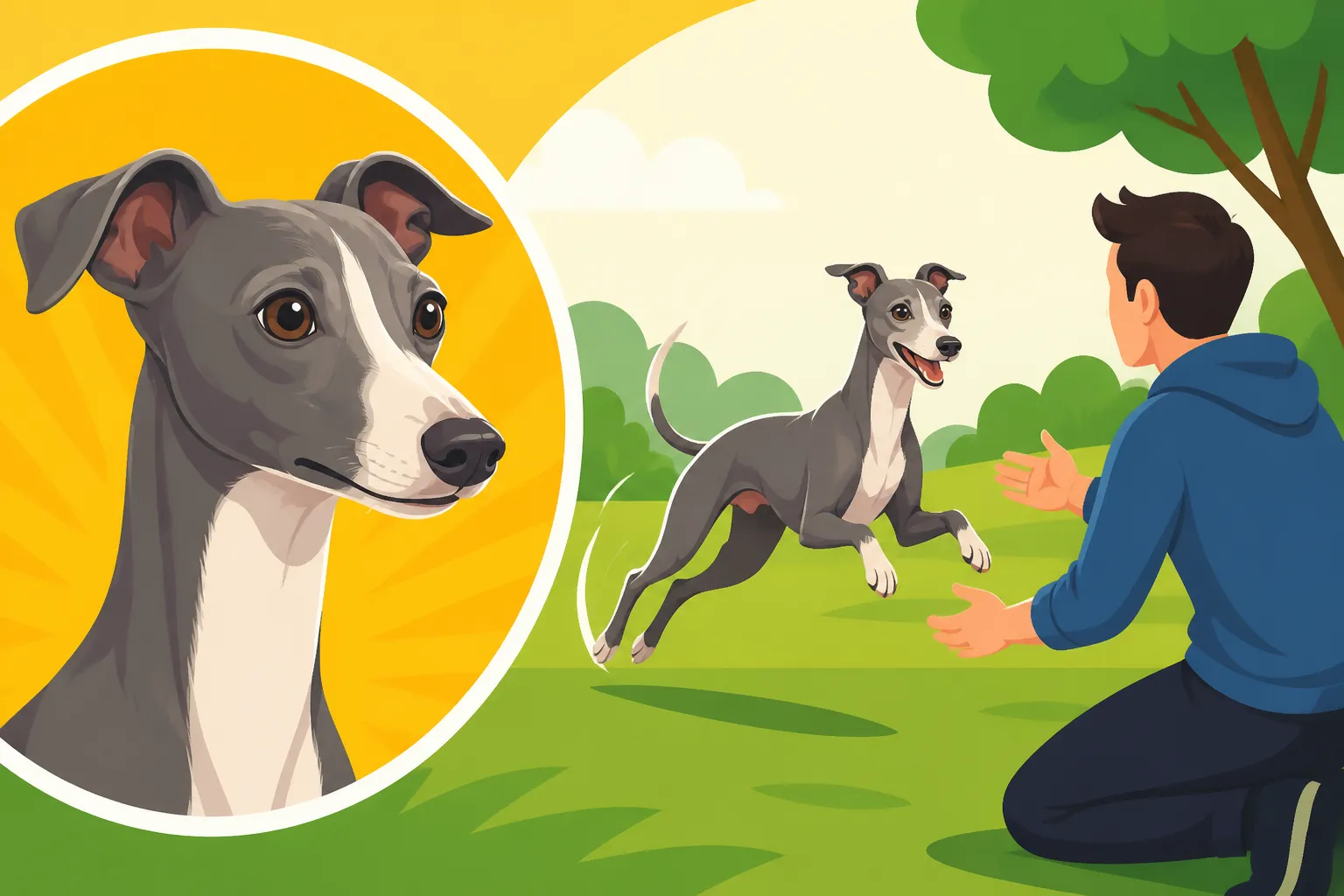
- The "Come" Game: Get down on their level, say their name excitedly, then your recall word ("come," "here," "touch" – whatever you choose, keep it consistent!). As soon as they move towards you, even a tiny step, praise lavishly and offer that high-value treat. If they ignore you, make a silly noise, clap, or pat your legs to re-engage them, then reward. Keep sessions short and fun, 2-5 minutes, several times a day.
- Adding Distance: Once they're consistently coming to you from a few feet away, gradually increase the distance. Move to different rooms in the house. Have a partner gently hold them, then release them as you call from across the room. Remember, every successful return gets a huge reward.
- Hiding and Calling: A fun way to reinforce recall indoors is to hide briefly (behind a sofa, another room) and then call your Iggy. Their natural desire to find you will often kick in, making the "come" a rewarding game of discovery. This also teaches them to seek you out when they can't see you, a critical skill for outdoor safety.
Gradually Introducing Distractions and Distance
Once your Italian Greyhound is a recall rockstar indoors, it's time to slowly and carefully introduce mild distractions. This is where most people rush, and then get frustrated when their Iggy "forgets" everything outside.
- Controlled Outdoor Space: Move to a securely fenced yard. Start with very minimal distractions – maybe just you, your Iggy, and those high-value treats. Practice the same "come" game you did indoors. Build up consistency before adding more.
- Adding Mild Distractions: Introduce a family member walking by, or a distant sound. The key is to keep distractions below the threshold where your Iggy will ignore you. If they fail to come, the distraction was too high. Reduce it and try again. Success builds success.
- Using a Long Line: This is an absolutely indispensable tool. A long line (a lightweight leash 15-30 feet long) allows you to practice recall in a larger, mildly distracting area while still maintaining control. You can purchase these easily on Amazon or at any pet supply store. Let your Iggy explore on the long line, but keep a watchful eye. When they get engrossed in something, call them. If they hesitate, gently reel them in while still using your happy, encouraging voice. Reward the instant they reach you. This teaches them that even if they're distracted, they must return to you, and it's always positive. Whether a Long Line Is Enough for an Italian Greyhound is a common question, and for recall, it's certainly a strong step.
Practicing with a Long Line for Safety and Success
The long line is your safety net, your training wheel for recall. Without it, you're essentially gambling with your Iggy's safety, especially considering What Speed an Italian Greyhound Reaches.
- Attachment and Handling: Always attach the long line to a well-fitting, secure harness, not a collar, to protect your Iggy's delicate neck. Which Harness Suits an Italian Greyhound's Neck is vital to consider. Hold the end of the line, letting it drag on the ground if your dog is exploring close by, or keeping it in your hand if they're ranging further.
- The "Check" Method: When you call your Iggy and they hesitate, use a gentle, consistent pressure on the line, reeling them in slowly while continuing to use your recall command and an encouraging tone. The moment they start moving towards you, release the pressure. Reward immediately when they reach you. This isn't about yanking; it's about guiding them back to you and showing them the path of least resistance (and biggest reward) is towards you.
- Varying Environments: Once comfortable in your yard, take the long line to a quiet park, an empty field, or a friend's securely fenced property. Always start with minimal distractions and gradually increase them. The goal is to generalize the recall command across many different environments, helping your Iggy understand "come" means "come" no matter where they are. Never practice off-leash in an unfenced or unsecured area.
Common Pitfalls and How to Overcome Them
Recall training an Italian Greyhound isn't without its challenges. There are common mistakes owners make that can inadvertently undermine their efforts. Being aware of these pitfalls can help you avoid frustration and keep your training on track.
Punishing a Delayed Recall
It’s completely natural to feel a surge of frustration when you've called your Iggy five times and they finally saunter over, looking like they couldn't care less. Our instinct might be to scold them, or to withhold the reward because they were "bad." This is the absolute worst thing you can do for recall training with an Italian Greyhound. If your Iggy eventually comes back, no matter how long it took, you must reward them.
Think of it from their perspective: they finally decided to come to you, and then they got yelled at. What did they learn? "Coming back equals bad things." They won't connect the scolding to the delay; they'll connect it to the act of returning. This quickly teaches them that it's safer to stay away, or even run further, than to come back to an angry human. Always make coming back a positive experience, even if you have to manage your own frustration with a deep breath and a silent count to ten. You want them to think, "Wow, I finally came back, and I got chicken! I should do that again!"
Overestimating Your Iggy's Reliability
This is perhaps the most dangerous pitfall. You've had some great recall sessions in the park with the long line, or maybe they've come running back perfectly a few times off-leash in a very controlled setting. You start to think, "They've got it!" and then, boom, a squirrel, a bird, or even just a particularly interesting scent, and they're gone. Italian Greyhounds are sighthounds first and foremost. Their prey drive is powerful and can override all training in a split second.
It’s crucial to understand that "reliable recall" for an Italian Greyhound in an open, unfenced area is often a statistical anomaly, not a guaranteed outcome. The risk of them bolting and getting lost or injured is simply too high for many owners to ever trust them completely off-leash outside of a secure, double-gated area. Why an Italian Greyhound Cannot Be Trusted Off Leash, Ever is a harsh reality for many of us. Always err on the side of caution. If you have even a shadow of a doubt, use a long line or keep them on a standard leash.
Dealing with Environmental Triggers
The world outside is full of fascinating, high-speed triggers for an Italian Greyhound. A rustling bush, a flapping flag, another dog playing, or the ultimate lure: a rabbit What an Italian Greyhound Does When It Sees a Rabbit. These aren't just distractions; they are powerful, instinctual calls that can completely hijack your Iggy's attention.
- Anticipate and Intervene: The best defense is a good offense. Learn to read your Iggy's body language. If you see them stiffen, ears perk, or eyes lock onto something, anticipate the chase. Immediately call their name and get their attention before they bolt. Reward for simply disengaging from the trigger and looking at you.
- Controlled Exposure: Gradually expose them to different environmental triggers while on a long line. Start far away from the trigger and slowly decrease the distance as they become more reliable. If they fail, you're too close or the trigger is too strong. Move further away and try again.
- Manage the Environment: Sometimes, the best strategy is simply to manage the environment. Avoid areas known for high wildlife activity if you're working on recall. Choose quiet parks during off-peak hours. Remember that even a seemingly invisible fence might not be enough to deter a determined Iggy chasing prey, making Whether an Invisible Fence Holds an Italian Greyhound a serious consideration for owners.
Essential Tools and Resources for Italian Greyhound Recall
While patience and consistency are your primary tools, there are also some physical items and external resources that can greatly aid in your Italian Greyhound's recall training journey.
The Right Harness and Leash Setup
For a breed as delicate and escape-prone as the Italian Greyhound, standard collars are often insufficient and potentially dangerous. Their slender necks and ability to slip out of ill-fitting gear mean you need specialized equipment.
- Martingale Collar (for leash walking, not off-leash): A martingale collar can be useful for walks on a standard leash, as it tightens gently when pulled, preventing them from backing out. However, it's not a substitute for a harness, especially during recall training or off-leash scenarios. Whether a Martingale Collar Suits an Italian Greyhound is worth researching for daily walks.
- Escape-Proof Harness: Look for a harness specifically designed for sighthounds or escape artists, often featuring a second strap around the waist behind the ribs. Brands like Ruffwear or similar designs offer secure fits. This prevents them from wiggling out if they get spooked or pull hard. Always ensure it's snug but comfortable, allowing full range of motion. Attach your long line to the back clip of this harness for maximum safety and comfort during training.
- Long Lines: As mentioned, a lightweight, durable long line (15-30 feet) is indispensable. These allow your Iggy freedom to explore while giving you the ability to practice recall and prevent escapes. You can find a good selection on Amazon.
Professional Training Support and Online Resources
Sometimes, an outside perspective and professional guidance can make all the difference.
- Certified Professional Dog Trainer (CPDT-KA): Seek out a trainer who uses positive reinforcement methods and, ideally, has experience with sighthounds. A good trainer can observe your Iggy's behavior, identify specific challenges, and tailor a training plan that works for both of you. They can also teach you crucial timing and handling skills that are hard to learn from a book alone.
- Online Training Courses: For those who prefer to learn at their own pace or live in areas with limited access to sighthound-experienced trainers, online courses can be a fantastic resource. Companies like BAXTER & Bella offer comprehensive online puppy and dog training programs that emphasize positive reinforcement and cover recall extensively. Their structured approach can provide the guidance you need from the comfort of your home.
- Breed-Specific Clubs and Forums: Connecting with other Italian Greyhound owners, perhaps through your local Italian Greyhound club or online forums, can offer a wealth of practical advice and shared experiences. They often have tips and tricks specific to the breed's quirks that only another Iggy owner would understand. They can also share stories about How Often a Loose Italian Greyhound Comes Back, which might reinforce your commitment to safety.
Creating a Safe Outdoor Space
While we strive for reliable recall, the reality for many Italian Greyhounds is that true off-leash freedom might only be safe in a very controlled environment.
- Securely Fenced Yard: This is paramount. If you have a yard, ensure the fencing is high enough (Iggies can jump surprisingly well!) and secure enough to prevent digging under or squeezing through gaps. How High a Fence an Italian Greyhound Needs is often underestimated. Check for weak spots regularly.
- Dog Parks (with extreme caution): Some dog parks have separate small dog areas, which might be suitable for some Iggies, but always proceed with extreme caution. The sheer speed of an Italian Greyhound means they can quickly get into trouble with larger, rougher playing dogs. Their delicate bones are easily fractured. If you do go, be hyper-vigilant and prepared to leave if the environment isn't safe.
- "Sniffari" Walks: Instead of focusing on off-leash running, provide enriching "sniffari" walks on a long leash in safe, varied environments. Let them explore scents, which is mentally stimulating and fulfilling for any dog, even if they can't run free. This meets their needs in a much safer way.
Lifelong Management: When Off-Leash Isn't an Option
Even with the most dedicated training, it’s a reality that some Italian Greyhounds may never achieve reliable enough recall for true off-leash freedom in open, unsecured areas. This isn't a failure on your part or theirs; it's simply acknowledging the breed's powerful instincts and delicate physical nature. Lifelong management and smart safety choices are key to their well-being.
Understanding the Risks vs. Rewards
The decision to let an Italian Greyhound off-leash outside of a securely fenced area carries significant risks. A single squirrel, a distant jogger, or a sudden loud noise can trigger their flight response, and their incredible speed means they can cover vast distances in seconds. We often talk about What Speed an Italian Greyhound Reaches, and it's truly breathtaking and terrifying in an emergency. The potential consequences—being hit by a car, getting lost, encountering aggressive wildlife or dogs—far outweigh the perceived "freedom" of a momentary off-leash run for many owners.
On the flip side, the rewards of supervised, safe off-leash exercise are immense for their physical and mental health. This is why creating those secure environments or using long lines is so critical. It's about finding that balance where your Iggy can truly be a sighthound without risking their life. It means making a conscious choice to prioritize their safety above all else.
Providing Safe Alternatives for Running and Play
If widespread off-leash recall isn't in the cards for your Iggy, don't despair! There are plenty of ways to let them burn off that incredible energy safely.
- Lure Coursing: This sport is practically tailor-made for Italian Greyhounds. It allows them to unleash their full running speed and chase instincts in a controlled, fenced environment. They chase a "lure" (usually a plastic bag) around a course, providing immense physical and mental satisfaction. It's safe, fun, and taps into their core breed traits without the danger.
- Secure Dog Parks (Small Dog Sections): As mentioned earlier, use extreme caution. However, if you find a well-managed dog park with a dedicated small dog area, this can be an option. Always supervise closely and be ready to intervene or leave if needed. Focus on interaction with compatible playmates rather than just letting them zoom unsupervised.
- Long Line Sprints: Even with a long line, you can give your Italian Greyhound ample opportunity to sprint and play. Find a large, open field where you can let out the full length of the line and encourage them to run, chase a thrown toy (on the line!), or simply enjoy a fast-paced game of chase with you. Whether a Long Line Is Enough for an Italian Greyhound for exercise needs often gets a resounding "yes" from experienced owners.
The Peace of Mind a Long Line Offers
Ultimately, for many Italian Greyhound owners, the long line becomes a permanent, invaluable tool for outdoor adventures. It offers the best of both worlds: it provides your Iggy with a sense of freedom and exploration, allowing them to sniff, trot, and even perform short sprints, while providing you with crucial control and peace of mind.
Imagine strolling through a park, your Iggy happily investigating a patch of grass 20 feet away, and you know that if a rabbit suddenly appears, you have the ability to gently guide them back to safety. This security prevents the gut-wrenching panic of a lost dog and saves you from the potentially devastating costs and heartbreak associated with an escape. It's a small investment in equipment and a slight adjustment to your routine that pays huge dividends in safety and enjoyment for both you and your beloved Italian Greyhound.
Disclaimer
This article is for general informational purposes only and does not constitute professional advice. Laws, prices and regulations vary by location and change over time. Consult a qualified professional for guidance on your specific situation.