Why an Italian Greyhound Stops Hearing You at a Sprint
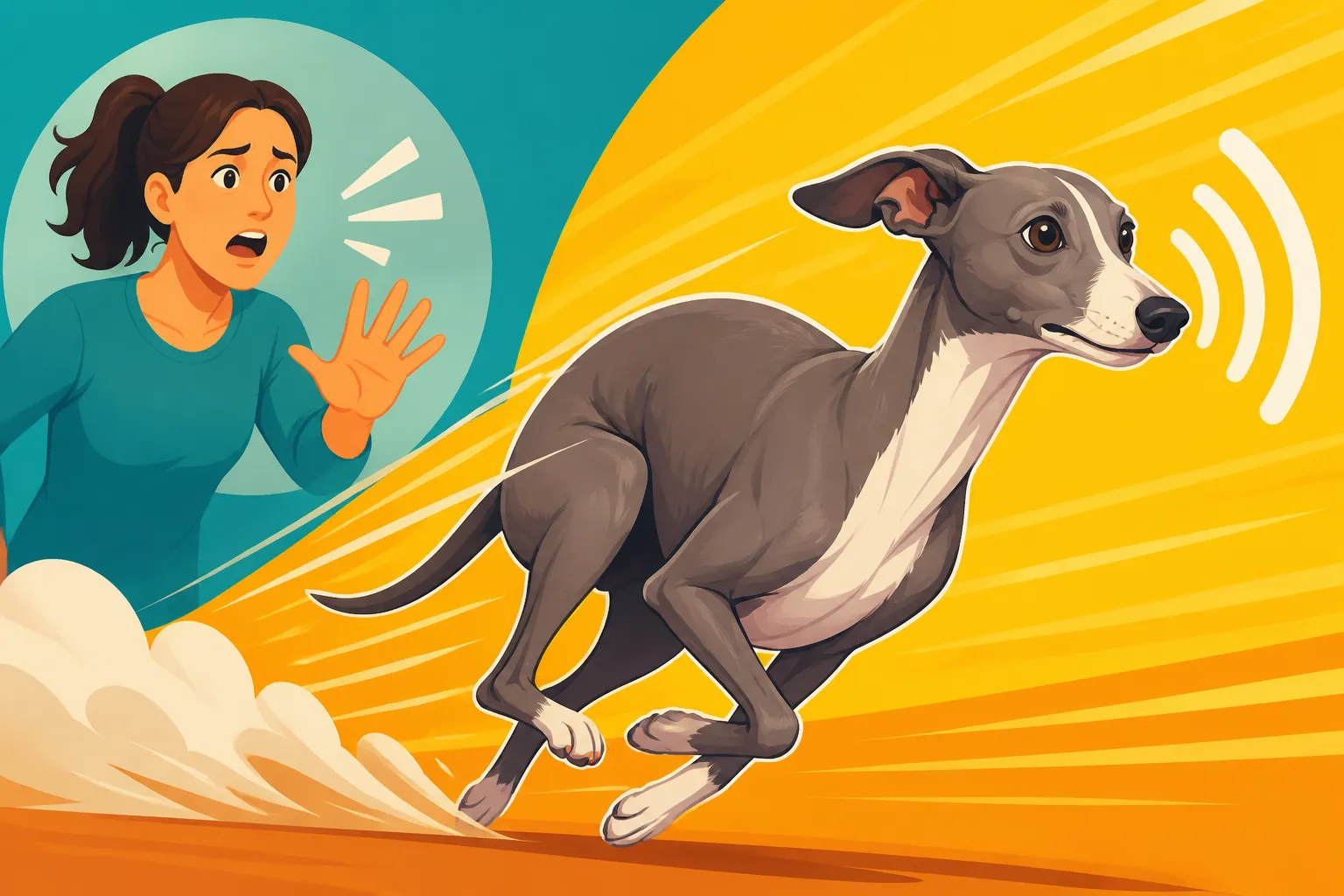
That heart-stopping moment when your graceful Italian Greyhound spots a squirrel across the park and suddenly, they're off – a blur of speed and focus, seemingly deaf to your frantic calls. It's a frustration many Italian Greyhound owners know all too well, feeling like your beloved companion has completely forgotten you exist. This guide dives deep into why your Italian Greyhound tunes you out at a sprint and offers realistic strategies to build a more reliable recall, even when their instincts kick in.
The Italian Greyhound's Instinctual Drive to Chase
Let's be real, you chose an Italian Greyhound, and part of their charm is that incredible speed and agility. But what makes them so captivating also means they come hardwired with instincts that can, at times, override everything else. When they hit that sprint, it's not personal; it's pure, unadulterated sighthound nature taking over.
A Sighthound's Primary Motivation
Italian Greyhounds are sighthounds, bred for millennia to spot and chase small, fast-moving prey. Unlike scent hounds who follow a trail with their nose to the ground, an IG's entire being is geared towards visual pursuit. Their wide field of vision, keen eyesight, and explosive acceleration are all tools for the chase. When something moves quickly in their periphery – be it a rabbit, a squirrel, a blowing leaf, or even a distant dog – it triggers a primal instinct. Their brain isn't processing your voice; it's focused on that movement, calculating the fastest path to intercept. This isn't naughtiness; it's literally what they were designed to do.
Imagine your IG, just enjoying a stroll, when suddenly, a rabbit darts across a field 50 yards away. To you, it's a tiny speck. To your IG, it's a high-definition target. Their body tenses, their gaze locks, and before you can even register what's happening, they're off. The world shrinks to that single moving object, and all other sensory input, including your voice, becomes background noise, utterly irrelevant to the mission at hand. It's a powerful, almost trance-like state that’s incredibly difficult to break.
The Thrill of the Chase: Dopamine and Adrenaline
Beyond just instinct, there's a powerful cocktail of neurochemicals at play during a sprint and chase. When an Italian Greyhound engages in a high-speed pursuit, their brain releases a surge of dopamine and adrenaline. Dopamine is the "reward" chemical, creating feelings of pleasure and motivation, while adrenaline provides the physical boost needed for maximum speed and focus. This combination creates an incredibly reinforcing experience.
This isn't just a fleeting moment of excitement; it's a deep, satisfying rush that literally makes the chase feel incredibly good to them. It's a natural high that's far more compelling than any treat you might have in your pocket, or any praise you can offer. This biological imperative is why even the most well-trained Italian Greyhounds can seem to "forget" every command they know when they're truly committed to a sprint. It’s not that they don’t hear you; it’s that the intense internal sensation of the chase drowns out all external cues, making them temporarily impervious to recall. It's a profound challenge for owners because you're literally competing with your dog's own intrinsic reward system.
Environmental Factors That Drown Out Your Voice
Even the most commanding voice can get lost in the whirlwind of an Italian Greyhound's focused sprint. It's not just their internal state; the world around them plays a huge role in why your calls fall on deaf ears. You might be yelling, but to them, it's just part of the chaotic symphony of an exciting environment.
Distance and Distraction
An Italian Greyhound can reach incredible speeds, often upwards of 25 miles per hour, making them one of the fastest small dog breeds. How Fast an Italian Greyhound Runs This means that in mere seconds, they can cover a significant distance. The further away they are, the less effective your voice becomes. Sound dissipates rapidly over distance, and by the time your IG is 50 or 100 feet away, your voice is just a whisper against the backdrop of other ambient sounds.
Think about being at a busy park: the wind rustling through trees, children laughing, other dogs barking, distant traffic noise, or even just the sound of their own paws hitting the ground at full tilt. All of these sounds contribute to a cacophony that easily drowns out your voice. Furthermore, when an Italian Greyhound is locked onto a target, they develop what can only be described as "tunnel vision." Their focus narrows intensely on the object of their chase, both visually and auditorily. Every ounce of their attention is funneled into that one pursuit, making it incredibly difficult for any other sensory input to penetrate their heightened state. You're trying to cut through a wall of adrenaline and singular focus.
Novelty and Overstimulation
Italian Greyhounds are sensitive and intelligent creatures, and new environments or unexpected stimuli can be incredibly stimulating. Even a familiar park can become an overwhelming landscape if there’s a new scent, an unfamiliar dog breed they haven't encountered before, or even construction noise on the horizon. This overstimulation can quickly lead to a state where their senses are on high alert, processing so much new information that your voice gets lost in the noise.
Consider a simple walk in a new neighborhood. Every new bush, every passing pedestrian, every distant siren could be a novel stimulus. For an Italian Greyhound, who is naturally inquisitive and wired to react to movement, this creates a constant stream of information. In such a state, their threshold for ignoring your voice drops significantly. They aren't trying to be disobedient; their brain is simply too busy processing the sensory buffet around them. When they finally do spot something that triggers their prey drive, the combination of existing overstimulation and the sudden burst of chase instinct becomes an almost insurmountable barrier for your recall command. This is particularly relevant given What an Italian Greyhound Does All Day, as even routine activities can become overstimulating if the environment changes.
Why Traditional Recall Training Fails in High-Stimulus Situations
Many owners diligently practice recall in their backyard or quiet living room, only to be utterly baffled when their Italian Greyhound acts as if they’ve never heard the command outside. This isn’t a flaw in your dog's intelligence, nor is it a sign of disrespect. It’s a fundamental mismatch between the training environment and the real world, particularly for a sighthound.
The Lure of the Wild vs. Your Voice
When you train recall indoors, you're typically offering a high-value treat or enthusiastic praise. Your Italian Greyhound associates your voice with a positive, immediate reward. However, when they are out in an open space and spot something moving – be it a squirrel, a bird, or even just another dog running – the intrinsic reward of the chase is often exponentially more powerful than any treat you could offer. The pure, unadulterated thrill of the hunt, the rush of adrenaline, and the deep satisfaction of exercising their ancient instincts are rewards that are incredibly hard to beat.
This isn't a problem unique to Italian Greyhounds, but it's amplified by their extreme speed and specialized prey drive. What an Italian Greyhound Chases The "reward" of the chase is instant and deeply satisfying on a primal level. The "reward" of coming back to you, while positive, is secondary and often delayed. To effectively compete with this, your recall has to be consistently more rewarding than anything they could possibly find outside, and that's a tough bar to clear. It requires consistent, high-intensity positive reinforcement in a variety of increasingly distracting environments, a process known as "proofing" your recall. Without this, your indoor recall is essentially a different command in their mind from your outdoor recall.
The Fragility of Fear-Based or Punishment-Based Training
Italian Greyhounds are famously sensitive souls. They thrive on positive reinforcement and crumble under harsh correction. Raising your voice, using punitive methods, or even showing visible frustration when they don't recall can have a profoundly negative impact on their willingness to come back to you. They are not dogs that respond well to being intimidated or scared into obedience.
If an Italian Greyhound associates coming back to you with a negative experience – a scolding, a leash yank, or even just your angry tone – they will actively avoid it, especially when they are already in a highly stimulated state. Imagine your IG sprinting after a rabbit, feeling that incredible rush, and then you yell at them. The connection they make isn't "I need to come back to human," but rather "Human is scary when I'm having fun." This can lead to a dog who actively runs away from you when called, seeing your approach as a threat rather than a source of safety and comfort. Why Chasing a Loose Italian Greyhound Makes It Worse For such a delicate breed, building trust and making recall an overwhelmingly positive experience is paramount. Any deviation from this can set your training back significantly, as their sensitive nature makes them hold onto negative associations.
Strategies to Increase Recall Reliability (Even at a Sprint)
Okay, so we know why they do it. Now, what can we actually do about it? While achieving 100% recall reliability in every high-stimulus situation might be a unicorn for an Italian Greyhound, there are definitely steps you can take to dramatically improve your chances and, more importantly, keep your delicate friend safe.
Building a Rock-Solid Foundation: High-Value Rewards
The absolute cornerstone of recall for an Italian Greyhound is making yourself the most exciting, rewarding thing in their universe. This means using truly, genuinely high-value rewards, especially in those challenging moments. Forget basic kibble; think cooked chicken bits, cheese cubes, sliced hot dogs, or whatever truly makes your IG's eyes light up. When they come to you, it should be an instant party, every single time.
Start practicing in low-distraction environments like your quiet backyard or even indoors. Call their name, use your recall cue ("Come!" or "Here!"), and the instant they turn towards you, even if they haven't moved, mark that behavior with a cheerful "YES!" and lavish them with those incredible treats and enthusiastic praise. Gradually increase the distance and introduce very mild distractions. The key is consistency and making the reward for returning so unbelievably good that it starts to compete with the thrill of the chase. You're building a mental association: "My human is the source of all things amazing, and coming to them is the best decision ever." Remember, What an Italian Greyhound Does When It Sees a Rabbit is a powerful instinct, so your counter-incentive needs to be equally powerful.
The Long Line: Safety and Practice
For an Italian Greyhound, an unfenced, open space is an invitation to explore their instincts, often at great risk. This is where a long line becomes your best friend. A long line, essentially a very long leash (15-30 feet or more), allows your IG the sensation of freedom to run and explore without the danger of them disappearing or running into harm's way. You can find excellent options on platforms like Amazon.
When using a long line, attach it to a well-fitting harness (never a collar, as a sudden stop could injure their delicate neck). Let them roam and sniff, and periodically, when they're not fully engrossed in something, call them. When they respond and come back, reel them in gently if needed, and reward them profusely with those high-value treats. This allows you to practice recall in a controlled "sprint" scenario. If they start to bolt after a squirrel, the long line acts as a safety net, allowing you to prevent the full-blown chase and redirect their attention. It's a way to build muscle memory for recall in an outdoor setting, gradually teaching them that even with tempting distractions, coming back to you is the right (and highly rewarding) choice. Whether a Long Line Is Enough for an Italian Greyhound is a good question to consider for ultimate safety.
Engage Their Minds, Not Just Their Legs
While Italian Greyhounds love to run, they also need mental stimulation. A bored Italian Greyhound might be more likely to take off after a perceived prey item just for the sheer excitement. Engaging their minds can help them stay more attuned to you and less prone to spontaneous dashing. Consider activities that channel their natural sighthound tendencies in a controlled, safe way.
Lure coursing, for instance, allows them to chase a mechanical lure in a fenced area, providing a safe outlet for their incredible speed and prey drive. Lure Coursing and Racing With an Italian Greyhound Structured fetch games in a secure yard can also satisfy their urge to run and retrieve, keeping their focus on you. Puzzle toys, scent work games, or even trick training can provide mental enrichment that builds their bond with you and increases their focus when you're asking for their attention. A mentally stimulated and engaged IG is often a more responsive IG, less likely to become completely absorbed by environmental distractions.
When Off-Leash Is Never the Answer
Let's be brutally honest for a moment: for many, if not most, Italian Greyhounds, being reliably off-leash in an unfenced, uncontrolled environment is simply not a realistic goal. Their instinct to chase is incredibly strong, and their delicate build makes any mishap potentially catastrophic. A broken leg from a fall, collision with another dog, or being hit by a car are terrifying realities for IG owners. Why an Italian Greyhound Cannot Be Trusted Off Leash, Ever
Accepting this reality is crucial for their safety and your peace of mind. Instead of trying to force a behavior that goes against their fundamental nature, embrace safe alternatives. Utilize dog parks with secure, high fencing. Explore private dog-friendly fields that are fully enclosed. Invest in a long line for walks in open spaces. Your Italian Greyhound will still get ample exercise and mental stimulation, but they’ll do it in a way that protects them from their own powerful instincts. It's about working with your dog's breed traits, not against them. If you're concerned about How High a Fence an Italian Greyhound Needs or if Whether an Italian Greyhound Can Live in an Apartment safely, these are important considerations for every owner.
| Strategy | Description | Ideal Use Case | Key Benefit | Potential Drawback |
|---|---|---|---|---|
| High-Value Rewards | Using irresistible treats (cooked meat, cheese) and enthusiastic praise for recall. | All training, especially initial stages and proofing. | Creates powerful positive association with coming to you. | Requires consistent effort; treats must truly be "high-value." |
| Long Line Training | Practicing recall in open spaces using a very long leash attached to a harness. | Parks, open fields, any unfenced outdoor area. | Allows safe freedom for practice; prevents full-blown chase of distractions. | Requires attentiveness from owner; line can get tangled. |
| Mental Stimulation | Engaging their minds with activities like lure coursing, fetch, puzzle toys, and trick training. | Daily routine, especially when outdoor exercise options are limited. | Reduces boredom-driven reactivity; keeps them more attentive to you. | Requires owner participation; some activities need specific equipment. |
| Secure Fenced Areas | Exercising solely in environments with robust, escape-proof fencing. | Dog parks, private properties, secure training facilities. | Eliminates risk of bolting into danger; allows off-leash freedom. | Access can be limited; some IGs may still try to escape if bored. |
| Consistent Cues | Using the same verbal command and hand signal every single time for recall. | Critical for all stages of training. | Prevents confusion; strengthens the association between cue and action. | Requires owner discipline and practice. |
| Positive Reinforcement | Rewarding desired behaviors (like checking in with you) with praise, treats, or toys, avoiding punishment. | Ongoing interaction and training. | Builds trust and confidence; makes returning a joyful experience for the dog. | Requires patience; negative experiences can quickly undo progress. |
Disclaimer
This article is for general informational purposes only and does not constitute professional advice. Laws, prices and regulations vary by location and change over time. Consult a qualified professional for guidance on your specific situation.