What to Do When an Italian Greyhound Gets Loose
The moment your beloved Italian Greyhound slips out of a gate left ajar or wriggles free from their collar, a cold dread washes over you. Their incredible speed, coupled with their strong prey drive and often selective hearing, means they can vanish in seconds, turning a casual walk or a moment of distraction into a frantic, heart-stopping search. This guide will walk you through the most effective steps to take immediately after your Italian Greyhound gets loose, offering practical advice and preventative measures to help bring your cherished companion back home safely.
Immediate Action: When Seconds Count
That initial burst of panic is completely normal, but how you react in those first few minutes can make all the difference. Your Italian Greyhound isn't just a dog; they are a sighthound with an instinct to run and chase, and their delicate build means they can easily get into trouble.
Don't Chase, Don't Yell: The Counter-Intuitive Truth
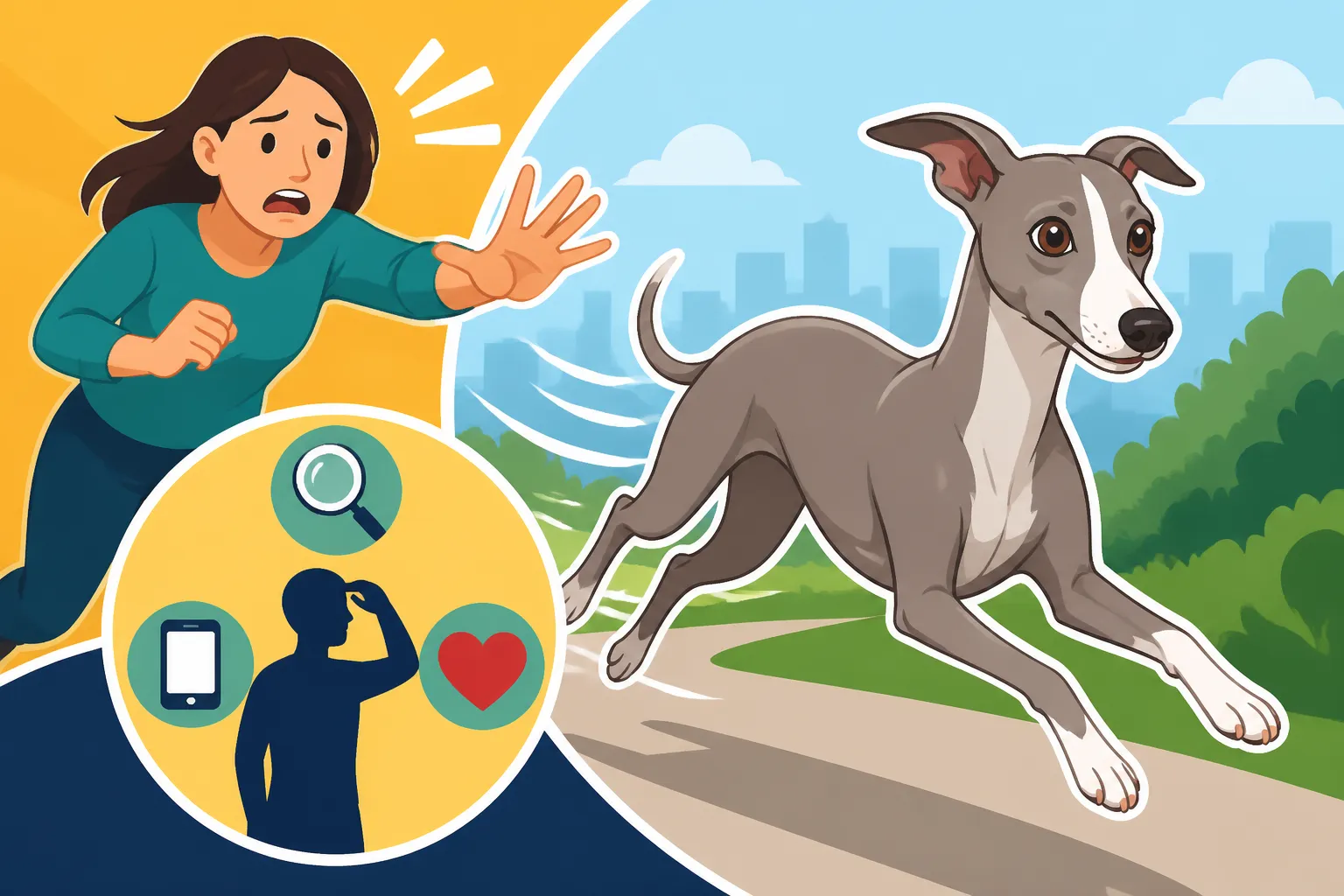
It's every fiber of your being telling you to sprint after them, shouting their name. Resist this urge with everything you have. For an Italian Greyhound, especially one that is scared or excited, being chased often feels like a game, or worse, it can make them more terrified and push them further away. They are so incredibly fast, you will likely only encourage them to run faster and put more distance between you. Yelling, even if it's their name, can sound like an angry, scary noise, confirming their decision to flee. Imagine a tiny deer-like creature being pursued and shouted at; their instinct will be pure flight. This is why many experienced Italian Greyhound owners will tell you Why Chasing a Loose Italian Greyhound Makes It Worse.
Instead, drop to the ground. Yes, really. Make yourself small and non-threatening. Sit or lie down if you can safely. This changes the dynamic entirely. Instead of a predator chasing prey, you become an interesting, less intimidating figure. Many Italian Greyhounds, especially those with a strong bond, will eventually circle back out of curiosity or concern if their person is suddenly on the ground.
Entice with Familiar Sounds and High-Value Treats
Once you're on the ground, use a happy, calm, upbeat voice. Call their name in a light, playful tone – the tone you use when they're about to get a favorite treat or go for a walk. Make kissing noises, crinkle a treat bag, or even mimic a sound they associate with fun, like a squeaky toy.
This is the time to pull out the big guns: the highest-value treats you have. Think cheese, cooked chicken, hot dogs – anything irresistible that they only get on special occasions. Keep these handy in a pouch or pocket when you're out with your Italian Greyhound. You want to create an instant association: "Oh! That sound means delicious things are happening with my human!" If they start to approach, don't rush them. Let them come to you, slowly, carefully. Once they are within arm's reach, calmly secure them without making a big deal out of it.
Keep the Escape Route Open
If your Italian Greyhound bolted through an open gate, a front door, or a small gap in the fence, do not close it immediately. There's a chance, especially if they are disoriented or scared, that they might try to return to their last known safe spot. Leave the gate or door open, but make sure the area is otherwise safe and that you can monitor it without scaring them off if they do reappear. This might mean having someone else watch the opening from a distance while you continue to search nearby using the non-chasing methods.
Understanding Your Italian Greyhound's Instincts During an Escape
Italian Greyhounds are not like many other breeds when it comes to getting loose. Their unique physical and mental makeup means their behavior in an escape situation is distinct, and understanding this can significantly aid in their recovery.
The Overpowering Prey Drive and Selective Hearing
The Italian Greyhound is a sighthound, first and foremost. This means they are visually oriented and possess an incredibly strong prey drive. A squirrel, a rabbit, a blowing leaf, or even a distant movement can trigger an instant, unyielding chase response. When their prey drive is activated, their hearing seems to shut down. You could be screaming their name at the top of your lungs, but they literally don't hear you because their entire being is focused on that visual target. This is why What an Italian Greyhound Chases often leads them far from home, and why Why an Italian Greyhound Stops Hearing You at a Sprint is such a common and frustrating reality for owners.
This instinct is so powerful that even the best recall training can fail in the face of a compelling visual stimulus. It's not defiance; it's instinct. It’s why virtually every Italian Greyhound owner will tell you Why an Italian Greyhound Cannot Be Trusted Off Leash, Ever. They might adore you, be perfectly trained indoors, but once that prey drive kicks in outdoors, you are often secondary to the chase.
The "Velcro Dog" Paradox in an Escape
It's a common saying that Italian Greyhounds are "Velcro dogs" – they stick to their people like glue, following them from room to room, craving constant physical contact. This intense bond can be both a blessing and a curse during an escape. On one hand, it might draw them back to you eventually. On the other hand, the sheer terror of being alone and disoriented can override that desire for connection, sending them further away in a panicked flight response.
Their lack of body fat and thin skin also means they're very susceptible to cold and injury. Being lost for even a few hours, especially in cooler weather, can quickly become a serious health risk for them. They'll be looking for warmth and shelter, which might draw them to unexpected places like under bushes, in sheds, or even into open garages.
Practical Search and Recovery Strategies
Once the initial shock wears off, it's time to activate a systematic search. Don't underestimate the power of community and a well-organized effort.
Enlisting Help and Spreading the Word
The moment you realize your Italian Greyhound is truly lost and not just momentarily out of sight, reach out.
- Family and Friends: Call immediate family members and trusted friends. Assign them specific tasks: one person can call local shelters and vet clinics, another can start a social media post, and others can help with a physical search.
- Local Social Media Groups: Post immediately in local lost pet groups on Facebook, Nextdoor, and other community platforms. Include:
- A clear, recent photo of your Italian Greyhound.
- Their name.
- The exact location and time they were last seen.
- Any distinguishing features (e.g., "blue merle with one white paw," "wears a red collar").
- Your contact information.
- A clear instruction not to chase if seen, but to call you immediately.
- Vets and Shelters: Call all veterinary clinics, emergency animal hospitals, and animal shelters in a wide radius around your home. Provide them with your dog's description, photo, and microchip number. This is crucial because a well-meaning person might pick up your dog and take them to the nearest vet or shelter. Make sure your microchip information is always up to date; it's a critical backup when a collar is lost. While Why a Microchip Is Not Enough for an Italian Greyhound points out its limitations, it's still a vital tool.
Luring and Trapping Techniques
For Italian Greyhounds who are very shy, scared, or have traveled a significant distance, direct capture might not be possible. This is where luring and humane trapping can be effective.
- Scent Trail: Place an article of your unwashed clothing, their favorite bed, or a toy with a strong scent of home near the escape point or a likely travel path. Italian Greyhounds have a surprisingly good sense of smell, and familiar scents can draw them back.
- Food Station: Set up a food and water bowl in your yard or near the escape point. For particularly wary dogs, you might even consider a trail camera, readily available on platforms like Amazon, to monitor the food station from a distance. This helps you confirm if it's your dog visiting and at what times, without disturbing them.
- Humane Traps: If your Italian Greyhound is consistently seen in a particular area but won't approach people, a humane trap might be necessary. These are live traps designed to capture animals without harm. You'll need to bait it with incredibly tempting food – something smelly and delicious like canned sardines, cooked chicken, or even bacon. Always research and understand how to properly set up and monitor a humane trap to ensure the dog's safety and minimize stress.
Night Search and GPS Trackers
Nighttime can sometimes offer a better chance of spotting your Italian Greyhound, especially if they are overwhelmed by daytime activity.
- Flashlights and Headlamps: Their eyes will reflect light, making them easier to spot in the dark. Drive slowly through neighborhoods with a powerful flashlight, scanning bushes, under cars, and in dark corners.
- GPS Trackers: This is where modern technology really shines. If your Italian Greyhound wears a GPS tracker (many owners swear by brands like Fi or Tractive for their peace of mind), you can often pinpoint their location with remarkable accuracy. What a GPS Tracker Costs for an Italian Greyhound might seem like an upfront investment, but it's invaluable in these situations. It's a game-changer for a breed known for its Houdini tendencies.
Table: Do's and Don'ts When Your Italian Greyhound Gets Loose
Here’s a quick overview of actions to take and avoid when your Italian Greyhound goes missing:
| Do's | Don'ts |
|---|---|
| Drop to the ground and make yourself small. | Chase or run after them. |
| Use a calm, happy, inviting tone of voice. | Yell or scold their name. |
| Offer high-value, irresistible treats. | Make loud, startling noises. |
| Keep escape routes (doors/gates) open if safe. | Immediately close all exits. |
| Put out scented items (your clothes, their bed). | Assume they’ll just come home eventually. |
| Call all local vets and shelters immediately. | Rely solely on social media. |
| Post on local lost pet social media groups. | Give up searching too soon. |
| Carry GPS tracker on them at all times. | Assume their collar is enough. |
| Search at night with a flashlight. | Search only during daylight hours. |
| Use humane traps with high-value food if needed. | Try to physically corner a scared dog. |
Preventative Measures to Avoid Future Escapes
The best way to handle a lost Italian Greyhound is to prevent it from happening in the first place. This requires vigilance, the right equipment, and consistent training.
Securing Your Home and Yard
Italian Greyhounds are agile, can jump surprisingly high, and are expert at finding tiny gaps.
- Fencing: Ensure your yard has a fence that is tall enough and secure at the bottom. A standard fence might not be enough; they can clear considerable heights. Which Fence Height Contains an Italian Greyhound is a crucial consideration. Check for any small gaps under gates or along the fence line where they could squeeze through.
- Door Security: Make it a habit to always double-check doors and gates before opening them. Consider installing self-closing gate latches or double gates for extra security. For your front door, Teaching an Italian Greyhound to Wait at a Door through consistent training can be a literal lifesaver. This training is about teaching them impulse control, making them pause and look to you before exiting any threshold.
Proper Leash, Collar, and Harness Use
This is perhaps the most critical preventative measure. Italian Greyhounds have unique body shapes that make standard collars prone to escape.
- Martingale Collars: Due to their narrow heads and slender necks, Italian Greyhounds can easily slip out of a flat buckle collar. A martingale collar is designed specifically for sighthounds; it tightens gently when pulled, preventing them from backing out, but rests loosely when not under tension. Many owners find these indispensable for walks. Whether a Martingale Collar Suits an Italian Greyhound is a resounding yes for most.
- Harnesses: A well-fitting harness can provide an additional layer of security, especially if your Italian Greyhound is a strong puller or prone to backing out of collars. Look for harnesses designed for sighthounds or escape-proof harnesses that fit snugly around their chest and ribcage without restricting movement.
- Double Leashing: For extra-nervous or flight-risk dogs, consider using both a martingale collar and a harness, each with its own leash, clipped together or held separately. This provides a backup in case one fails.
Training and Socialization
While an Italian Greyhound's prey drive is strong, consistent training, even if it doesn't guarantee a perfect recall off-leash, can still build a stronger bond and better responsiveness.
- Recall Practice: Practice recall in a secure, enclosed area, starting with minimal distractions and gradually increasing them. Make coming when called the most rewarding thing ever. Use those high-value treats! Even if it only works 50% of the time, that 50% could be the difference between life and death. Online training platforms, such as those offered by BAXTER & Bella, often have fantastic modules on foundational recall and impulse control that are specifically helpful for challenging breeds like IGs.
- Door Manners: As mentioned, teaching a "wait" cue at doors is invaluable. This teaches them not to bolt out immediately, giving you precious seconds to react if a leash isn't on or an accidental opening occurs.
- Socialization: A well-socialized Italian Greyhound might be less prone to panic and more likely to approach a friendly stranger if they get lost, rather than fleeing everyone they see.
Losing your Italian Greyhound is one of the most terrifying experiences an owner can face. By understanding their unique behaviors, acting quickly and strategically when they do get loose, and implementing robust preventative measures, you significantly increase the chances of a happy reunion and keep your delicate companion safe.
Disclaimer
This article is for general informational purposes only and does not constitute professional advice. Laws, prices and regulations vary by location and change over time. Consult a qualified professional for guidance on your specific situation.